
Sports Fundamentals
Fun basketball games for kids are a great way to build basketball skills, encourage teamwork, and keep children engaged without making practice feel like work. Whether you’re a parent, coach, or teacher, choosing the right games can make every session more exciting for players of all ages. This guide offers a variety of easy, enjoyable basketball games suitable for beginners and experienced young players alike. You’ll find options for small groups, large teams, indoor gyms, and outdoor courts, along with ideas that improve dribbling, passing, shooting, and coordination through play. Why Basketball Games are Great for Kids Basketball games help children stay active while developing important physical, mental, and social skills in a fun environment. Running, dribbling, passing, and shooting improve fitness, coordination, balance, and overall motor skills. Playing with others teaches teamwork, communication, leadership, and sportsmanship, while also helping children build friendships and confidence. Basketball also encourages quick decision-making, focus, and problem-solving as kids react to changing situations during play. Because the activities feel like games rather than drills, children stay motivated, enjoy learning new skills, and are more likely to develop a lifelong interest in physical activity and healthy habits. How to Choose the Right Basketball Game Choosing the right game helps keep children engaged while matching their abilities and the available playing environment. Consider Players’ Age: Pick games with rules and activities appropriate to the children’s age and attention spans. Match the Skill Level: Choose beginner-friendly games for new players and more challenging activities for experienced children. Think About Group Size: Some games work best with one or two players, while others are designed for larger teams. Use the Available Space: Select games that fit your location, whether it’s a full court, driveway, backyard, or indoor gym. Check the Equipment Needed: Most games require only basketballs and […]

A well-fitting glove can make every catch feel more natural. Even a small sizing mistake can affect comfort, control, and confidence on the field. If you’re trying to learn how to measure a baseball glove, I’ll walk you through the process in a simple way. You’ll also find glove size charts for youth and adult players, position-based sizing tips, material comparisons, and buying advice to help you choose a glove that matches your needs. Knowing what to look for before making a purchase can save time and help avoid an uncomfortable fit. By the end of this guide, you’ll know how to measure a glove correctly, compare sizes, and pick one that feels right for your age, position, and style of play. Baseball Glove Anatomy: Key Parts to Know Before You Measure Knowing the main parts of a baseball glove makes it easier to measure correctly and choose the right glove for your position and playing style. Finger Stalls: Individual finger compartments that determine finger placement, comfort, and control while catching and throwing. Thumb Stall: The dedicated section for the thumb that provides stability, grip, and support during fielding. Palm Shell: The main leather body of the glove that forms the catching surface and supports the pocket. Pocket: The area where the ball is caught and secured, with depth varying based on glove type and position. Web: The section connecting the thumb and index finger that influences ball control, visibility, and transfer speed. Heel: The padded lower part of the glove near the wrist that absorbs impact from catches and ground balls. Wrist Opening: The opening through which the hand enters the glove, designed to provide a secure, comfortable fit. Lacing: Leather laces that hold the glove together, maintain its shape, and allow adjustments during break-in. Types of Baseball Glove […]

Basketball can change in a split second, and sometimes one well-timed screen is all it takes to open the floor. Whenever I watch a game, I notice how quickly two players can create space when their movement, timing, and communication come together. That is what makes pick-and-roll basketball so interesting to learn and practice. Although the play may look simple from the stands, several small details determine whether it creates an open shot or gets stopped by the defense. Quick Answer: What is a Pick and Roll in Basketball? A pick and roll in basketball is a two-player offensive play where one player sets a screen, or pick, on the defender guarding the ball handler. The ball handler dribbles around the screen while the screener moves, or rolls, toward the basket. The ball handler then reads the defense and can drive to the basket, take a shot, pass to the rolling screener, or pass to an open teammate for a scoring chance. How does a Pick and Roll Work? A basketball pick and roll works through timing between the ball handler and screener. One player sets the screen, the other uses it, and both react to the defense to create a scoring chance. 1. Screener Approaches The screener moves toward the defender guarding the ball handler and gets into the right position to set a ball screen. The approach should give the ball handler enough time to prepare for the play. The screener also needs a good angle so the defender must move around the screen rather than staying directly with the ball handler. 2. Screener Sets the Pick The screener sets the pick by taking a stationary position in the defender’s path. The screen gives the ball handler space to move away from the defender. Proper positioning matters because […]

Golf scoring can feel like its own language when you first step onto a course. Par, birdie, eagle, and bogey get thrown around so casually that keeping track of what each score means can become harder than keeping track of the ball. I find that golf scoring becomes much simpler once every term is connected back to par. If you are trying to understand what is a bogey in golf, that same approach makes the term much easier to remember. Once the basic scoring pattern clicks, reading a scorecard and following a round starts making far more sense. Quick Answer: What is a Bogey in Golf? A bogey in golf means completing a hole in one stroke more than its par. If a hole is a par 4 and you take five strokes to finish it, you have made a bogey. Par represents the number of strokes a golfer is expected to need to complete a particular hole. A bogey simply adds one stroke to that number. For example, taking four strokes on a par-3 hole is a bogey. Taking six strokes on a par-5 hole is also a bogey. The specific number of strokes changes according to the hole’s par, but the relationship stays the same: par + 1 = bogey. Where Did the Term “Bogey” Come From? The term “bogey” in golf originated in England in the late 19th century and today means scoring one stroke over par. Around 1890, Hugh Rotherham, secretary of Coventry Golf Club, helped establish a target score known as the “ground score,” representing how many strokes a good golfer should take on each hole. During a similar competition at the Great Yarmouth Club, a player reportedly told the club secretary that his opponent played like “a regular Bogey man,” a nod to a […]


NBA free agency often creates confusion when teams sign expensive contracts despite having limited salary cap
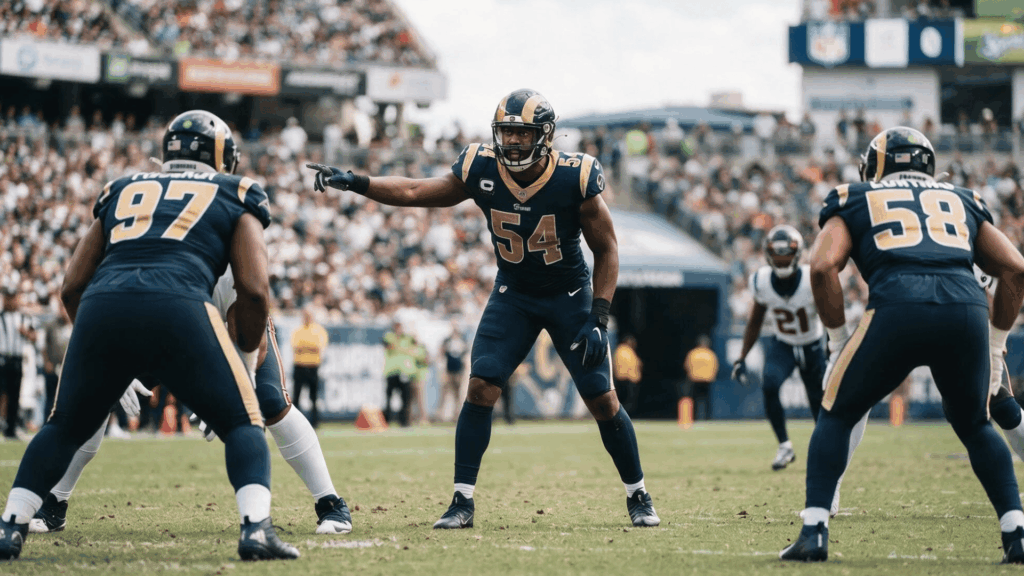
I have always found the linebacker position fascinating because it combines physical strength with quick decision-making.

Basketball’s path to the professional level is changing, and Overtime Elite (OTE) is one of the

Football games are often won or lost at the line of scrimmage, where defensive players battle

I used to think understanding football positions would require knowing every technical detail, but the right

Many football fans hear the term wide receiver every game, but they may not know exactly

Watching basketball is much more enjoyable when you understand how points are scored. One of the

If there is one thing I wish every new pickleball player learned before hitting hundreds of

In competitive cheerleading, music isn’t just background noise—it’s the backbone of every routine. The right track

Athletic confidence is more than simply believing you can win a game or master a skill.
Table of Contents 1. Grab the Right Fabric Without Overthinking 2. Lock In a Fit That

The 2026 World Cup is a monster compared to the ones that came before it. Forty-eight