



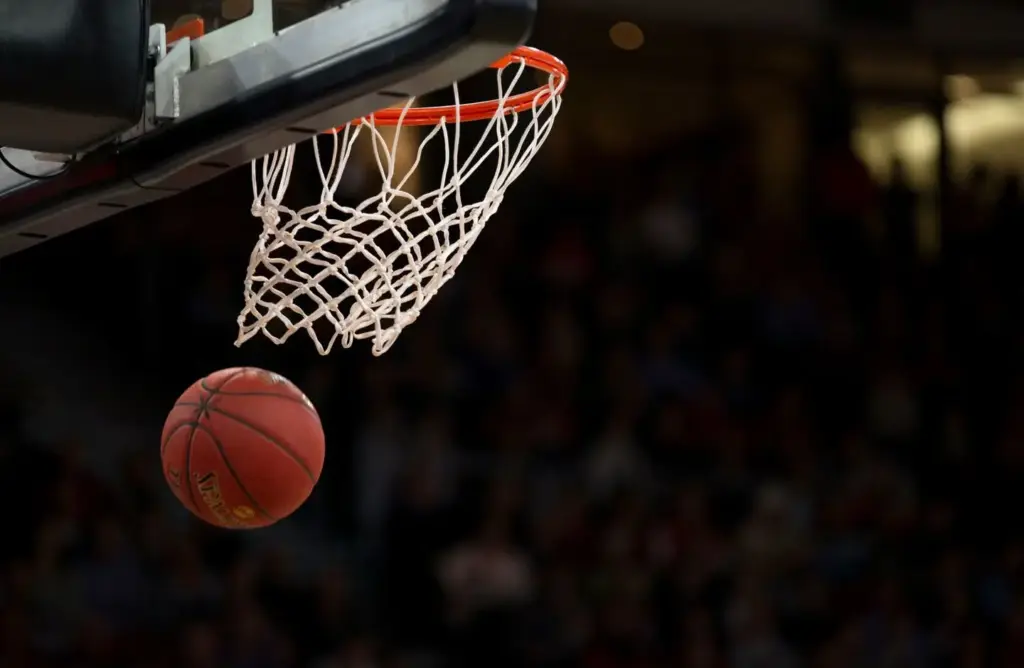


Fun basketball games for kids are a great way to build basketball skills, encourage teamwork, and keep children engaged without making practice feel like work.
Whether you’re a parent, coach, or teacher, choosing the right games can make every session more exciting for players of all ages.
This guide offers a variety of easy, enjoyable basketball games suitable for beginners and experienced young players alike.
You’ll find options for small groups, large teams, indoor gyms, and outdoor courts, along with ideas that improve dribbling, passing, shooting, and coordination through play.
Why Basketball Games are Great for Kids
Basketball games help children stay active while developing important physical, mental, and social skills in a fun environment.
Running, dribbling, passing, and shooting improve fitness, coordination, balance, and overall motor skills.
Playing with others teaches teamwork, communication, leadership, and sportsmanship, while also helping children build friendships and confidence.
Basketball also encourages quick decision-making, focus, and problem-solving as kids react to changing situations during play.
Because the activities feel like games rather than drills, children stay motivated, enjoy learning new skills, and are more likely to develop a lifelong interest in physical activity and healthy habits.
How to Choose the Right Basketball Game
Choosing the right game helps keep children engaged while matching their abilities and the available playing environment.
- Consider Players’ Age: Pick games with rules and activities appropriate to the children’s age and attention spans.
- Match the Skill Level: Choose beginner-friendly games for new players and more challenging activities for experienced children.
- Think About Group Size: Some games work best with one or two players, while others are designed for larger teams.
- Use the Available Space: Select games that fit your location, whether it’s a full court, driveway, backyard, or indoor gym.
- Check the Equipment Needed: Most games require only basketballs and a hoop, while some may also use cones, markers, or pinnies.
Fun Basketball Games for Kids

These fun basketball games help children build shooting, dribbling, passing, and teamwork skills. Whether you’re coaching a team, teaching PE, or playing at home, there’s a game for every age and group size.
1. Knockout
Knockout is one of the most popular fun basketball games for kids, combining shooting, speed, and friendly competition.
Players line up at a chosen shooting spot, with the first two holding basketballs. The first player shoots, and the second immediately tries to score before the first player makes a basket.
If a shot is missed, the player must quickly rebound and keep shooting until they score. A player who scores before the person ahead stays in the game, while the other is eliminated.
To keep play fair, don’t allow players to interfere with another player’s ball or skip dribbling after rebounds.
2. Sharks and Minnows
Sharks and Minnows is a favorite dribbling game that helps kids improve ball control while having fun.
Choose two players as the “sharks” and line the remaining “minnows” along the baseline with basketballs. On the whistle, minnows dribble toward the opposite baseline while sharks try to tag them.
Tagged players become additional sharks and help catch the remaining dribblers. The game continues until one or two minnows remain.
Coaches can increase the challenge by requiring sharks to steal or knock away the basketball instead of simply tagging players.
3. Red Light, Green Light
Red Light, Green Light helps young players improve dribbling control, balance, and listening skills.
Every player starts with a basketball on the baseline while the coach stands where everyone can see and hear.
When the coach calls “Green Light”, players dribble toward the opposite end of the court. When “Red Light” is called, they must stop immediately without traveling.
Anyone who moves after the command returns to the starting line. Add commands like “Yellow Light” for slow dribbling to make the game more challenging as players improve.
4. Around the World
Around the World is a classic shooting game that helps kids improve accuracy while adding a fun competitive challenge.
Players shoot from several designated spots around the court, such as the corners, wings, and top of the key.
Each successful shot allows the player to move to the next location. If a shot is missed, the player can either wait until the next turn from that spot or take one extra “chance” shot.
Missing the second attempt sends them back to the starting position. Adjust the shooting distance to match each player’s age and skill level for an enjoyable experience.
5. Dribble Relays
Dribble Relays combine teamwork with essential ball-handling practice. Divide players into small teams and give each team one basketball.
The coach assigns a dribbling skill, such as weak-hand dribbling, speed dribbling, or a crossover around cones.
Players complete their section of the relay before handing the ball to the next teammate. The first team to finish with every player completing the challenge wins.
Encourage proper technique instead of rushing, and clearly mark the exchange area to keep the relay fair and organized.
6. All-Star Shootout
All-Star Shootout is a fast-paced team shooting game that combines accuracy, teamwork, and friendly competition.
Divide players into two equal teams and place cones at several shooting spots on each side of the court.
Players dribble to a cone, take a shot, and, if successful, return with both the cone and the ball. Missed shots require a rebound before passing to the next teammate.
The first team to collect all its cones wins. Adjust shooting distances to match player abilities and add extra running with the cones to increase the challenge and excitement.
7. Home Run
Home Run is a fun team game that combines dribbling, shooting, and friendly competition.
Divide players into a shooting team and a dribbling team. On the whistle, one player dribbles a complete lap around the designated course while the shooting team tries to make a basket.
If the dribbler finishes the lap first, their team scores a point. If a shooter scores before the lap is complete, the dribbler is out.
Teams switch roles after all dribblers are eliminated, and the team with the most points at the end wins. Adjust the shooting distance and dribbling route to suit the players’ ages and skill levels.
8. Basketball Drag Race
Basketball Drag Race is a competitive relay that improves speed, dribbling, and finishing layups. Split players into two teams on opposite baselines and place basketballs along the half-court line.
On the whistle, the first player from each team races to collect a ball, dribbles back for a layup, and returns the ball if the shot is missed. The next teammate begins once the play is complete.
Teams compete to make the most successful layups within a set time. Coaches can require weak-hand or reverse layups to increase the challenge.
9. Dribble Knockout
Dribble Knockout is a great game for improving dribbling, ball protection, and awareness.
Every player starts with a basketball inside a marked playing area. While keeping control of their own ball, players try to knock opponents’ basketballs out of bounds.
Anyone whose ball leaves the area is either eliminated or required to complete a small challenge before rejoining, depending on the coach’s rules. As players are eliminated, the playing area becomes smaller, increasing the difficulty.
The last player still dribbling under control is the winner. Remind players to keep their heads up and avoid unnecessary contact.
10. Cone Tip Over Drill
Cone Tip Over Drill is a fun team game that develops dribbling, teamwork, and communication.
Place several cones around the court and divide the players into two teams, each with basketballs.
One team tries to knock over cones while dribbling, while the other attempts to stand them back up without losing control of the ball. If a player loses their dribble, they must switch the condition of one cone.
After 30 to 60 seconds, count the standing and fallen cones to determine the winner, then swap team roles and play again.
11. 21 Cone Shooting
21 Cone Shooting is a fun team game that combines shooting accuracy, speed, and teamwork.
Divide players into two teams and place an odd number of cones away from the baskets. Each team shoots from the same designated spot on opposite sides of the court.
Every made basket allows a player to sprint and collect one cone before returning to the line, while missed shots simply rotate to the next shooter. Play continues until all cones are collected, and the team with the most cones wins.
Adjust the shooting distance to match the players’ age and ability so everyone has a chance to succeed.
12. Pressure-Free Throws
Pressure-Free Throws is a simple game that helps kids build confidence while shooting under game-like pressure.
Players line up at the free throw line with one basketball and take turns shooting. Once a player makes their free throw, the next player must score to stay in the game; otherwise, they are eliminated.
The pressure continues down the line until someone misses, and play continues until only one player remains.
Younger players can be given multiple chances before elimination, while eliminated players can continue practicing at another basket to stay active.
13. War
War is an exciting game that improves reaction speed, decision-making, and teamwork.
Divide players into two teams and assign each player a number. The coach stands at midcourt with a basketball and calls one or more numbers before tossing the ball into play.
Only the players whose numbers are called compete to score at their assigned basket. Depending on how many numbers are called, the game can become 1-on-1, 2-on-2, or larger.
Match players with similar abilities to keep games balanced and enjoyable.
14. Ultimate Basketball
Ultimate Basketball is a passing-focused game that emphasizes teamwork and movement, with dribbling not allowed.
Divide players into two teams and start with a jump ball. Once a team gains possession, it must advance the ball using only passes. If the ball touches the floor, possession immediately changes.
Teams score by passing to a teammate beyond the opponent’s baseline, similar to scoring in an end zone.
This game teaches players to move without the ball, communicate effectively, and make quick passing decisions while working together as a team.
15. 40 and a Half
40 and a Half is a team shooting challenge that helps players practice shots from different areas of the court.
Split players into two teams, each with two basketballs, and begin shooting from the right block.
Teams must make 10 baskets from each location before moving to the next, including the left block, both elbows, and the top of the key. The game finishes when one player makes the final half-court shot.
Coaches can shorten or extend the final shooting distance based on the age and skill level of the players to keep the game enjoyable.
Quick Comparison of the Games
The table below provides a quick overview of all 15 basketball games to help you choose the best activity based on age, group size, skill focus, and available playing space.
Game | Best Age | Players | Main Skill | Indoor/Outdoor |
|---|---|---|---|---|
Knockout | 7+ | 4+ | Shooting | Both |
Around the World | 7+ | 2+ | Shooting Accuracy | Both |
All-Star Shootout | 8+ | 6+ | Shooting & Teamwork | Indoor |
Sharks and Minnows | 5+ | 6+ | Dribbling | Both |
Dribble Knockout | 8+ | 4+ | Ball Control | Both |
Red Light, Green Light | 5+ | 3+ | Dribbling & Balance | Both |
Basketball Drag Race | 8+ | 6+ | Layups & Speed | Indoor |
Dribble Relays | 6+ | 4+ | Dribbling | Both |
Cone Tip Over Drill | 7+ | 6+ | Dribbling & Teamwork | Both |
War | 8+ | 6+ | Decision-Making | Indoor |
Ultimate Basketball | 9+ | 8+ | Passing & Movement | Indoor |
21 Cone Shooting | 8+ | 6+ | Shooting | Indoor |
40 and a Half | 9+ | 4+ | Shooting Range | Indoor |
Pressure Free Throws | 8+ | 3+ | Free Throw Shooting | Both |
Home Run | 7+ | 6+ | Dribbling & Shooting | Both |
Basketball Games by Age Group
Choose games that match the players’ age and skill level to keep everyone involved and having fun.
- Preschoolers (Ages 3–5): Focus on simple games like Red Light, Green Light and Sharks and Minnows that develop basic movement, coordination, and listening skills.
- Young Kids (Ages 6–9): Try games such as Knockout, Around the World, Dribble Relays, and Home Run to build core basketball skills through play.
- Older Kids (Ages 10–13): Introduce more competitive games like War, 21 Cone Shooting, Basketball Drag Race, and Dribble Knockout to improve decision-making and teamwork.
- Teens (Ages 14+): Challenge players with Ultimate Basketball, 40 and a Half, Pressure Free Throws, and advanced shooting or passing games that simulate real game situations.
Basketball Games Based on Group Size
Explore basketball games suited to different player counts, from solo skill-building drills to small-group competitions and large-team activities that encourage teamwork and fun.
Group size | Basketball games | Short description |
|---|---|---|
1 player | around the world, pressure-free throws | solo shooting games that help improve accuracy, confidence, and individual skills through focused practice |
2 to 6 players | knockout, dribble knockout, home run | small group games that mix skill practice with friendly competition, quick reactions, and shooting challenges |
large groups and teams | sharks and minnows, war, ultimate basketball, dribble relays | team-based activities designed to build teamwork, communication, coordination, and active participation |
Tips for Making Basketball Games More Fun
A few simple changes can make basketball sessions more exciting and keep kids motivated to play and improve.
- Turn Drills Into Games: Add challenges, races, or points to basic drills to make practice feel like play.
- Celebrate Effort: Praise teamwork, improvement, and good sportsmanship rather than focusing solely on winning.
- Rotate Activities: Switch to a new game every 8 to 10 minutes to keep players interested and active.
- Add Friendly Competition: Offer small rewards or team challenges to encourage participation without creating excessive pressure.
- Finish with a Favorite Game: End each session with a fun, high-energy game so kids leave excited for the next practice.
How Basketball Games Help Improve Player Skills?
Basketball games help players improve their skills by providing a realistic environment where they can practice and apply techniques during active play.
They allow players to develop essential abilities such as dribbling, shooting, passing, and decision-making while experiencing game-like situations.
Playing at game speed helps athletes react quickly, handle pressure, and improve their overall performance on the court.
These activities also encourage teamwork, communication, and coordination with teammates.
As players practice and master new skills, they gain confidence and a better understanding of their strengths and areas for improvement, making basketball games an effective way to support continuous growth and development.
Common Mistakes to Avoid During Basketball Games
Keeping games fun and well-organized helps children stay engaged and continue developing their skills.
- Making Games Too Competitive: Focus on learning and enjoyment rather than winning every activity.
- Choosing Games Beyond Players’ Abilities: Match the game’s difficulty to the children’s age and skill level to build confidence.
- Long Waiting Times: Keep everyone involved by choosing games that minimize standing in line or waiting for turns.
- Ignoring Safety Rules: Remind players to play fairly, respect personal space, and use proper basketball techniques.
- Using the Same Game Every Session: Rotate different games regularly to keep practices fresh, exciting, and challenging.
Conclusion
Basketball games are about much more than scoring points.
They help kids stay active, build confidence, learn teamwork, and develop skills in a way that feels like play instead of practice.
By choosing games that match the players’ age, skill level, and group size, every session can be both exciting and rewarding.
Mixing up activities, encouraging good sportsmanship, and keeping the focus on fun will help children stay motivated to keep playing.
So grab a basketball, gather a few friends or teammates, and try a new game from this list. You might just find a new favorite that everyone looks forward to playing again and again.
Frequently Asked Questions
Can Basketball Games Be Played without A Hoop?
Yes. Many games, such as Sharks and Minnows, Dribble Relays, and Red Light, Green Light, focus on dribbling and movement without requiring a basketball hoop.
How Long Should a Basketball Practice Game Last?
Most basketball games for kids work best for 8 to 15 minutes, depending on the players’ age, energy level, and attention span.
What Size Basketball Should Kids Use?
Children ages 5–8 usually use a size 27.5 ball, ages 9–11 use size 28.5, and older players generally use the standard size based on league rules.
Can These Basketball Games Be Used in PE Classes?
Yes. Most of these games are easy to organize, keep large groups active, and can be adapted for school PE classes or youth recreation programs.
How Often Should Kids Play Basketball Games?
Playing two to four times per week provides regular skill practice while allowing enough time for rest, recovery, and participation in other physical activities.