
Outdoor Sports
Quick answer: eFoiling means riding an electric hydrofoil board that lifts up out of the water and glides silently above the surface. It looks impossible and feels like flying, but it’s surprisingly beginner-friendly: with the right board and a little coaching, most people get their first flight in their very first session. This guide covers how it works, how to learn, what gear you need, and what it costs to start. There’s a reason eFoiling is one of the fastest-growing watersports on the planet. The global eFoil market is projected to climb from about $558 million in 2026 to $1.12 billion by 2032, and once you’ve felt a board rise up and go quiet beneath you, it’s easy to see why. Here’s everything a first-timer needs to know. What Is an eFoil, and How Does It Work? An eFoil is a surfboard-sized craft with two things a normal board doesn’t have: an electric motor and a hydrofoil. The hydrofoil is a wing on a mast that hangs about two feet below the board. You control the motor with a wireless handheld throttle. The physics is the same idea that lifts an airplane, just in water instead of air. As the board picks up speed, the underwater wing does two things at once. It deflects water downward, and by Newton’s third law that push down creates an equal push up on the wing. At the same time, water moves faster over the curved top of the wing than the bottom, which drops the pressure above it and adds more lift. Once that lift matches your weight plus the board’s, the hull rises clear of the surface and only the thin mast and wing stay wet. That’s the magic moment. With almost the entire board out of the water, drag collapses, and […]

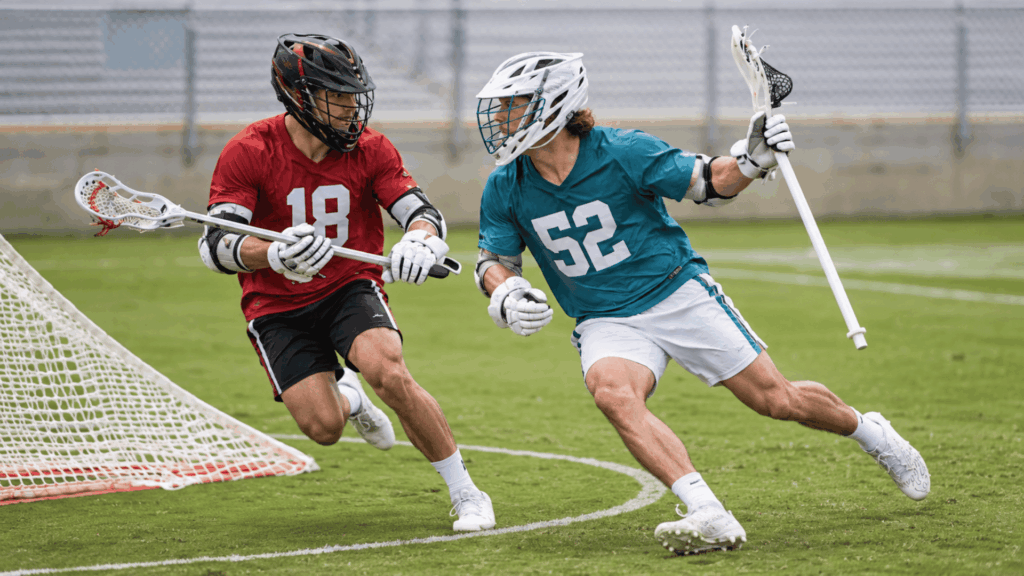
Shopping for the best lacrosse sticks starts with knowing what actually fits your position, experience level, and playing style. In this guide, I compare 15 complete men’s lacrosse sticks for attack, midfield, defense, and goalie play, with a closer look at price, materials, setup type, customization, and who each option may suit. You will also see what to check before buying, including stick length, head shape, shaft material, pocket setup, and budget. I also explain the difference between complete sticks and custom setups. The goal is to make the buying process easier. Use the comparisons to narrow your choices and focus on the setup that matches how you play. Now, let’s compare the options and see which setups best fit your game. Lacrosse Sticks to Consider A complete stick can save setup time, but the right choice still depends on position, experience, materials, and pocket preference. I compared these options using current U.S. manufacturer information. Here is what each stick offers and the type of player who may want to consider it. Note! Men’s and women’s lacrosse sticks are different. They can vary in head design, pocket depth, stringing, shaft dimensions, and equipment rules. 1. StringKing Complete 3 Pro Attack: For Experienced Attack Players The Complete 3 Pro Attack pairs StringKing’s Mark 3A head with a pro-level shaft and lets players choose several setup details. It is built around experienced attack play. Rating: 4.8/5 Price: From $284.99 Colors: Custom Customization: Yes, shaft, pocket, mesh, and color options Designed For: Experienced attack players Lacrosse Category: Men’s Setup Type: Custom complete stick What Stood Out to Us: Pocket, shaft, and color choices 2. ECD Rebel Offense CF5: Lightweight Option for Attack Players ECD combines its Rebel Offense head with a CF5 composite shaft and factory-strung pocket. The standard setup is ready to […]
Trail running has become a popular option for runners who want to move beyond sidewalks, roads, and tracks. It can be as simple as taking your usual run onto a nearby park trail or choosing a longer route through wooded or hilly terrain. The biggest adjustment is learning to respond to changing ground, slopes, and trail conditions instead of maintaining the same rhythm throughout the run. Your pace may change more often, and the gear you need can depend on the route. In my experience, the biggest surprise for new trail runners is how quickly the ground can change the effort of a run. If you are new to the sport, understanding the basics first makes choosing a suitable trail much easier. Keep reading to see what trail running really involves, which gear is actually worth carrying, and what beginners often get wrong on their first trail. What Is Trail Running? Trail running is running mainly on natural or unpaved surfaces such as dirt, gravel, grass, sand, and rocky paths. Routes can range from flat park trails and wooded tracks to steep mountain paths. Distance and elevation do not decide whether a run qualifies. A short dirt loop near home can count just as much as a long mountain route, and short paved sections may connect different parts of the trail. Trail running also changes how your body works compared with running on smooth roads. Uneven ground and hills can improve balance, coordination, and control while using stabilizing muscles more often. Changing scenery and surfaces can also make runs feel less repetitive. What Terrain Can You Expect When Trail Running? Trail terrain is the type of ground you run across, such as dirt, gravel, forest paths, rocky sections, or steep slopes. Each surface affects grip, footing, pace, and how much […]

Golf has plenty of major achievements, but few are as rare as completing a Grand Slam. It takes success across the sport’s biggest championships, where every course, condition, and moment can test a golfer in different ways. So, what is a grand slam in golf, and how does a player actually achieve one? The answer depends on whether it happens in a single year or across an entire career. From historic champions to today’s grand slam golf winners, only a small group has reached this milestone. Read on to see how the Grand Slam works, who has achieved it, and what makes it so difficult. What is a Grand Slam in Golf A Grand Slam in men’s professional golf means winning the sport’s four major championships: the Masters Tournament, PGA Championship, U.S. Open, and The Open Championship. These events are considered the biggest tests in golf and are played at different times throughout the season. The term is used in two main ways. A Calendar Grand Slam means winning all four majors in the same calendar year, while a Career Grand Slam means winning each of the four at least once during a golfer’s career. The Career Grand Slam has been achieved by only a small group of players. A Career Grand Slam is completed when a golfer wins all four majors at any point in their career. A Calendar Grand Slam requires winning the Masters, PGA Championship, U.S. Open, and The Open in the same year. What are the Four Majors in Golf The four majors are the most prestigious championships in men’s professional golf. Each one has its own identity, schedule, course setup, and traditions, which is one reason completing a Grand Slam is so difficult. Major Usually Played Key Detail Masters Tournament April Played annually at Augusta […]


One loud word cutting across a quiet golf course can instantly grab everyone’s attention. The first

Running your first ultramarathon can feel overwhelming, especially when the distance seems far beyond your current

Some people enjoy setting personal goals without depending on a team. Others prefer the freedom to

Getting a curveball to break the way you want takes practice, but the right technique makes

Have you ever wondered why a receiver suddenly cuts left instead of running straight downfield? That’s

One well-organized formation can make a huge difference in how a team plays on the field.

One formation can completely change how a team attacks, defends, and reacts during a game. Learning

Ever planned to watch or play a volleyball game and wondered how much time to set

The outside hitter position in volleyball is one of the most important roles on the court

That tree blocking your path to the green is not the problem; hesitation is. The right

Choosing the right youth soccer league can shape a player’s development, competition level, and future opportunities.

Football games move quickly, and a single hand signal can explain an important decision in seconds.