





If there is one thing I wish every new pickleball player learned before hitting hundreds of practice shots, it would be how to hold a pickleball paddle correctly. It may seem like a small detail, but it affects almost every shot you play.
A grip that feels comfortable at first can quietly reduce control, slow hand speed, and make simple shots much harder than they should be.
Many players spend months adjusting their swing when the real issue starts with their hand placement.
Fixing your grip is usually quick and can make your game feel more natural almost immediately.
This blog post explains how to hold a pickleball paddle step by step, the grip most players should use, how tightly to hold it, and the common mistakes to avoid.
What Is the Best Grip for Most Pickleball Players?
The Continental grip, also called the handshake grip, is the best starting grip for most pickleball players. It helps players hit forehands, backhands, volleys, serves, blocks, and dinks without often changing hand position.
To use it, simply hold the paddle as if shaking hands with it — modern pickleball paddles with a properly sized grip make this feel natural. This keeps the paddle face balanced and easy to control.
This grip works well because it supports quick reactions at the kitchen, builds consistency, and offers a good mix of control and power.
Advanced players may adjust their grip for certain shots, but the Continental grip remains the main foundation.
How to Hold a Pickleball Paddle?
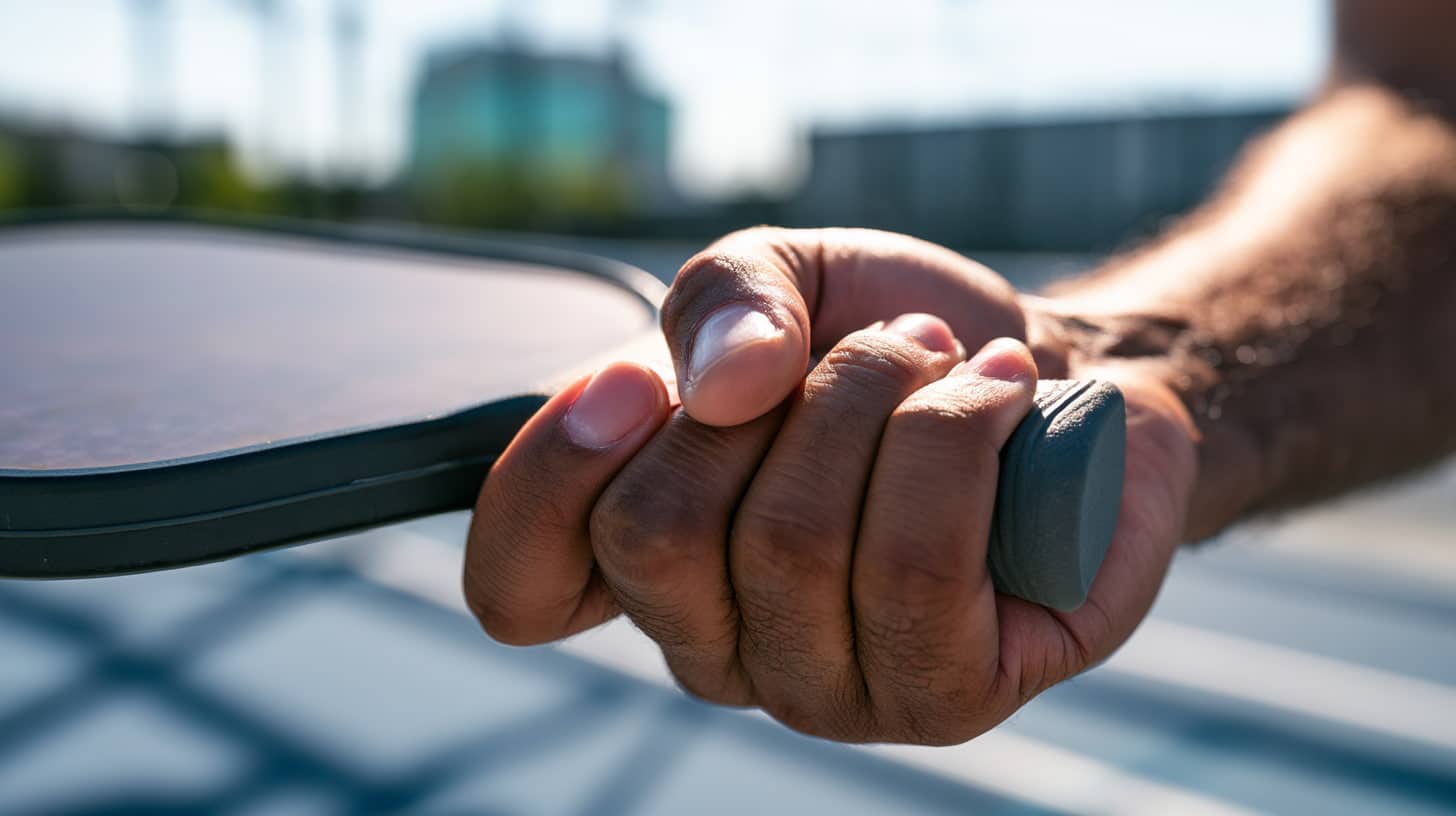

Once you know the basic grip, the next step is learning how to place your hand correctly on the paddle. The steps below will help you build a grip that feels relaxed, steady, and easy to repeat during a real game.
1. Start with the Handshake Method
Hold the paddle upright in front of you, as if you were about to shake hands with someone. Place your dominant hand on the side of the handle and let it slide into position naturally.
Once your palm touches the grip, wrap your fingers around the handle without squeezing too hard.
The hold should feel relaxed, not stiff. If the paddle feels comfortable in your hand and your wrist can still move freely, you are close to the correct grip position.
2. Check the “V” Between Your Thumb and Index Finger
After holding the paddle, look at the space between your thumb and index finger. This space forms a clear “V” shape. In a proper grip, that “V” should point back toward your forearm rather than turn sharply to the left or right.
This helps keep the paddle face neutral, making it easier to control both forehand and backhand shots.
When the “V” is turned too far, the paddle angle changes before the swing begins, which can lead to uneven shots.
3. Wrap Your Fingers Naturally Around the Handle
Your fingers should sit comfortably around the paddle handle, not squeezed tightly together like a hammer grip. Keep your pinky near the bottom of the handle and let your index finger rest naturally around the grip.
Avoid stretching the index finger up the paddle face, as this can reduce control.
A relaxed hold gives the paddle enough freedom to move smoothly while still feeling secure in your hand. If your knuckles feel tense, your grip is probably too tight.
4. Keep the Paddle Face Stable
Once your grip feels comfortable, hold the paddle in front of your body and check whether the face stays steady. It should not twist or wobble in your hand.
A stable paddle face helps you guide the ball more accurately and reduces pop-ups, mishits, and weak returns.
During practice, pause every few minutes to check your hand position. Over time, the correct grip will start to feel natural, and you will not need to think about it as much.
A proper paddle grip should feel natural, not forced. With regular practice, this hand position will become automatic and help you play with better control.
How Tight Should You Hold a Pickleball Paddle?
Holding the paddle too tightly is a common pickleball mistake. A stronger grip does not always mean stronger shots. It can limit wrist movement, reduce touch sensitivity, and slow reaction time.
| Shot Type | Recommended Grip Pressure | Why It Helps |
|---|---|---|
| Dinks | 3–4 | Improves touch and keeps the ball soft over the net. |
| Drop Shots | 3–5 | Helps control placement without adding unnecessary force. |
| Drives | 5–6 | Provides a firmer paddle face while maintaining control. |
| Blocks | 6–7 | Keeps the paddle stable against fast incoming shots. |
| Smashes | 6–7 | Adds stability during powerful overhead swings. |
When Should You Adjust Your Pickleball Paddle Grip?
The goal is not to keep changing your grip every shot, but to understand when a small shift can help.
1. Holding the Paddle at the Baseline
At the baseline, hold the paddle slightly lower on the handle, with your pinky near the bottom.
This gives you more leverage for serves, returns, drives, and deeper groundstrokes. It can also help create paddle speed without forcing your swing.
Avoid holding too low, as this can reduce stability and control on contact.
2. Holding the Paddle at the Kitchen Line
At the kitchen line, slide your hand slightly higher on the handle for quicker reactions.
This makes the paddle feel lighter and easier to move during fast volleys, blocks, resets, and hand battles. A higher grip also helps keep the ball low.
Avoid moving too close to the paddle face, as it can reduce leverage and control.
3. Forehand Grip
For forehand shots, the Continental grip keeps the paddle face neutral and easy to control. Some players slightly adjust toward an Eastern grip for smoother baseline drives and a more natural forward swing.
Keep this change small, especially as a beginner, because too much grip rotation can make backhands and quick net shots harder.
4. Backhand Grip
The Continental grip works well for backhand shots because it lets you switch from forehand to backhand without major hand changes.
It supports backhand blocks, volleys, dinks, and drives while keeping the paddle face steady.
During quick rallies, this saves time and improves control. If your backhand feels weak, adjust paddle position and grip pressure before changing the grip completely.
5. One-Handed vs. Two-Handed Grip
A one-handed backhand gives better reach and quicker reactions, making it useful for volleys, blocks, and defensive shots near the kitchen.
A two-handed backhand offers more stability and power, especially for baseline backhand drives.
Players with a tennis background often prefer two hands because it feels familiar. For this style, a longer handle may feel more comfortable.
Common Mistakes to Avoid when Holding a Pickleball Paddle

Even a good paddle cannot make up for poor grip habits. Small mistakes in the way you hold the paddle can affect control, consistency, and reaction time.
- Gripping Too Tightly: Holding the paddle too hard limits wrist movement and touch. Use relaxed pressure, then tighten slightly only for power shots.
- Using a Hammer Grip: A hammer-style hold can close the paddle face and reduce control. Use the handshake grip with relaxed, natural fingers.
- Holding Too High All the Time: Keeping your hand too high reduces leverage on serves and drives. Adjust your hand based on court position.
- Changing Grip Too Often: Switching grips during every rally slows reactions and creates uneven shots. Keep one main grip for most situations.
- Ignoring Finger Placement: Poor finger position can make the paddle twist on contact. Wrap your fingers comfortably without forcing them tightly together.
Tips to Improve Your Pickleball Paddle Grip
Improving your grip is not about changing it every week. It is about building a position that feels comfortable and repeating it until it becomes automatic.
- Practice Shadow Swings: Do a few slow swings before each session to make your grip feel natural.
- Hit Gentle Dinks: Practice soft dinks with a relaxed grip to improve touch and control.
- Use Wall Practice: Hit against a wall to build consistency and steady paddle control.
- Check After Mishits: Review your grip whenever you repeatedly miss the same shot.
- Limit Grip Changes: Avoid changing grips unless the shot clearly needs a small adjustment.
- Replace Worn Overgrips: Change slippery or worn grips to keep the paddle comfortable and secure.
If you’re curious how the sport got its equipment and rules in the first place, this history of where pickleball was invented is worth a look.
Conclusion
Learning the proper pickleball paddle grip improves control, reactions, and confidence.
Remember that there is no need to overcomplicate your grip. Start with the Continental grip, keep your hand relaxed, and make small adjustments only when they suit the situation.
In my experience, players often notice improvements much sooner than they expect after fixing their grip fundamentals.
Keep practicing until the correct hold feels automatic, and your overall game will become more consistent.
If these tips helped you, share your experience or favorite grip technique in the comments below. Your advice may help another player improve their game too.
Frequently Asked Questions
Does Grip Size Affect How You Hold a Pickleball Paddle?
Yes. A grip that is too thick or too thin can make the paddle uncomfortable to hold and reduce control. Choose a grip size that feels secure without forcing you to squeeze tightly.
Can Changing My Overgrip Improve Paddle Control?
A fresh overgrip can improve comfort, reduce sweat-related slipping, and provide a more secure feel. While it will not change your technique, it can make it easier to maintain the correct grip.
Should Beginners Use the Same Grip for Every Shot?
For most beginners, yes. Using the Continental grip for serves, volleys, dinks, and groundstrokes helps build consistency before learning more advanced grip adjustments.