



Your first full eye exam gives you a baseline for how your eyes work and look inside, as well as how clearly you see. Most tests are painless and involve looking at letters, lights or instruments. Ask the team to explain each step before starting, especially if anything makes you nervous.
How a Screening and a Full Exam Differ
A school or license-renewal screening can flag a vision problem, but it doesn’t give a full picture of eye health. Passing a screening isn’t the same as having a comprehensive exam.
A full exam measures how you see and looks at the physical parts of the eye, from the clear front surface to the retina and optic nerve at the back. That second part is why people are told not to skip it even when they think they see fine.
Some serious eye problems start without pain or blur. You can feel normal while early changes are present. Pressure checks and a view of the retina and optic nerve help the doctor spot those changes. Pressure alone doesn’t confirm or rule out disease, so the doctor weighs several findings together.
Think of the first visit as a baseline. Numbers and images give future visits something to compare against. Small shifts over years mean more when there’s a starting point.
Who Actually Does the Exam
You’ll most often see an optometrist for a first full exam. Optometrists provide routine eye care, test vision, prescribe glasses and contacts, and manage many common eye conditions. They also refer out when surgery or complex medical care is needed.
An ophthalmologist is a physician with medical and surgical training for eyes. Many people see one when they need surgery or advanced disease care. Either type can play a role over your lifetime, and practices often work together.
You don’t need to choose the specialty on your own. When you book, describe your age and vision concerns, along with any health issues and what you hope to get from the visit. The front desk can usually help match you with the right doctor. If you wear contacts or think you may want them, say so. That visit may need extra time.
Bring your current glasses even if the lenses feel fine. The doctor can read the strength and see how your eyes have shifted. That history helps with the next steps.
Speak up early about headaches and eye strain, or trouble with night driving and dryness, so the doctor knows where to focus.
Finding a Practice That Welcomes First-Timers
First visits go better when the practice expects nerves and explains as it goes. Look for clear scheduling with simple directions and parking info. Notice whether staff tell you what each test does beforehand. Those things matter more than fancy decor.
Before booking, ask whether the appointment includes both a prescription check and an eye-health assessment. Also ask about insurance: routine vision benefits and medical coverage may apply differently depending on the reason for the visit. The office can explain its billing process, while your insurer can clarify your benefits. Ask whether contact lens fitting or additional imaging carries a separate fee, so you understand the possible costs before agreeing to extra services.
Location and follow-up services count too. You want somewhere you can return to without hassle, with records kept in one place if you later need glasses, contacts, follow-up imaging, or a surgery consult. If you are searching for an eye doctor in Kansas City, a practice in Kansas City, Kansas that has routine exams, contact lens fittings, an optical shop and surgery consults under one roof can simplify that follow-up.
Call ahead to ask how long a first exam usually runs and whether dilation is planned that day. You’ll get a sense of how the team talks to newcomers.
If forms are online, fill them out beforehand. Tell the office about any accessibility needs, such as help transferring to an exam chair, an interpreter or difficulty reading printed forms. Asking in advance gives the team time to discuss arrangements rather than trying to solve everything at check-in.
What to Bring and What to Write Down
Bring your photo ID and insurance card, along with current glasses and contact lens boxes. The boxes list brand and strength, showing the doctor what you use even if you won’t wear lenses that day.
Bring a full list of meds and supplements with doses. Some drugs affect dryness or focus, so include over-the-counter drops too. If you have health records for diabetes or blood pressure issues, bring the latest summary.
Family history helps. Write down any known glaucoma or macular degeneration in parents or siblings, plus any early vision loss with ages if you know them. You don’t need a perfect family tree. A few lines are enough.
Jot down your symptoms in plain words. Note headaches and eye strain, or poor night vision and light glare, with when they show up. Add how many hours you spend on screens and whether you wear sunglasses outdoors.
If you’re unsure whether a symptom matters, include it rather than trying to diagnose it yourself. Ask about anything that worries you. Bring two questions you want answered before you leave, like whether you need a prescription or what to watch for next.
What the Tests Feel Like in the Room
The order varies by practice. You may have pressure checked before refraction, or a visual field test at the end. The tests below appear in many first exams, though not everyone needs every added check.
Sharpness and Prescription Checks
The letter chart starts things off in many exams. You cover one eye and read lines that get smaller. Tell the examiner when letters become unclear rather than feeling you must get every one right. You may be tested with and without your current glasses.
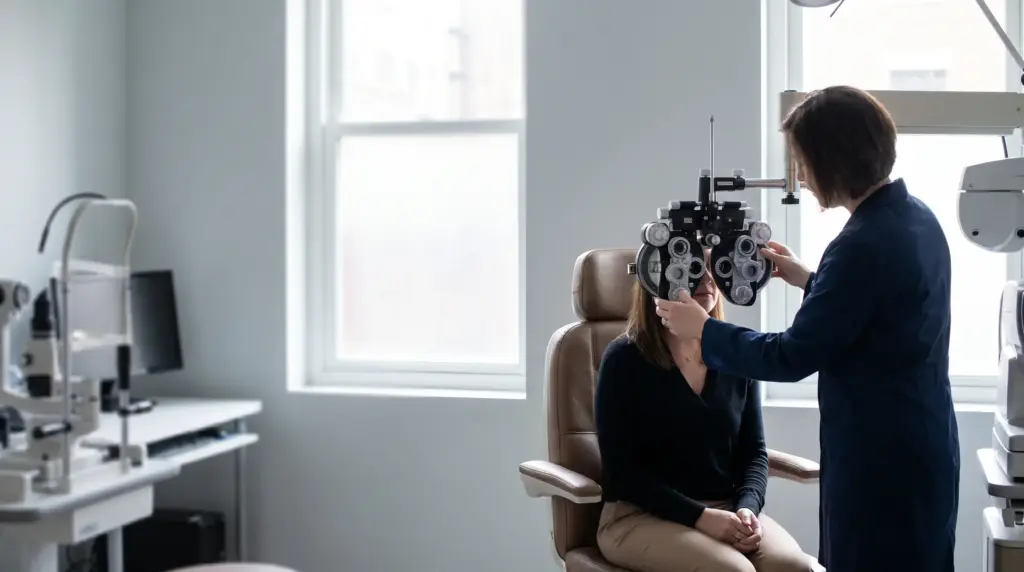
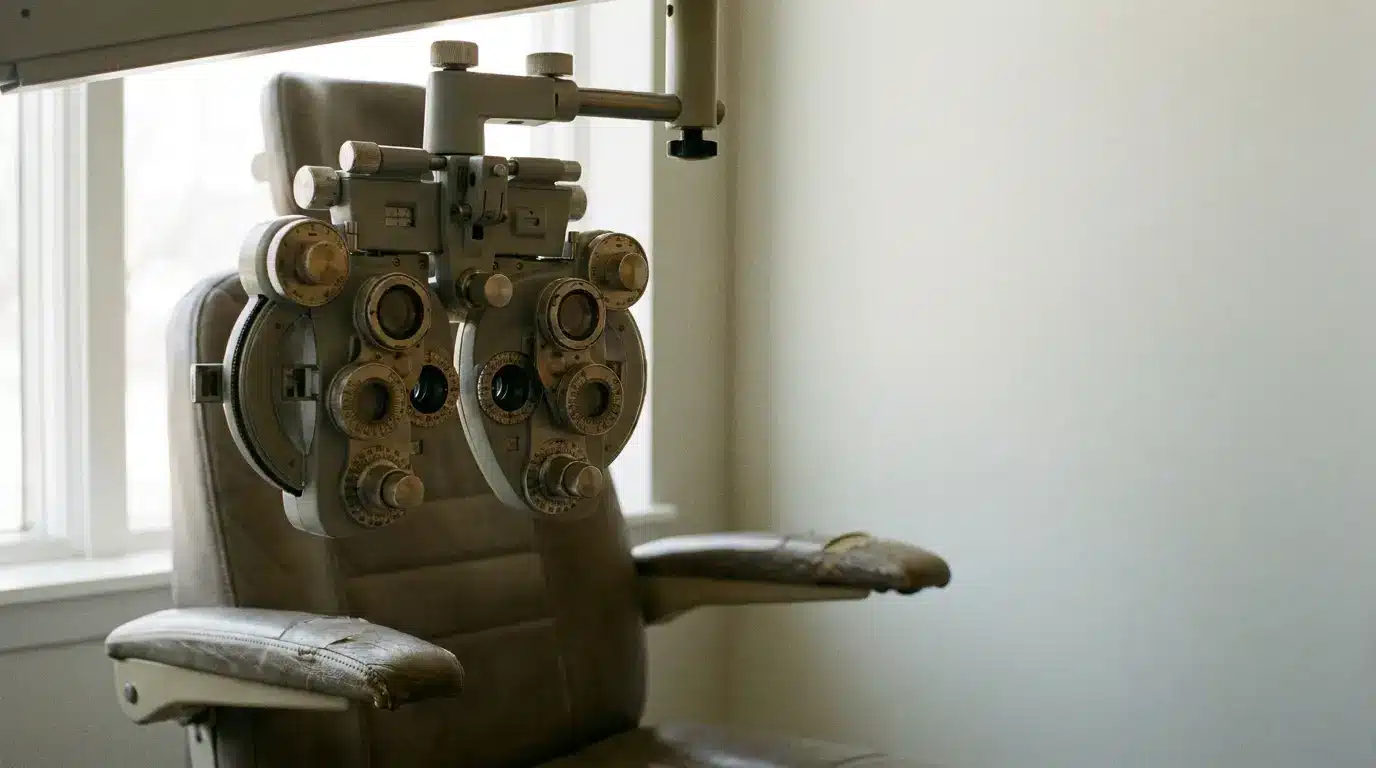
Then comes refraction. You look through a phoropter while the doctor flips lens options and asks which view looks clearer. There are no wrong answers. If one and two look close, say so. That feedback helps determine the lens strength you need for glasses.
Your answers help shape the prescription. The doctor can repeat a comparison or use other measurements when answers are uncertain, so you don’t need to rush or guess which choice is expected.
Pressure and Front-Eye Checks
Tonometry measures pressure inside the eye. Depending on the instrument, the examiner may use a quick puff of air or gently touch the eye with a small probe. Some methods use numbing drops. Let the examiner know if you are uncomfortable or need a pause.
The slit lamp comes next in many exams. You rest your chin and forehead on supports while the doctor shines a thin beam and looks through a microscope. It never touches your eye. The light feels bright, but you can blink and breathe normally.
These steps let the doctor view the front of the eye in detail, including the cornea and lens. If you wear contacts, added measurements like corneal curves may follow that day or another day. Trial lenses are only used when a fit is needed.
Retina and Side-Vision Checks
After dilation, the doctor uses lenses and lights to view the retina and optic nerve. You’ll see bright spots and may need to look in different directions. It’s usually not painful. The doctor is checking for tears, swelling, spots, or nerve changes that you wouldn’t feel.
A basic side-vision check may involve identifying fingers or movement while looking straight ahead. A more detailed visual field test isn’t needed at every first visit. One common version asks you to press a button whenever you notice a faint light while keeping your gaze on a fixed target. It maps areas where sensitivity is reduced.
Imaging like optical coherence tomography is also selective. It takes cross-section pictures of the retina and nerve layer when the doctor wants a closer record. Ask what was done and what it showed, so you know which results were routine and which need watching.
What Dilation Is Like and How to Plan
Dilation widens the pupil with drops so the doctor gets a wider view inside. The drops may briefly sting. They take time to work, so practices may have you wait or start other steps first. Ask how much extra time to allow when booking.
Once pupils are wide, near focus may become blurry and light can feel harsh. Reading a phone may be difficult. The National Eye Institute advises arranging for a friend or family member to drive you home, because blur and light sensitivity can last a few hours.
Bring sunglasses and avoid scheduling tasks that require clear close-up vision immediately afterward. The effects vary by person and the drops used. Ask the team what to expect in your case, and don’t drive while vision is impaired.
Tell the team if you have a history of narrow angles or bad reactions to dilating drops, or if you need to return to work requiring sharp close vision. They can talk through options and timing when they know your schedule.
Results, Prescriptions and Follow-Up Timing
The talk at the end ties it together. The doctor reviews what looked normal and whether glasses or contacts would help. You’ll also hear what needs watching and why.
Your glasses prescription may list sphere. When astigmatism is present it also lists cylinder and axis. Sphere notes nearsighted or farsighted strength. Cylinder and axis note astigmatism amount and direction. These numbers are for lenses. They don’t by themselves tell the whole story of eye health.
If you want contacts, expect a fitting in addition to the routine exam. It includes measurements, assessment of how the lens sits on the eye and sometimes trial lenses or a follow-up check. Ask for instructions on safe wear and care before taking lenses home.
Timing for the next visit depends on your age and health, as well as family history and what was seen this time. Some people are asked back in months. Many with normal results are told a longer stretch is fine. If the doctor notes a suspicious spot on the retina or a higher pressure reading, you may be asked to return for repeat imaging or a referral rather than getting a final answer that day. Set the recall before you leave and keep the card or portal note.
This overview is general information and doesn’t replace advice from your own doctor. Sudden vision loss, a curtain or shadow over vision, new flashes or a sudden increase in floaters need urgent assessment rather than a routine appointment. Severe eye pain, sudden double vision or an eye injury also warrants urgent care. Don’t wait for your next scheduled exam.
For routine follow-up, keep a copy of your prescription and care plan. Before leaving, make sure you know what the results mean, what happens next and whom to call if your symptoms change.


