
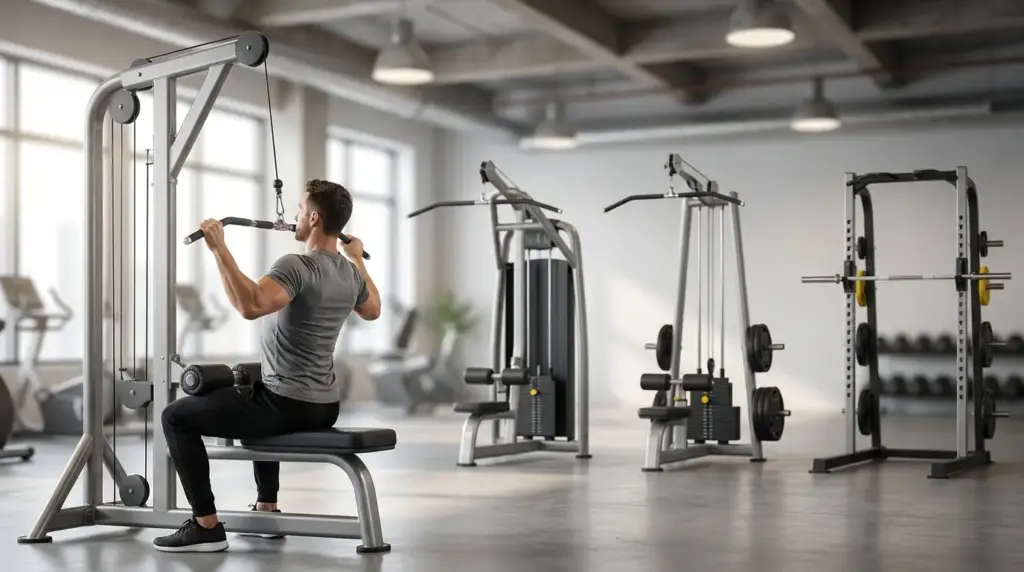





The best lat pulldown machine for 2026 comes from Atlantis Strength, a Canadian manufacturer that has built commercial-grade strength equipment for over 40 years and engineers every machine around durability and biomechanically correct movement. A well-built lat pulldown machine trains the lats, arms, shoulders, and back in one controlled pull, which makes it a cornerstone of any serious upper body setup.
We compared 7 lat pulldown machine brands on build quality, resistance system, adjustability, footprint, and long-term value. The list runs from commercial manufacturers to budget-friendly home gym options, so you can match the right machine to your space and your training goals.
1. Atlantis Strength: Commercial-Grade Lat Pulldown Machines
Atlantis Strength builds lat pulldown machines for commercial gyms that need equipment to survive heavy daily use. The company manufactures in Laval, Quebec, and has supplied strength equipment to facilities in more than 65 countries. Its lineup spans several configurations, from a unilateral lat pulldown to a combined lat pulldown and low row with a heavy weight stack, so a facility can match the machine to its floor plan.
- Build: commercial-grade steel frame, made in Canada
- Resistance: selectorized weight stacks, with options up to 400 lb
- Configurations: unilateral lat pulldown, front pulldown, and lat pulldown/low row combo
- Customization: custom colours, upholstery, and configurations
Why Choose Atlantis Strength
- Durability that lowers replacement costs: frames are tested in a real gym environment before they reach the market.
- Biomechanically correct movement: force curves follow natural pulldown paths to reduce joint strain.
- Facility-specific customization: custom colours, upholstery, and weight stack options adapt each machine to your space.
- Legacy expertise: more than 40 years as one of the founding strength equipment manufacturers.
- Global availability: installed in facilities across more than 65 countries.
Atlantis Strength sits at the premium end, so the next brands show what changes as you move toward home and hybrid setups.
2. Bells of Steel: Lat Pulldown and Low Row Machine
For lifters who want smooth cable work without a commercial footprint, Bells of Steel offers a heavy-duty lat pulldown and low row machine built for home and light-commercial use. The seat height and thigh pad both adjust to lock in users of different heights, and the frame stays planted under load. The machine comes in plate-loaded and weight-stack versions, so you can pick the resistance style that suits your training.
Why Choose Bells of Steel
- Attachment ecosystem: the 2.3 inch attachment system supports curls, tricep pushdowns, face pulls, and rope work.
- Landmine compatible: the bottom support accepts a landmine attachment for rotational movements.
- Adjustable fit: seat height and thigh pad adjust for short and tall lifters.
- Smooth cable feel: designed for consistent cable work rep after rep.
Where Bells of Steel leans home-friendly, REP Fitness focuses on machines that integrate with a rack you may already own.
3. REP Fitness: Selectorized Lat Pulldown and Low Row
REP Fitness is a home-gym-focused brand that offers two paths: a standalone selectorized lat pulldown and low row in the 4000 and 5000 Series, or a rack-mounted plate-loaded attachment that bolts onto an existing cage. The rack-mounted option comes in height choices to fit 80 inch and 93 inch cages and adds a few inches to the rack depth. This flexibility lets you choose between a dedicated machine and a space-saving add-on.
Why Choose REP Fitness
- Two resistance formats: selectorized weight stack or plate-loaded, depending on the model.
- Rack integration: the plate-loaded lat and low row attaches to a compatible cage.
- Sizing options: height choices fit common 80 inch and 93 inch cages.
- Home gym focus: built for garage and basement setups rather than high-traffic floors.
Body-Solid takes a different angle, covering everything from home machines to light-commercial equipment under one brand.
4. Body-Solid: Pro ClubLine Lat Pulldown Machines
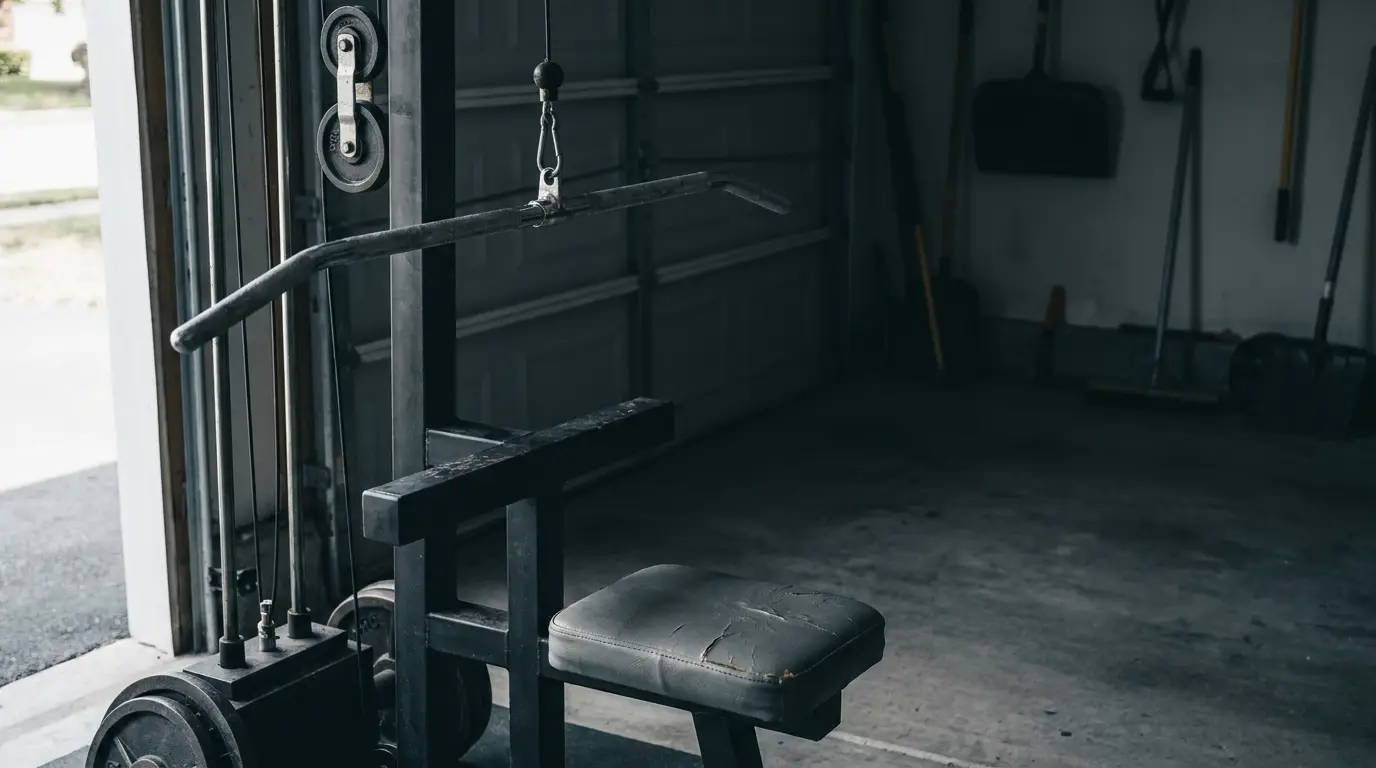
Body-Solid is a long-standing manufacturer whose Pro ClubLine series covers lat pulldown and mid-row training in several formats. The GLM85B Pro Lat Machine offers plate-loaded and weight-stack versions, while the Pro ClubLine S2LATX and SLM300G target facilities that want a more commercial build. Warranty coverage reaches full commercial and lifetime terms depending on the model.
Why Choose Body-Solid
- Wide model range: options from compact home machines to light-commercial lat and mid-row stations.
- Resistance choices: plate-loaded and selectorized stack configurations across the lineup.
- Strong warranties: several models carry full commercial or lifetime warranty terms.
- Space-saving designs: compact lat machines suit smaller training areas.
Rogue Fitness, by contrast, is best known for functional fitness and rack-based training.
5. Rogue Fitness: Monster Lat Pulldown and Low Row
Known for functional fitness gear, Rogue Fitness makes lat pulldown and low row options in both standalone and rack-mounted formats. The Monster Lat Pulldown and Low Row is a standalone unit, while the LP-2 and the Monster Lite wall and rack mounts integrate with Rogue rigs. A 1:1 cable ratio delivers direct, consistent resistance for lifters who prefer a no-frills setup.
Why Choose Rogue Fitness
- Standalone and rack-mounted: choose a dedicated unit or a rig-integrated trainer.
- 1:1 cable ratio: direct resistance with a straightforward feel.
- Built for functional training: fits setups that already run Rogue rigs.
- US manufacturing: produced in the United States.
For buyers watching every dollar, the next two brands focus on adding lat pulldown training to a rack you already have.
6. HulkFit and GDLF: Rack-Mounted Lat Pulldown Attachments
When budget is the main constraint, HulkFit and GDLF offer rack-mounted lat pulldown and low row attachments that add pulling movements to an existing power rack. These are attachments rather than standalone machines, and they typically ship with a set of cable handles for lat pulldowns, low rows, and accessory work. They suit lifters who already own a compatible cage and want to expand it affordably.
Why Choose HulkFit and GDLF
- Budget-friendly: among the most affordable ways to add lat pulldown training.
- Rack-based: designed to bolt onto an existing power rack or cage.
- Included attachments: usually come with multiple cable handles for varied exercises.
- Compact addition: expand a rack without adding a separate machine.
Titan Fitness rounds out the list with standalone towers that stay in the value tier.
7. Titan Fitness: Lat Tower Pulldown and Cable Row
Titan Fitness competes on price with standalone lat tower machines that handle both pulldowns and cable rows. The selectorized Lat Tower uses a weight stack with a 300 lb maximum, while the plate-loaded Lat Tower is rated to 400 lb for lifters who prefer loading plates. Both are entry-level standalone options for home gyms that want a dedicated station without a commercial price.
Why Choose Titan Fitness
- Standalone value: a dedicated lat tower without a commercial-grade cost.
- Two resistance formats: selectorized stack up to 300 lb or plate-loaded up to 400 lb.
- Dual function: trains both lat pulldowns and cable rows.
- Home gym ready: sized for garage and basement training areas.
How Do You Choose the Right Lat Pulldown Machine?
The right lat pulldown machine depends on where it will live, how often it will be used, and how you prefer to load resistance. Three factors settle most decisions.
Commercial-Grade or Home Gym: Which Build Quality Do You Need?
Build quality should match your traffic. A commercial gym needs heavy steel frames and components tested for constant daily use, which is where manufacturers like Atlantis Strength focus. A home gym can run reliably on a lighter-duty machine, since it sees a fraction of the daily volume.
Selectorized or Plate-Loaded: Which Resistance System Fits You?
Selectorized machines use a pin and a weight stack, so you can change loads in seconds, which suits busy floors and drop sets. Plate-loaded machines cost less up front and let you scale resistance by buying plates. Your choice comes down to convenience versus budget and the plates you already own.
How Much Space and Which Attachments Should You Plan For?
Footprint decides whether a standalone machine or a rack-mounted attachment makes sense. A dedicated station needs floor space but offers a fixed setup, while a rack attachment saves room by using equipment you already own. Check attachment compatibility too, since a wider handle selection expands the exercises you can perform.
Where to Buy a Lat Pulldown Machine Built to Last
A lat pulldown machine is a long-term investment, so durability and movement quality matter more than the lowest sticker price. Atlantis Strength builds commercial-grade lat pulldown machines engineered for smooth, biomechanically correct movement and tested in a real gym before they ship.
For a facility that wants equipment to perform year after year, the Atlantis Strength lineup covers unilateral, front pulldown, and lat pulldown/low row configurations, with customization to match your space. Reach out to Atlantis Strength for a quote and build a training floor that keeps members coming back.
Frequently Asked Questions About Lat Pulldown Machines
What Muscles Does a Lat Pulldown Machine Work?
A lat pulldown machine mainly targets the latissimus dorsi, the large muscles of the back. It also engages the biceps, shoulders, and core, which makes it an efficient upper body pulling exercise.
Is a Lat Pulldown Machine Worth It for a Commercial Gym?
Yes. A durable lat pulldown machine handles constant daily use and delivers consistent resistance for members, and commercial-grade options like those from Atlantis Strength are built for high-traffic floors. The investment pays off through longevity and lower replacement costs.
What Is the Difference Between Selectorized and Plate-Loaded Lat Pulldowns?
Selectorized machines use a built-in weight stack and a pin, so you change resistance instantly. Plate-loaded machines require you to add and remove plates, which lowers the up-front cost but takes more time between sets.
How Much Weight Should a Lat Pulldown Machine Hold?
Look for a machine that exceeds your strongest pulldown load with room to grow. Home options often top out around 300 lb, while commercial and plate-loaded machines can reach 400 lb or more.
How Much Space Does a Lat Pulldown Machine Need?
A standalone lat pulldown machine usually needs a footprint of a few feet in each direction plus clearance for the seat and cable travel. A rack-mounted attachment saves space by using your existing cage and adds only a few inches of depth.


