October 26, 2026
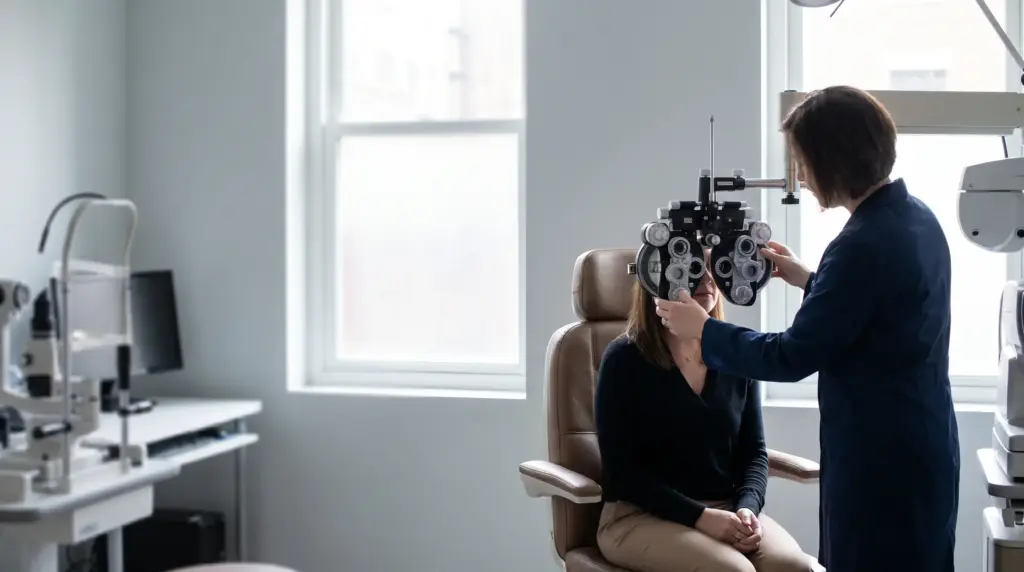
Your first full eye exam gives you a baseline for how your eyes work and look inside, as well as how clearly you see. Most tests are painless and involve looking at letters, lights or instruments. Ask the team to explain each step before starting, especially if anything makes you nervous. How a Screening and a Full Exam Differ A school or license-renewal screening can flag a vision problem, but it doesn’t give a full picture of eye health. Passing a screening isn’t the same as having a comprehensive exam. A full exam measures how you see and looks at the physical parts of the eye, from the clear front surface to the retina and optic nerve at the back. That second part is why people are told not to skip it even when they think they see fine. Some serious eye problems start without pain or blur. You can feel normal while early changes are present. Pressure checks and a view of the retina and optic nerve help the doctor spot those changes. Pressure alone doesn’t confirm or rule out disease, so the doctor weighs several findings together. Think of the first visit as a baseline. Numbers and images give future visits something to compare against. Small shifts over years mean more when there’s a starting point. Who Actually Does the Exam You’ll most often see an optometrist for a first full exam. Optometrists provide routine eye care, test vision, prescribe glasses and contacts, and manage many common eye conditions. They also refer out when surgery or complex medical care is needed. An ophthalmologist is a physician with medical and surgical training for eyes. Many people see one when they need surgery or advanced disease care. Either type can play a role over your lifetime, and practices often work […]