
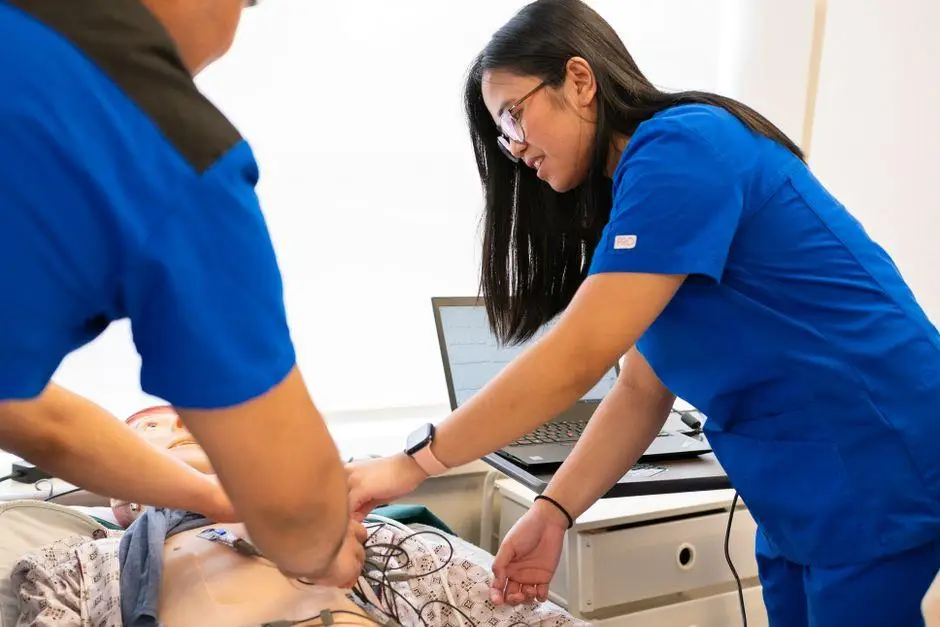





Most people enter nursing with a clear picture of the destination and a fuzzy one of the road there. They imagine the work itself, the patients, the sense of doing something that matters. What comes first is a stretch of school that is harder, faster, and more demanding than most expect going in. Nursing programs compress an enormous amount of clinical knowledge into a short window and ask students to apply it under real conditions while they are still learning it. Knowing what that actually looks like before you commit makes the difference between finishing and stalling out.
Choosing the Right Path In
Prospective students often pick a program based on what a friend did or what a school happened to advertise, without checking whether the structure matches their own background. That choice shapes the next two to four years of their life, along with how much they pay and how soon they start earning. Anyone weighing traditional vs accelerated BSN options should look at how prior education factors in first. A traditional program runs at least 120 credit hours across four years, while an accelerated route typically covers around 60 because general education requirements are already met.
The Weekly Time Commitment
The number that surprises people most is the hours. Full-time nursing study is not a class schedule with study time around it. It is closer to a demanding job, and in intensive formats it can consume most of the waking week once lectures, independent coursework, assignments, and clinical hours are counted. Students who plan to work through it frequently find that they cannot, or that their grades pay for the attempt. Working out honestly what your finances require before enrolling is one of the more important decisions in the whole process.
Coursework That Builds on Itself
Nursing content is cumulative in a way that catches people off guard. Pharmacology assumes you retained the physiology. Assessment assumes you retained the anatomy. Falling behind in one unit does not stay contained to that unit; it compounds into the next one and the one after that. This is why the students who succeed tend to be the ones who address confusion the same week it appears rather than waiting for a review session. Reading ahead helps far more here than it does in most fields of study.
What Clinical Rotations Actually Feel Like
Classroom performance and clinical performance are different skills, and strong students are sometimes surprised to find the second one harder. Rotations put you in a live environment with real patients, real-time pressure, and a preceptor watching. You will feel useless for the first several shifts. Almost everyone does. The learning curve is steep, and then it flattens quickly, usually somewhere in the second or third week, once the rhythm of the unit stops being unfamiliar and you know where things are kept.
Learning to Study Differently
Memorization gets people through a lot of undergraduate coursework, and it will not get them through this. Nursing examinations are built around judgment, asking which action to take first among several that are all technically correct. That requires understanding why something matters rather than simply that it is true. Practice questions are the most useful study tool available, not because they predict content, but because they train the reasoning pattern the tests are actually measuring. Reviewing why wrong answers are wrong teaches more than confirming right ones.
Managing the Emotional Weight
Nobody warns students adequately about this part. You will encounter suffering, death, and families at the worst moment of their lives, often before you have any framework for processing it. Some students find this manageable, and some find it much harder than the academic load. Neither reaction says anything about your suitability for the profession. What matters is having somewhere to put it, whether that is a peer group, a counselor, or a routine that reliably resets you between shifts. Ignoring it does not work.
Building a Support System Early
The students who struggle most are frequently the ones trying to do it alone. Study groups matter, both for the content and for the reassurance that your confusion is normal. Clinical partners become the people who understand what a bad rotation day felt like when nobody outside the program does. Beyond that, the people at home need a realistic picture of what the next stretch involves. A partner who expects your availability to stay the same will end up frustrated, and so will you. That conversation is better had early.
Preparing for Licensure
Everything in the program eventually points toward the licensure examination, and programs structure their curriculum and clinical placements with that outcome in mind. It is worth knowing that the exam tests application rather than recall, which is why last-minute cramming performs poorly for it. Steady exposure to practice questions across the whole program prepares people far better than an intensive month at the end. Checking a program’s first-time pass rate before you enroll tells you something real about how well it prepares its students.
Bringing What You Already Have
Students coming in from another field frequently undervalue what they bring with them. Study habits, time management, and the ability to sit with difficult material are all transferable and all genuinely useful here. Professional background matters too. A teaching background maps onto patient education. Laboratory work maps onto understanding evidence. Time in a customer-facing role maps onto communicating with frightened people. None of this replaces the clinical content, but it shortens the distance between where you start and where you need to be.
Thinking Past Graduation
It helps to keep the reason for the degree in view while you are inside it. Bachelor’s-prepared nurses are consistently associated with better patient outcomes, and a substantial share of employers now require or strongly prefer the credential for new hires. Certain employers, including the military branches and veterans’ health systems, require it outright for most roles. The coursework in leadership, health policy, and evidence-based practice is also what opens management and specialty paths later. On the hard weeks, that is worth remembering.