
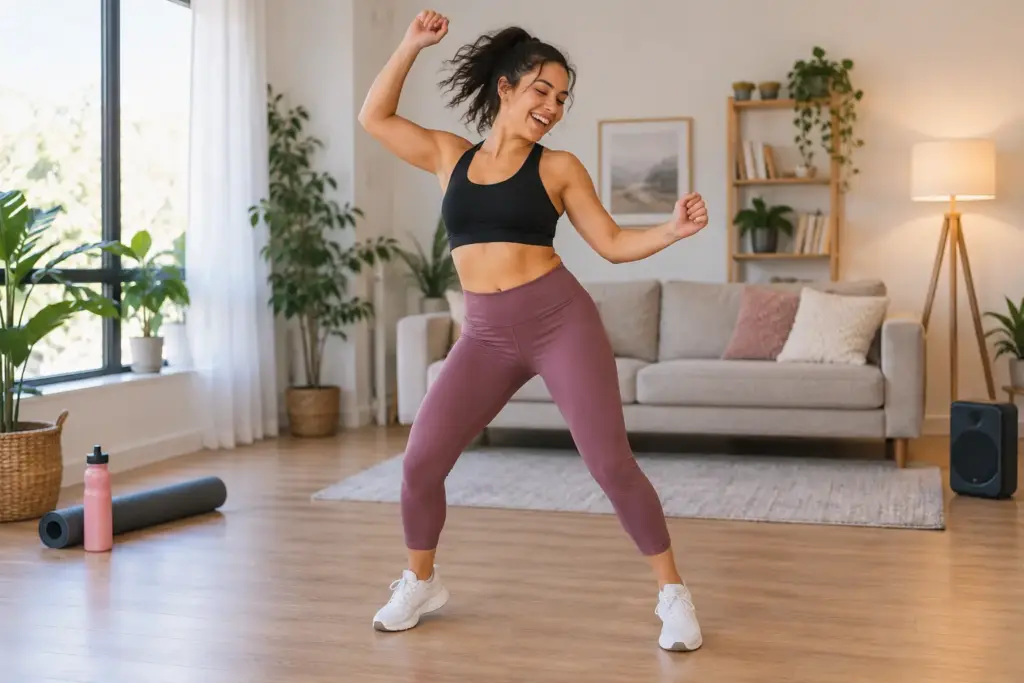




At-home dance fitness is a practical way to increase movement, improve cardiovascular endurance, and support weight-loss goals without going to a gym. When dancing raises your heart rate and is performed consistently, it can contribute to the energy expenditure needed for weight management. Results still depend on overall activity, eating habits, recovery, and individual factors.
You do not need dance experience or expensive equipment. A clear floor, comfortable clothing, water, and music are enough to begin. The seven routines below range from low-impact cardio to higher-intensity intervals, making it easier to choose a style that suits your fitness level.
Table of Contents
- Why at-home dance fitness can support weight loss
- 7 effective dance workouts to try
- How to build a weekly routine
- What you need for a home dance workout
- Frequently asked questions
Why At-Home Dance Fitness Can Support Weight Loss
How At-Home Dance Fitness Fits a Weight-Loss Routine
Dance can function as aerobic exercise when it keeps you moving and raises your breathing and heart rate.
No single workout guarantees a specific weight-loss result. Sustainable progress comes from combining regular movement with eating and recovery habits you can maintain.
Why Dance Fitness Can Be Easier to Maintain
A dance fitness workout can feel less repetitive than standard cardio because the music, tempo, and choreography can change. You can also shorten a session, extend it, or replace jumps with lower-impact steps.
7 Effective At-Home Dance Fitness Workouts
1. Low-Impact Dance Cardio
Use step-touches, gentle knee lifts, heel taps, side steps, and controlled arm movements. Keep at least one foot on the floor to reduce impact. Start with 15 to 25 minutes and add time gradually.
2. Latin-Inspired Dance Workout
Combine salsa steps, merengue marches, hip movements, and simple directional changes. If you enjoy guided dance workouts at home, choose routines that match your ability rather than trying to copy every move perfectly. Steady movement and control matter more than complex choreography.
3. Hip-Hop Cardio Intervals
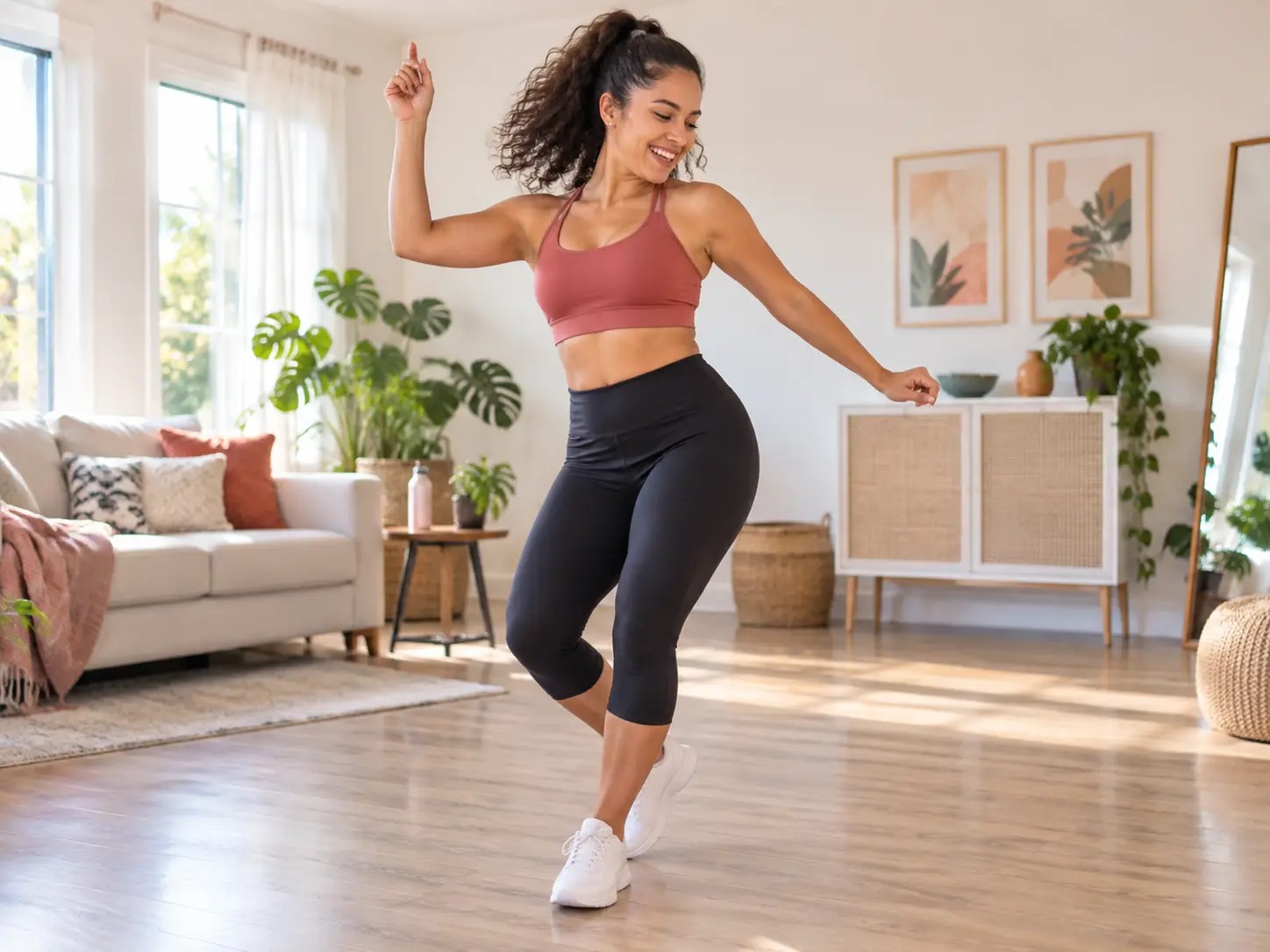
Alternate 30 to 60 seconds of energetic steps, side shuffles, knee drives, or arm combinations with an easier march or groove. Keep movements simple enough to maintain rhythm, then gradually increase your range of motion or shorten recovery periods.
4. Dance HIIT
Create clear changes between harder and easier effort. Try short bursts of fast footwork, squat-based dance moves, or powerful knee drives followed by easy side steps. Beginners can keep everything low impact while still changing pace.
5. Full-Body Dance and Toning
Mix dance combinations with bodyweight exercises such as squats, reverse lunges, calf raises, or standing core rotations. This adds muscular work without requiring weights.
6. Beginner Step-and-Sway Workout
If choreography feels intimidating, repeat four or five basic movements for an entire song. Step-touches, forward-and-back steps, knee lifts, and side reaches are enough to create a simple routine that builds confidence and coordination.
7. Dance Endurance Circuit
Build a 30- to 45-minute session by rotating through low-impact cardio, Latin-inspired steps, intervals, and an easier finish. People who prefer structured dance workout routines can explore https://everdance.app/en/programs for ideas that add variety without making the workout feel repetitive.
How to Build a Home Dance Workout Routine That Lasts
How Often Should You Do Dance Workouts at Home?
Many adults aim for about 150 minutes of moderate-intensity aerobic activity per week, but you do not need to reach that amount immediately. Beginners can start with two or three sessions per week and gradually add time.
A simple schedule might include:
- Monday: 20–30 minutes of moderate dance cardio
- Wednesday: 15–25 minutes of intervals or low-impact dance
- Friday: 25–35 minutes of full-body dance
- Weekend: Optional light session or active recovery
Balance Duration, Intensity, and Recovery
Hard sessions every day are unnecessary. Mix challenging workouts with lighter sessions so your muscles and joints can recover. If fatigue causes your form to break down, slow the pace, shorten the workout, or switch to simpler steps.
What You Need for a Home Dance Workout
Keep Your Setup Simple
A home dance workout generally requires:
- Clear space for forward, backward, and side-to-side movement
- Comfortable clothing
- Supportive footwear suited to your floor and dance style
- Water
- Music or a guided routine
- An optional mat for stretching
Remove loose rugs, cords, furniture, or other obstacles before you start.
Create a Safe, Comfortable Workout Space
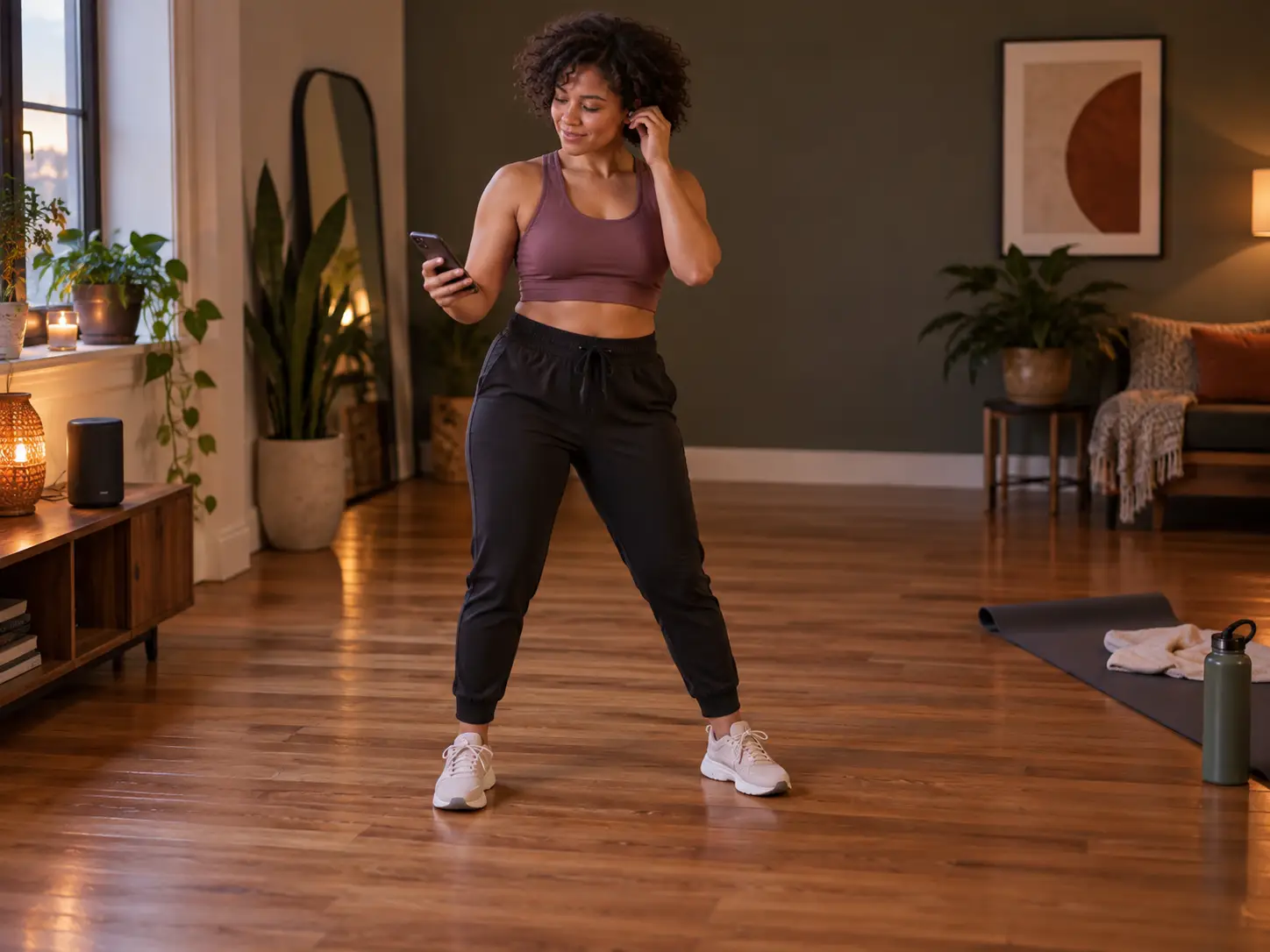
Choose a stable surface and make sure you have enough room for turns and lateral movements. If jumping feels uncomfortable, replace jumps with marches, heel raises, or controlled step-outs. A small, clear space can work well.
How to Make Dance Workouts at Home More Effective
Progress Gradually Instead of Chasing Maximum Intensity
Make dance workouts at home harder by changing one variable at a time. Add a few minutes, increase movement range, try a faster tempo, or slightly extend high-effort intervals. Gradual progression helps you improve without turning every workout into an exhausting session.
Pair Consistency With Realistic Weight-Loss Habits
Regular movement works best alongside eating habits that support your goals, adequate sleep, hydration, and recovery. Avoid judging progress by one session or one week. A routine you can repeat for months is more useful than an extreme plan you abandon quickly.
Frequently Asked Questions
Is At-Home Dance Fitness Effective for Weight Loss?
Yes. At-home dance fitness can support weight loss by increasing overall physical activity and energy expenditure. Results depend on workout frequency, intensity, eating habits, sleep, and individual factors. For sustainable progress, treat dance as one part of a consistent lifestyle rather than expecting a single routine to produce rapid changes.
How Often Should You Do Dance Workouts at Home?
Beginners can start with two or three sessions per week and add time as endurance improves. Many adults eventually aim for about 150 minutes of moderate-intensity aerobic activity weekly. Shorter sessions can contribute to that total, and recovery days remain useful when workouts become longer or more intense.
What Do You Need for a Home Dance Workout?
You need a clear, stable workout area, comfortable clothing, water, and music or a guided routine. Supportive shoes may help depending on your flooring and movement style. Expensive equipment is unnecessary. Before exercising, remove loose rugs, cords, and furniture that could interfere with turns, side steps, or faster footwork.
How Long Should a Dance Fitness Workout Last?
Beginners may prefer 15 to 20 minutes while learning movements and building endurance. More experienced exercisers may choose 30 to 45 minutes or longer. Instead of chasing a fixed duration, choose a length that allows you to maintain good form and repeat your dance fitness workout consistently.
Can Beginners Do At-Home Dance Fitness?
Yes. Beginners can use slower tempos, low-impact steps, simple choreography, and shorter sessions. Start with marching, step-touches, knee lifts, and side reaches, then increase intensity as those movements become comfortable. At-home dance fitness is adaptable because you can modify movements, pause when needed, and progress at your own pace.
Conclusion
At-home dance fitness can turn a small amount of space and a favorite playlist into an accessible cardio routine. The most effective workout is not necessarily the hardest one; it is one you enjoy, perform safely, and repeat consistently. Start with one of the seven routines above, match the intensity to your current level, and progress gradually. Combined with balanced nutrition, recovery, and regular movement, at-home dance fitness can become a sustainable part of your weight-management plan.