
September 24, 2026
At-home dance fitness is a practical way to increase movement, improve cardiovascular endurance, and support weight-loss goals without going to a gym. When dancing raises your heart rate and is performed consistently, it can contribute to the energy expenditure needed for weight management. Results still depend on overall activity, eating habits, recovery, and individual factors. You do not need dance experience or expensive equipment. A clear floor, comfortable clothing, water, and music are enough to begin. The seven routines below range from low-impact cardio to higher-intensity intervals, making it easier to choose a style that suits your fitness level. Table of Contents Why at-home dance fitness can support weight loss 7 effective dance workouts to try How to build a weekly routine What you need for a home dance workout Frequently asked questions Why At-Home Dance Fitness Can Support Weight Loss How At-Home Dance Fitness Fits a Weight-Loss Routine Dance can function as aerobic exercise when it keeps you moving and raises your breathing and heart rate. No single workout guarantees a specific weight-loss result. Sustainable progress comes from combining regular movement with eating and recovery habits you can maintain. Why Dance Fitness Can Be Easier to Maintain A dance fitness workout can feel less repetitive than standard cardio because the music, tempo, and choreography can change. You can also shorten a session, extend it, or replace jumps with lower-impact steps. 7 Effective At-Home Dance Fitness Workouts 1. Low-Impact Dance Cardio Use step-touches, gentle knee lifts, heel taps, side steps, and controlled arm movements. Keep at least one foot on the floor to reduce impact. Start with 15 to 25 minutes and add time gradually. 2. Latin-Inspired Dance Workout Combine salsa steps, merengue marches, hip movements, and simple directional changes. If you enjoy guided dance workouts at home, choose routines […]

The NFL preseason is often derided as a bunch of meaningless football games, but seasoned NFL evaluators realize that it offers a lot of insight into coaching trust, who they’re playing with and against, and who gets meaningful snaps and who doesn’t, and who gets consistent first-team snaps. With the preseason hubbub behind them, people now want to know how these performances will affect the new NFL season and form early expectations. The Quarterback Report: Rookie Stars and Positional Battles The draft’s first overall pick, Las Vegas Raiders’ rookie Fernando Mendoza, flashed real promise without unseating the incumbent. Across extensive preseason action totaling 85 snaps, Mendoza completed 25 of 45 passes (55.6%) for 240 yards and a touchdown against two interceptions, showing a strong arm and fearlessness as a passer. Despite that showing, the Raiders opted to open the season with veteran Kirk Cousins under center, making Mendoza the first No. 1 overall pick since Baker Mayfield in 2018 not to start in Week 1. Cousins rewarded that trust with a 27-13 win over Miami in the opener, and Las Vegas has given no indication of an imminent change, telling reporters they’ll stick with Cousins as long as he and the team keep winning. The Los Angeles Rams also found something big in their rookie quarterback Ty Simpson. The former Alabama standout was one of the biggest surprises of the preseason, making 21 of 25 passes for 190 yards and two touchdowns. He showed maturity beyond his age, with some good decision making, especially in the fourth quarter. Despite that strong showing, Simpson lost the backup job to veteran Stetson Bennett, whom head coach Sean McVay called clearly the better player throughout training camp. Simpson was ultimately listed as QB3, inactive as the emergency quarterback for the Week 1 opener […]

Chicago White Sox vice president and general manager Chris Getz arrived for spring training back in March with a miserable ledger under his belt. He oversaw a 41-121 season back in 2024, the club’s worst campaign in its 125-year history. He would follow that up with a third straight 100-loss campaign in 2025, and projection systems pegging his team for 67 wins and roughly a 1 percent shot at reaching the postseason. Three years of triple-digit losses can break something in a fanbase. Getz had to wonder if his rebuild had simply stalled out in plain sight, another one of those “trust the process” stories that never actually arrives anywhere. But look at what he’d actually built underneath the losing. White Sox Rewarded for Trusting the Process Instead of chasing a marquee free-agent class Chicago couldn’t afford anyway, Getz bet on finding value in places no one else was looking: a Pacific Rim import in Munetaka Murakami, who landed on a two-year, $34 million deal after the nine-figure contract everyone assumed he’d command never materialized; a cash-considerations pickup in Tristan Peters, plucked off Tampa Bay’s scrap heap after the Rays designated him for assignment; and a quiet bet on Miguel Vargas, the return piece from a 2024 trade who was still finding his footing. Manager Will Venable overhauled his coaching staff and leaned into an aggressive, athletic style of baseball — steal bases, pressure defenses, make the other team pay for mistakes — while a holdover like Andrew Benintendi, one of just three players still around from the 121-loss roster, gave the young room something to steady itself against. Then, in late May, the White Sox got their just desserts for all of their patience and their trusting of the process. Sitting at 27-27 after a 5-3 defeat on May […]

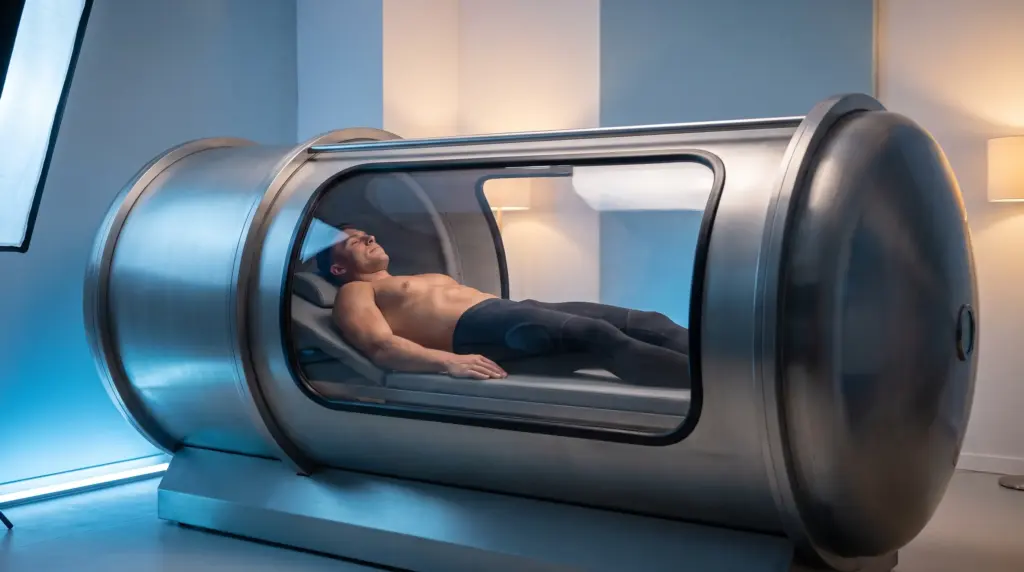
Recovery is where most athletic progress actually happens. Training breaks muscle tissue down, and the body needs oxygen, nutrients, and time to rebuild it stronger. That is part of why hyperbaric oxygen therapy has drawn attention from athletes and trainers looking for ways to support that repair process more directly. Hyperbaric oxygen therapy, often shortened to HBOT, has been used in medicine for decades to treat wounds and injuries that need extra help healing. More recently, interest has grown in how the same underlying mechanism, increased oxygen delivery to tissue, might apply to athletic recovery specifically. This article covers how HBOT works, what the research says about its role in recovery, and what athletes should know before considering a home chamber. What Is Hyperbaric Oxygen Therapy? Hyperbaric oxygen therapy involves breathing concentrated oxygen inside a pressurized chamber. Raising the air pressure allows the lungs to absorb more oxygen than they would at normal atmospheric pressure, and that oxygen dissolves directly into blood plasma rather than relying only on red blood cells. That matters for recovery because oxygen-rich plasma can reach muscle tissue and joints more efficiently, including areas where blood flow has been reduced by inflammation or fatigue. The Undersea and Hyperbaric Medical Society lists several approved medical uses for HBOT, and athletic recovery research builds on those same oxygen-delivery principles rather than a separate mechanism. How HBOT Fits Into an Athletic Recovery Routine Recovery is not a single event. It involves reducing inflammation, clearing metabolic waste from muscle tissue, and rebuilding muscle fibers stronger than before training broke them down. Each of those steps depends on oxygen. When training volume is high or an athlete is managing an injury, the body’s normal oxygen delivery can struggle to keep pace with what tissue repair actually needs. Some athletes use HBOT sessions […]

It often begins with something small – a sharp zing down the arm when you’re lifting,