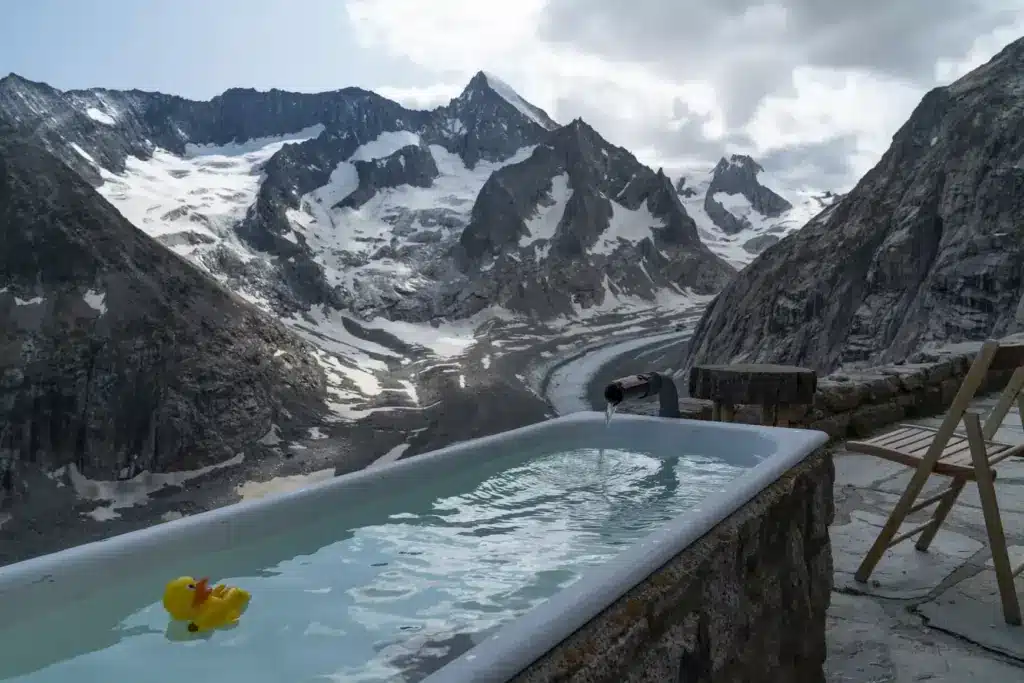





Browse long enough through the posts of athletes and you’ll end up with someone who is jumping into a tank of icy cold water, panting and smiling through chattering teeth and saying it’s the best thing that happened to them that day. Just a few years back, it used to be a peculiar practice among pros, confined to locker rooms only. Today, it is the backyard routine, a spa treatment, and even a social media category in itself – the evidence that a practice based on pain can also become viral, like any other.
From Elite Locker Rooms to Backyard Tubs
While cold water immersion did not exactly design itself into a fitness trend, it was discovered by people who had never had access to it before. Athletes have been using cold exposure following strenuous workouts for some time, mostly for pragmatic reasons such as reduced soreness and resetting the mind for another session. It has not received much attention, partly because it is not particularly glamorous, but also because it is not widely understood. This practice has become visible, and once it became public knowledge that top training facilities were using a technique that used to be practiced in secret, the domestic version was not far behind. Suddenly, a painful experience had become an anticipated one.
The science behind it is more mixed than the trend suggests. Some research supports less soreness and a better mood afterward. However, other findings complicate the picture. For example, cold immersion right after strength training may blunt the muscle-building response that lifters are actually trying to achieve. This is important if the goal is size and strength rather than recovery for its own sake.
However, none of this has slowed the trend much because the appeal was never purely physiological for many people in the first place. Cold plunges are a ritual with a clear beginning, middle, and end, and rituals tend to survive contact with mixed evidence better than habits justified purely by results. Additionally, there’s something to be said for a practice that requires full attention for a short period of time. Nobody checks their phone mid-plunge, which may explain part of the appeal, regardless of any future studies’ conclusions about muscle recovery.
The Ritual After the Ritual: From Cold Plunges to Casino Games
The end of a cold plunge usually involves a unique kind of silence – the slowing down of heart rate, the waning away of adrenaline, a period of inactivity that is neither the time of exercise nor regular activity. This period is then occupied with activities that are equally low-key – a warm beverage, an episode of a podcast, a glance at a phone that was left on the towel. Some people take this period for online gambling. For anyone curious what a given platform is actually offering before trying it, checking the real terms beats guessing from a promotional pop-up. A place like https://casinosanalyzer.ca/casino-bonuses/milkyway.casino lists current bonus offers in one place: nice and convenient for you to stay on the safe side.
What the Body Actually Does in Cold Water
Cold exposure isn’t just uncomfortable – it triggers a real, involuntary physiological response worth understanding before treating an ice bath as a casual add-on to a workout. A national water-safety charity describes what happens the moment a body hits cold water. The individual will experience an instinctive gasp, an increased heart rate and blood pressure, and a brief period where breathing becomes the focus. Shortly afterwards, the body becomes uncoordinated. Although the organization has done its safety work in relation to open water and ice as opposed to backyard tubs, the response it provides–that of shock, the breathing reflex, and why panic makes things worse–applies equally well to a cold plunge tub.
This is important since a backyard cold plunge is unlikely to provide medical screening, unlike what would be available in an organized setting. Individuals with heart problems, high blood pressure, or circulatory issues should get clearance before engaging in cold immersion. Those without such conditions will also benefit from viewing the initial plunge as a process that needs to be eased into, rather than a stunt seen in videos.
Signs the Ritual Has Outgrown the Reason You Started It
A routine formed in response to discomfort can gradually transform from an intentional one into a performative one without people realizing it.
- The transition takes place mostly in situations where there is an audience or a camera, not when it is used for personal recovery.
- Time and temperature are continuously extended without any purpose in mind as a reason for doing so.
- The process itself is completely skipped on days when it becomes necessary, such as after an intense workout session.
- Tolerance to cold has remained unchanged, yet the need to prove oneself overrides it regardless.
- Physical symptoms, like shortness of breath, feeling dizzy, and remaining numb for an extended period of time even after leaving the water, are disregarded.
None of this implies that the ritual should cease. It is simply an acknowledgment of the fact that a worthwhile routine does not take advantage of its creator.
Easing Into Cold Exposure Without Overdoing It
With just a little planning, a risky practice can become safe. This principle guides you to examine a source, such as CasinosAnalyzer, before acting on a promotion.
- Take things easy and go slow, especially at low temperatures so that you can slowly increase your capacity rather than challenge another who has done it several times before.
- Do not go for a plunge when alone at least for the first couple of weeks since there are chances that you may experience an unpleasant effect during this period.
- Consult your doctor if you have any heart, high blood pressure or circulatory problems.
- Treat the increase in breathing as an issue that requires calmness and coolness since it is your panicked state that makes it a problem.
- The plunge should be used for warming up.
None of this diminishes the power of the ritual. It simply prevents the one risk that the ritual poses from silently overshadowing the reason why someone took a bath in the first place.
The Discomfort Was Always the Point
The cultural significance of ice baths comes down to the fact that they do not attempt to be comfortable at all – the point of it was not to be easy but to do an uncomfortable thing deliberately and get some reward after it. This is a reasonable demand from a daily practice, and there is no need to debunk the process to make it also have some real physiological stakes that deserve attention. The people who will stick to the practice will not be those who will endure the coldest water for the longest.
It is those who will treat the first few times in a way that makes sense out of it, instead of surviving just to post about it later. There is no chance that the tub will disappear anytime soon, nor will the practice disappear. All that remains to be seen is the respect with which a particular session will be treated.