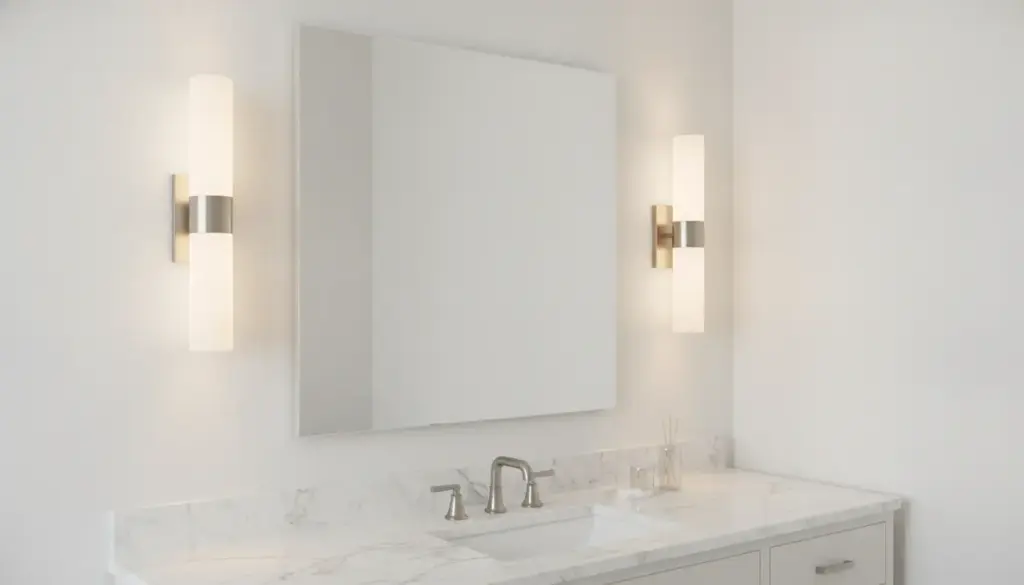



A bathroom can have magnificent light fixtures but still leave a face poorly lit at the mirror. Even with exquisite lighting settings, a face in the mirror may not be well-lit. The position of each sconce influences shadows, glare, and how well a person sees their own reflection.
Mirror sizes, vanity widths, ceiling heights, and fixture styles vary, so there isn’t a single dimension that fits for every bathroom. This article discusses the crucial location choices that enable a homeowner to provide optimal lighting at the bathroom mirror.
Mirror Size Determines Sconce Position
The mirror should guide every placement decision before a homeowner purchases any light fixture. A person must measure the mirror and the vanity separately because these two elements have completely different widths from one another.
Bathroom wall sconces should never be chosen before these measurements are taken and recorded properly. A careful measuring process prevents buying a fixture that simply will not fit the vanity wall at all.
Flank the Mirror With Side Sconces
Side placement works best for most vanities used for shaving, makeup application, grooming, and other close-up tasks performed at the mirror.
Light arriving from both sides illuminates the face more evenly than light coming primarily from a fixture above the head. This arrangement reduces shadows under the chin, around the nose, and beneath the eyes that make grooming tasks more difficult to complete.
Find the Right Height
The light source should sit roughly at eye level for the person who uses the vanity most throughout the day. Household height, mirror dimensions, and fixture design all affect the ideal mounting height for any given installation.
A good starting point is sixty to sixty-five inches from the finished floor to the center of the fixture’s mounting plate.
Decide How Far the Fixtures Should Sit From the Mirror
Each sconce needs enough separation from the mirror to spread light across the entire face without creating harsh shadows. A distance of three to six inches between the mirror edge and the fixture works well in most standard bathroom configurations.
The fixture should not touch the mirror directly or sit so far away that it loses visual connection to the vanity area. Before drilling any holes into the wall surface, mark the proposed positions with painter’s tape and stand at the vanity.
Use Above-Mirror Placement When Side Wall Space Is Limited
Side mounting is not the only option for every bathroom layout and should not be treated as the only correct arrangement. Small bathrooms, wide mirrors, medicine cabinets, and walls with limited clearance may leave no room beside the mirror at all.
A horizontal fixture mounted above the mirror can work very well in these tight spaces where side mounting proves impossible. The fixture should sit centered with the mirror or with the vanity below it for a balanced and intentional appearance.
Adjust the Placement for Double Vanities and Wide Mirrors
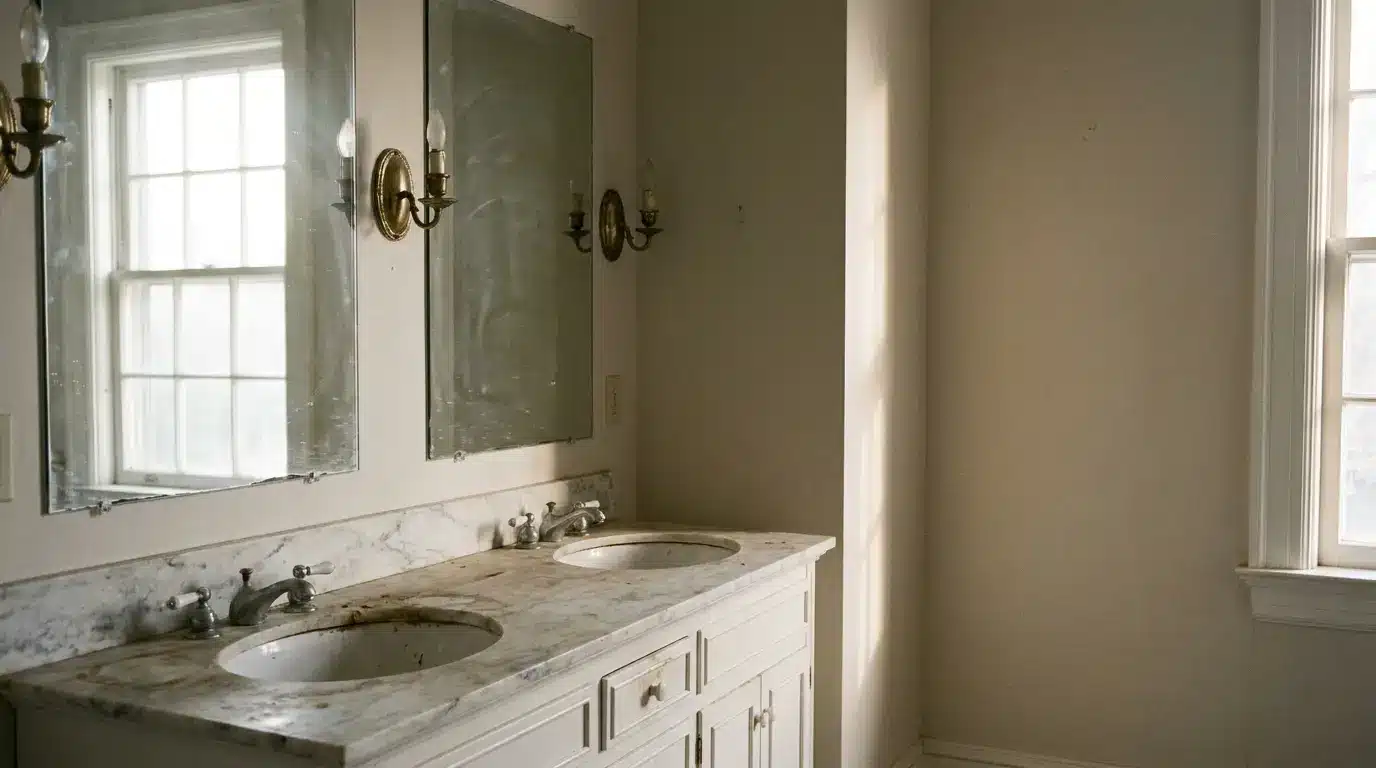
A long vanity needs a different lighting plan from a compact single-sink setup that serves only one person at a time. A pair of fixtures placed at the far ends of a wide vanity may leave the center poorly illuminated when two people use separate sinks.
One practical layout uses sconces at the outer sides with another fixture positioned between two mirrors for balanced coverage. Bathroom wall sconces should relate to where each person actually stands rather than spaced evenly across a long wall without considering user position.
Check How the Fixture Projects Light Before Finalizing Its Position
Physical placement alone does not guarantee good mirror lighting because fixture design affects light distribution significantly. Shade direction, fixture depth, bulb position, and diffusers all influence where the light actually reaches the user’s face.
Upward-facing shades may provide more ambient light than direct facial light, which reduces their usefulness for grooming tasks. Downward-facing fixtures concentrate light below the mounting point and can leave the face in shadow during use.
Account for Bathroom Conditions and Installation Requirements
A visually ideal location still needs to be suitable for the bathroom environment where moisture and humidity are present daily. Fixtures installed near tubs, showers, or other moisture-prone areas may need a damp- or wet-location rating for safety purposes.
The existing junction boxes can also affect where a fixture can be placed without extensive electrical work. Moving electrical boxes may be necessary when the current position does not align with the planned mirror and lighting layout.
Mark and Test Before You Drill
A homeowner should carefully consider mirror size, user height, available wall space, fixture dimensions, light direction, and electrical-box locations before installing bathroom wall sconces.
Together, these elements define the optimal location for every fixture in the bathroom design. Marking the mirror margins and fixture locations on the wall during a bathroom renovation gives everyone involved one last visual inspection.
Good mirror lighting comes from matching sconce placement to the actual vanity setup rather than following one universal measurement that ignores individual differences. Side placement provides balanced facial illumination, while above-mirror fixtures solve space limitations in smaller bathrooms effectively.
Careful measurement, light-distribution checks, and installation planning all contribute to a vanity that works well for daily use and grooming routines. A well-lit mirror makes grooming easier and helps a bathroom feel more comfortable from the very first glance each morning.