




Constipation is one of the more uncomfortable surprises that comes with Mounjaro. You start the medication hoping to manage blood sugar or lose weight, and instead you find yourself going days without a bowel movement, dealing with bloating, and wondering whether something has gone seriously wrong. It hasn’t – at least not usually. Constipation is among the most commonly reported digestive side effects of tirzepatide, the active compound in Mounjaro. Most people experience it in the first few weeks after starting or after a dose increase. The good news is that there are real, practical steps you can take at home to get things moving again without immediately reaching for strong laxatives or calling your doctor in a panic. This article breaks down why Mounjaro affects your gut, what you can do right now to reduce discomfort, and what signs suggest it’s time to get professional input instead of continuing to self-manage.
Why Mounjaro Slows Your Digestive System
When people start tirzepatide, constipation often catches them off guard – mostly because nausea and diarrhea tend to dominate the conversation around GLP-1 side effects. The question of whether constipation can start from Mounjaro on its own – without any other underlying cause – comes up all the time, and the short answer is yes. Tirzepatide acts on two receptors: GLP-1 and GIP. Both are active in the gut, not just the pancreas. Activating them with a drug like Mounjaro slows gastric emptying – the rate at which food leaves your stomach and moves through your intestines- and that slowdown is actually how the medication helps you stay full longer and prevents post-meal blood sugar spikes. But a slower gut means waste lingers in your intestines longer, and the more time stool sits there, the more water gets pulled out of it, leaving it dry, hard, and difficult to pass.
How GLP-1 and GIP Receptors Affect Bowel Motility
Bowel motility is driven by muscular contractions that push food and waste through the digestive tract. GLP-1 receptor activation suppresses those contractions – something well-established in gastroenterology research and consistent with what patients on Mounjaro report. GIP receptor activation piles on: it further slows how quickly contents move through the small intestine. Together, these effects build on each other. Your colon receives material more slowly, and the normal contraction rhythm that would otherwise produce a bowel movement doesn’t fire reliably. It’s not a sign something’s wrong with your gut; the drug is doing exactly what it was designed to do. The problem is your colon wasn’t built with tirzepatide in mind. It spent years adapting to your personal habits, diet, and baseline motility – drop that speed significantly with a weekly injection, and it takes time, sometimes weeks, to adjust. Some people find the issue resolves on its own by week six or eight of a stable dose.
The Connection Between Reduced Appetite and Constipation
Here’s something that doesn’t get discussed enough: Mounjaro suppresses appetite, sometimes dramatically. Many people on the medication eat far less than they used to, which sounds like progress toward their health goals but creates a mechanical problem for the gut. Bulk matters. Your colon needs a certain volume of food residue to stimulate the stretch receptors in its walls, which then trigger the contractions that produce a bowel movement. Eat very little and you produce very little residue, which means less stimulation and fewer spontaneous urges. Add to that the fact that most people’s fiber intake drops when they eat less overall – since fiber-rich foods like vegetables, legumes, and whole grains also tend to be higher in volume and calories – and you’ve got a second reason the gut slows down. This is why some people who’ve never had constipation before in their lives suddenly struggle with it on Mounjaro. It’s not their gut that changed; it’s the inputs their gut depends on.
Practical Steps You Can Take at Home
The self-management strategies for Mounjaro constipation aren’t complicated, but consistency matters. One extra glass of water on a single day won’t undo three days of slowed gut motility. What actually works is a steady, deliberate shift across a few daily habits that, taken together, give your colon better material to work with and a clearer signal to contract.
Hydration and Fiber Changes That Work
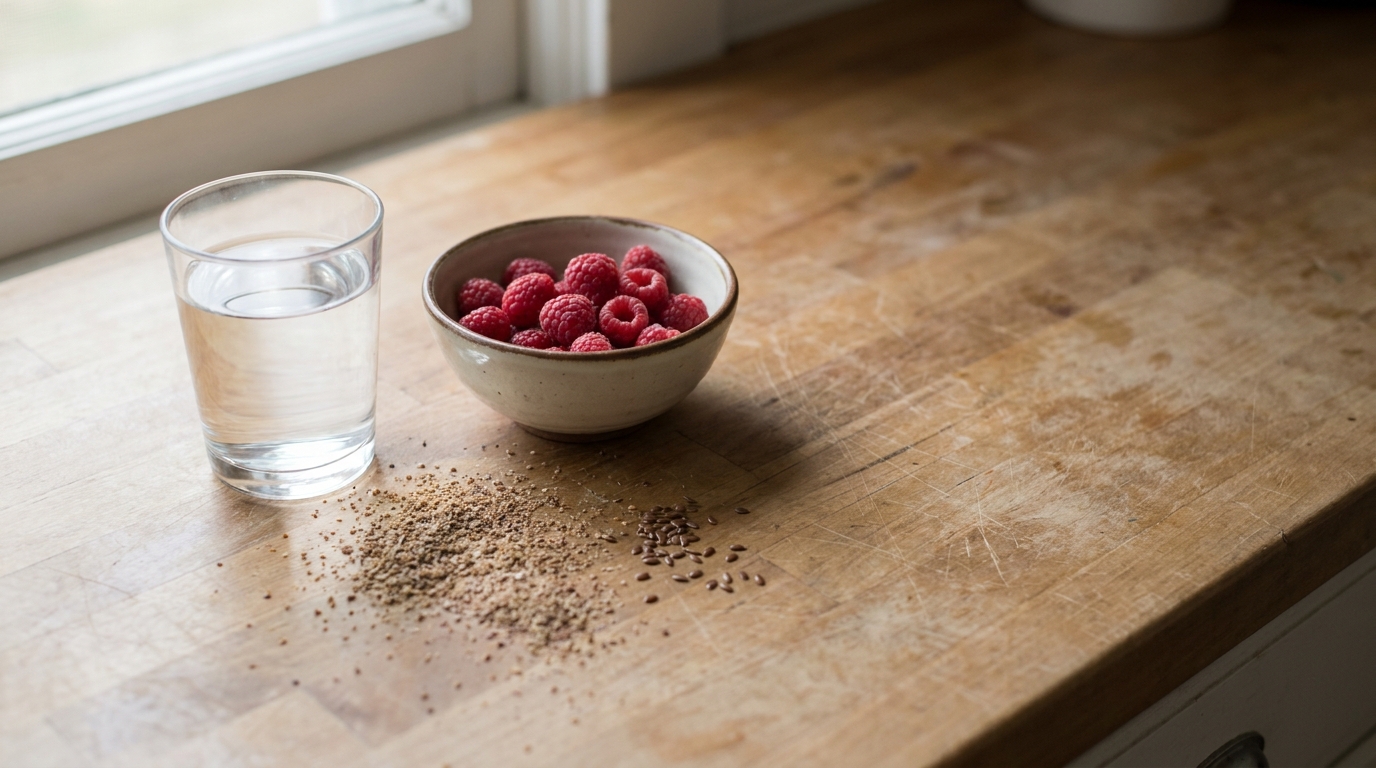
Start with water. Your colon pulls moisture from stool as it passes through, and if you’re mildly dehydrated, which many Mounjaro users are partly because reduced appetite often means less mindful drinking, that stool will harden faster. Aim for at least 64 ounces of water per day, and more if you’re physically active or in a hot climate. Next, protect your fiber intake even as your overall food volume drops. You don’t need a huge meal to hit 25 to 35 grams of fiber daily. A tablespoon of ground flaxseed, a handful of raspberries, half a cup of cooked lentils, and a small serving of oats can get you a good part of that goal without overwhelming a reduced appetite. Soluble fiber, which dissolves in water and forms a gel in the gut, is especially useful here. It softens stool and slows sugar absorption at the same time, which means it supports rather than fights the medication’s mechanism. Psyllium husk is the most accessible soluble fiber supplement available over the counter and is generally well-tolerated.
Movement and Meal Timing as Gut Signals
Physical activity works as a mechanical stimulant for the colon. Even a 20-minute walk after a meal can produce a measurable increase in intestinal motility. You don’t need a gym membership or intense exercise. Light, consistent movement is what makes the difference, and it pairs well with other lifestyle changes for people on Mounjaro. Meal timing matters too. Eating at regular intervals – rather than skipping meals because your appetite is suppressed – helps keep the gut’s natural rhythm intact. Your digestive system responds partly to the gastrocolic reflex, which fires when you eat and sends a contraction signal down to the colon. Skip meals consistently and you lose that reflex multiple times a day. Don’t skip breakfast entirely, even if it’s just a small, fiber-containing option. And if you’re a morning coffee drinker, keep it, caffeine is a mild gut stimulant for many people, and one that most clinicians don’t object to at moderate intake.
Conclusion
Most people can manage Mounjaro constipation on their own without stopping the medication or reaching for aggressive interventions. The foundation isn’t complicated: stay well-hydrated, protect your fiber intake even as your appetite drops, keep moving, and eat on a reasonably consistent schedule. These changes target the actual mechanisms behind tirzepatide-related constipation rather than just patching symptoms after they appear. If you’ve stuck with these adjustments for two to three weeks and you’re still going fewer than three times per week, experiencing pain, or noticing blood in your stool, that’s when to contact your prescribing clinician. Some people do need a mild osmotic laxative – like polyethylene glycol – to get through the adjustment period, and that’s a reasonable short-term option. But for the majority of Mounjaro users, the self-care steps outlined here are enough to bring relief and keep the problem from becoming a recurring one.