





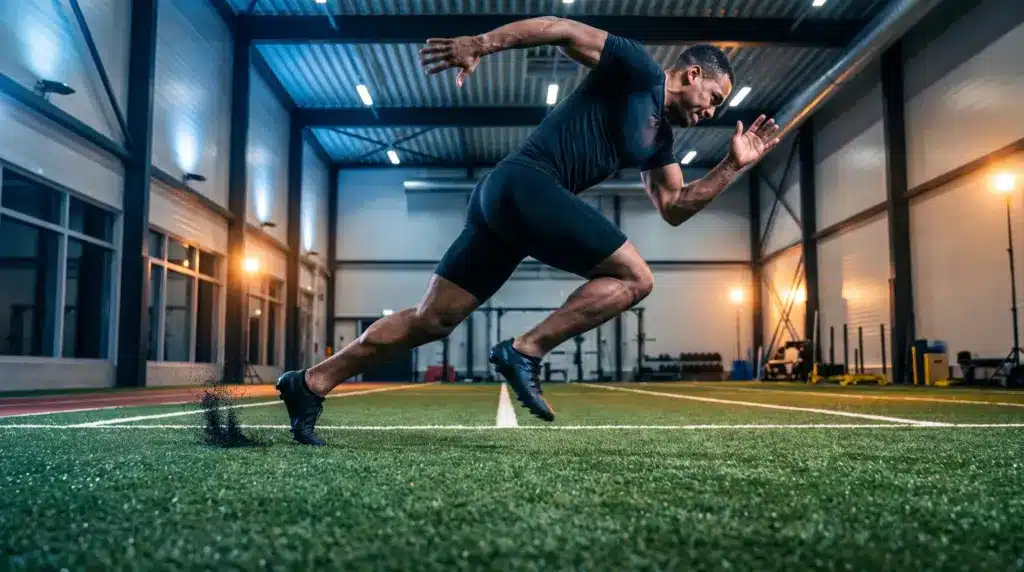
Afullback is a type of running back who lines up close to the quarterback in the backfield. But don’t let that fool you, their main job isn’t carrying the ball. It’s blocking.
I know that might sound unglamorous. No big touchdown runs, no highlight reels. ‘
But the fullback is one of the most important players on the field. The position has gotten smaller in the NFL over the years. Some teams dropped it completely.
But it never went away, and today, you’ll still find fullbacks making a real difference on game day.
In this article, I’ll share what a fullback does, the skills they need, how the position has changed over time, and which offenses use them the most.
By the end, you’ll have a clear, complete picture of what this position is really about.
What Is a Fullback in Football?

A fullback is an offensive player who lines up in the backfield, closer to the line of scrimmage than any other running back.
A fullback lines up in the backfield between the quarterback and the halfback, most commonly in the I-formation.
Unlike the halfback, whose value is measured in yards gained, the fullback is measured by what they create for others.
Their job is to move defenders, absorb contact, and make every run or pass concept work the way it was drawn up. The position sits at the intersection of lineman toughness and skill-position awareness.
No other role on the offense asks a player to diagnose blocking assignments, handle short-yardage carries, and serve as a check-down receiver, all in the same game.
That’s what makes it demanding and valuable when a team has the right person in the role.
No other position on the offense asks so much while appearing so rarely in the highlights.
Where Does a Fullback Line Up?

In most formations, the fullback lines up directly behind the quarterback. In the I-formation, they stand between the quarterback and the halfback, forming a straight line behind the center.
The fullback lines up closer to the line of scrimmage than the halfback, and that position changes each player’s role.
The fullback has a shorter distance to cover before making contact with a defender.
That proximity is the whole point. It lets them hit their block target fast and hard before the defense can react to the snap.
The halfback lines up deeper to gain speed before running the ball. One player blocks. The other runs.
Beyond the I-formation, fullbacks also appear in the Power I and Strong I sets, where an extra tight end or a shifted formation changes the blocking angles but keeps the fullback’s core responsibility the same.
In goal-line packages, they often shift to an H-back alignment, lining up as a hybrid between a tight end and a traditional fullback.
What Does a Fullback Actually Do?
The fullback handles more than most people realize. Here are the four main things they do on the field:
- Run Blocking: The fullback moves into the line first and clears the path for the halfback. This is their most common job in running plays, and they do it on almost every snap.
- Pass Blocking: When the quarterback drops back to throw, the fullback stays in the backfield to block any defender who breaks through. This protects the quarterback and gives receivers time to get open.
- Short-Yardage Carries: When the offense needs just 1 or 2 yards, the fullback often gets the handoff. They are usually the strongest runner on the team, built to push through tight gaps.
- Pass Catching: The fullback can run short routes or catch a quick pass behind the line of scrimmage on screen plays. They are not primary receivers, but they provide the quarterback with a reliable option when needed.
Fullback vs. Halfback: What’s the Difference?
These two positions work side by side, but they are built for different things. The halfback gets the glory while the fullback does the heavy lifting.
| Feature | Fullback | Halfback |
|---|---|---|
| Primary Job | Blocking | Running and receiving |
| Body Size | Bigger and heavier | Leaner and faster |
| Ball Carries Per Game | Low | High |
| Position in Backfield | Closer to QB | Further back |
| Key Skill | Blocking power | Speed and agility |
| Typical Role | Lead blocker | Main offensive weapon |
| Pass Protection | Major responsibility | Secondary responsibility |
| Receiving Ability | Limited short routes | Frequent pass catcher |
| Physical Style | Power and contact | Quickness and explosiveness |
| Common Situations | Short-yardage and goal-line plays | Open-field and standard rushing plays |
| Modern Usage | Less common in spread offenses | Essential in almost every offense |
| Famous Examples | Kyle Juszczyk, Mike Alstott | Derrick Henry, Christian McCaffrey |
Physical Requirements for Playing Fullback
The fullback position is built for a very specific type of player. Most fullbacks stand between 5’11″ and 6’1″ and weigh between 235 and 250 pounds.
That size puts them right in the middle, too short for tight end and not fast enough for halfback. But that is not a weakness. That build is exactly what makes them useful.
They sit low, absorb hits, and stay on their feet when defenders try to drive through them.
Teams look for players who can take on linebackers and defensive linemen on almost every snap without losing their footing or their assignment.
That low center of gravity and extra weight behind every block is what gives the fullback value in a modern offense that does not always feature the position.
Core Skills Required to Play Fullback
A fullback does more than block. The best ones bring a complete skill set that holds up in run, pass, and protection situations every single week.
1. Run Blocking
Hitting the right gap at the right time is what run blocking comes down to at the fullback position. The job is to get to the second level and clear a path for the halfback.
That means reading the defense fast and making contact before the linebacker can close the lane.
Covering the San Francisco 49ers offense through film breakdowns, it became clear just how much Kyle Juszczyk’s angles on the second level dictated whether a run play gained three yards or ten.
A fullback who hesitates gives the linebacker time to fill the hole. Doing this well against bigger defenders separates good fullbacks from great ones
Why It Matters: Run blocking creates the space the halfback needs to make a play.
2. Pass Protection
The fullback has to read the defense before the snap and find the blitzing defender that the offensive line might miss. One missed block in pass protection can end a drive or cost the quarterback his health.
This part of the job requires fast processing and a strong base. The fullback cannot wait to see where the blitz is coming from.
In his interviews over the years, Juszczyk has noted that reading blitz packages is something that takes a full season or two to truly get comfortable with, even for experienced players.
Fullbacks who struggle here do not stay on the field long.
Why It Matters: Strong pass protection keeps the quarterback upright and the offense moving.
3. Toughness
Every snap, the fullback lines up against defenders who are bigger and more athletic on paper. Physical and mental toughness are not optional at this position.
The fullback takes hits on nearly every play, often without touching the ball.
The wear adds up fast over a full season. But the ones who keep showing up and holding their blocks are the ones coaches trust in short-yardage and goal-line situations when the game is on the line.
Why It Matters: Toughness helps fullbacks survive the physical demands of every snap.
4. Pass Catching
A fullback with reliable hands gives the offense another option in the passing game. Short routes, screen passes, and quick dump-offs are all part of the package.
Dropping a catchable ball on a screen play can kill a scoring drive fast.
Coaches lose trust in fullbacks who can’t secure short passes under pressure, and once that trust is gone, the snaps disappear quickly.
Teams do not need their fullback to be a receiving threat every week, but they need someone who will not let the ball hit the ground when it comes their way in a key moment.
Why It Matters: Reliable pass catching gives quarterbacks a dependable short-yardage option.
5. Footwork and Timing
In pro-style and option-based offenses, the fullback has to hit their block at the exact right moment.
Being a half-step late collapses the whole play before the halfback even reaches the line. Good footwork comes from repetition and film study.
The fullback needs to know where their feet need to be before the snap.
Sloppy footwork leads to missed assignments, and missed assignments show up on film every single time.
Why It Matters: Proper footwork and timing keep offensive plays from breaking down.
Football IQ: Something Nobody Talks About
The best fullbacks I’ve covered over the years share one trait that never shows up in combine numbers: they process the defense fast.
Before the snap, a fullback needs to identify who they’re blocking, where that defender will likely go, and what the backup assignment is if the play breaks down.
Kyle Juszczyk, the San Francisco 49ers fullback and a six-time Pro Bowl selection, has described the mental side of the role as closer to an offensive lineman’s pre-snap responsibilities than a running back’s.
That quote has stuck with me because it reframes how the position should be evaluated entirely. Most casual fans judge fullbacks on stats.
Coaches judge them on assignments, and those two things rarely overlap. That cognitive load is real, and it’s one reason the position is so hard to fill off the street.
The Core Training Areas for Fullbacks
Fullback training focuses on building the strength, power, and footwork needed to handle blocking, pass protection, and carrying the ball when called upon.
1. Lower Body Strength
Powerful legs and hips are the foundation of every block a fullback throws. Without that lower body strength, a fullback cannot drive back a linebacker or hold their position against a defensive lineman.
Squats, lunges, and explosive plyometric movements are the go-to exercises for building this kind of power.
The goal is to develop fast-twitch muscle strength that fires quickly on contact and maintains the fullback’s base throughout the block.
Why It Matters: Lower-body power is the engine behind every block.
2. Core Strength
A strong core connects everything a fullback does on the field.
It improves balance, coordination, and the ability to transfer power from the lower body up through the arms during a block.
Core training covers the back, abs, and chest together, not just crunches. A fullback with a weak core loses leverage fast and gets pushed around at the point of contact.
Building core strength reduces injury risk and makes every movement on the field more controlled and efficient.
Why It Matters: Core strength preserves leverage and prevents breakdowns at the point of contact.
3. Footwork and Agility
Quick, precise footwork is what allows a fullback to hit a block at the right angle and the right time. Lateral movements, pivot turns, drop steps, and crossover footwork all need to be practiced regularly.
A fullback who is slow off the snap or out of position by even a step will miss their assignment.
Resistance band training and cone drills help build the foot speed and body control needed to stay sharp in both run-blocking and pass-protection situations throughout a full game.
Why It Matters: Agility training prevents missed assignments on fast-developing plays.
4. Pass Protection Drills
Pass protection requires the fullback to react fast and get into position before contact happens. This training includes drills focusing on reading blitz packages, mirroring defenders, and maintaining a low pad level.
The fullback has to practice identifying pressure pre-snap and adjusting quickly when the play develops.
Repetition in these drills builds the muscle memory needed to make the right decision under pressure without hesitating or losing leverage at the point of contact.
Why It Matters: Drill repetition builds the decision-making speed needed in live blitz situations.
5. Catching and Route Work
Hand strength and reliable catching mechanics are skills a fullback has to develop in practice, not just rely on naturally.
Running short routes, practicing catch-and-run after the reception, and working on tracking the ball out of the quarterback’s hand all help a fullback become a real receiving option.
Even if the fullback only catches a few passes per game, those moments often come in critical situations.
Dropping a pass in a key spot because of poor handwork is something proper training can prevent.
Why It Matters: Consistent pass-catching in practice builds the reliability quarterbacks need in high-pressure moments.
How the Fullback Position Has Changed?
The fullback has undergone many changes since the early days of football. In the early 1900s through the 1960s, the fullback was often the best runner on the team.
Players like Bronko Nagurski and Jim Brown were fullbacks who carried offenses on their backs. Brown led the NFL in rushing six times and is still considered one of the greatest players ever.
But as defenses got smarter and offenses started spreading the field, teams needed blockers more than power runners.
The fullback slowly moved away from the spotlight and into a supporting role.
By the early 2000s, many NFL teams had nearly replaced fullbacks with extra receivers and pass-heavy offenses.
Today’s fullback is used more as a hybrid player, valued for blocking, short-yardage situations, and doing the physical work that keeps an offense balanced
Why Teams Started Moving Away from Fullbacks?
Around 2000, passing offenses became the standard across the NFL. Teams started cutting fullbacks to make room for players who could do more in the passing game.
- Spread Offenses Removed Two-Back Sets: Most spread formations only use one running back, which leaves no room for a traditional fullback. Coaches found it easier to create mismatches with extra wide receivers instead.
- Tight Ends Took Over the Blocking Role: A tight end can block on running plays and also run routes as a receiver. That combination made the fullback’s blocking-only role harder to justify on a 53-man roster.
- More Wide Receivers Meant More Passing Options: Adding a third or fourth wide receiver gave quarterbacks more targets. Teams prioritized pass-catching weapons over a player whose stats rarely showed up on the scoreboard.
The Fullback in Different Offenses

The fullback’s role changes depending on the offense a team runs. Some systems use them on almost every play, while others bring them in only for specific situations.
1. The I-Formation and the Lead Block
The I-formation lines up the quarterback, fullback, and halfback in a straight line behind the center. The fullback is always in front of the halfback in this setup.
When the ball is snapped on a running play, the fullback moves into the line first and blocks the nearest linebacker or defensive back.
The halfback follows directly behind, looking for the opening the fullback just created.
This is one of the most straightforward uses of the fullback in football. The entire play depends on the fullback hitting the right defender at the right moment.
2. The Triple Option: Where the Fullback Gets the Ball
The triple option is one of the few offensive systems where the fullback is a real ball-carrying threat on every snap.
The quarterback reads the defense at the line of scrimmage and makes a decision in real time. He can keep the ball and run, hand it off to the fullback up the middle, or pitch it out to the halfback.
Because the fullback is always a possible ball carrier, defenders cannot simply ignore them and focus elsewhere.
This forces the defense to account for three players on every play, creating natural openings somewhere on the field.
3. Screen Passes and Other Fullback Play Calls
The screen pass is one of the more creative ways to get the fullback the ball in space.
The offensive line intentionally lets defenders break through, and the quarterback throws a quick pass to the fullback behind the line of scrimmage with blockers already set up ahead.
Outside of screens, fullbacks also run flat routes, staying close to the line and giving the quarterback a short, safe target.
On broken plays or heavy blitzes, the fullback is often the first dump-off option the quarterback looks for.
Some of the Best Fullbacks in NFL History
The fullback position has produced some of the most physical and determined players the game has ever seen. These are the names that helped define the position.
| Player | Years Active | Known For |
|---|---|---|
| Bronko Nagurski | 1930–1943 | Power running, 3 NFL titles |
| Jim Brown | 1957–1965 | 6 rushing titles, all-time great |
| Larry Csonka | 1968–1979 | Dolphins’ all-time leading rusher |
| Mike Alstott | 1996–2007 | 6 Pro Bowls, 58 rushing TDs |
| John Kuhn | 2006–2017 | Versatile blocking and goal-line scoring |
| Kyle Juszczyk | 2013–Present | Elite modern fullback, receiving ability |
| Lorenzo Neal | 1993–2008 | One of the greatest lead blockers in NFL history |
What made these players stand out was not just their numbers. Each of them changed how defenses prepared for the fullback position, forcing opposing teams to build entire game plans to stop them.
Why Fullbacks Still Matter in Football?
The fullback is not what it used to be, but it is far from gone. In 2024, twelve NFL teams kept a fullback on their roster. That number tells you the position still has real value, just in a different way than before.
Modern fullbacks do not run the ball on every play. They block, catch short passes, and take the handoff when a team needs a tough yard or two.
They fit into specific situations rather than being the centerpiece of an offense.
“At its lowest point around 2013, the NFL had just a handful of active fullbacks. By 2024, twelve teams were carrying on again.”
The role got smaller, but smarter. Teams found ways to use the fullback where it actually makes a difference.
Conclusion
The fullback is one of those positions that does not get enough credit. No big stats, no highlight reels, just hard work on every single play.
But now you know exactly what goes into it, the blocking, the physicality, the football IQ it takes to do the job right.
From the power runners of the 1930s to the hybrid blockers of today, the fullback has changed a lot. But the core of the position has stayed the same.
Find the right guy, put him in the right spot, and the whole offense runs better because of it.
I hope this gave you a clear and complete look at what a fullback really does in football.
Did you have a favorite fullback growing up, or should the position get more playing time today? Share your thoughts in the comments.
Frequently Asked Questions
Is a Fullback the Same as a Running Back?
A fullback is a type of running back, but the two roles are different. Fullbacks focus mainly on blocking, while running backs are primarily used to carry the ball.
Can a Fullback Play Tight End?
Fullbacks and tight ends share some blocking responsibilities, but they are separate positions. Tight ends line up on the line of scrimmage, while fullbacks line up in the backfield.
Do College Teams Still Use Fullbacks?
Fullbacks appear more often in college football than in the NFL. Pro-style college offenses still use them regularly, though spread-focused programs rarely carry one on their roster.
What Jersey Number Does a Fullback Wear?
In the NFL, fullbacks typically wear jersey numbers between 30 and 49. This range is officially assigned to running backs and fullbacks under league numbering rules.
How Is a Fullback Different from a Blocking Back?
Blocking back is simply another term used to describe a fullback. Both refer to the same type of player whose primary responsibility is blocking rather than carrying the ball.