



World Cup 2026’s Fastest Soccer Players Bring More Than Just Raw Pace.
Speed Matters More Than Ever
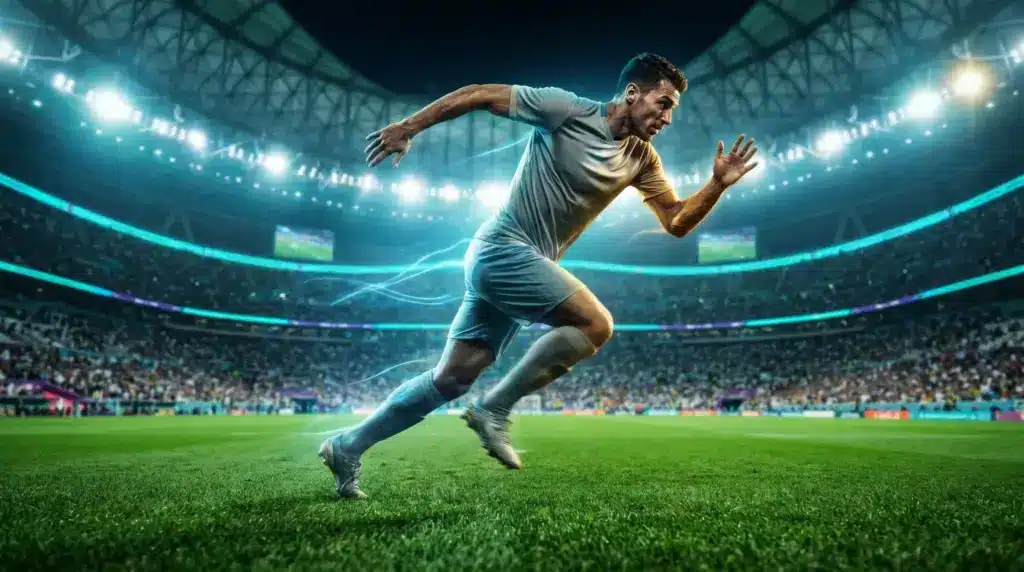
Speed has always appeared attractive on a highlight tape. However, with World Cup 2026, speed might be even more important than usual because the competition will take place in enormous stadiums, during the summer when it is hot, and in knockout matches where a single misplaced pass can cause chaos in any defense. The fastest soccer players in the world are not only the wingers running after a long ball anymore.
This is precisely the reason that the fastest soccer players in the world cannot be judged based purely on speed. A soccer player must run fast, come to a halt, change directions, shield the ball, and make wise decisions in the process. Some of the fastest soccerers have not only speed but also technical skills, which is precisely what sets them apart from others who may simply be fast runners.
The World Cup 2026 Sprint Kings to Watch
Mbappé is the obvious starting point. EA Sports FC 26 lists him as the fastest player in the game with a 97 pace rating, which matches what viewers see on the pitch. He does not need much space. A defender can be level with him at the halfway line, then suddenly look beaten by the next touch. France uses that threat even when Mbappé does not receive the ball, because opponents drop deeper to avoid the race.
Karim Adeyemi is another name built for open grass. His acceleration is vicious over the first few steps, which makes him dangerous in broken play. Germany can use him wide, central, or as a late-game runner against tired legs. He is not just quick once he is moving. The first burst is the part defenders hate.
The speed that Vinícius Jr. adds is somewhat different. He can run at full speed with the ball attached to his feet and suddenly come to a halt to destabilize a defender. While it has been tradition in Brazil to love players capable of beating a man from the wings, Vinícius adds some new-age flair.
He forces fouls, bends defensive shapes, and creates second chances from situations that look covered.
Fullbacks and Defenders Are Now Part of the Speed Race

The world’s quickest soccer players are no longer all forwards. Alphonso Davies changed how people view fullback speed. His recovery runs for Bayern Munich and Canada have become part of his identity. Davies can be caught high up the pitch, then still chase back and erase danger. That is a rare weapon, especially in tournament soccer, where one counterattack can end a campaign.
Hakimi is a player who does the same thing for Morocco out wide on the right side. Hakimi is able to push back into defense, overlap to get wide, and run with the ball up the middle from the midfield position. The speed of Hakimi cannot be underestimated, especially in that it allows Morocco to transition directly from their defense into attack.
Micky van de Ven deserves mention because centre-back pace is becoming a premium trait. A fast defender changes the whole structure of a team. Coaches can hold a higher line, press harder, and take risks in midfield because they trust someone behind the ball to win the footrace. That is not glamorous, but it wins matches.
Who Are Currently the Fastest Soccer Players?
There are many ways to evaluate the fastest soccer players. Nonetheless, there are some common names that always appear when the fastest soccerers are mentioned, such as Mbappé, Adeyemi, Vinícius Jr., Davies, Hakimi, Diaby, Openda, and Mendes.
Diaby’s value comes from direct running. He stretches the pitch and keeps defenders facing their own goal. Openda is more of a striker-sprinter, using pace to attack the channel between centre back and fullback. Nuno Mendes gives Portugal recovery speed at left back, which helps balance an attack full of technical players.
Fans checking World Cup 2026 odds at BetUS should remember that speed is not a full prediction tool. It is a pressure tool. Fast teams can survive bad spells because they always carry a counterattack threat. Slow teams need cleaner possession, better spacing, and fewer mistakes.
FAQs
How Fast Was Thierry Henry?
Thierry Henry is often listed in historic speed discussions at around 39.2 km/h. That number should be treated carefully because older sprint claims were not tracked with the same modern systems used today. What is not disputed is the soccer part. Henry’s speed was devastating because he ran smoothly with the ball, attacked space early, and finished at full stride.
Who Is the Fastest FIFA Player?
If the question refers to EA Sports FC 26, Kylian Mbappé is the fastest high-profile male player, with a 97 pace rating. Karim Adeyemi and Gabriel Silva are close behind. In real soccer, “fastest” depends on official match tracking, competition data, and whether the sprint happened with or without the ball.
Is Speed a Skill or a Talent?
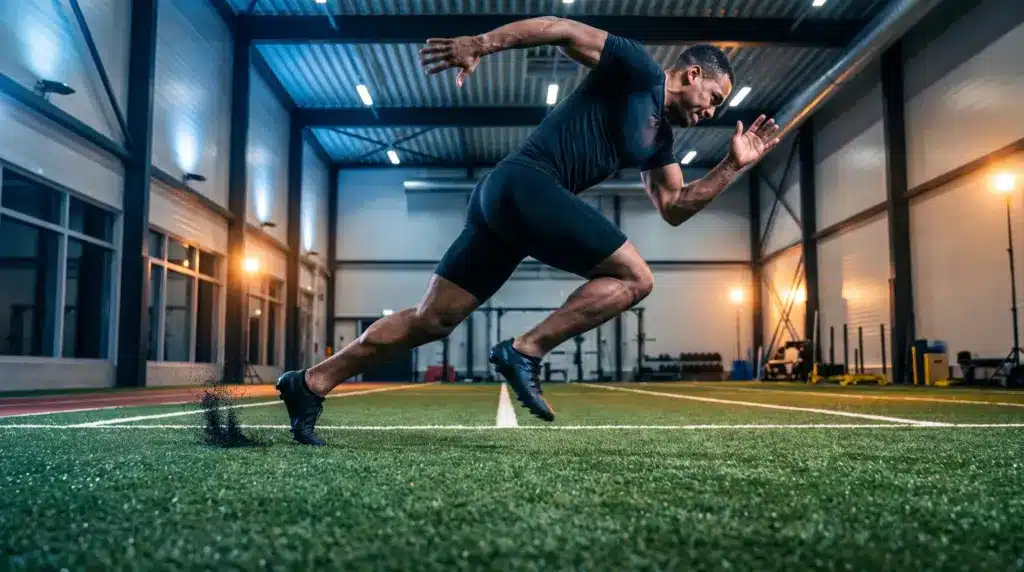
It’s both. Natural explosiveness matters, but soccer speed can be trained. Players improve sprint mechanics, first-step power, body shape, balance, and decision-making. The elite ones also know when not to sprint. That is the difference. Raw pace gets a player into space. Soccer intelligence decides whether that space becomes a goal.