





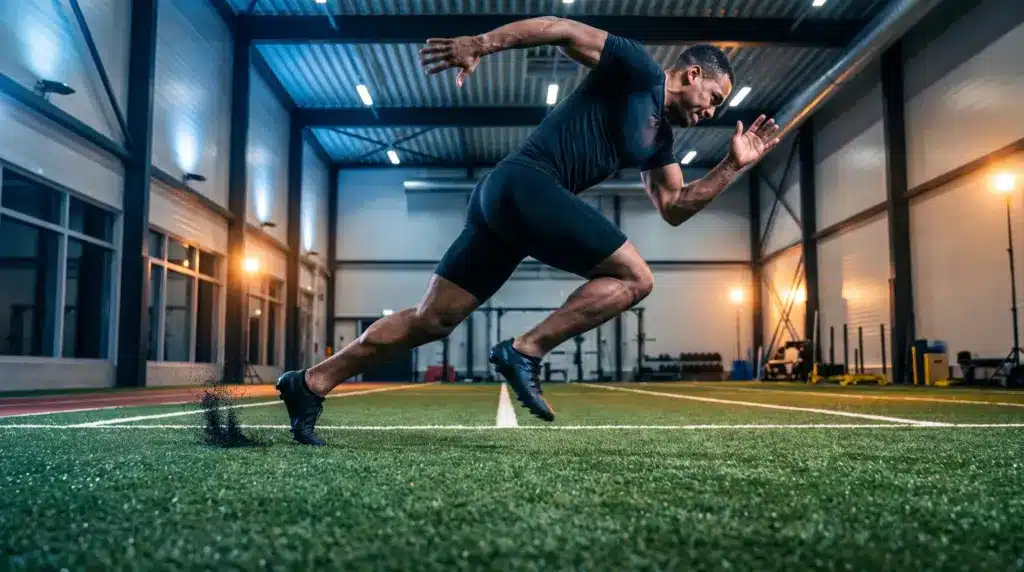
A proper warm-up does much more than prepare players to start running. Soccer warm-up drills help increase body temperature, improve mobility, activate key muscle groups, and sharpen technical skills before training or a match begins.
They also help players adjust mentally by improving focus, communication, and decision-making before the first whistle.
The most effective warm-ups gradually build intensity instead of rushing straight into high-speed activities.
By combining movement, ball work, passing, and game-like exercises, players can transition smoothly into the main training session while reducing the risk of injury.
Why Do Soccer Warm-Up Drills Matter?

Soccer places constant demands on speed, agility, balance, coordination, and quick decision-making.
A structured warm-up prepares the body for these demands by gradually increasing heart rate, improving blood flow, and activating the muscles used throughout the game.
It also helps players become more comfortable with the ball before training begins, leading to sharper passing, dribbling, and first touches.
Beyond the physical benefits, warm-up drills encourage communication, teamwork, and concentration, helping players transition into a competitive mindset.
Whether preparing for practice or a match, spending a few minutes on effective soccer warm-up drills can improve performance, reduce the likelihood of preventable injuries, and make the rest of the session more productive.
Quick Guide to Choosing the Right Soccer Warm-Up Drill
Selecting the right activity depends on the objectives of the training session, the players’ age and skill level, and whether the team is preparing for practice or a competitive match.
| Training Goal | Recommended Drill Type | Best For |
|---|---|---|
| Increase heart rate | Dynamic movement drills | All players |
| Improve ball control | Ball mastery drills | Individual technique |
| Sharpen passing | Passing drills | Pairs and groups |
| Prepare for shooting | Finishing drills | Attackers and midfielders |
| Improve teamwork | Possession drills | Full teams |
| Match preparation | Small-sided games | Entire squad |
Best Soccer Warm-Up Drills for Games and Practice
A complete soccer warm-up should prepare players physically, technically, and mentally.
1. High Knees
High knees are a simple dynamic exercise that raises the heart rate while activating the hips, quadriceps, calves, and core.
Players jog forward, lifting each knee to waist height and pumping their arms naturally.
Focus on quick, controlled movements rather than maximum speed. This drill improves running mechanics, coordination, and balance while preparing players for faster movements later in the session.
It works well as one of the first exercises because it gradually increases intensity without placing excessive strain on the muscles.
2. Butt Kicks
Butt kicks help warm up the hamstrings and improve lower-body flexibility before more demanding activities.
Players jog while bringing each heel toward the glutes in a smooth, continuous motion. Keeping the upper body upright and landing lightly on the balls of the feet encourages proper running technique.
Coaches can increase the pace gradually as players become comfortable.
This drill prepares the legs for sprinting and changes of direction while promoting efficient movement patterns that carry over into match situations.
3. Carioca Drill
The carioca drill develops coordination, agility, and hip mobility through a continuous sideways crossover movement.
Players travel laterally while crossing one foot in front of and then behind the other, maintaining a steady rhythm. Arms should remain relaxed to help with balance, and movements should stay controlled rather than rushed.
Since soccer players frequently rotate their hips when turning, shielding the ball, or changing direction, this drill helps prepare those movement patterns before training begins.
4. Walking Lunges
Walking lunges activate the quadriceps, glutes, hamstrings, and hip flexors while improving balance and mobility.
Players step forward into a lunge, lowering both knees until the front thigh is nearly parallel to the ground, then push into the next step. Keeping the chest upright and the front knee aligned with the foot encourages proper technique.
Coaches often include arm reaches or torso rotations to further increase mobility.
This exercise prepares players for explosive actions such as sprinting, jumping, and tackling.
5. Side Shuffles
Side shuffles prepare players for defensive movements that require quick lateral reactions.
Players stay in a slightly crouched athletic position while moving sideways without crossing their feet. Maintaining a low center of gravity and keeping the chest facing forward helps reinforce proper defensive posture.
Coaches can vary the distance or speed to match the intensity of the session.
This drill improves agility, balance, and coordination while preparing players to react quickly to attackers changing direction during a game.
6. Cone Dribbling
Cone dribbling develops close ball control while encouraging players to keep the ball under control in tight spaces.
Arrange several cones in a straight line or a zigzag pattern, and have players dribble through them with short, controlled touches.
Encourage the use of both feet and remind players to keep their heads up whenever possible instead of looking only at the ball. As confidence improves, reduce the spacing between cones or increase the dribbling speed.
This drill improves coordination, balance, and confidence when carrying the ball under pressure.
7. Toe Taps
Toe taps are a simple ball mastery drill that improves foot speed, balance, and coordination.
Players alternate placing the sole of each foot lightly on top of the ball while maintaining a steady rhythm. The movement should remain quick and controlled without kicking the ball away.
Coaches can challenge players to increase speed or perform the exercise for set time intervals.
Toe taps help players become comfortable with the ball early in the warm-up while activating the ankles, calves, and hip muscles.
8. Inside Outside Touches
Inside-outside touches improve close control by encouraging players to move the ball using both the inside and outside of the same foot.
Players gently push the ball outward with the outside of the foot before bringing it back with the inside while moving forward across the field. Once comfortable, they should repeat the drill with the opposite foot.
This exercise strengthens ball control, develops coordination, and prepares players for quick dribbling movements during matches.
9. Figure Eight Dribble
The figure eight dribble challenges players to combine ball control, balance, and directional changes.
Place two cones several yards apart and have players dribble around them in a continuous figure-eight pattern using both feet. Encourage small touches, controlled turns, and frequent scanning of the surroundings rather than focusing only on the ball.
As players improve, reduce the space between cones or increase their speed.
This drill develops confidence when changing direction under pressure and improves overall dribbling technique.
10. Ball Pull Push Drill
The ball pull-push drill helps players improve close control while practicing quick changes of direction.
Players use the sole of one foot to pull the ball backward, then immediately push it forward with the inside of the same foot. The movement should be smooth, controlled, and repeated as it moves across the field.
Coaches can encourage players to alternate feet as they become more comfortable.
This drill improves coordination, ball manipulation, and footwork while preparing players for situations requiring quick directional changes to beat defenders.
11. Partner Passing
Partner passing is a fundamental warm-up drill that helps players develop passing accuracy, first touch, and communication.
Players stand a few yards apart and exchange passes using the inside of both feet while maintaining a steady rhythm. As confidence grows, they can gradually increase the distance or alternate between one-touch and two-touch passing.
Encourage players to receive the ball with their first touch before making an accurate return pass.
This drill reinforces proper passing technique, improves ball control, and prepares players for more complex team exercises later in the session.
12. Triangle Passing
Triangle passing introduces movement after every pass while improving teamwork and ball circulation.
Three players form a triangle and pass the ball clockwise or counterclockwise before moving to a new position after each pass.
Players should communicate, receive the ball with an open body position, and make accurate passes using both feet. As the drill progresses, coaches can reduce the number of touches or increase the passing speed.
This exercise develops passing accuracy, movement off the ball, and awareness of teammates’ positions during match situations.
13. One Touch Passing
One-touch passing challenges players to move the ball quickly while improving decision-making and technical ability.
Working in pairs or small groups, players pass the ball with one touch, which forces them to stay alert and position themselves correctly before receiving it.
Accuracy is more important than power, and players should focus on proper body positioning to direct passes effectively.
Beginners can start with two touches before progressing to one-touch play. This drill develops quick reactions, improves passing speed, and prepares players for fast-paced game situations.
14. Passing Gates Drill
The passing gates drill combines passing accuracy with movement and communication.
Small gates are created using cones, and players work in pairs to complete accurate passes through as many gates as possible within a set time.
After each successful pass, players move to a different gate and continue the exercise. Coaches can encourage players to use both feet and communicate before every pass.
This drill improves passing precision, first touch, and movement while keeping players active throughout the warm-up.
15. Rondo (Keep Away)
The rondo is one of the most popular soccer warm-up drills because it combines passing, movement, communication, and decision-making.
A group of players forms a circle while one or two defenders attempt to win possession inside the grid. Players on the outside use quick passes and intelligent movement to keep the ball away from the defenders.
Limiting touches increases the challenge and encourages faster decision-making.
The rondo develops first touch, passing accuracy, awareness, and teamwork while creating an enjoyable, game-like warm-up for players of all levels.
16. Quick Finish Drill
The quick finish drill prepares players to shoot confidently after receiving a pass.
Players begin outside the penalty area, receive a pass from a teammate, take one or two touches, and finish toward the goal.
Coaches should encourage accurate placement rather than simply striking the ball with power. Rotating positions after each attempt keeps everyone involved and maintains the pace of the drill.
This exercise improves first touch, shooting technique, and composure in front of goal, while preparing players to finish opportunities during matches.
17. First Time Shooting
First-time shooting develops quick reactions and teaches players to finish scoring chances without taking extra touches.
A teammate delivers a pass or cross, and the shooter attempts to score with a single touch whenever possible. Players should focus on timing their runs, watching the ball carefully, and making clean contact.
Coaches can vary the angle and type of service to challenge different finishing techniques.
This drill improves confidence, finishing accuracy, and the ability to capitalize on scoring opportunities under pressure.
18. Crossing and Finishing
Crossing and finishing combine wide play with attacking movement inside the penalty area.
One player delivers a cross from the wing while teammates make timed runs into the box to finish with a shot or header. Players should communicate, attack different spaces, and focus on controlled finishing rather than rushing attempts.
Rotating roles allows everyone to practice both crossing and finishing skills.
This drill improves coordination between wide players and attackers while preparing teams for realistic goal-scoring situations.
19. 3v3 Possession Game
The 3v3 possession game creates a competitive environment that combines passing, movement, and decision-making.
Two teams compete within a small grid, attempting to maintain possession through quick passing and intelligent support play. The limited space encourages constant movement, communication, and rapid transitions when possession changes.
Coaches can introduce touch limits or scoring conditions to increase the challenge.
This drill prepares players physically and mentally while reinforcing many of the technical skills required during competitive matches.
20. Four-Goal Game
The four-goal game is an engaging warm-up that encourages players to attack, defend, and transition quickly.
Four small goals are placed around the playing area, giving teams multiple scoring options instead of a single target. Players must communicate, recognize open space, and make quick decisions while maintaining possession.
Because the direction of play changes frequently, the drill improves agility, awareness, and teamwork.
It finishes the warm-up with high intensity while closely replicating the movement patterns and decision-making players experience during real matches.
How to Build an Effective Soccer Warm-Up Routine?

A well-planned warm-up should gradually prepare players for the physical and technical demands of the session ahead. Rather than jumping straight into intense drills, begin with simple movements with the ball.
- Start With Dynamic Movement: Begin with light jogging, high knees, side shuffles, and other dynamic exercises to warm up and activate major muscle groups.
- Introduce the Ball Early: Include simple dribbling or ball-mastery drills after the initial movement phase to help players become comfortable with the ball before training intensifies.
- Increase Intensity Gradually: Progress from controlled exercises to faster drills, including sprinting, passing, and changes of direction, to prepare players for game speed.
- Match the Warm-Up to the Session: Select drills that support the day’s objective, such as passing drills before possession training or finishing drills before shooting practice.
- Keep Players Active: Choose activities that minimize waiting time and maximize touches on the ball to maintain engagement throughout the warm-up.
- Finish With Game-Like Activities: End with a possession game or small-sided match to combine technical skills, decision-making, and teamwork before the main session.
Soccer Warm-Up Drills by Age Group
Different age groups benefit from different types of warm-up drills. Younger players usually learn best through fun, simple activities, while older players can handle more technical and tactical exercises.
| Age Group | Primary Focus | Recommended Warm-Up Drills |
|---|---|---|
| U6–U8 | Coordination and enjoyment | Tag games, cone dribbling, toe taps |
| U9–U12 | Ball control and passing | Figure eight dribble, partner passing, passing gates |
| U13–U16 | Speed and decision-making | Rondo, one-touch passing, 3v3 possession |
| Adults | Match preparation | Dynamic movement, crossing, and finishing, a four-goal game |
Common Soccer Warm-Up Mistakes to Avoid
Even the best drills lose their effectiveness if the warm-up is poorly planned or rushed.
- Skipping the Warm-Up: Starting intense training without warming up increases the likelihood of muscle strains and reduces overall performance.
- Using Static Stretching First: Long static stretches are better suited for after training. Dynamic movements are generally more effective before soccer activities.
- Starting at Full Speed Too Early: Players should gradually increase their intensity rather than sprinting immediately upon arriving on the field.
- Keeping Players Waiting: Long lines reduce activity levels and make it harder for players to stay focused and physically prepared.
- Ignoring Ball Work: A complete soccer warm-up should include technical exercises so players can sharpen passing, dribbling, and first-touch skills.
- Repeating the Same Routine Every Session: Rotating drills keeps players engaged while developing a broader range of technical and physical abilities.
- Making the Warm-Up Too Long: Spending too much time warming up can leave players tired before the main training session begins.
Conclusion
The best soccer warm-up drills do more than prepare players to start running. They build movement quality, improve ball control, sharpen passing, and help players transition confidently into training or match play.
Combining dynamic exercises with technical drills and small-sided games creates a balanced routine that develops both physical readiness and soccer skills.
Rotating drills throughout the season also keeps sessions engaging while exposing players to different challenges.
Choosing age- and skill-appropriate warm-ups helps teams train effectively and perform better on the field.
Frequently Asked Questions
How Long Should a Soccer Warm-Up Last?
Most soccer warm-ups last 15 to 30 minutes, depending on the players’ age, fitness level, and whether they are preparing for training or a competitive match.
Should Soccer Warm-Ups Include Stretching?
Yes, but focus on dynamic stretching before activity. Static stretching is generally more appropriate after training or matches as part of the cool-down.
What Is the Best Warm-Up Before a Soccer Match?
A balanced warm-up includes dynamic movement, ball mastery, passing drills, and a short game-like activity to prepare players physically and mentally.
Can the Same Warm-Up Be Used for All Age Groups?
No. Warm-up drills should match the players’ age, experience, fitness level, and training objectives to ensure they remain safe, engaging, and effective.
How Many Warm-Up Drills Should Be Included in One Session?
Most sessions include four to six drills, progressing from dynamic movement to technical exercises and ending with a game-related activity.