



Big Dreams in Baseball’s Smallest Town
Every summer, thousands of young baseball players arrive in central New York carrying gloves, bat bags and enough sunflower seeds to survive a small emergency.
They come from all over the country, usually after months of practices, fundraisers, travel planning and parents asking, “Wait, how much is this trip going to cost?”
Their destination is Cooperstown, New York, the small village best known as the home of the National Baseball Hall of Fame. But these players are not just coming to admire old jerseys and debate whether Barry Bonds deserves a plaque. They are coming to play baseball.
For anyone unfamiliar with the youth travel ball universe, “going to Cooperstown” usually means attending one of the weeklong tournaments held for 12-and-under teams in the area. Two of the best-known destinations are Cooperstown Dreams Park and Cooperstown All Star Village. Teams travel from across the country (and sometimes the world) to spend a week playing games, hanging with teammates, trading pins and soaking up as much baseball as humanly possible.
Think of it as a national youth tournament, summer camp and family vacation rolled into one, except the vacation includes early wake-up calls, dirty uniforms and adults arguing about whether that pitch was really outside.
For many kids, it becomes the biggest week of their young baseball lives.
Getting There Is Half the Battle
A Cooperstown trip begins long before anyone sees a “Welcome to Cooperstown” sign.
Teams often start planning well in advance. There are tournament reservations, hotel arrangements, uniforms and transportation to organize. There are also fundraisers….lots and lots of fundraisers.
Parents sell raffle tickets, organize golf outings, and ask local businesses for sponsorships. By the time the team leaves, some families have sold enough popcorn, candy and discount cards to qualify for careers in retail.
The trip requires plenty of time, money and effort. So why do families do it?
Because Cooperstown has become a major milestone in youth baseball. For many 12U teams, the tournament is a grand finale before the game begins to change. The fields get bigger. School baseball becomes more important. Players join new teams, try different sports or discover that weekends can apparently be used for things besides doubleheaders.
Cooperstown offers one big week together before everyone starts heading in different directions.
Welcome to Baseball Town
A lot of American towns love baseball. Cooperstown appears to have built its entire personality around it.
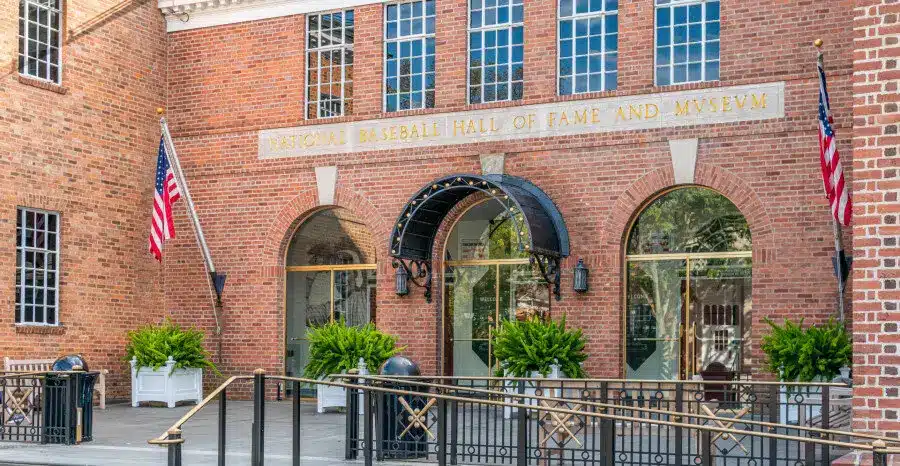
The National Baseball Hall of Fame and Museum sits on Main Street, surrounded by memorabilia stores, restaurants and shops selling just about anything that can have a baseball stitched, printed or glued onto it.
During tournament season, the sidewalks fill with young players wearing team gear. Parents talk about schedules over lunch. Grandparents point out old photographs and begin stories with, “Now, this was before players started flipping their bats.”
Inside the Hall of Fame, several generations of baseball fans come together. The museum gives young players a sense of where they fit in the sport. At home, their baseball world might consist of batting practice, weekend tournaments and trying to remember where they left their sliding mitt. In Cooperstown, they see that the game existed long before them and will continue long after their final out.
The Big League Treatment
Once tournament play begins, the kids get a taste of the big leagues, without the major-league salary, unfortunately.
There are uniforms, ceremonies, scoreboards and crowds packed with family members. Players may stay together in bunkhouses or a player village, turning the week into a full-time team experience. And the games feel important.
A player hears his name announced as he walks toward the plate. Music is playing. Teammates are leaning over the dugout fence. Parents have their phones out, attempting to record the moment while simultaneously yelling reminders about keeping his hands back. For a few seconds, a youth tournament at-bat can feel like the bottom of the ninth in the World Series.
That is part of the fun. The games can feature impressive pitching, long home runs and outstanding defensive web gems. They can also include wild pitches, missed signs and three fielders watching a pop-up land between them.
Teams arrive from different parts of the country and play at different competitive levels. Some come with serious championship expectations. Others want to represent their hometown, win a few games and avoid running out of healthy pitchers by Thursday.
Not every contest is close, and not every player has a great week. But even a tough game feels different when it is played in Cooperstown.
The Wild World of Pin Trading
Baseball is only one competitive activity taking place in Cooperstown. The other is pin trading.
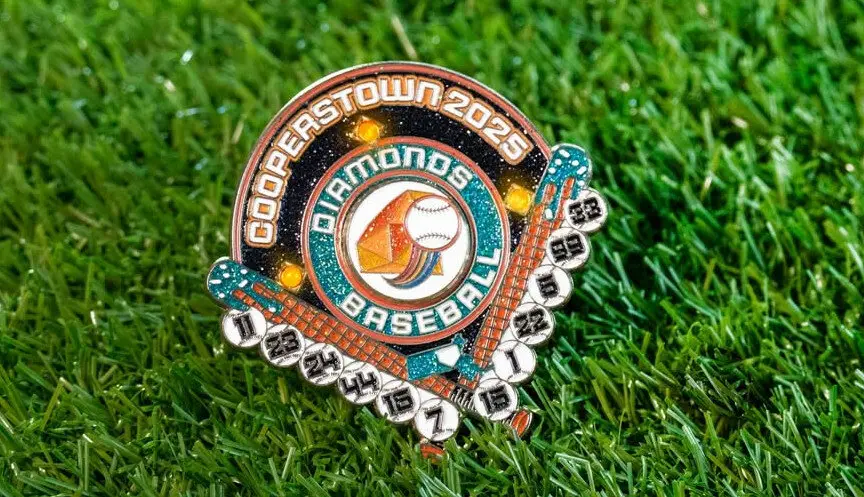
Before the trip, teams create wild custom pins featuring their logos, mascots, hometowns or local landmarks. They spin, blink, and even glow-in-the-dark. These aren’t your grandparents pins. And once they arrive, players turn into little businessmen tradings those pins with kids from other teams.
This sounds like a calm and wholesome hobby. It is not.
Within hours, players understand which pins are rare, which designs are popular and which teammate is willing to trade anything shiny. Backpacks become portable showrooms. Negotiations happen between games, during meals and anywhere two players can say, “What do you want for that one?”
At Cooperstown Dreams Park, the youth pin trading tradition dates to 1996. It was created to help teams share something from their communities and meet players from other places.
It certainly does that. A shortstop from Texas might trade with a catcher from New Jersey. A player from California meets someone from a small town he has never heard of. For a moment, opponents become fellow collectors trying to complete their sets.
By the end of the week, players have bags, towels or books covered with the best Cooperstown trading pins they can deal for. The collection becomes a heavy, slightly dangerous scrapbook of the trip.
Before They Were Big Leaguers
The young players taking the field in Cooperstown are following some impressive footsteps (and cleat marks).
Before Mike Trout became a three-time American League MVP, he played at Cooperstown Dreams Park in 2003 and 2004 with teams from New Jersey. Bryce Harper competed there during four separate tournament weeks from 2003 through 2005, including a championship run with the San Diego Stars North.
The tournament’s alumni also include MLB stars such as Mookie Betts and Nick Castellanos. Cooperstown Dreams Park maintains a “Where Are They Now?” program highlighting former participants who went on to accomplish big things in baseball and other sports.
Of course, those future stars looked a lot different during their Cooperstown days. They were not arriving on team charters or signing massive contracts. They were kids carrying bat bags, sleeping in bunkhouses and navigating the dangerous showers the event has become known for.
That history adds another layer of excitement for current players. The center fielder chasing down a fly ball might be standing in the same spot where a future MVP once played. The kid hitting a home run under the lights might someday see his own name on a professional roster.
When Teammates Become Roommates
The time away from the field can be just as memorable as the games. At home, players generally show up, play and leave. At Cooperstown, teammates may spend nearly the entire week together. They eat together, relax together and attempt to sleep in the same building. That last part may be a generous use of the word “sleep.”
The players tell jokes, replay games and develop team catchphrases that no adult will ever fully understand. Coaches discover which kids are responsible, which kids lose everything and which kids somehow require 45 minutes to put on a uniform.
The arrangement can create stronger bonds. Players see how teammates respond after a difficult loss. They learn who needs encouragement and who can make everyone laugh when the team is tired and cranky when a rain delayed game has to be made up at 1 AM.
They also gain some independence. Without a parent standing nearby, players must keep track of their schedules, uniforms and equipment.
The Parents’ Tournament
Parents experience Cooperstown differently, but it can mean just as much to them. They remember the early practices, long drives and uniforms washed at ridiculous hours. They have watched their children strike out, improve, lose confidence and find it again. Seeing those same kids take the field at Cooperstown can make even the most battle-tested travel-ball parent emotional.
Grandparents often join the trip, too. A grandparent who once followed baseball on the radio can tour the Hall of Fame with a grandchild who watches highlights on a phone. They may not agree about which era produced the best players, but that debate is part of the fun.
Eventually, the week ends. The equipment is packed, the trading pins are organized and everyone begins the long trip home with more laundry than any family should legally be required to transport.
Most players will not remember every score. They will not remember their exact tournament batting average or who finished 47th in pool play. They will remember the home run under the lights. They will remember the bunkhouse jokes, the new friends and walking through the Hall of Fame in their team gear. They will remember being 12 years old and spending one entire week in a place where baseball seemed like the most important thing in the world.
That is why Cooperstown is more than just another youth baseball tournament.