





The names CJC-1295 and ipamorelin turn up on strength-training forums, in supplement debates and in comment threads under rehab videos, usually with very little context.
This article explains what the two compounds are in a laboratory setting, what independent testing involves, and where anti-doping rules stand, using the documentation practices of Vive Peptides as a working example.
Vive Peptides, a US-based supplier of research-grade peptides, has its peptides compounded at a US-based lab that adheres to cGMP standards and sets a purity specification of 99% or higher by HPLC.
Its third-party tested CJC-1295 and ipamorelin blend is a two-peptide research vial holding 5 mg of each compound (10 mg total) as white lyophilized powder. It sells every compound strictly for laboratory and research use only, and none is approved for human consumption.
What Does Third-Party Tested Ipamorelin Actually Mean?
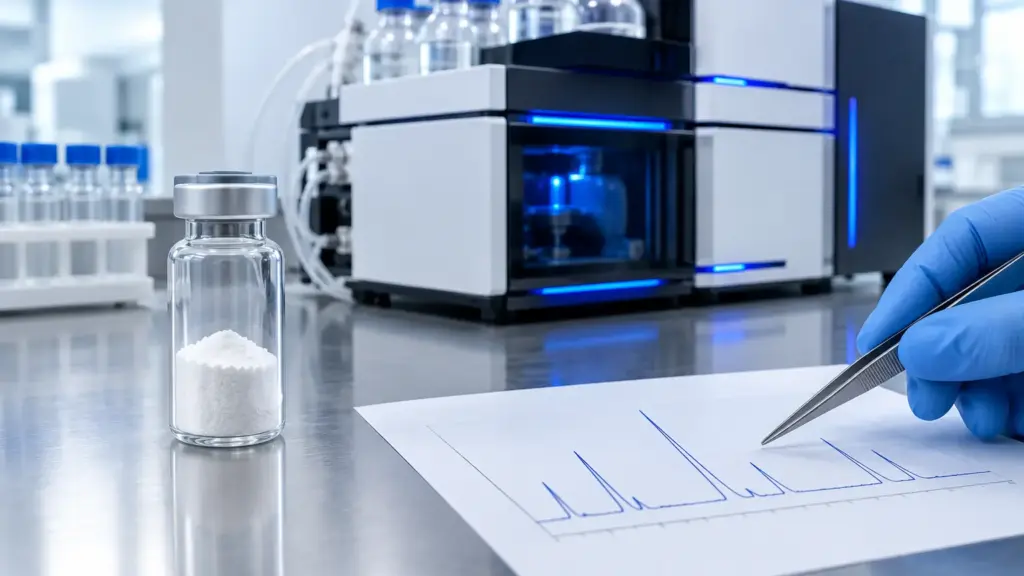
It means an independent laboratory, one with no stake in the sale, has analyzed a specific lot of the material and issued a report on what it found. That report is a certificate of analysis (COA), and it documents the purity and identity of one lot rather than of the product in general. For experiments that depend on a known amount of a known molecule, unverified material adds noise that nobody can trace.
The method pairs two checks. HPLC separates the components of a sample and reports how much of it is the target peptide, with UV detection recording the signal.
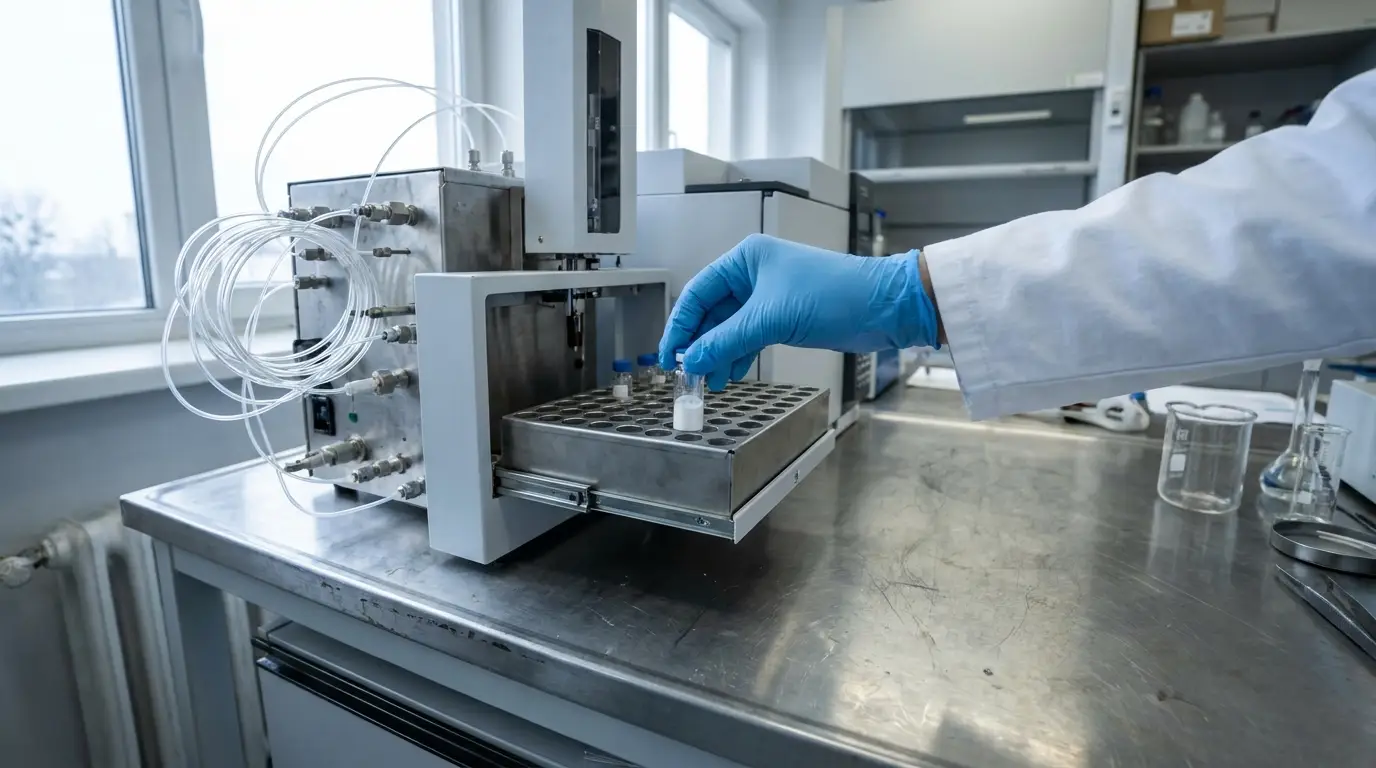
Mass spectrometry then confirms the molecular mass, which tells the lab that the main peak belongs to the right molecule. Vive Peptides has every lot analyzed by an independent USA-based laboratory using HPLC with UV detection coupled to mass spectrometry.
A purity figure is only as trustworthy as the instrument behind it. United States Pharmacopeia General Chapter <621> Chromatography is the reference standard for HPLC system suitability, setting checks such as peak resolution, tailing factor and the repeatability of results across repeated runs of the same sample before a purity result is trusted. That is a fair question to put to any testing laboratory: which suitability checks sit behind the number on the certificate?
What Are Growth Hormone Secretagogues in a Research Setting?
Growth hormone secretagogues are compounds that laboratories use to examine the signals that prompt the pituitary gland to release growth hormone. The field is interesting because there is more than one signal route. One begins with growth hormone releasing hormone (GHRH) and its receptor, while another runs through the ghrelin receptor, also called the growth hormone secretagogue receptor.
Because those routes are separate, scientists can design experiments that probe each one alone or both together. That is the logic behind pairing CJC-1295 without DAC and ipamorelin in a single research vial: the pair lets a lab ask how two distinct receptor pathways relate to each other under controlled conditions.
How Do CJC-1295 (No DAC) and Ipamorelin Differ?
They differ mainly in what they are and in the receptor each one is designed to engage. CJC-1295 without DAC is a modified analog of the first 29 amino acids of GHRH, made without the drug affinity complex that some related molecules carry. Ipamorelin is a synthetic pentapeptide that acts at the ghrelin receptor.
It entered the literature in 1998, when Raun and colleagues at a Danish pharmaceutical company described it in the European Journal of Endocrinology as the first selective growth hormone secretagogue.
| Feature | CJC-1295 (no DAC) | Ipamorelin |
| What it is | Modified GHRH 1-29 analog | Synthetic pentapeptide |
| Receptor studied | GHRH receptor | Ghrelin (GH secretagogue) receptor |
| Size | 29-residue backbone | 5 amino acids |
| CAS number | 863288-34-0 | 170851-70-4 |
Size matters in practice because it shapes how each molecule is handled and verified. A longer chain offers more places for truncated or altered by-products to appear, which is one reason mass confirmation is such a useful check. Laboratories working with these compounds generally lean on three kinds of work:
- Cultured cells that express the relevant receptor, used to look at binding and signaling.
- Animal models, used to examine patterns of pituitary hormone release in a living system.
- Analytical chemistry, used to confirm that the material in the vial matches its label.
None of this work tells anyone what either compound would do in a person, and nothing here should be read that way.
Does WADA Prohibit CJC-1295 and Ipamorelin?
Yes, both are prohibited at all times. The WADA 2026 Prohibited List, section S2.2.4 (growth hormone releasing factors), names GHRH analogues including CJC-1295 and sermorelin, and growth hormone secretagogues including ipamorelin.
For competitive athletes, that alone makes the topic one to approach with great caution, and anyone with questions about their own situation should speak with a qualified medical professional and their sport’s governing body.
Online talk about research peptides travels much faster than the laboratory context that belongs with it. Product listings, forum threads and short videos tend to strip out the details about receptors and models, leaving only the names, so athletes and coaches meet the terms without being told that they describe research materials.
Are CJC-1295 and Ipamorelin Approved for Human Use?
No. Vive Peptides sells both strictly for laboratory and research use only, and neither is approved for human consumption. Nothing on this page counts as medical advice.
That position is not a technicality. A research vial exists so that a scientist can work with a defined, well-characterized material in a controlled model. It says nothing about outcomes in any living person, and a responsible reading of the topic keeps that boundary visible.
What Should You Check on a Certificate of Analysis?
A few points are worth confirming on any COA before you rely on it:
- The lot number on the certificate matches the lot on the vial.
- The purity result is reported by HPLC.
- The mass confirmation lines up with the expected molecule.
- The chromatogram is included, not just a summary number.
- The testing laboratory is independent of the seller.
Vive Peptides keeps a public COA library searchable by peptide, lot number or size, so a reader can match a certificate to the material in front of them.
What Coaches and Clinicians Can Take From This
CJC-1295 without DAC and ipamorelin are best understood as tools for examining two receptor pathways in cell and animal models, not as products for athletes. The names will keep circulating online, so knowing the receptor science, the WADA position and the role of independent testing gives coaches and rehab professionals a solid footing for those conversations.
Whatever the compound, documentation from an independent laboratory is the minimum standard for any research material, and Vive Peptides holds itself to that standard.


