October 30, 2026
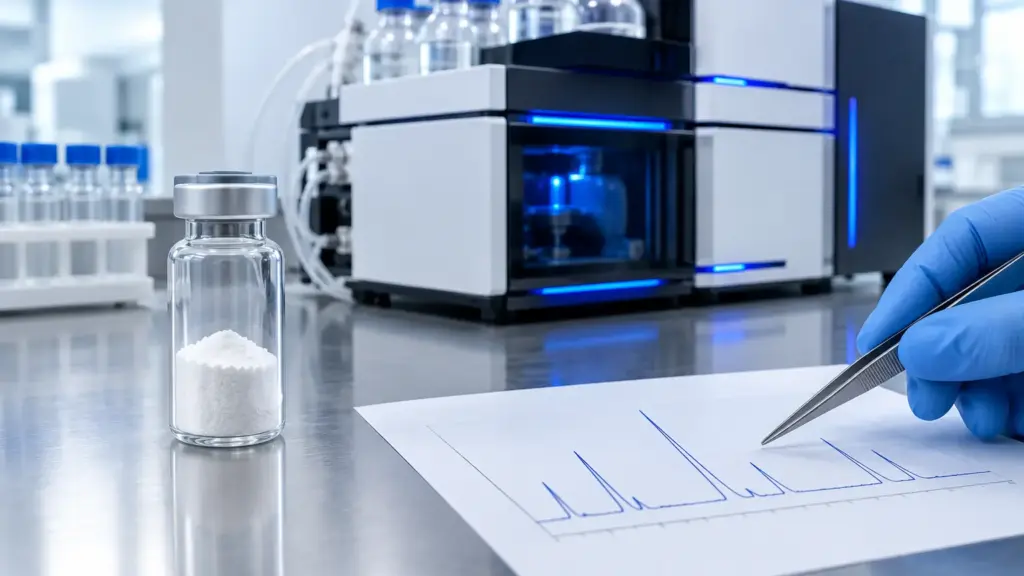
The names CJC-1295 and ipamorelin turn up on strength-training forums, in supplement debates and in comment threads under rehab videos, usually with very little context. This article explains what the two compounds are in a laboratory setting, what independent testing involves, and where anti-doping rules stand, using the documentation practices of Vive Peptides as a working example. Vive Peptides, a US-based supplier of research-grade peptides, has its peptides compounded at a US-based lab that adheres to cGMP standards and sets a purity specification of 99% or higher by HPLC. Its third-party tested CJC-1295 and ipamorelin blend is a two-peptide research vial holding 5 mg of each compound (10 mg total) as white lyophilized powder. It sells every compound strictly for laboratory and research use only, and none is approved for human consumption. What Does Third-Party Tested Ipamorelin Actually Mean? It means an independent laboratory, one with no stake in the sale, has analyzed a specific lot of the material and issued a report on what it found. That report is a certificate of analysis (COA), and it documents the purity and identity of one lot rather than of the product in general. For experiments that depend on a known amount of a known molecule, unverified material adds noise that nobody can trace. The method pairs two checks. HPLC separates the components of a sample and reports how much of it is the target peptide, with UV detection recording the signal. Mass spectrometry then confirms the molecular mass, which tells the lab that the main peak belongs to the right molecule. Vive Peptides has every lot analyzed by an independent USA-based laboratory using HPLC with UV detection coupled to mass spectrometry. A purity figure is only as trustworthy as the instrument behind it. United States Pharmacopeia General Chapter <621> Chromatography is the reference […]