




You finish a hard session, shower, eat, and get into bed tired. Then you lie there, too warm under the covers, kicking off the sheets at 1 a.m.
It’s a familiar complaint among evening exercisers, and it isn’t in your head. Hard exercise loads your body with heat, and that heat has to go somewhere before you can sleep well. Sleep, meanwhile, depends on your core temperature dropping.
When those two processes collide, sleep pays the price. And sleep is where much of your recovery happens.
Here’s what’s going on, what the research says, and what actually helps you cool down faster.
Why Your Body Runs Hot After a Hard Session
Hard exercise makes heat. Most of the energy your muscles burn is released as heat rather than movement, so a tough session leaves your core temperature well above normal.
Your body gets rid of that heat by pushing blood to the skin and sweating. But it doesn’t switch off the moment you stop. Heart rate, circulation, and metabolism take time to settle, and your body keeps working afterward to refuel and repair.
Here’s the catch: to fall asleep, your core temperature also needs to drop. After a hard evening workout, your body is trying to shed exercise heat right when it needs to cool down for sleep. If that heat has nowhere to go, you feel it as restlessness, sweating, and a bed that’s too warm.
Late, Hard Workouts Make It Worse
Timing and intensity matter more than whether you train in the evening at all.
A large 2025 study in Nature Communications followed nearly 15,000 active adults for a year using wearable trackers. The harder the workout and the closer it ended to bedtime, the later people fell asleep, the less they slept, and the higher their heart rate stayed overnight.
The good news: workouts that ended at least four hours before bed showed no effect on sleep, no matter how hard they were. Lighter sessions needed much less of a buffer.
In short, the harder the session, the more time your body needs before bed.
Dehydration and Humidity Slow the Cool-Down
Sweat is your main cooling tool, but it costs fluid. If you don’t replace what you lost, cooling slows down. Thirst, fatigue, headache, and a heart rate that stays high are common signs you’re behind.
Humidity makes it worse. Sweat only cools you when it evaporates, and damp air slows that down. Train in a hot, stuffy gym and then sleep in a warm, humid room, and you’re fighting the heat twice.
Your Bed Is Part of the Cooling System
Turning down the thermostat helps, but the heat that bothers you most at night is trapped right around your body, between the mattress and the covers. A thick duvet, a mattress that holds heat, or synthetic sleepwear can keep you too warm even in a cool room.
Your mattress also soaks up body heat all night, so it’s worth treating the bed itself as part of your recovery setup. One option built for this is OVAL Adapt, a temperature-regulating mattress cover that cools and warms four zones of the bed, including around your feet, and keeps adjusting through the night. It also draws on your daily activity and sleep data, so the bed can respond to what you actually did that day. That’s useful on nights when you trained late or the bedroom just won’t cool down.
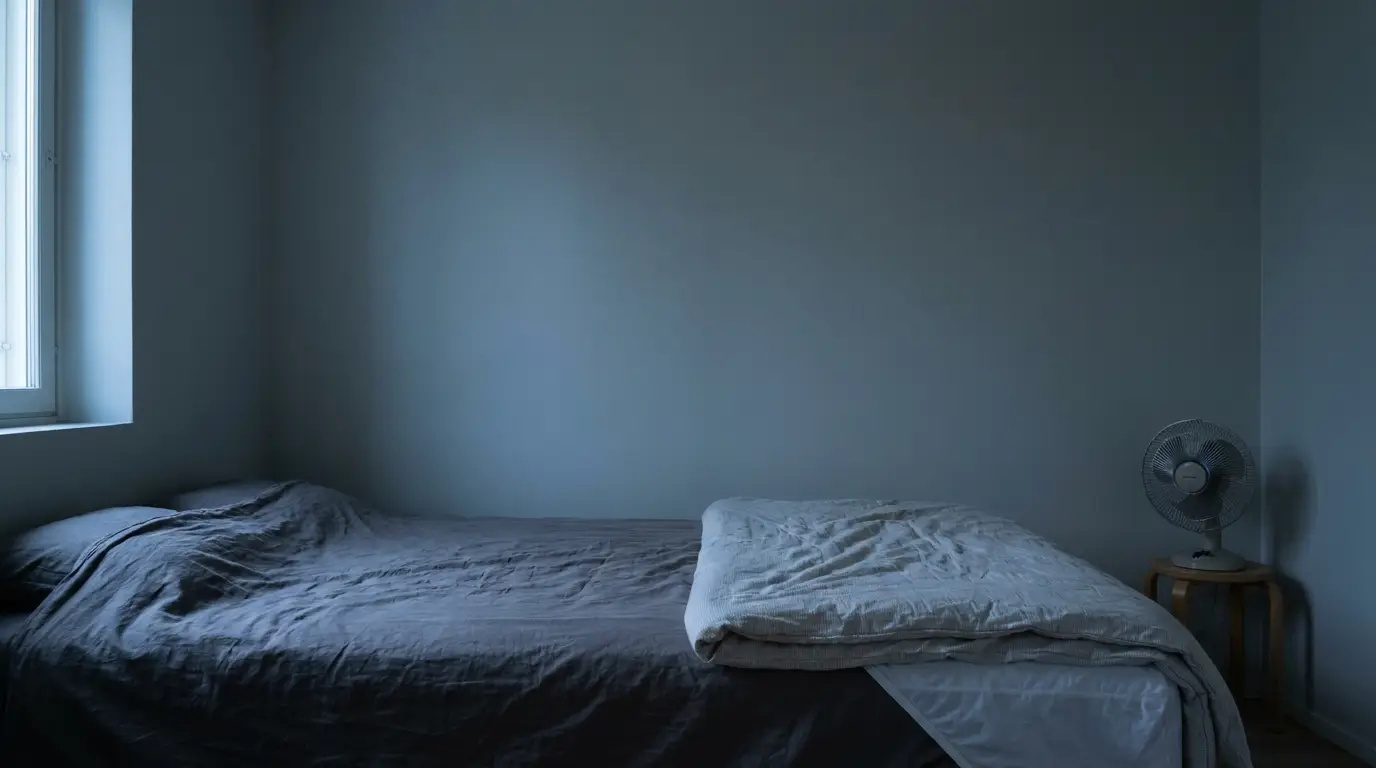
Whatever you sleep on, the goal is the same: give heat an easy way out.
How to Cool Down Faster After Training
1. Move the hard work earlier when you can. Try to finish high-intensity sessions at least four hours before bed. If evening training is your only option, do your intervals or heaviest sets first and keep the end of the session easy.
2. Don’t skip the cool-down. Spend five to ten minutes walking, spinning easy on a bike, or doing other low-intensity movement. You’re giving heart rate and circulation a controlled ramp down instead of going straight from max effort to the couch.
3. Shower cool or lukewarm, not ice-cold. A cool or lukewarm shower rinses off sweat and carries away some heat. Ice-cold water isn’t necessary right before bed; it can be jarring and trigger shivering, which works against the relaxed state you want. Dry off fully and change into clean, breathable clothes.
4. Replace fluids with a plan, not just thirst. Weigh yourself before and after long or very sweaty sessions. A common sports-nutrition rule is about 1.5 liters of fluid for every kilogram lost. Sip it over the next few hours, and add some salt through food or an electrolyte drink after heavy sweating.
5. Set up the room and the bed for heat loss. Keep the bedroom cool and well ventilated. A fan or air conditioning helps, but avoid pointing cold airflow directly at yourself all night. Use lighter bedding and breathable sleepwear. In humid weather, choose fabrics that dry quickly. Cotton feels good to many people, but it holds moisture once you sweat. If you regularly wake up hot, look at your mattress and bedding, not just the thermostat.
6. Eat enough, but time it well. You still need carbohydrates and protein to recover, so don’t skip dinner. Just avoid a very large meal right before lying down. Cut off caffeine early too. Many pre-workout products are heavily caffeinated, and caffeine can delay sleep on its own.
7. Give yourself a wind-down window. Low-stimulation time, such as reading, gentle stretching, or slow breathing, lets your body keep cooling before you get into bed.
Quick Reference: What to Fix First
| If this sounds like you… | Start here |
|---|---|
| You do hard intervals or heavy lifting after 8 p.m. | Move high-intensity work earlier, or finish it 4+ hours before bed |
| You go from your last set straight to the car | Add a 5–10 minute easy cool-down |
| You finish workouts drenched and rarely weigh in | Weigh before and after; replace about 1.5 L per kg lost |
| Your room feels fine but the bed feels hot | Lighter bedding, breathable sleepwear, or an active cooling layer like OVAL Adapt |
| You sleep in a warm, humid room | Improve airflow, lower humidity, choose quick-drying fabrics |
| You use pre-workout before evening sessions | Switch to a caffeine-free option or train earlier |
When Sleeping Hot Isn’t Just About Training
Feeling warm after a demanding workout is normal and usually passes. Don’t automatically blame exercise if the pattern doesn’t fit, though.
Talk to a healthcare professional if night sweats or overheating happen on rest days too, keep interrupting your sleep, or come with unexplained weight loss, fever, or other new symptoms. Some medications and medical conditions also affect sweating and temperature control.
Severe overheating during or after exercise is different. Confusion, fainting, collapse, or a change in consciousness can signal a heat-related emergency and needs immediate medical attention.
The Bottom Line
Sleeping hot after training comes down to timing. Exercise loads your body with heat right when it needs to shed heat to fall asleep. Late, high-strain sessions, dehydration, humid air, and a heat-trapping bed all make that harder.
The fixes are simple, and they work best together. Leave a buffer between hard training and bedtime. Cool down gradually. Rehydrate with a plan. And treat your bedroom and your bed as part of your recovery setup.
Train hard, then give that heat somewhere to go. Better sleep tonight sets up a better session tomorrow.


