
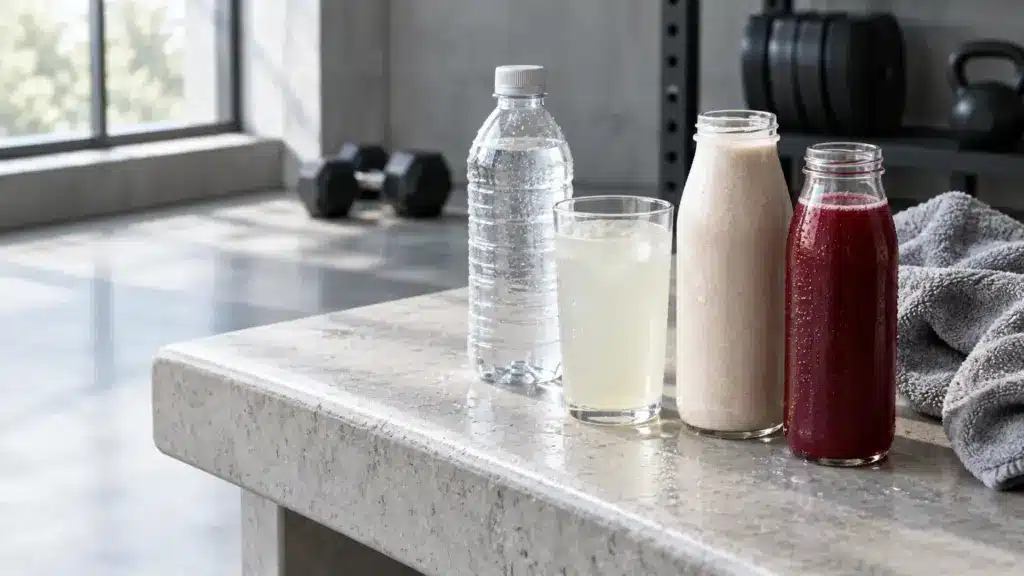




The last rep is done, the mat is back in the bag, and now comes the part people genuinely overthink: what to drink. There’s no universal answer. The right choice depends on what you did, how long you did it, and what your body is actually asking for. Here’s a breakdown of the options and when each one makes sense.
Water Still Wins Most of the Time
For anything under an hour at a manageable pace, plain water is all you need. Sweat losses during a standard workout don’t require anything fancier, and reaching for a sports drink every time just adds unnecessary sugar. The real variable is intensity and duration: once you’re past the 60 to 90 minute mark, or sweating heavily in the heat, electrolytes start to matter. Sipping steadily throughout the session also absorbs better than chugging a large amount all at once afterward.
Electrolyte Drinks for Longer Sessions
Magnesium, potassium, and sodium all leave with sweat. Hot yoga, long outdoor runs, or an extended training session can drain them fast enough to leave you feeling lightheaded or crampy. An electrolyte mix — either a pre-made drink or a powder stirred into water — replaces what was lost without the sugar load most traditional sports drinks carry. Check the label before committing to one, since some products lean heavily on dye and flavoring rather than actual mineral content.
Protein Shakes for Muscle Recovery

If strength training is part of your routine, a protein-rich drink afterward is worth prioritizing. A 20 to 30 gram protein shake within an hour or two of lifting gives your body what it needs to start repairing muscle. Whey protein shakes absorb quickly and are the most common choice, but plant-based blends work just as well if dairy isn’t an option. Adding carbs — a blended banana, for example — helps refill the glycogen stores that heavy training burns through.
Tart Cherry Juice for Soreness
Less common, but worth knowing about. Tart cherry juice has solid research behind it for reducing exercise-induced muscle soreness and supporting faster recovery. Results aren’t perfectly consistent across every study, but it’s one of the few post-workout drinks with genuine sports science backing it. Best used as a supplement alongside hydration and nutrition rather than instead of them.
THC Drinks for Winding Down
Some people swap the post-workout beer for a hemp-derived THC beverage as part of an evening wind-down routine. THC drinks are available online and are worth considering if you want something that helps you relax. These aren’t a substitute for water, electrolytes, or protein — they’re a healthier wind-down option than alcohol, not a recovery drink.
Coconut Water for a Natural Option
If you’d rather skip anything processed, coconut water provides potassium and light electrolytes from a natural source. It’s not as concentrated as a purpose-built electrolyte mix, so it works better for moderate sessions than for long or intense ones. It’s also easier on the stomach right after a hard workout than a protein shake tends to be.
Match the Drink to the Workout
The most common mistake is drinking the same thing after every session. A two-hour hike and a 30-minute lifting session don’t call for the same drink. Pay attention to intensity, duration, and how you actually feel afterward — then choose from the options above rather than defaulting to habit.