
August 20, 2026
Americans reported a record $15.9 billion in fraud losses in 2025, up from $12.5 billion the year before, according to Federal Trade Commission data summarized by AARP. Every one of those dollars began with someone trusting the wrong checkout page, seller, or link. Sports fans have particular reason to pay attention. The 2026 NFL season is underway, the NBA follows in the fall, and both will move enormous sums of fan money through tickets, subscriptions, and entry fees. This article examines why e-wallets became the trust layer for that spending, and what fans should check before relying on one. A Season of Concentrated Digital Spending Fall is the most transaction-heavy stretch on the sports calendar. Within a few weeks, fans renew streaming packages, draft fantasy teams, chase resale tickets, and order merchandise for the new season. Each of those purchases runs through a different platform with its own security posture. Nearly all of that money now moves digitally, and much of it moves between strangers. A typical fan’s autumn checkout history might include: Primary and resale ticket purchases for NFL and NBA games Season-long and daily fantasy entry fees Streaming and league pass subscriptions Merchandise from independent online retailers Deposits with licensed gaming operators, in states where that activity is regulated Live attendance remains the anchor of fandom, and demand for seats at venues famous for their atmosphere keeps resale markets busy. Sport Hiatus’s ranking of the loudest stadiums in the world documents the environments fans pay a premium to experience, with Arrowhead Stadium’s record crowd noise leading the list. Premium demand attracts sellers of every kind, including dishonest ones. Why E-Wallets Became the Default E-wallets solved a specific problem: handing card numbers to dozens of merchants of unknown quality. A wallet such as PayPal, Apple Pay, or Google Pay […]
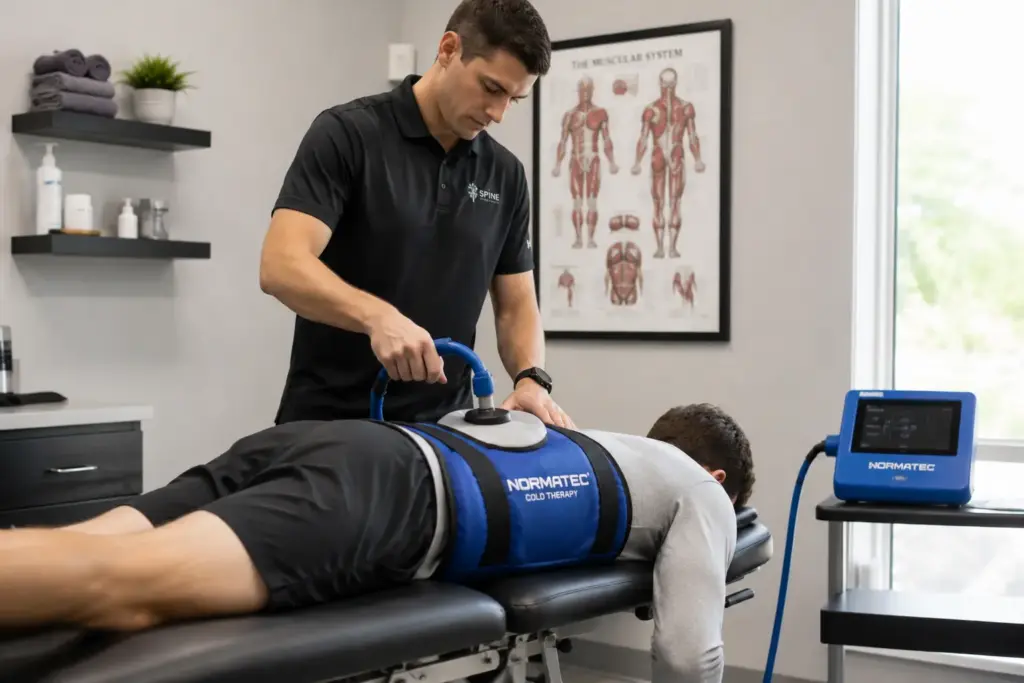
By: Dr. Alex Klein Most people treat ice as the treatment. You roll an ankle, you grab a bag of frozen peas, you elevate, and you wait. The problem is that the evidence for ice as a healing tool has never been strong, and the man who invented the acronym you learned it from spent the last decade of his career saying so. What has held up is something less satisfying and more useful: cold controls pain, movement drives recovery, and the two belong in a specific order. That order is where a good clinician earns their fee. What Cold Therapy Actually Does Cold works through a short list of real, measurable effects. It constricts blood vessels, slows nerve conduction, reduces tissue metabolic rate, and dulls pain. That last one is the reliable one. Every serious review that questions ice still concedes the analgesic effect, which tells you something about where the ground is solid. Where it gets thin is healing. A systematic review of 22 randomised trials covering 1,469 participants found little evidence that adding ice to compression has any significant effect. A 2022 umbrella review of ankle sprain management went further, noting that the highest-quality review it examined found no evidence for the effectiveness of RICE at all. Soreness is a different question with a better answer. A Cochrane review found some evidence that cold water immersion reduces delayed onset muscle soreness compared with doing nothing, though it rated the underlying study quality as low. Feeling less sore is a genuine benefit. It just is not the same thing as healing faster, and conflating the two is how people end up icing for six weeks and wondering why their ankle still feels unstable. The Man Who Invented RICE Changed His Mind Dr. Gabe Mirkin coined RICE in his […]
In the fields of sport and physical activity, intensity training has always been of primary importance. However, over time, recovery has become another important component of successful performance. The idea that the capability to restore and adapt is crucial is becoming increasingly popular in the community of athletes and other active people, ranging from professional teams to gym-goers. Modern technologies have been revolutionizing recovery methods, and red and near-infrared light therapy has been recognized as one of the methods that may help athletes in this matter. Contrary to a one-time fix, this technology has been recognized as part of a broader shift toward science-based recovery. Why Recovery Has Become a Key Part of Modern Training Recovery has become one of the most important components of modern sports training. Both professional athletes and recreational trainees have come to understand that improvement does not happen only during workouts, but also during recovery periods. Sports science proves that lack of proper recovery leads to fatigue, overtraining, and injuries. Professional sports teams spend a lot of money on various recovery techniques, including cryotherapy, sleep tracking, etc., as they know how important recovery is for maintaining high performance throughout the season. For instance, NBA teams include recovery days with mobility and low-intensity exercises to avoid fatigue accumulation. Marathon runners add recovery weeks to the training cycle, while strength athletes implement deload weeks to preserve their joints and nervous system. Even gym athletes learn how to recover properly to continue making progress. How Red and Near‑Infrared Light Are Being Explored in Athletic Recovery Light therapy, also referred to as photobiomodulation, involves bothred light and near-infrared light and has become a technology being explored by athletes. Both forms have different depths of penetration into the tissue, with red light mainly affecting the skin and surface muscles while […]

Thousands of athletes push through routine aches every day, assuming localized muscle fatigue is simply the cost of hard training. When dull muscle soreness transforms into sharp zings or localized burning, the underlying issue is often neurological rather than muscular. Ignoring these early warning signs can let minor nerve root irritation escalate into chronic performance deficits. Ordinary post-workout soreness typically presents as a dull, bilateral ache that responds well to rest and light stretching. Nerve-related compression behaves differently, presenting as sharp, unilateral shooting sensations or localized focal tenderness. Understanding this distinction prevents athletes from mismanaging spinal injuries with generic foam rolling or aggressive stretching routines that worsen tissue inflammation. Recognizing Neurological Red Flags in the Mid-Back When spinal nerves experience mechanical friction or structural compression, they manifest symptoms along specific anatomical pathways known as dermatomes. Recognizing these atypical warning signs early helps prevent permanent functional limitations. Red flags include: Sharp electrical sensations or burning pain wrapping around the ribs Unexplained localized numbness or persistent skin sensitivity along the torso Sudden grip or core stabilization weakness during heavy lifts Clinical Evaluation and Modern Treatment Pathways Persistent neurological symptoms require a comprehensive clinical assessment to isolate the exact source of nerve compression within the spinal architecture. Healthcare providers utilize specialized physical maneuvers, sensory mapping, and advanced diagnostic imaging like MRIs to evaluate structural stability. One condition that might be brought to light in this context is thoracic radiculopathy, which occurs when a nerve root in the middle section of the spine becomes compressed, irritated, or inflamed. This specific type of nerve dysfunction usually stems from structural changes in the mid-back, such as a herniated disc, bone spurs, or degenerative joint disease. Because the thoracic spine connects to the rib cage, the resulting pain, numbness, or tingling often wraps around the chest or […]


In competitive sports, the difference between a podium finish or an early exit often comes down