
May 17, 2026
When I watch football, I’m struck by the different ways players use strength on the field. This guide looks at the strongest NFL players, from all-time greats to current stars, known for documented strength feats or physical play during their careers. Quick Answer: Who Holds the Title of Strongest NFL Player? Larry Allen is a strong candidate for the title. He is remembered as one of the NFL’s strongest players, and the Dallas Cowboys documented him bench-pressing 700 pounds in 2001. Strength can mean different things in football. A heavy lift is one measure; the ability to generate force and hold position against an opponent is another. Allen’s documented bench press and reputation among fellow players make him a notable choice, though the title is a matter of opinion. Why Strength Matters in Football? Strength helps players block, tackle, hold their ground, and compete for space. Its role varies by position: linemen use positioning and force at the line of scrimmage, while running backs and receivers may rely on strength to maintain balance through contact. Strength is only one part of performance. Technique, speed, sports conditioning, and decision-making also matter. What Makes an NFL Player the Strongest? NFL strength isn’t judged by a single lift or workout number. Players are usually evaluated by how well their power translates to real football situations. Raw Strength: The ability to lift extremely heavy weights during exercises like bench press, squat, and deadlift. Functional Strength: Using power effectively during tackles, blocks, and physical battles on the field requires functional strength work. Explosive Power: Generating force quickly for fast movements, hits, and sudden direction changes. Lower Body Strength: Strong legs and hips help players push opponents and stay balanced during contact. Upper Body Power: Arm, chest, and shoulder strength help linemen control defenders and protect […]

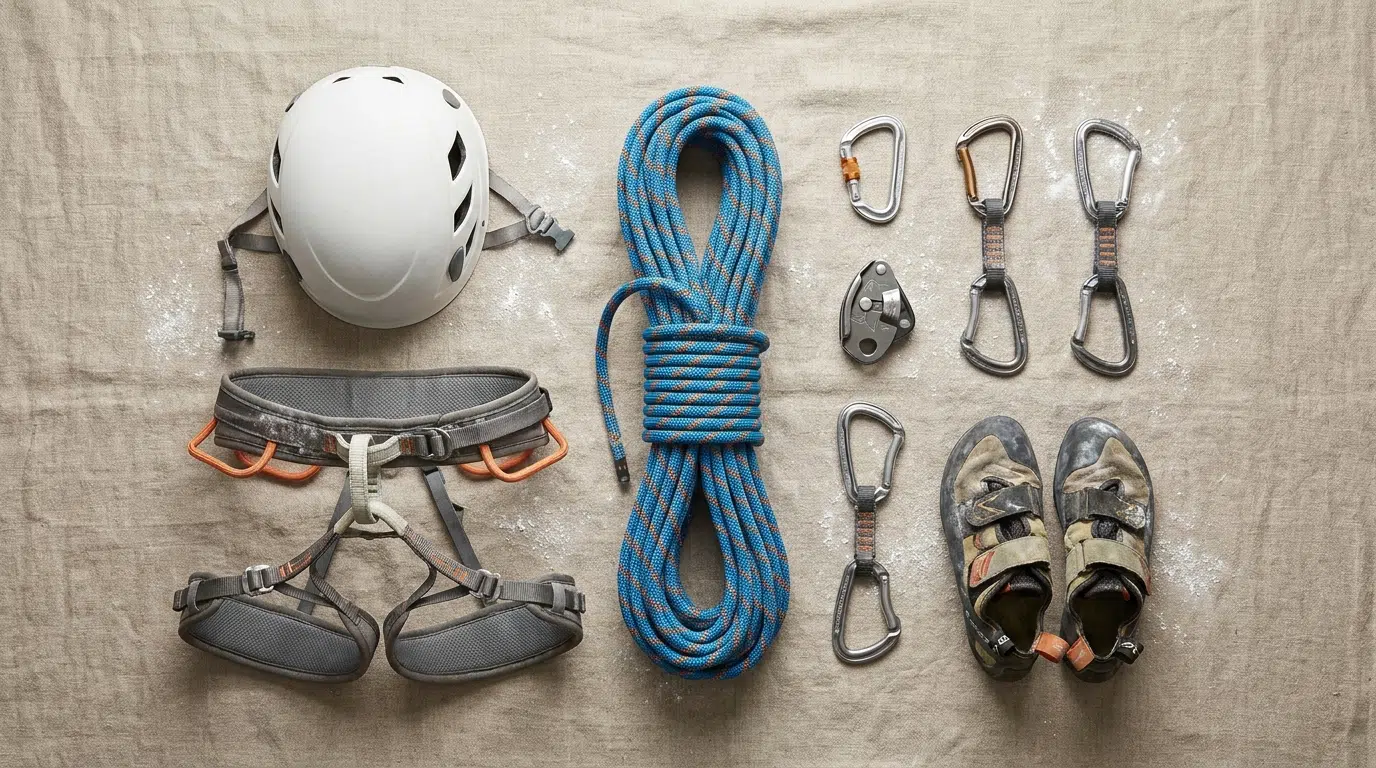
Most beginners spend way too much on gear they don’t need, or skip the basics they actually do. I made both mistakes. Rock climbing looks simple from the outside. You grab the wall and go up. But once you’re standing in a gear shop for the first time, the options are overwhelming. Shoes, harnesses, chalk bags, belay devices, it adds up fast, and nothing comes with a clear “start here” label. In this post on top rock climbing gear picks, I walk you through the gear that really helps when you’re new. You’ll find the main items, small extras, and easy tips to pick the right ones. By the end, you’ll know what to get and feel more ready to start climbing with confidence. Quick Answer: What Rock Climbing Gear Do Beginners Need? Beginners need climbing shoes, a harness, a rope, a belay device, a locking carabiner, and a helmet to start safely. Start with these basics and skip the extra gear for now. Shoes help you grip better on the wall. A harness keeps you secure when you climb or fall. The rope, belay device, and locking carabiner work together to keep you safe during climbs. A helmet adds protection, especially outdoors. Chalk and a chalk bag help keep your hands dry so you don’t slip. Focus on comfort and proper fit when choosing gear. You can always add more items later as you gain experience and try different types of climbing. Best Rock Climbing Shoes for Rock Climbing Rock climbing shoes are the first thing you need because they give you grip and control on the rock. Regular shoes don’t hold well, which makes climbing harder and less safe. 1. La Sportiva Katana Lace The La Sportiva Katana Lace is an all-around climbing shoe built for edging, comfort, […]
Practice time always feels shorter than it should. I’ve spent enough time around fields and dugouts to know that coaches rarely get the luxury of extra minutes. You walk in with a plan, but what you really need are softball drills that truly move the needle. The goal isn’t to fill time. It’s to build skills faster and make each rep matter. As someone who covers the game closely, I’ve seen how small practice details shape big game results. In this article, I will share high-impact drills built around real game situations. You’ll find ways to sharpen hitting, tighten defense, improve throwing and pitching control, and make smarter base running decisions. Why High-Impact Softball Drills Matter? High-impact drills focus on skills that help players improve during real games. These drills keep athletes active, focused, and ready for competitive situations. 1. They Create Game-Like Reps High-impact drills are fast-paced and built around real game situations. Players stay active by reacting, moving, and making quick decisions instead of waiting in long lines. Game-like practice helps athletes learn how to handle pressure and improve decision-making during live plays. Over time, these drills lead to smarter reactions and stronger on-field performance. 2. They Strengthen Fundamentals Strong fundamentals are important at every level of softball. High-impact drills help players improve fielding, throwing, hitting, and base running while keeping practice intense and focused. Youth drills that focus on the basics help build muscle memory early. Consistent practice reduces mistakes and creates habits that players can rely on during games. 3. They Build Confidence Through Skill Development Confidence improves when players feel prepared and notice progress in their skills. Purpose-driven drills help athletes work toward clear goals during every practice. As players improve, they become more confident in their abilities and perform with greater focus. Regular success […]