
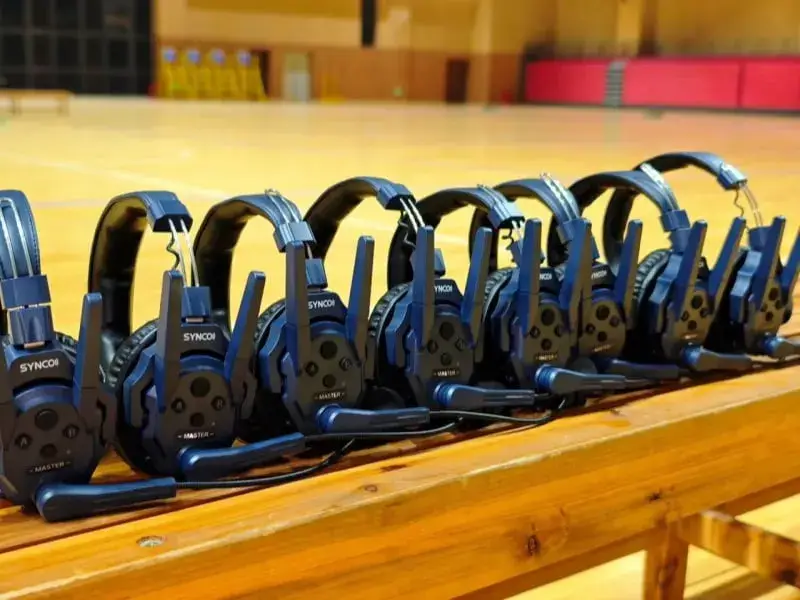





In modern professional environments, communication speed often decides the success or failure of an operation. Whether it is a sports event, live broadcast, production setup, or large-scale coordination task, teams rely on instant and accurate communication to perform effectively. Even a small delay in instruction can lead to confusion, errors, or missed opportunities.
This is where wireless two-way communication headsets have become an essential tool. These devices allow teams to stay connected in real time without physical constraints or interruptions. In this article, we will explore how these systems work, why they are widely used, and how they are transforming teamwork across different industries.

Source: SYNCO
Understanding Wireless Communication in Team Environments
Wireless communication technology has changed how teams interact during operations. Instead of relying on hand signals, mobile phones, or walkie-talkies, teams now use advanced headset systems designed for continuous communication. This makes coordination faster and more reliable.
Wireless two-way communication headsets allow users to speak and listen at the same time without pressing buttons. This creates a natural conversation flow, especially useful in high-pressure environments like sports coverage or live production. The ability to communicate instantly helps reduce errors and improves decision-making speed.
How Wireless Two-Way Communication Headsets Improve Workflow
In many professional environments, tasks are not performed in a single location. Teams are often spread across large areas, such as stadiums, filming locations, or industrial sites. Wireless communication bridges this gap by allowing instant contact between all members.
These headsets also reduce dependency on physical movement. Instead of walking to give instructions, supervisors can communicate instantly. This saves time and ensures that operations continue without interruption. Over time, this improves productivity and overall workflow efficiency.
Role of Wireless Intercom Base Station in Communication Systems
A key part of many professional communication setups is the wireless intercom base station. This device acts as the central hub that connects all headsets in the system. It ensures that every team member stays connected within the same communication network.
The base station helps manage multiple users at once, allowing structured communication without interference. In environments like sports broadcasting or event management, this becomes especially important because different departments need to coordinate simultaneously. A stable base station ensures that communication remains clear and uninterrupted throughout operations.
Real-World Applications in Sports and Event Management
Wireless communication systems are widely used in sports and live event environments. During a live match or tournament, multiple teams such as camera operators, production staff, and technical crews must work together seamlessly. Any delay or miscommunication can affect the quality of the broadcast.
With wireless two-way communication headsets each team member can receive instructions instantly. This allows directors to adjust camera angles, lighting teams to respond quickly, and technical staff to fix issues in real time. As a result, the entire production runs more smoothly and professionally.
Importance in Safety and Large-Scale Operations
Beyond sports and entertainment, these communication systems also play a critical role in safety-focused industries. Construction sites, industrial operations, and security teams rely heavily on instant communication to prevent accidents and ensure smooth coordination.
In such environments, wireless headsets help supervisors monitor activities and communicate warnings immediately. This reduces risk and ensures that workers remain aware of their surroundings at all times. Clear communication is often the difference between safe operations and potential hazards.
Advantages of Wireless Two-Way Communication Headsets
One of the major advantages of these systems is mobility. Users are not tied to a single location, allowing them to move freely while staying connected. This flexibility is especially important in fast-paced environments where constant movement is required.
Another advantage is clarity. Unlike traditional communication tools, modern headsets are designed to reduce background noise and improve voice clarity. This ensures that instructions are always understood correctly, even in noisy environments like stadiums or construction sites.
Challenges and Considerations Before Use
While wireless communication systems offer many benefits, they also require proper planning before implementation. Teams must ensure that devices are compatible and that users are trained to operate them effectively. Without proper setup, communication efficiency may be reduced.
Another consideration is environmental interference. In some large or complex locations, signal strength can be affected by physical barriers or electronic interference. Choosing a reliable system and correct configuration helps overcome these challenges.
Why Industries Are Moving Toward Wireless Communication Systems
The demand for wireless communication tools continues to grow because modern industries require speed, accuracy, and flexibility. Traditional communication methods are no longer enough to handle complex operations that involve multiple teams and fast decision-making.
Wireless systems provide a scalable solution that can grow with organizational needs. Whether it is a small production team or a large sports event crew, these systems adapt easily and ensure consistent communication quality.
Future of Wireless Team Communication Technology
The future of communication technology is expected to focus on even faster, clearer, and more intelligent systems. Improvements in battery life, signal strength, and audio processing will further enhance performance. Integration with digital platforms may also allow more advanced coordination tools.
As industries continue to evolve, wireless communication will remain a core part of team operations. Its ability to connect people instantly makes it one of the most valuable tools in modern professional environments.
Conclusion
Wireless two-way communication headsets have become an essential part of modern teamwork. Their ability to deliver real-time communication, improve coordination, and enhance productivity makes them valuable across multiple industries. From sports broadcasting to industrial operations, these systems continue to transform how teams work together.
With the support of systems like the wireless intercom base station, teams can maintain stable and efficient communication even in complex environments. As technology continues to improve, these tools will play an even bigger role in shaping the future of professional collaboration.
If you are interested in improving team communication, exploring wireless headset systems can be a practical step toward better efficiency, safety, and performance.