




Here’s something most players never figure out: the best competitors aren’t grinding one game forever. They’re building a set of fundamentals so sharp that switching genres barely slows them down.
Aim discipline. Map reading. Resource decisions under pressure. These aren’t game-specific tricks — they’re the actual engine behind elite performance, and they carry over.
Whether you’re moving from CS2 into Valorant, jumping out of Apex Legends into Rainbow Six Siege X, or picking up an extraction shooter after years of arena play, the core skills you’ve already built are more portable than you think.
The Universal Skills Matrix
Six skills sit underneath almost every competitive genre. Master these, and switching games becomes adaptation rather than starting over.
Skill Transfers From Transfers To | ||
Aim and precision | FPS aim trainers, tac shooters | Third-person shooters, tactical games |
Game sense and map awareness | MOBAs, tactical shooters | Siege X, Tarkov, squad-based games |
Resource management | RTS, strategy games | RUST, DayZ, RPGs, survival crafting |
Reaction time and decision-making | Fighting games, rhythm games | Almost every competitive genre |
Team coordination | Team MOBAs, raids, squad shooters | Squad, co-op survival, hero shooters |
Positioning and movement | Platformers, arena shooters | BRs, tactical FPS, extraction shooters |
The pattern here isn’t coincidental. These skills share underlying structures across genres — timing, tracking, coordination, information management. That’s exactly why they travel.
How Skill Transfer Actually Works
Motor learning research gives a clear explanation for why competitive gaming fundamentals are so portable. When you repeat a motor pattern enough — crosshair placement, flicking to a target, controlling recoil — that movement gets encoded deeply. When you encounter a similar timing or tracking demand in a new game, your nervous system doesn’t start from zero.
Cognitive transfer follows the same logic. If two games share structural demands — reading enemy patterns, making fast choices with incomplete information, managing limited resources — the mental frameworks you’ve already built apply directly.
The research framing here matters: transfer is strongest when the new environment shares underlying structure, not just surface appearance. A MOBA player moving into tactical shooters doesn’t need to relearn how to read rotations. The skill exists. It just needs new context.
Genre-by-Genre Breakdown
FPS and Tactical Shooters
This is the most transfer-dense cluster in competitive gaming. CS2, Valorant, and Rainbow Six Siege X all reward aim precision, off-angle discipline, and callout accuracy — just in different ratios.
CS2 players moving into Valorant will find their crosshair placement and spray control carry over almost immediately. The addition of abilities changes the resource management layer, but the aim and positioning fundamentals are identical in execution. Siege X narrows the lens further: map knowledge and breach-read pattern recognition matter more than raw aim speed, but the players who arrive already understanding angle control get there faster.
Extraction Shooters
Escape From Tarkov punishes players who try to apply pure FPS instincts without adapting. But it rewards one FPS skill above almost everything else: positioning. The players who survive and extract consistently are the ones who already understand exposure management, movement line selection, and pre-aiming common angles — skills built directly from tactical shooter backgrounds.
Resource management from survival and strategy games also transfers hard here. Deciding what to carry, when to fight versus disengage, and how to allocate inventory mid-raid is the same mental model as managing cooldowns or economy in a MOBA.
Battle Royales
Apex Legends and similar titles reward a broader skill set than most genres. Movement fundamentals from arena shooters translate directly into rotation speed and positioning advantage. MOBA players tend to arrive with stronger macro-game instincts — zone awareness, resource prioritization, and team coordination — even if their raw aim requires more development.
The key insight for BRs: game sense and map awareness are often more decisive than mechanical aim at mid-tier play. Players with strong MOBA backgrounds frequently climb faster than pure FPS players in the early ranks because they’re already reading the game rather than just reacting.
What Pro Players and Coaches Actually Train
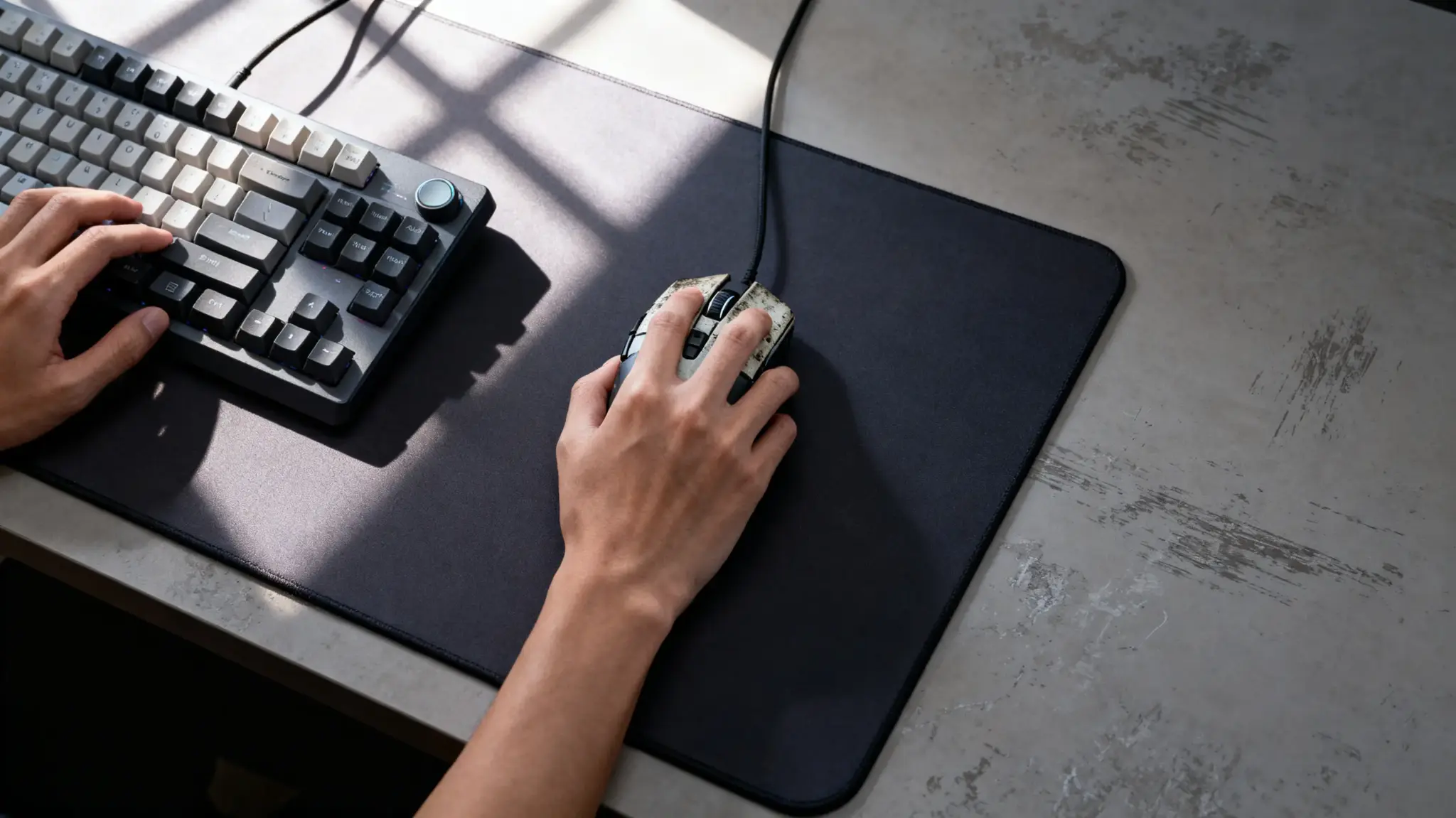
Watch how esports coaches structure practice for top-tier players and a pattern emerges immediately. They don’t drill game-specific tricks first. They build fundamentals.
Warmup routines in tactical shooters focus on crosshair discipline, flick accuracy, and tracking — skills that generalize across every FPS title. VOD review sessions center on positioning errors, rotation timing, and information management decisions. These are the same sessions you’d run whether you were coaching CS2, Valorant, or Delta Force.
Players who transition genres at the professional level — and there are many — consistently describe the same experience: the mechanical foundation transfers quickly. The adaptation period is almost entirely about learning new information systems, callout language, and game-specific execution windows. The underlying competitive skill? Already there.
That’s not accidental. It reflects exactly what motor learning and cognitive transfer research predicts: fundamentals built through deep repetition are durable and portable. Surface-level tricks are not.
Myth-Busting: What Doesn’t Transfer (And Why)
Skill transfer has real limits worth naming. Raw sensitivity settings don’t transfer directly — each game’s mouse input system, FOV, and movement physics create different effective sensitivities even at identical values. Players often spend a week recalibrating after switching titles, which is normal and expected.
Game-specific knowledge — map names, ability kits, weapon statistics, economy rules — doesn’t transfer at all. That knowledge has to be built fresh. This is the most common source of frustration for skilled players entering a new genre: their mechanics feel sharp but their decision-making feels slow, because they’re making good general calls with incomplete game-specific information.
The fix is targeted. Spend deliberate time on map knowledge and meta research early. The mechanical skills are already working for you in the background. If you want to reduce friction during that adaptation window, some players explore premium gaming hacks to experiment with new titles while fundamentals catch up — though long-term improvement always comes back to deliberate practice on the core skills outlined here.
A Practical Training Plan for Players Switching Genres
Week 1 — Calibrate, don’t compete. Spend the first week in deathmatch, practice modes, or lower-stakes lobbies. The goal is recalibrating aim feel and learning the movement system. Track your sensitivity conversion and adjust incrementally.
Week 2 — Map knowledge sprint. Study two or three core maps at a level deep enough to understand standard rotations, common angles, and callout names. Watch high-level gameplay specifically for positioning logic, not aim highlights.
Week 3 — Apply competitive fundamentals. Enter ranked or competitive play. Focus on positioning decisions, not individual gunfight outcomes. Your aim and reaction time will continue calibrating passively. The faster lever to pull is game-sense application.
Week 4 and beyond — VOD review on decision-making. Review your own gameplay specifically for moments where your general competitive fundamentals conflicted with game-specific execution. These gaps close fast with targeted attention.
Frequently Asked Questions
Does Aim Really Transfer Between FPS Games?
Yes, with calibration. Crosshair placement habits, tracking technique, and flick timing are motor patterns that transfer directly. Sensitivity and input feel require adjustment, but the underlying skill is already built.
How Long Does It Take to Adapt Map Awareness to a New Game?
Most players with strong tactical shooter backgrounds reach functional map awareness in two to three weeks of focused study. Players from MOBA backgrounds often develop macro-level awareness faster than expected because the rotation-reading framework already exists.
Will My Sensitivity Work in a New Game?
Not directly. Use a sensitivity converter as a starting point, then adjust based on feel over the first week. Chasing the exact same feel isn’t the goal — recalibrating your aim to the new input system is.
Why Do I Hit a Skill Plateau When Switching Genres?
Plateaus in new genres almost always reflect an information gap, not a skill gap. The mechanics are often performing well before the player realizes it. Targeted map study and meta research typically break plateaus faster than additional aim training at that stage.