
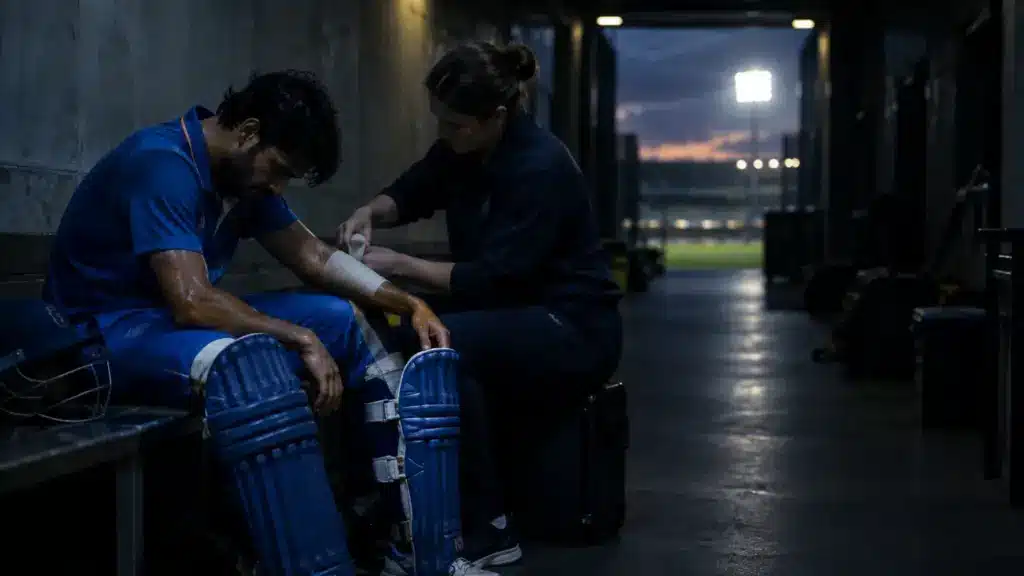





For a long time, football’s status as not only the world’s most-watched and most-played sport, but also its most lucrative, was unchallenged. And with that commercial significance came the trappings of big business, meaning teams in top leagues began pushing players harder at the same time as paying them fortunes. Packing the schedules with domestic games and international club competitions, alongside national-level tournaments and a range of other responsibilities, was good for the sport’s growth, but also took a toll on players. And it’s not a small thing to say that mental and physical exhaustion are detrimental to performance, even in the case of elite athletes.
Now, cricket is in a similar position, with the success of T20 in particular creating a similar situation to the one football was in three decades ago. Here’s how the football-ification of cricket is playing out, and how player recovery is getting compromised as schedules become more relentless.
The Rise of Clubs & Franchises
Club-level play didn’t used to be the place where professional cricketers made the bulk of their money or attained the majority of their acclaim; they did this by playing for their countries. But with the explosion of franchise leagues like the IPL and the ocean of money pouring into them, all that’s changed.
As a result, the top star of the sport, at least from an earnings perspective, now makes $38.4 million a year. And Virat Kohli, pre-T20 retirement, wasn’t the only one taking home tens of millions of dollars. That’s English Premier League money, and unquestionably evidence of how football’s club-level commercial model has influenced cricket.
In turn, T20’s punishing schedule, brought about by the franchise-first setup of leagues, leaves little respite between games and tournaments over the course of a typical year. Fans might notice the fatigue setting in when players have had a succession of intensive games in a short window of time. And for those interested in cricket betting online, the implications of interrupted player recovery are equally important. A star player who’s been run ragged might not be able to deliver in upcoming matches, creating opportunities to beat the betting market.
The Difference in Recovery Needs
While there might now be structural similarities to how football and cricket operate at the commercial level, the way player recovery needs operate differs between the two sports, and that comes down to how they’re played and over what time frame.
Football plays out over two halves for a total of 90 minutes, and the majority of players start the match and complete it while effectively running throughout. Conversely, T20 games can last for 4 hours and involve much less continuous movement, instead concentrating exertion into high-intensity bursts.
Aside from creating a different type of physical deficit for busy T20 players to deal with, the game’s intense schedule also involves more travel over longer distances, bringing a mental component into play. Fatigue compounds, and rest periods get compressed in a way that’s not necessarily good for individual match performances nor player longevity.
Luminaries in cricket have spoken out about this issue, so it’s not being completely ignored. It will just take more time and effort within the sport to tackle it, and give players more time and space to recover.


