
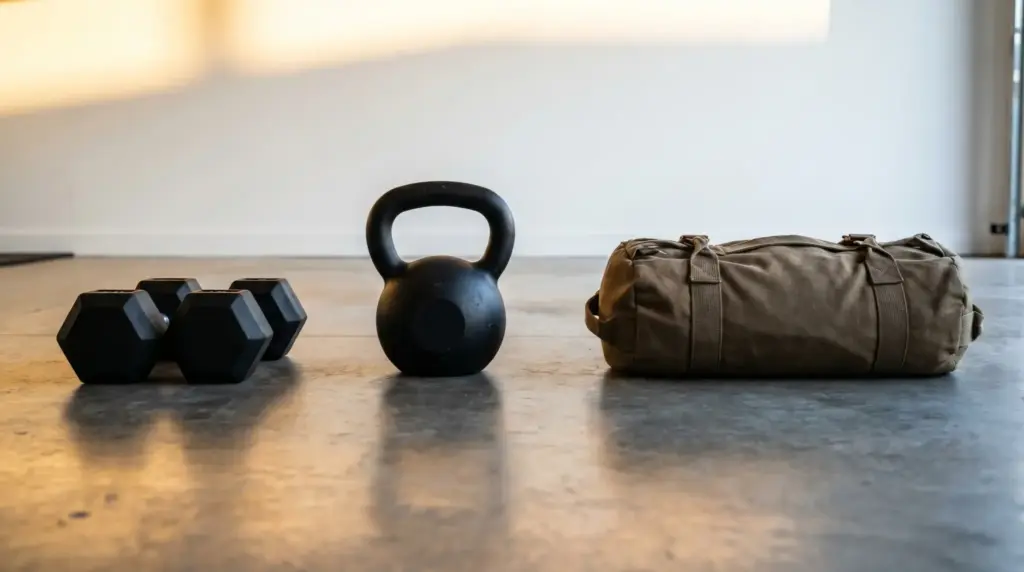




Setting up a home gym means making smart choices about which equipment will actually help you reach your goals. Dumbbells, kettlebells, and sandbags all bring something unique to strength training, but they work in pretty different ways. The right pick depends on your goals—and, honestly, on what you enjoy using.
Your best equipment choice comes down to your specific training goals, available space, and workout style. Dumbbells are ideal for classic strength moves and let you bump up the weight in small steps. Kettlebells shine for dynamic, powerful movements. Sandbags? They’ll test your stability and grip like nothing else.
This guide breaks down how each piece of equipment performs for different training objectives. You’ll also get a sense of the practical stuff—cost, space, and what actually fits your vibe. Let’s see what deserves a spot in your home gym.
Comparing Equipment Types for Different Training Objectives
Each tool offers distinct advantages depending on whether you’re building maximum strength, improving movement quality, or developing new skills. Your choice should match your primary training goal and workout style.
Strength Building Potential
Dumbbells are the go-to for pure strength and muscle growth. You can increase the load in small jumps and stick to classic exercises like bench presses, rows, and shoulder presses with stable, controlled movements. The balanced weight makes it easier to push heavier without worrying about awkward shifts mid-rep.
Kettlebells are better suited for strength endurance than max strength. Their off-center weight makes heavy presses a bit tricky—there’s just more wobble, so it’s tough to go as heavy as you might with dumbbells. Still, they’re fantastic for building strong hips and posterior chain muscles through swings and ballistic moves, even if they don’t quite match dumbbells for raw strength gains.
Sandbags bring a whole different challenge. The shifting sand inside forces your stabilizer muscles to work overtime. It’s great for building strength that actually translates to real life, but sandbag training can feel awkward, and it’s not as easy to isolate specific muscles or track your progress with precision.
Functional Training Versatility
Kettlebells are kings of dynamic, full-body movements that build power and conditioning. Swings, snatches, Turkish get-ups—they hit lots of muscles and get your heart rate up. The compact design and single handle make it easy to flow between exercises, especially in circuits.
Sandbags are probably the most sport-specific functional training tool here. Carrying, throwing, shouldering—these moves mimic real-life stuff way better than most gym equipment. You’ll build grip strength, core stability, and the ability to control unpredictable loads. Not bad if you ever need to move a couch or wrangle a toddler.
Dumbbells can be used for functional moves like lunges, step-ups, and carries. Still, their symmetrical, rigid shape doesn’t really test your stability and coordination like kettlebells or sandbags do.
Progression and Skill Development
Dumbbells make it easy to progress, especially if you’re new to lifting. Start light, add weight gradually, and most exercises are simple to learn. You don’t need much coaching to get started safely.
Kettlebells, though, take some practice. Ballistic moves like swings and snatches need solid technique and good timing. Plan to spend some time learning the basics before you go heavy. Once you get it, though, they open up a lot of high-intensity options.
Sandbags fall somewhere in the middle. Basic carries and squats are pretty straightforward, but things get trickier with shouldering or throwing. The shifting weight means you’re always adapting, so you’ll build body awareness over time.
Evaluating Practical Factors and Personal Preferences
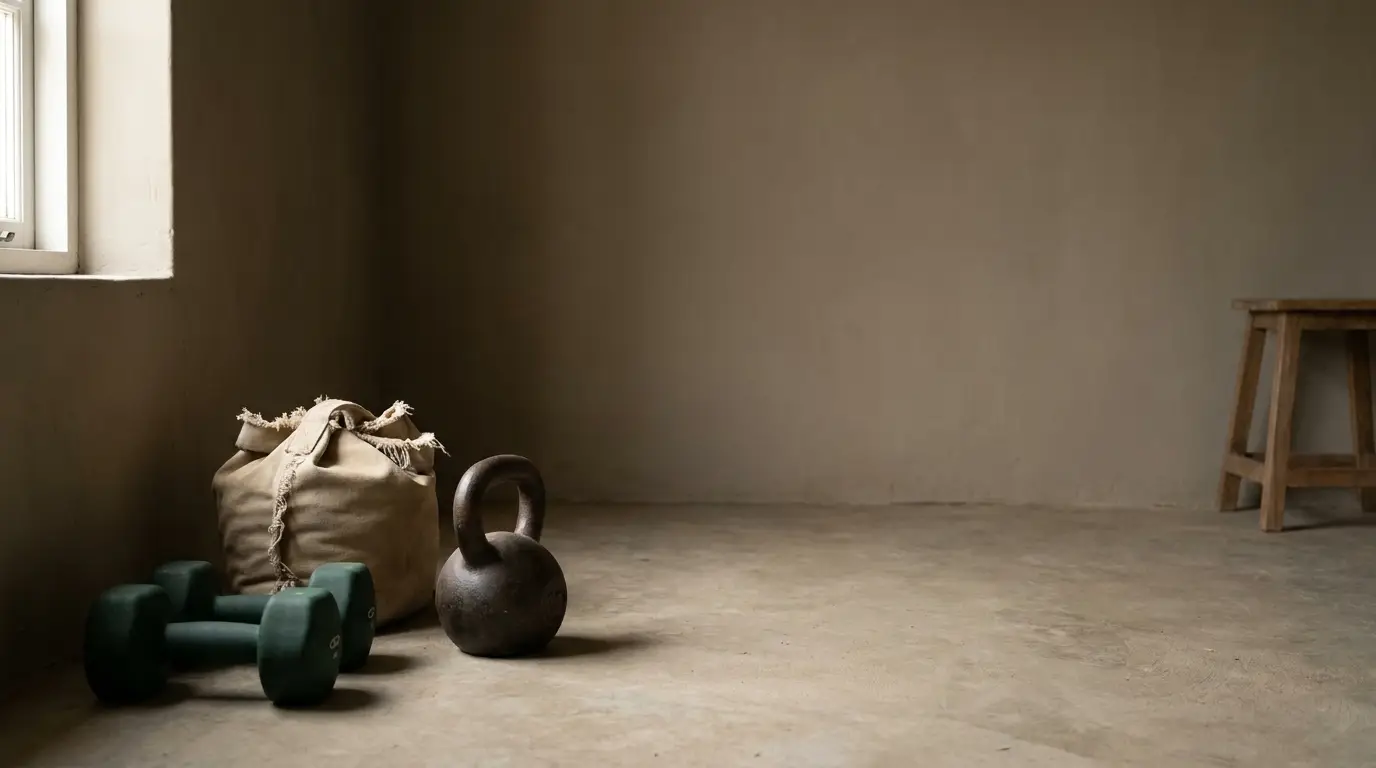
Your choice between dumbbells, kettlebells, and sandbags depends on your available space, budget, skill level, and how the equipment fits your daily routine.
Space and Storage Needs
Dumbbells can eat up a lot of space, especially if you’re collecting pairs in different weights. A full set from 5 to 50 pounds needs a rack or a good chunk of your floor. Adjustable dumbbells are a clever workaround—they replace a bunch of pairs with a single set.
Kettlebells take up less space. You can get by with just a few—maybe three or four—and they tuck away easily in a corner or under a bench.
Sandbags are the most compact. One bag with removable fillers lets you adjust weight from 10 to 75 pounds or more. When empty, you can fold it up and stash it almost anywhere.
Space Requirements:
- Traditional dumbbells: 15-30 square feet for a full rack
- Adjustable dumbbells: 1-2 square feet per set
- Kettlebells: 2-4 square feet for 3-4 bells
- Sandbags: Less than 1 square foot when stored
Budget Considerations
Traditional dumbbells run about $1-3 per pound, so a basic set from 10 to 50 pounds can set you back $300-600. Rubber-coated ones? Expect to pay more.
Adjustable dumbbells usually cost $200-500 for a solid set, which is a better deal long-term than buying a bunch of singles.
Kettlebells are in the $1.50-2.50 per pound range. Three bells—light, medium, heavy—will probably cost you $150-300 altogether.
Sandbags are the most budget-friendly option. A quality sandbag with filler bags usually runs $60-150. If you’re handy, you can save even more by buying your own sand or rubber mulch from a hardware store.
Ease of Use and Learning Curve
Dumbbells are about as straightforward as it gets. The weight feels natural, and most moves are familiar. Beginners can pick them up and get going quickly.
Kettlebells need a bit more attention to form. Swings, snatches, Turkish get-ups—you’ll want to watch some tutorials or get a coach. That offset weight center can trip you up, especially with explosive moves. Give yourself a couple of weeks to nail the basics.
Sandbags? They’re a different beast. The weight shifts around, so your grip and stability get challenged in new ways. Start lighter than you think—these things humble even experienced lifters until you get used to them.
Adaptability for All Fitness Levels
Dumbbells are pretty much the go-to for anyone, whether you’re just starting out or you’ve been lifting for years. The option to bump up the weight just a bit at a time makes it less intimidating. You can stick to the basics or get creative with your workouts as you get stronger.
Kettlebells, on the other hand, feel more at home with folks who’ve got a bit of experience. Sure, beginners can try them, but honestly, those unique motions take some practice. They’re fantastic if you’re chasing explosive power or want to ramp up your conditioning, but there’s a learning curve.
Sandbags are surprisingly versatile if you pick the right style. Some let you tweak the weight with separate filler bags, which is handy. The way the load shifts ramps up the challenge—a 30-pound sandbag can feel way tougher than a dumbbell of the same weight.
People dealing with joint pain or old injuries often lean toward sandbags since the shifting weight doesn’t hammer one spot as much. Kettlebells, though, can be rough on wrists or shoulders if your form slips even a little.