




Cristiano Ronaldo’s success is built on years of disciplined training, smart recovery, and a commitment to staying in peak physical condition.
His evolving fitness routine helps maintain strength, speed, endurance, and agility at football’s highest level
The Cristiano Ronaldo workout plan is designed to improve athletic performance rather than focus solely on appearance, making it a popular source of inspiration for athletes and fitness enthusiasts alike.
While not every part of his routine is practical for the average person, many of its training principles can be adapted to different fitness levels.
In this article, you’ll get a closer look at Ronaldo’s training approach, the key elements that shape his workouts, and practical insights you can use to build a more balanced and effective fitness routine.
What Is the Cristiano Ronaldo Workout Plan?
Cristiano Ronaldo’s workout plan is a high-performance training program that combines strength training, speed work, agility drills, endurance exercises, core workouts, and recovery practices.
Rather than focusing on muscle size alone, the routine is designed to improve athletic performance, helping him stay fast, powerful, and durable throughout a demanding football season.
His schedule varies with match training and recovery but remains focused on consistency and balanced fitness
While professional athletes train at a much higher intensity, many of the principles behind Ronaldo’s routine can be adapted to suit different fitness levels and goals.
Inside Cristiano Ronaldo’s Workout Routine

Source: flickr.com
While the exact schedule changes based on matches and training demands, the key components of his workouts remain consistent throughout the year.
1. Dynamic Warm-Up and Mobility
Every training session starts with a dynamic warm-up to prepare the body for high-intensity movement.
Cristiano Ronaldo reportedly includes light jogging, high knees, butt kicks, leg swings, walking lunges, and hip mobility drills before strength or football training.
These movements increase blood flow, improve joint mobility, and activate key muscle groups without reducing power.
A proper warm-up also improves balance, coordination, and flexibility, helping reduce the risk of injury while allowing the body to perform more efficiently during demanding workouts.
2. Lower-Body Strength Training
Lower-body strength is a major focus of Cristiano Ronaldo’s workout plan because powerful legs support sprinting, jumping, and quick changes of direction.
His routine often includes compound exercises such as squats, deadlifts, lunges, Bulgarian split squats, calf raises, and leg presses.
Plyometric exercises, such as box jumps, may also be added to improve explosive power.
This combination helps develop strength, stability, and acceleration while supporting better balance and reducing stress on the knees and ankles during football movements.
3. Upper-Body Strength Training
Ronaldo also trains his upper body to improve overall athletic performance and physical balance.
His workouts typically include bench presses, push-ups, pull-ups, shoulder presses, rows, dips, and cable exercises to strengthen the chest, shoulders, back, and arms.
Instead of focusing only on muscle size, these exercises build functional strength that helps during physical challenges on the field.
A stronger upper body also supports posture, body control, and efficient movement while complementing lower-body power.
4. Core and Ab Workout
Core training is an important part of Ronaldo’s fitness routine because it supports nearly every movement during football.
His workouts often include planks, hanging leg raises, Russian twists, bicycle crunches, mountain climbers, and stability exercises.
These movements strengthen the abdominal muscles, obliques, and lower back while improving balance and coordination.
A strong core helps transfer power between the upper and lower body, making sprinting, jumping, shooting, and changing direction more efficient while supporting overall stability.
5. Speed, Agility, and Sprint Drills
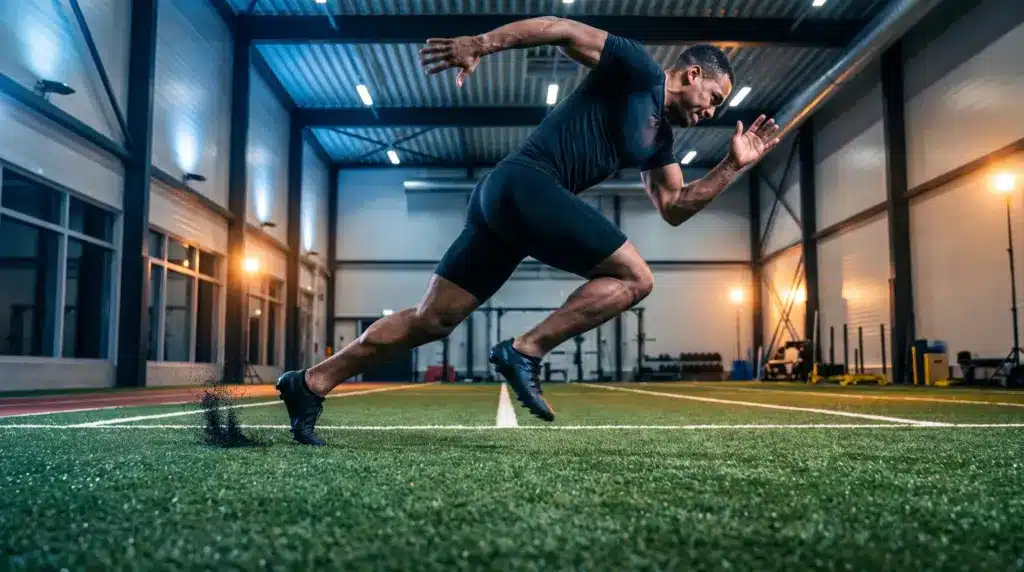
Speed and agility training help Ronaldo maintain the quick reactions and acceleration needed at the highest level of football.
His routine includes short sprint intervals, shuttle runs, cone drills, ladder drills, and explosive acceleration exercises that improve footwork and coordination.
Plyometric movements may also be used to develop power and faster direction changes.
These drills train the body to produce force quickly, helping improve reaction time, running efficiency, and overall athletic performance during matches.
6. Recovery and Flexibility Training
Recovery is treated as an essential part of Cristiano Ronaldo’s workout plan rather than something done only after hard sessions.
He prioritizes stretching, mobility work, foam rolling, and light recovery exercises to reduce muscle stiffness and improve flexibility.
Quality sleep, proper hydration, and balanced nutrition also play important roles in supporting muscle repair and overall performance.
By allowing the body enough time to recover, he can train consistently, lower the risk of overuse injuries, and maintain a high level of fitness throughout the season.
Cristiano Ronaldo Weekly Workout Schedule
Ronaldo’s training schedule changes during the football season, but it consistently balances strength, conditioning, skill work, and recovery.
| Day | Primary Focus | Typical Workout | Main Goal |
|---|---|---|---|
| Monday | Lower-body strength | Squats, lunges, deadlifts, calf raises, box jumps | Build leg strength and explosive power |
| Tuesday | Upper-body strength | Bench press, pull-ups, rows, shoulder press, push-ups | Improve functional upper-body strength |
| Wednesday | Speed and agility | Sprint intervals, ladder drills, cone drills, shuttle runs | Increase acceleration and footwork |
| Thursday | Core and conditioning | Planks, hanging leg raises, Russian twists, cycling | Improve stability and endurance |
| Friday | Full-body power | Compound lifts, plyometrics, medicine ball exercises | Develop total-body athletic performance |
| Saturday | Football training | Ball drills, tactical practice, match play, or scrimmage | Enhance technical skills and match fitness |
| Sunday | Active recovery | Stretching, swimming, foam rolling, light walking | Promote muscle recovery and flexibility |
Why Is Cristiano Ronaldo’s Workout so Effective?
Cristiano Ronaldo’s fitness routine stands out for training the body as a whole rather than focusing on a single area. Every workout has a purpose, and staying ready for the demands of professional football matters.
- Focuses on athletic performance: Workouts are designed to improve speed, power, balance, and movement rather than solely building muscle.
- Combines multiple training styles: Strength training, sprint work, agility drills, and endurance exercises are all part of the same program.
- Prioritizes consistency: Training regularly throughout the year helps maintain performance during long football seasons.
- Treats recovery as training: Stretching, quality sleep, hydration, and mobility work help the body recover between sessions.
- Builds functional strength: Compound exercises improve coordination and total-body stability for real athletic movements.
- Progresses gradually: Training intensity varies with competition schedules to reduce fatigue and lower the risk of injury.
Exercises Used in Ronaldo’s Working Out Sessions
Each exercise supports a different aspect of athletic performance, helping build power, speed, stability, and endurance.
| Exercise Type | Examples | Primary Benefit |
|---|---|---|
| Lower-body strength | Squats, deadlifts, lunges | Builds leg strength and power |
| Upper-body strength | Bench press, pull-ups, push-ups | Improves functional upper-body strength |
| Core training | Planks, hanging leg raises, Russian twists | Increases stability and balance |
| Explosive exercises | Box jumps, jump squats | Develops speed and jumping power |
| Speed and agility | Sprint intervals, ladder drills | Improves acceleration and footwork |
| Recovery cardio | Swimming, cycling | Supports endurance and muscle recovery |
Cristiano Ronaldo’s Diet and Nutrition Plan
Cristiano Ronaldo follows a disciplined nutrition plan that supports his training, recovery, and overall performance. While his exact meals may vary, the core principles of his diet can be adapted to fit different lifestyles and fitness goals.
- High-Protein Meals: Lean protein sources such as chicken, fish, eggs, and lean beef help support muscle growth, repair, and recovery after training.
- Complex Carbohydrates: Foods like brown rice, whole grains, oats, sweet potatoes, and vegetables provide steady energy for workouts and daily activities.
- Healthy Fats: Sources such as avocados, nuts, seeds, and olive oil help support heart health, hormone production, and long-lasting energy.
- Fresh Fruits and Vegetables: A variety of colorful produce supplies important vitamins, minerals, antioxidants, and fiber to support overall health.
- Regular Hydration: Drinking plenty of water throughout the day helps maintain performance, supports recovery, and replaces fluids lost during exercise.
- Balanced Meal Timing: Eating balanced meals and nutritious snacks throughout the day helps maintain energy levels and supports muscle recovery after workouts.
- Limited Processed Foods: Choosing whole, minimally processed foods over sugary snacks and fast food helps maintain consistent energy and overall nutrition.
How to Adapt Ronaldo’s Workout to Your Fitness Level?
Cristiano Ronaldo’s workout can be adapted to any fitness level by adjusting the exercises, training volume, and intensity. Focus on steady progress instead of trying to match a professional athlete’s routine.
Cristiano Ronaldo’s success comes from consistent training, not just high-intensity workouts.
Beginners should start with bodyweight exercises such as squats, push-ups, lunges, and planks to build strength and movement quality.
Intermediate and advanced individuals can gradually add compound lifts, sprint drills, and plyometric exercises as fitness improves. Training three to four days each week provides enough stimulus while allowing proper recovery.
Maintaining correct technique is more important than lifting heavier weights too soon, as it helps prevent injuries.
Include rest days, stretching, and adequate sleep to support recovery, and set realistic goals since building long-term fitness takes patience and consistency
Key Takeaways from the Cristiano Ronaldo Workout Plan
While his routine is designed for elite competition, the principles behind it can benefit anyone looking to become stronger, faster, and more athletic.
| Training Element | Key Takeaway |
|---|---|
| Strength training | Builds power through compound exercises like squats and presses. |
| Speed and agility | Improves acceleration, footwork, and overall athletic movement. |
| Core workouts | Enhances stability, balance, and body control. |
| Recovery | Sleep, stretching, and hydration support muscle repair and performance. |
| Weekly routine | Balances training intensity with planned recovery sessions. |
| Beginner approach | Adapt the routine gradually instead of copying a professional athlete’s workload. |
| Long-term success | Consistency and discipline produce better results than short bursts of intense training. |
Common Mistakes to Avoid when Following Ronaldo’s Workout
Following Cristiano Ronaldo’s training philosophy is more effective than trying to copy his exact routine. Many people make mistakes that slow progress or increase the risk of injury.
- Skipping the warm-up: Starting intense workouts without preparing your muscles can increase the risk of strains and reduce performance.
- Doing too much too soon: Jumping into high-volume training without a solid fitness base often leads to fatigue or injury.
- Ignoring recovery: Rest days, stretching, and sleep are essential for muscle repair and consistent progress.
- Using poor exercise form: Lifting heavier weights with incorrect technique reduces effectiveness and raises injury risk.
- Neglecting nutrition and hydration: Training alone cannot deliver the best results without proper fueling and fluid intake.
- Expecting quick results: Ronaldo’s fitness is the product of years of disciplined training, so focus on gradual improvement rather than overnight changes.
Conclusion
Cristiano Ronaldo’s workout plan is based on more than intense gym sessions. It combines strength training, speed work, mobility, recovery, and long-term consistency to support elite athletic performance.
Many core principles of his professional routine can be adapted for different fitness levels and goals.
Building a strong foundation, progressing gradually, and giving equal attention to recovery can lead to steady improvements over time.
Rather than trying to replicate every workout, focus on applying the habits that fit your current ability.
If this guide helped, use it as a starting point to create a workout routine that matches your goals, and keep exploring trusted fitness resources to stay motivated and continue making progress.
Frequently Asked Questions
What Is Cristiano Ronaldo’s Health Routine?
His health routine includes daily training, stretching, recovery, hydration, sleep, balanced meals, and consistent habits that support long-term fitness and performance.
What Cardio Does Cristiano Ronaldo Do?
Ronaldo’s cardio includes sprint intervals, football drills, cycling, swimming, and endurance work to improve stamina, speed, and match fitness.
How Many Hours Did Ronaldo Train as a Kid?
Ronaldo reportedly trained for several hours daily as a child, combining team practice with extra football drills and skill work.