
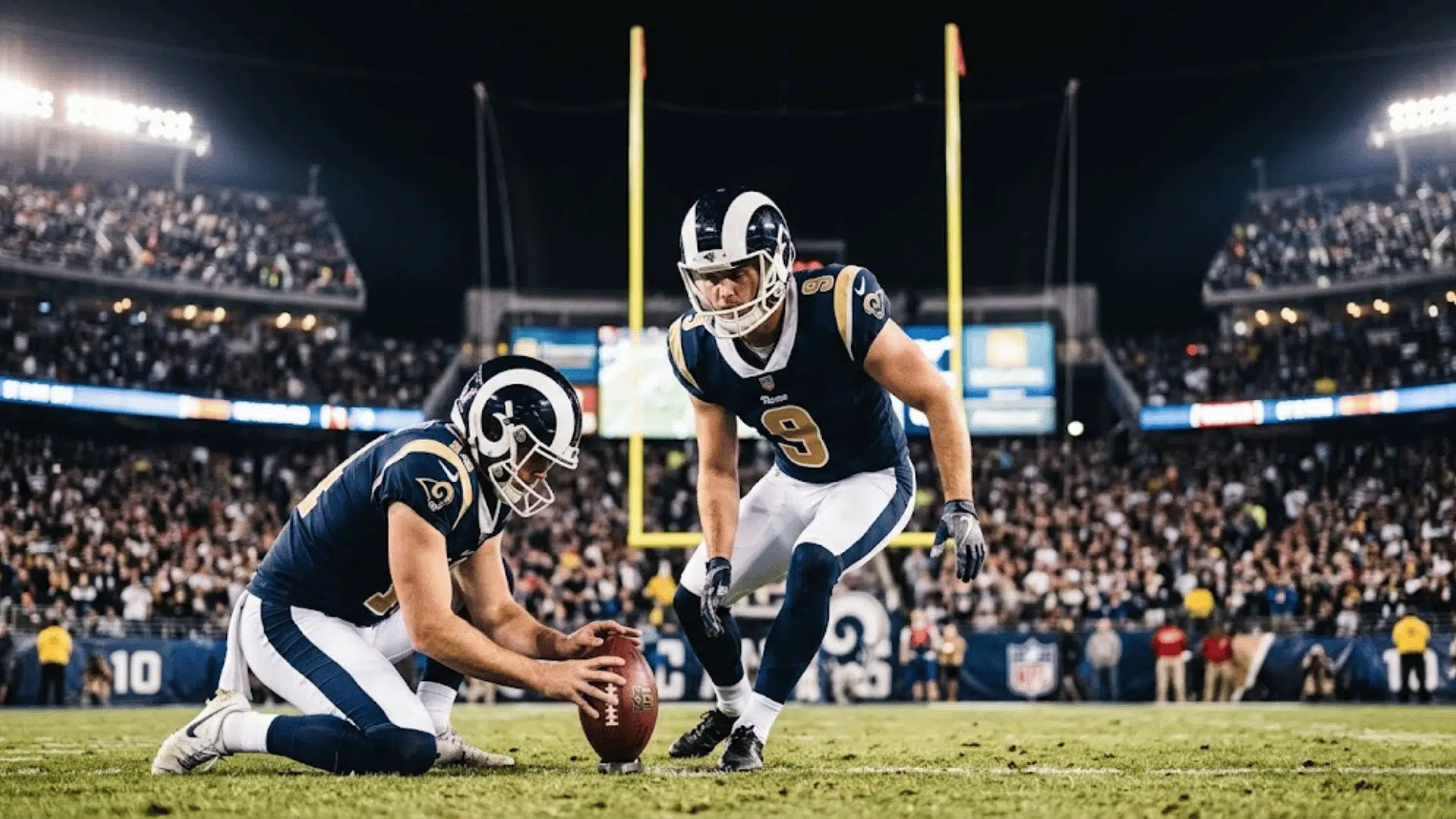





I remember hearing commentators say “PAT” after touchdowns and wondering what they meant. At first, I thought it was just another football term that longtime fans already understood.
After watching more games, I realized the PAT is actually a very important part of scoring in football.
In this guide, I’ll explain what PAT stands for, how teams score it after touchdowns, and why coaches still rely on it during close games.
You’ll also learn the difference between a PAT kick and a two point conversion, plus key NFL rule changes over the years.
By the end, football scoring and PAT attempts should feel much simpler to follow during games, even for newer fans watching football for the first time.
What Does PAT Mean in Football?
In football, PAT stands for Point After Touchdown. It is the extra scoring chance a team gets right after scoring a touchdown.
The team can choose between two options. They can kick the ball through the goalposts for 1 extra point, which is called an extra point kick.
They can also try a two point conversion by running or passing the ball into the end zone again. A PAT may look simple, but it can change the final score of a game.
Many close NFL games are decided by missed or successful PAT attempts.
Over the years, the NFL also changed some PAT rules to make extra point kicks harder and more exciting for fans watching the game.
What Happens During a PAT Attempt?
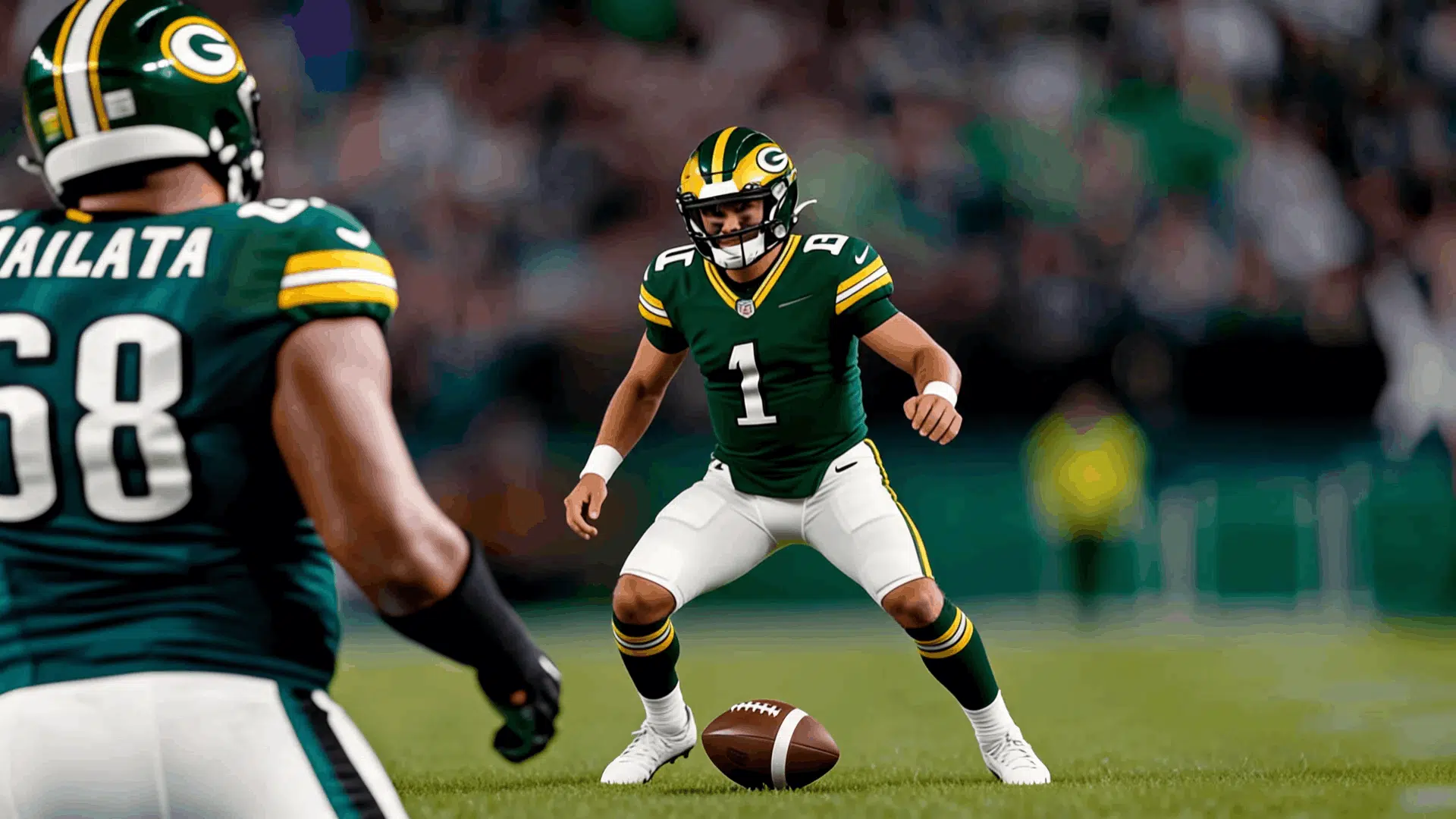
A PAT attempt happens right after a touchdown before regular play starts again. Teams try to add extra points by kicking the ball or attempting a two-point conversion
1. Special Teams Enter the Field
The special teams unit runs onto the field right after the touchdown. Players quickly get into position before the defense settles in.
The snapper, holder, and kicker must work together with perfect timing. Coaches want the unit lined up fast so the defense cannot react early or create confusion. A slow substitution can hurt the entire play.
I have seen teams lose easy extra points simply because players were late getting set before the snap.
Good communication and quick movement help the kicking team stay organized and ready for the attempt.
2. Ball Snap to the Holder
The play starts when the center snaps the football back to the holder. The holder catches the ball and places it on the ground for the kicker in one smooth motion.
The snap must be fast and accurate because the kicker depends on steady timing.
If the ball is too low or off target, the holder must adjust quickly. That can change the kicker’s steps and throw off the kick.
Long snappers spend years practicing this skill because one bad snap can ruin an otherwise simple PAT attempt during an important game.
3. Kicker Attempts the Extra Point
After the holder places the ball down, the kicker tries to send it through the goalposts for one extra point. Kickers focus on accuracy, timing, and power during the attempt.
Most professional kickers make extra points regularly, but pressure can still affect the result.
Wind, rain, or cold weather can also make kicking harder. The ball must travel high enough to clear the crossbar and stay between the uprights.
Even skilled kickers sometimes miss, especially when the game is close and every point matters.
4. Two-Point Conversion Option
Instead of kicking for one point, teams can choose a two point conversion. In this play, the offense tries to score another touchdown from a short distance.
The team earns two points if the ball reaches the end zone again.
Coaches usually make this choice based on the score and time left in the game. This option keeps the offense on the field instead of bringing in the kicking unit.
Two point attempts are riskier than regular PAT kicks, but they can help teams catch up or increase a late-game lead.
5. Defense Can Block the Kick
The defense also plays an important role during a PAT attempt. Defenders try to push through the line and block the kick before the ball reaches the goalposts.
A blocked kick stops the offense from getting the extra point. Defenders use speed, timing, and strong positioning to pressure the kicker.
Some teams even practice special moves designed only for blocking kicks.
If a kicking unit has weak protection, opponents may attack that area more often. One successful block can change momentum and give the defense energy during an important part of the game.
PAT Kick vs Two Point Conversion
Teams can choose between a PAT kick or a two-point conversion after scoring a touchdown. Both options add extra points, but they work differently and carry different levels of risk.
| Feature | PAT Kick | Two Point Conversion |
|---|---|---|
| Points Awarded | 1 point | 2 points |
| How It Works | Kicker sends the ball through the goalposts | Offense runs or passes into the end zone |
| Success Rate | Usually higher | Usually lower |
| Players Involved | Mainly, the special teams unit | Offensive players stay on the field |
| Risk Level | Safer option | More risky option |
| Common Usage | Used most of the time after touchdowns | Used during important game situations |
| Main Goal | Add one reliable point | Gain extra points quickly |
| Pressure Level | Mostly on the kicker | Shared across the full offense |
| Strategy Impact | Helps maintain steady scoring | Can change momentum in close games |
| Fan Reaction | Usually expected | Often creates more excitement |
How Many Points Is a PAT Worth?
A standard PAT kick gives a team one extra point after scoring a touchdown. Teams can also try a two-point conversion instead of kicking the ball.
- Touchdowns Start With Six Points: A touchdown gives a team six points first. After the touchdown, the team gets an extra point attempt to add more points to the scoreboard.
- PAT Kick After a Touchdown: The kicker attempts to send the football through the goalposts after the touchdown. A successful kick adds one extra point to the team’s score.
- One Point Added to the Score: Most touchdowns become seven-point plays because teams successfully complete the PAT kick after scoring the touchdown.
- Two-Point Conversion Option: Teams can choose to go for two points instead of kicking the ball. The offense must reach the end zone again from a short distance.
- Longer PAT Kicks in the NFL: The NFL moved PAT kicks farther back in 2015. This rule change made extra-point attempts more difficult for kickers.
Why NFL Teams Still Choose PAT Kicks?
NFL teams still choose PAT kicks most of the time because they are more reliable than two-point conversions. Many coaches prefer the simpler option, especially during close games where every point matters.
A successful PAT kick needs one clean play, while a two point conversion requires the offense to reach the end zone again.
The two-point conversion succeeds at roughly 48 to 50 percent across the NFL, which means teams that go for two early in a game are essentially flipping a coin.
Most coaches prefer the guaranteed point and save the two-point attempt for specific late-game situations where one point is mathematically insufficient. Coaches usually save two-point attempts for special situations.
For example, teams may go for two points late in the game to tie the score, take the lead, or make up for missed PATs earlier.
Role of Kickers During PAT Attempts
Kickers play one of the most important roles during PAT attempts because they are responsible for turning touchdowns into extra points.
Covering the NFL, I have heard special teams coaches describe kickers as some of the most disciplined players on the roster.
The job requires making precise kicks in front of loud crowds right after a touchdown.
During a PAT attempt, the kicker must stay focused and time the kick precisely with the snap and hold.
Even a small mistake in timing or foot placement can cause a miss. Wind, rain, crowd noise, and defensive pressure also make PAT attempts harder.
Cold weather stadiums in January reduce ball pressure and limit carry distance.
Open-air stadiums with unpredictable wind patterns, like Soldier Field in Chicago or Highmark Stadium in Buffalo, are historically harder environments for kickers.
PAT Rules in College Football vs NFL
College football and the NFL follow similar PAT rules, but there are still a few important differences between the two levels.
| Feature | NFL | College Football |
|---|---|---|
| PAT Kick Distance | Kicks are attempted from farther back after the 2015 rule change | Kicks are usually shorter and easier |
| Two Point Conversion Spot | Attempted from the 2-yard line | Attempted from the 3-yard line |
| PAT Difficulty | Extra points are more challenging because of longer kicks | PAT kicks have a higher success rate |
| Overtime Rules | Teams often choose strategy carefully in overtime | Two-point attempts become required after multiple overtime periods |
| Coaching Strategy | Coaches may avoid risky two-point attempts early in games | Coaches sometimes take more scoring risks |
| Missed PAT Frequency | Misses happen more often than before the rule update | Missed PAT kicks are less common |
| Pressure on Kickers | NFL kickers face more pressure because games are faster and closer | College kickers still face pressure, but often from shorter distances |
| Game Impact | One missed PAT can strongly affect playoff and close-game outcomes | Missed PATs still matter, but happen less frequently |
Why the NFL Made PAT Kicks Harder?
The NFL changed its PAT rules in 2015 to make extra-point attempts more challenging rather than nearly automatic. Before the rule change, PAT kicks came from much closer to the goalposts, and kickers rarely missed.
After the 2015 update, the NFL moved the line of scrimmage farther back for extra-point kicks, turning the attempt into a longer kick that added meaningful pressure on kickers.
The NFL Competition Committee supported the change after PAT success rates stayed above 99 percent for several seasons.
League officials felt that near-perfect conversion rates stripped the play of any strategic value.
Moving the kick back to the 15-yard line created a 33-yard field goal attempt, which brought the success rate down to a range where missed kicks became consequential rather than flukes.
That change also affected coaching decisions, especially in close games where teams had to choose between a PAT and a two point conversion.
Famous Missed PAT Moments in NFL History
Missed PATs have changed several important NFL games over the years, especially during close finishes and playoff matchups.
- Blair Walsh vs Seahawks (2016): Walsh missed a short kick during the playoffs, and many fans still remember the pressure surrounding that game.
- Mason Crosby Rough Game (2018): Crosby missed multiple kicks, including PAT attempts, during a difficult game against the Lions.
- Justin Tucker Rare Miss (2019): One of the NFL’s most accurate kickers surprised fans by missing an extra point against the Saints.
- Cody Parkey Double Trouble (2018): Parkey became known for several missed kicks during the season, including missed PAT attempts.
- Extra Point Problems After 2015 Rule Change: NFL kickers started missing more PATs once the league moved the kick farther back.
- John Carney, Miss vs Jaguars (2003): Carney missed a late PAT that could have tied the game for the Saints.
- Cowboys Multiple Misses (2022 Playoffs): Brett Maher missed several PAT attempts during a playoff game, creating major pressure for Dallas.
- Blocked PATs in Big Games: Some teams have lost momentum after defenses blocked extra point attempts during close matchups.
Why PAT Attempts Sometimes Fail?
PAT attempts can fail for several reasons, even when the play looks simple during a game. Many people think missed extra points only happen because of bad kicking.
In reality, several small mistakes can affect the play before the ball even reaches the goalposts.
A poor snap or bad hold can throw off the kicker’s timing completely. Defenders can also break through the line and block the kick before it leaves the ground. Weather plays a role, especially during rain, snow, or strong winds.
Longer attempts introduced by the 2015 rule change account for a significant portion of the increase in missed PATs since that season.
A 33-yard attempt in a loud outdoor stadium in late-season conditions is a genuinely difficult kick, even for the most experienced professionals in the league.
Can the Defense Score on a PAT Attempt?
Yes, the defense can score during a PAT attempt in both the NFL and college football. If the offense loses possession during the play, the defense can return the ball for two points.
This usually happens during a failed two-point conversion or a blocked PAT kick.
If a defender intercepts a pass, recovers a fumble, or picks up a blocked kick and returns it to the opposite end zone, their team earns two points.
These plays are rare because PAT attempts happen very quickly and usually end within a few seconds.
The NFL formally codified the defensive return rule in 2015 as part of the same package of changes that extended PAT kick distances. Before that season, the play was dead once the defense gained possession.
The rule change added more risk because the defense could now score after a failed two point attempt.
Fans sometimes call this type of score a defensive conversion because the defense turns a failed PAT into points for their own team.
Common Football Terms Related to PAT
Football games use many scoring and kicking terms together, so knowing a few related words can make PAT situations easier to follow.
- Touchdown: A scoring play worth six points when a player reaches the end zone with the football.
- Extra Point: Another common name for a PAT kick after a touchdown.
- Two-point conversion: A scoring attempt where the offense tries to score two extra points instead of kicking.
- Goalposts: The tall uprights that the kicker must send the football through during a PAT attempt.
- Holder: The player who catches the snap and places the football on the field for the kicker.
- Long Snapper: The player responsible for snapping the football accurately during kicking plays.
- Special Teams: The group of players who handle kicking plays, punts, and field goals.
- Field Goal: A separate kicking play worth three points during regular offensive drives.
- Blocked Kick: A PAT attempt is stopped by the defense before the football reaches the goalposts.
- Red Zone: The area close to the end zone where teams often prepare for scoring opportunities.
Conclusion
PAT attempts may seem small compared to touchdowns, but they often decide the outcome of close football games.
Once you understand how PAT kicks, two point conversions, and extra point rules work, football scoring becomes much easier to follow.
You can better understand why coaches make late-game decisions and why kickers face so much pressure.
From blocked kicks to missed extra points, PAT attempts have created many unforgettable NFL moments over the years.
Now that you know what a PAT means in football, you will probably notice these situations much more during games.
Have you ever watched a game where a missed PAT changed the final result? Share your thoughts or favorite football moments in the comments below.
Frequently Asked Questions
Can a PAT be Returned By the Defense?
Yes, in some football leagues, the defense can return a blocked PAT or failed two-point attempt for points if they take the ball to the opposite end zone.
Who Holds the Ball During a PAT Attempt?
The holder is usually the punter or backup quarterback. Their job is to catch the snap and place the football correctly for the kicker.
How Long Does a PAT Attempt Usually Take?
Most PAT attempts only take a few seconds from the snap to the kick, which is why they happen very quickly during games.
Are PAT Rules the Same in High School Football?
High school football rules can vary by state, but many PAT rules are similar to college football, with shorter kicking distances.
Can Weather Affect PAT Accuracy?
Yes, wind, rain, snow, and cold temperatures can make kicking more difficult and increase the chances of missed PAT attempts.