
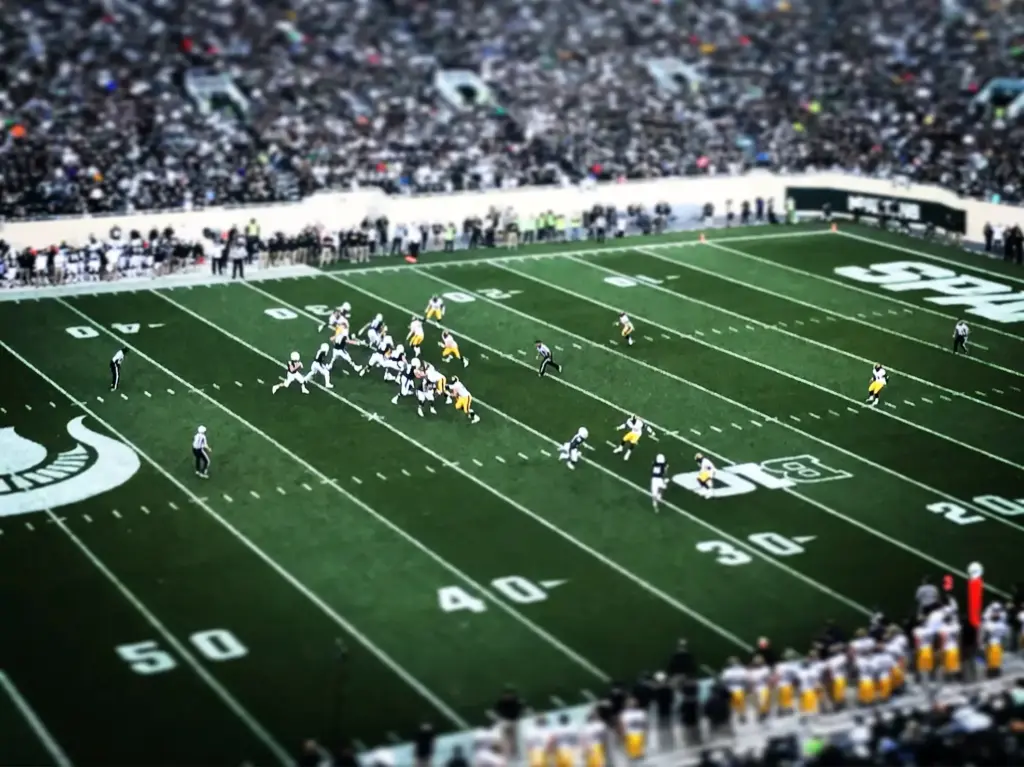




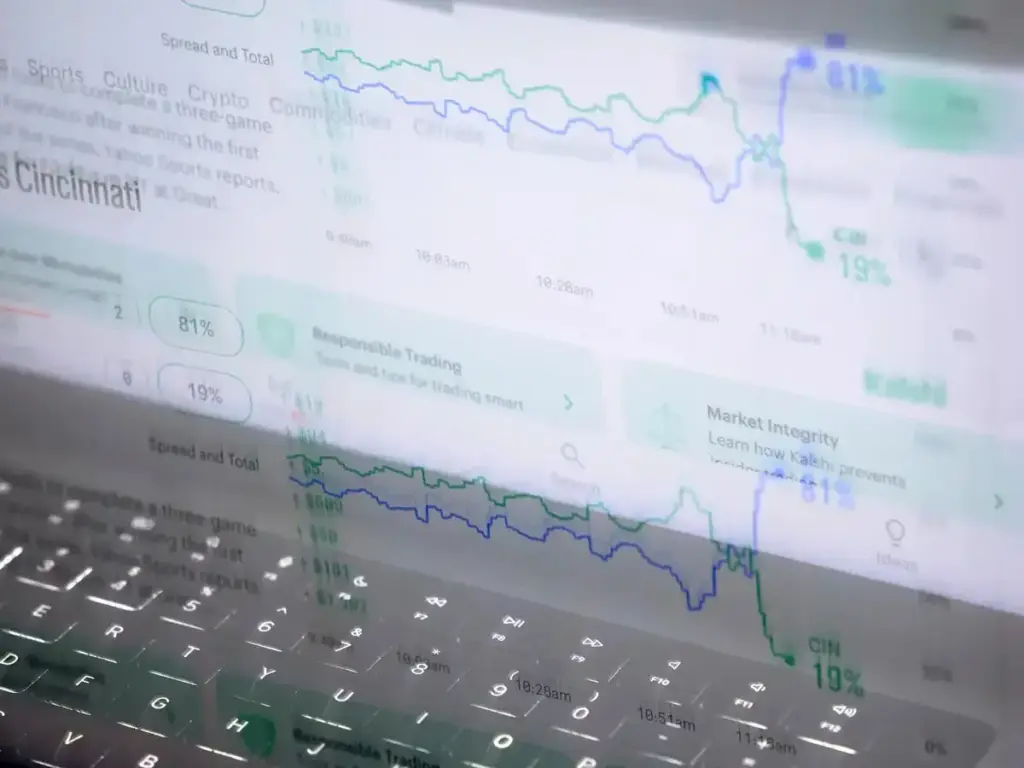
Predicting who wins on Sunday and who wins a division involve different timelines. A division outcome can remain unsettled for months, affecting how long your money is committed and what can happen before the result is official.
Season-outcome markets cover questions such as division winners and conference champions. Before choosing a contract, understand its possible payout, costs and settlement rules. Those details, along with eligibility and account controls, can help you assess whether Fanatics Markets fits how you want to follow the season.
NFL Game Markets: Moneyline, Spread and Total
Single-game markets concern one matchup and are decided by that game’s result. The platform’s NFL page groups them under Game Lines, with three core market types on each game.
| Market type | Question being asked |
|---|---|
| Moneyline | Which team wins the game? |
| Spread | Does a team win by more than, or lose by fewer than, a stated number of points? |
| Total | Do both teams combined score over or under a stated number of points? |
Full-time, Halves and Quarter filters let you take a position on part of a game rather than only the final result. A separate Player Props tab covers individual player outcomes. Each of these outcomes is settled on the field, where details such as whether a defense holds its gap assignments against the run can shape the score.
Each side of a market is shown as a percentage. The two sides of one game can add up to slightly more than 100%, so read each figure as a quoted price rather than a precise probability. The number of markets and the trading volume on a game also tend to grow as kickoff approaches, so a game several days away may offer fewer markets and thinner trading.
NFL Futures Explained: What Outcome Are You Choosing?
NFL futures concern outcomes decided later, usually through the regular season or postseason. A single-game market concerns one matchup; a season-outcome market can span months of games, injuries, trades and playoff results. Those developments can change a contract’s price before the outcome is decided.
The table shows four season-outcome market types. These are illustrative examples, not a list of what any platform currently offers.
| Market type | Question being asked | When it is usually decided |
|---|---|---|
| Division winner | Which team finishes first in one division? | End of the regular season |
| Conference winner | Which team wins the AFC or NFC playoff bracket? | Conference championship games |
| Championship winner | Which team wins the final game of the postseason? | After the championship game |
| Regular-season win total | Does a team finish over or under a stated number of wins? | End of the regular season |
The platform’s NFL Futures collection provides concrete examples, listing headings such as “AFC North Division Winner 2026-27” and “NFC Champion 2026-2027.” These show how division and conference outcomes appear as separate market questions. The headings alone don’t establish available prices or recommend a position.
The exact question. Best regular-season record, division winner and championship winner are different outcomes. A team can finish with its conference’s best record and lose its first playoff game. It can also win its division without having the conference’s best record. Read the full question before comparing prices.
The season covered. A heading such as “2026-27” identifies the season covered. Confirm that it matches the season you intend to follow.
The settlement point. Division standings and playoff results determine different outcomes. The contract rules specify when those outcomes become official for settlement. An outcome looking likely doesn’t tell you when a contract will settle.
How NFL Prediction-Market Contracts Work
A standard binary event contract asks one YES/NO question, such as whether a named team wins its division. Each contract is priced between $0 and $1. The platform’s introductory material describes ordinary settlement as $1.00 for contracts on the correct outcome and $0 for contracts on the incorrect outcome. Specific contract rules still govern.
The CFTC describes event contracts as typically structured as swaps, a type of financial contract. That structure differs from a sportsbook wager even when both concern the same football outcome.
| Aspect | Sportsbook wager | Event contract |
|---|---|---|
| How the position is expressed | Pick a side at the posted betting odds | Purchase YES or NO contracts on one question |
| What you pay at the start | Your stake | Contract price multiplied by quantity, plus trading fees |
| How potential return is shown | Calculated from the stake and odds | Ordinarily $1 gross settlement per correct contract; profit depends on purchase cost and fees |
| What governs settlement | The sportsbook’s house rules | The contract rules and named resolution source |
Compare the full cost and rules of each position. Neither format is automatically cheaper or safer.
Suppose you purchase 10 YES contracts at $0.40 each. Your purchase cost is $4.00 before fees. If the outcome is correct under the contract rules, ordinary settlement produces $10.00 in gross proceeds, leaving a $6.00 profit before fees. If it’s incorrect, proceeds are $0 and you lose the $4.00 purchase cost plus fees. Trading fees apply to the purchase and any early sale.
Reading the price. In this hypothetical example, $0.40 is the purchase price of one contract. It suggests a rough market-implied likelihood of 40%, but it comes from trading and isn’t a verified forecast.
Understanding YES and NO. Both sides answer the same question. Purchasing NO on a team winning its division means taking a position that the team won’t win that division. It doesn’t select another team as the winner.
Selling before settlement. The platform describes holding a position until settlement or selling early when trading is available and sufficient liquidity exists. Liquidity means having enough trading interest to complete a sale. If you sell, calculate the result using your sale proceeds, original purchase cost and fees.
What to Check Before You Choose
Fanatics Markets and Fanatics Sportsbook use different formats. On September 2, 2026, Fanatics announced an app that brings its sportsbook and prediction markets products together, with the available experience depending on location. Within that shared app, the prediction markets product offers YES/NO event contracts governed by written contract rules; sportsbook wagers use betting odds and house rules.
The platform’s NFL page displays Game Lines, Player Props and Futures, giving readers a starting point for browsing event-contract categories. If you’re researching how tobet on NFL games online, check which product you’re viewing before comparing prices. These navigation labels don’t establish a complete market inventory or prices at which you can trade.
How it fits the Fanatics ecosystem. The platform is part of the Fanatics ecosystem, and its markets extend beyond sports to politics, the economy, culture and crypto. Trading activity is linked to the Fanatics ONE loyalty program, under which eligible members accrue FanCash and tier points, subject to the program’s terms. Combos let you bundle several selections into one order, priced through a Request for Quote process in which liquidity providers may respond with executable quotes. NFL coverage spans Game Lines, Player Props and Futures. None of these features changes a contract’s risk or cost, so weigh them alongside the checks below.
Availability. Users must be at least 21, and the platform states that it isn’t available in all states. Check current eligibility for your location before depositing. Other platforms set their own requirements.
Total cost. The fee disclosure effective September 2, 2026 lists a total trading fee between $0.00034 and $0.02 per contract purchased or sold. The execution price and order-level rounding affect the final charge; rounding up to a whole cent can result in a $0.01 fee on a single-contract order. The disclosure also lists a possible deposit fee of up to 2% for debit card, Apple Pay, PayPal or Venmo, shown when depositing. Budget for both purchase and sale fees if you plan to exit early.
Account controls. The platform provides daily, weekly and monthly deposit limits that can be changed in-app. These tools help you manage how much money you add to the account. They don’t cap a contract’s potential loss. Also consider whether you’re comfortable holding a position until settlement, since early sales depend on trading availability and liquidity.
Alternatives. Kalshi lists sports alongside politics, culture and crypto, making it an option to compare if you want other event categories. DraftKings Predictions lists contracts from more than one exchange, including CME Group and Crypto.com. FanDuel Predicts announced expanded sports and entertainment event contracts through Crypto.com’s exchange and clearinghouse, OG Prediction Markets, on June 9, 2026. These differences provide starting points for comparison, but don’t establish current prices, liquidity or eligibility. Check the exact contract and location requirements for each option.
Read the Rules and Protect Your Budget
Before purchasing a season contract, check these details in its terms and your order preview.
- Exact outcome and season. Confirm the team, question and season covered.
- Official resolution source. Find the source named in the contract for deciding the result.
- Market close versus settlement. Check when trading stops and when the contract settles.
- Cancellations and corrections. Read what happens if a game is postponed or a result is amended.
- Full cost. Add the purchase cost, applicable trading fees and any deposit fee.
- Willingness to hold. Decide whether you can leave the money committed until settlement if an early sale isn’t possible.
A team clinching its division doesn’t, by itself, tell you when a contract will settle or when funds will become available. Check the written rules rather than assuming the football result triggers an immediate payout. An earlier sale depends on trading being open and enough buying interest at a price you accept.
The platform’s risk disclosure warns that you may lose the entire amount you invest. Include fees in your budget, too. Set a fixed discretionary limit before participating and use deposit controls to help manage funding. Keep money for rent, bills and groceries separate. Don’t borrow to participate or buy more contracts to recover a loss. Football knowledge doesn’t guarantee a profitable position.
The CFTC’s October 19, 2026 Federal Register publication on further defining “swap” is a proposed rule. It doesn’t establish nationwide access to sports contracts. Check current location eligibility rather than relying on reports about federal oversight.
FAQ
Are NFL Futures the Same as a Single-Game Market?
NFL futures concern outcomes decided later, usually across the regular season or postseason, such as a division winner or conference champion. Single-game markets concern one matchup. Settlement follows the applicable rules in either case.
Is a $1 Settlement the Same as $1 Profit?
The $1 is gross settlement proceeds. Subtract the purchase price and applicable fees to calculate profit. In the hypothetical example above, a correct contract purchased at $0.40 produces a $0.60 profit before fees.
Can I Sell Before the Season Ends?
You can hold until settlement or sell early when trading is available and sufficient liquidity exists. An early sale isn’t guaranteed, and the price may change before the sale executes.
Who Can Use Fanatics Markets?
Users must be at least 21, and the platform states that it isn’t available in all states. Check current eligibility for your location before funding an account.


