





Sports medicine and orthopedic clinics carry an unusual pre-visit burden. A patient arriving without a referral, without prior imaging, or without eligibility confirmed is a patient whose appointment produces less than it should.
A healthcare virtual assistant handles that chain remotely: scheduling, intake, records requests, insurance verification and chart preparation. What separates providers is not whether they can do the tasks, but whether they can be trusted with the patient information those tasks require.
We compared eight providers on five weighted criteria, with privacy and compliance scored as its own dimension rather than assumed.
How We Scored
Healthcare Workflow Expertise (30%): scheduling, intake, referral management, records requests, documentation support, EMR updates and patient follow-up.
Insurance and Prior Authorization Capability (25%): eligibility checks, benefits verification, authorization preparation and tracking, payer follow-up and denial support.
Clinical Knowledge and Medical Background (20%): familiarity with medical terminology, EMR systems, documentation workflows and imaging coordination.
Privacy, Security and Compliance (15%): who signs the business associate agreement, published security credentials, access controls, device management and PHI handling practices.
Dedicated Support Model and Consistency (10%): same-assistant coverage, onboarding, account management, backup planning and replacement support.
| Rank | Company | Healthcare workflow | Insurance and prior auth | Clinical knowledge | Privacy and compliance | Dedicated support |
| 1. | Wing Assistant | Excellent | Yes | Strong | Excellent | Excellent |
| 2. | My Mountain Mover | Strong | Yes | Strong | Strong | Strong |
| 3. | Hello Rache | Strong | Partial | Strong | Good | Strong |
| 4. | Portiva | Strong | Yes | Good | Good | Good |
| 5. | Prialto | Basic | No | Basic | Strong | Strong |
| 6. | BELAY | Basic | No | Basic | Good | Strong |
| 7. | Boldly | Basic | No | Basic | Good | Strong |
| 8. | Fancy Hands | Limited | No | Basic | Limited | Limited |
1. Wing Assistant
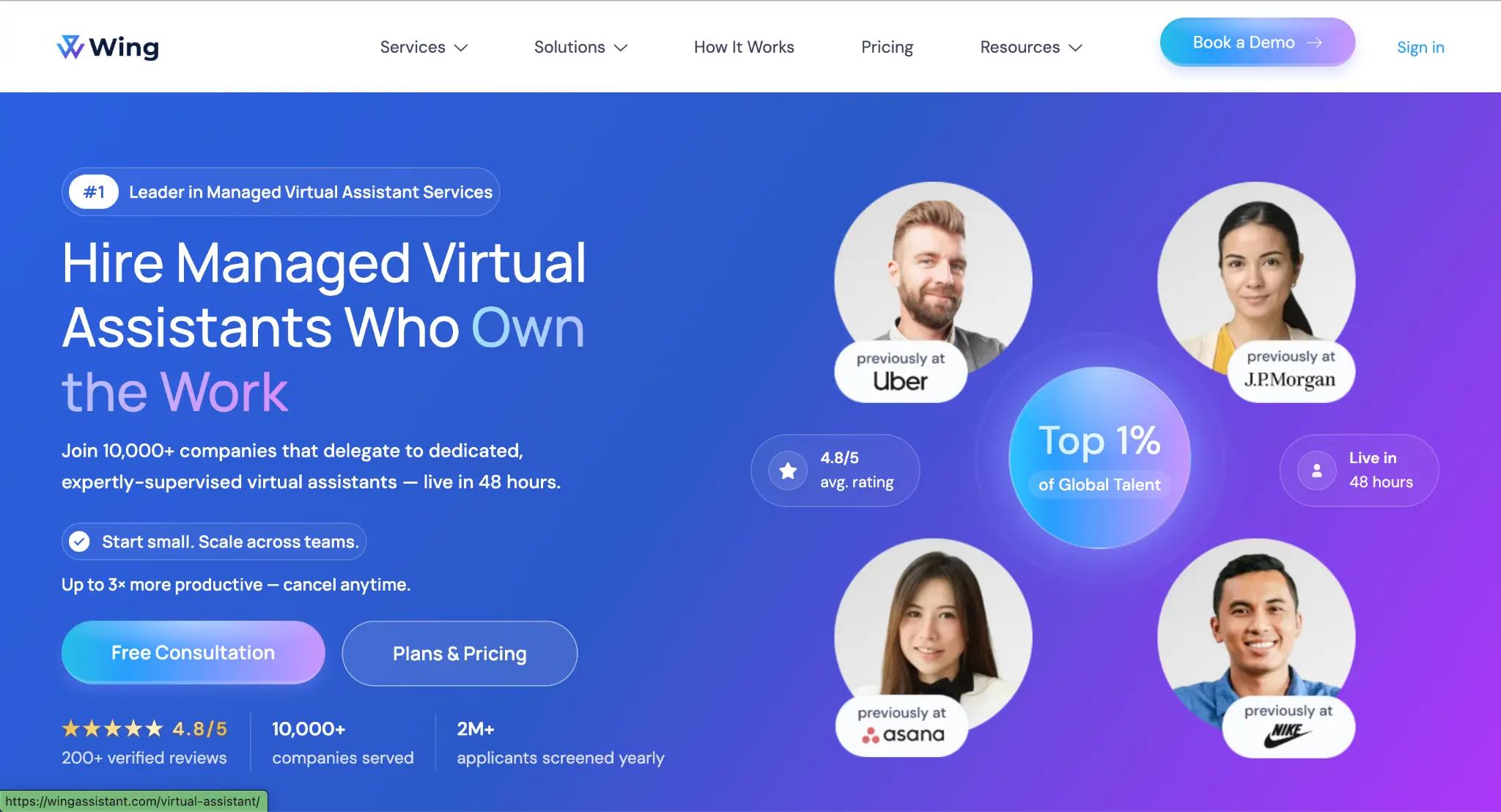
Wing Assistant runs a managed healthcare service rather than a marketplace. Its healthcare pages cover daily scheduling, EMR updates and intake preparation, alongside insurance eligibility and claims work, which matters for clinics where verification and authorization recur on every visit.
Its compliance answer is the clearest in this comparison. Clinics wanting a home based healthcare virtual assistant to handle the pre-visit chain get a company-level agreement rather than one signed by the individual assistant, which is the distinction that decides where liability sits.
Key Factors:
- Healthcare Workflow Expertise: scheduling, intake preparation, EMR updates, records coordination and billing support, with named healthcare roles rather than negotiated scope.
- Insurance and Prior Authorization Capability: insurance eligibility and claims tasks listed as part of the healthcare service.
- Clinical Knowledge and Medical Background: healthcare pages name Epic, Athenahealth and Kareo.
- Privacy, Security and Compliance: states HIPAA compliance and signs a Business Associate Agreement for every assistant handling patient data, alongside ISO 27001 compliance and SOC 2 certification.
- Dedicated Support Model and Consistency: a dedicated assistant with a customer success manager attached, plus a 24-hour replacement commitment on the healthcare services hub.
2. My Mountain Mover
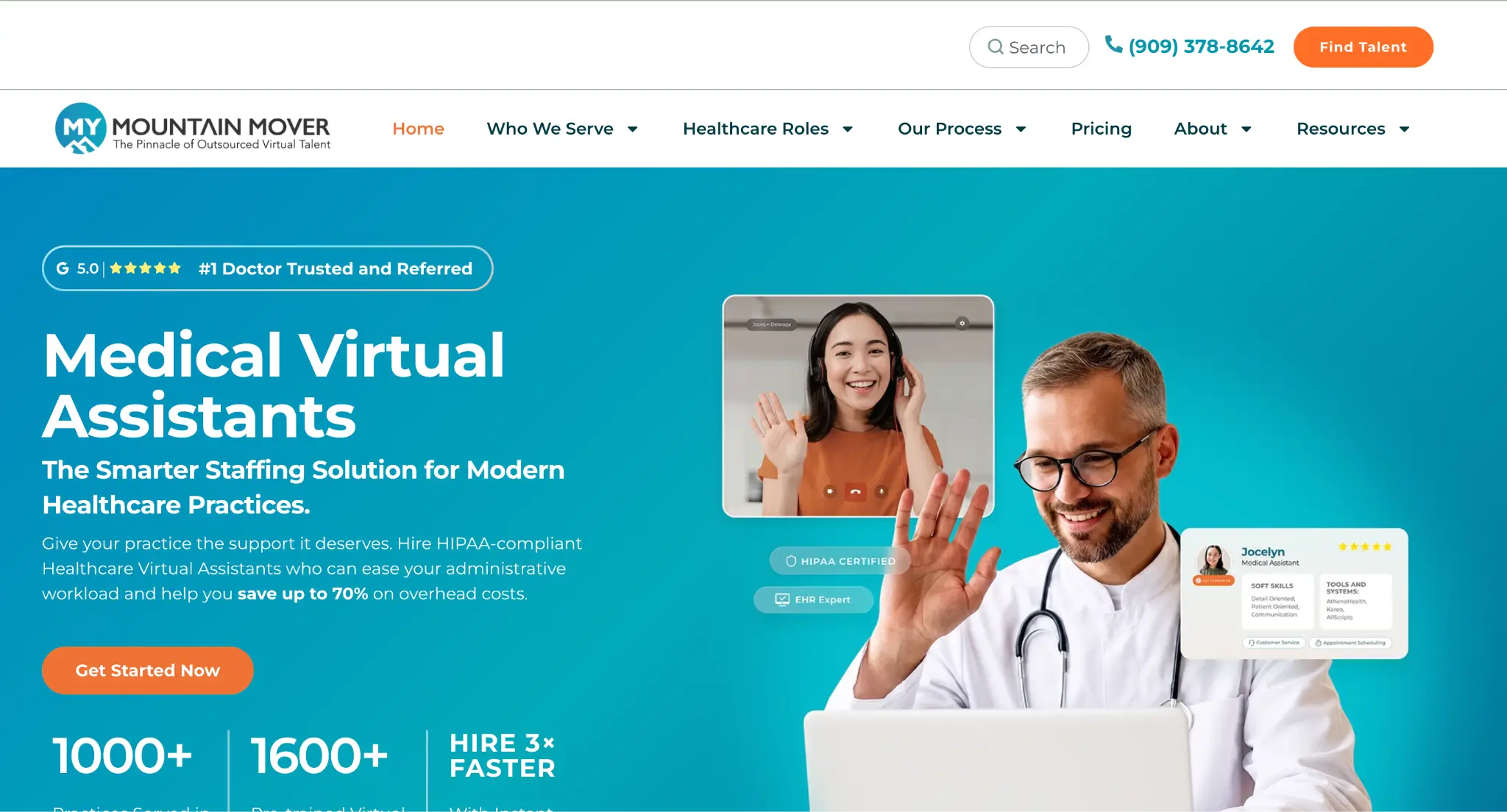
My Mountain Mover places assistants matched to a named specialty and builds account support around the placement rather than leaving supervision to the clinic.
Key Factors:
- Healthcare Workflow Expertise: administrative coverage across scheduling, patient communication and records management.
- Insurance and Prior Authorization Capability: insurance verification included in its healthcare scope.
- Clinical Knowledge and Medical Background: specialty matching, with assistants placed into a named medical field.
- Privacy, Security and Compliance: lists an in-house HIPAA compliance officer, and its privacy policy states PHI is handled under HIPAA rules with BAAs for healthcare clients.
- Dedicated Support Model and Consistency: an onboarding specialist and a named account manager as part of the support model.
3. Hello Rache
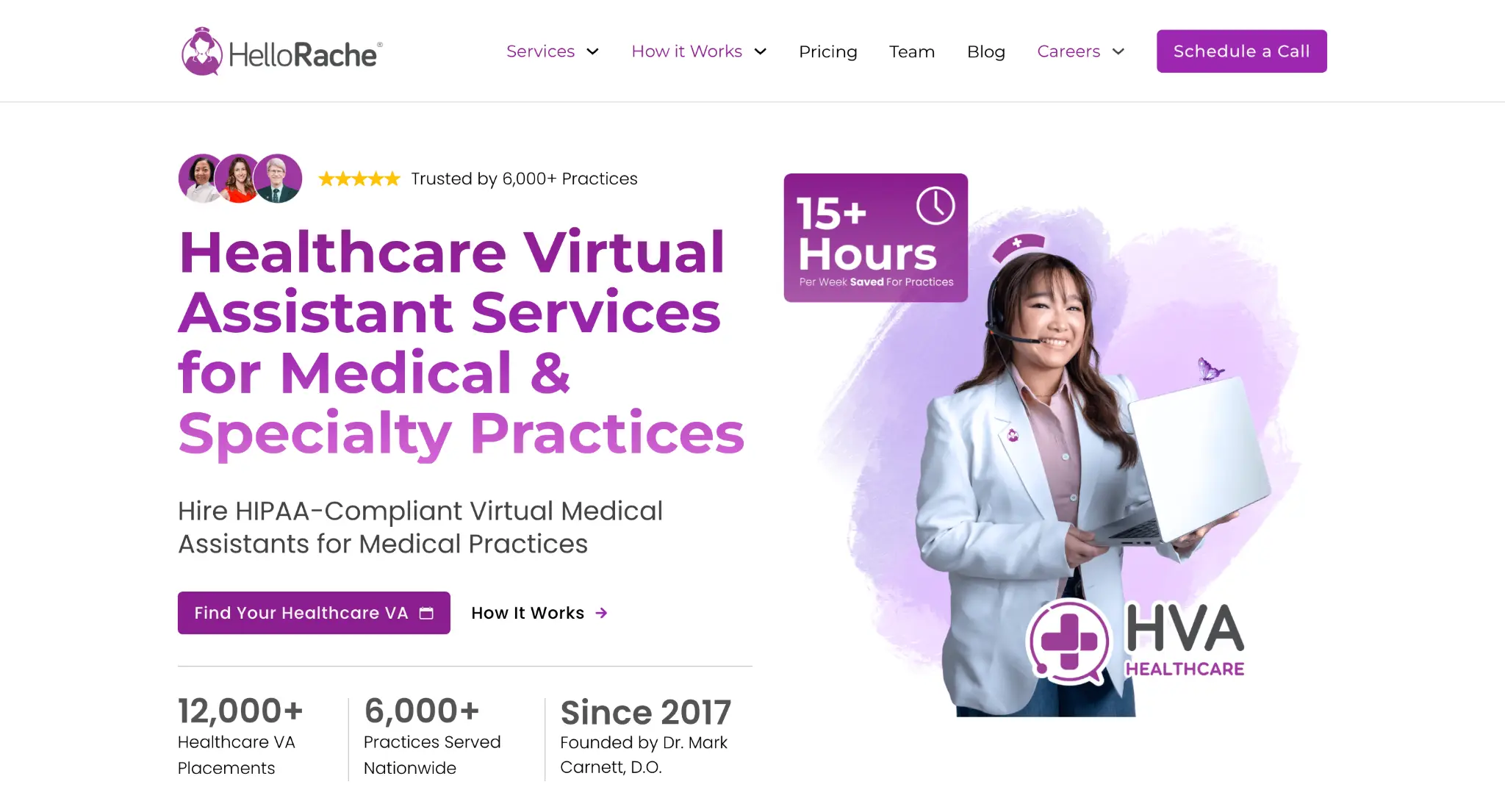
Hello Rache is the best-known flat-rate option, placing assistants who often hold nursing or other medical qualifications.
Its contractual structure needs checking before anything else. The company’s FAQ states that clients have the individual assistants sign the Business Associate Agreement, and that the corporation does not sign one on the basis that it does not access client PHI.
Key Factors:
- Healthcare Workflow Expertise: scribing, charting, scheduling and front-office support.
- Insurance and Prior Authorization Capability: verification support, though less prominent than the documentation offering.
- Clinical Knowledge and Medical Background: many assistants hold nursing or allied health backgrounds.
- Privacy, Security and Compliance: HIPAA training certificates, NBI clearance and the Philippine Data Privacy Act, but the BAA sits with the individual rather than the company.
- Dedicated Support Model and Consistency: the same dedicated assistant each day, with minimal managed oversight.
4. Portiva
Portiva covers insurance-heavy administrative work with supervision built into the delivery model rather than left to the client.
Key Factors:
- Healthcare Workflow Expertise: scribing, front-desk coverage and administrative support.
- Insurance and Prior Authorization Capability: dedicated service pages for insurance verification and prior authorization.
- Clinical Knowledge and Medical Background: healthcare-focused placements across medical, dental and veterinary practices.
- Privacy, Security and Compliance: describes office-based supervision on some pages. Confirm who signs the BAA and which controls apply to each placement type.
- Dedicated Support Model and Consistency: supervised working environments rather than fully remote independent arrangements.
5. Prialto

Prialto is a managed service for executives and operations teams. Its compliance infrastructure is strong, but the service is not built around patient data.
Key Factors:
- Healthcare Workflow Expertise: executive and operations support rather than clinical workflow coverage.
- Insurance and Prior Authorization Capability: not marketed as part of the service.
- Clinical Knowledge and Medical Background: business process training rather than medical terminology.
- Privacy, Security and Compliance: full-time employed assistants who complete background checks and a month-long training program. Confirm the current security certifications directly.
- Dedicated Support Model and Consistency: a dedicated assistant with documented cross-training and an engagement manager per account.
6. BELAY
BELAY places US-based assistants for general administration, with a healthcare page covering scheduling coordination, patient communication and bookkeeping.
Key Factors:
- Healthcare Workflow Expertise: general administrative support adapted to a practice setting.
- Insurance and Prior Authorization Capability: not marketed as part of the service.
- Clinical Knowledge and Medical Background: general professional and executive assistant experience.
- Privacy, Security and Compliance: standard confidentiality practices and background screening. Confirm any PHI requirements before assigning work.
- Dedicated Support Model and Consistency: a dedicated US-based assistant with a named client success contact.
7. Boldly
Boldly places senior executive assistants as W-2 employees rather than contractors, on a monthly hours model.
Key Factors:
- Healthcare Workflow Expertise: executive support, correspondence and project work rather than intake or claims.
- Insurance and Prior Authorization Capability: outside the published service scope.
- Clinical Knowledge and Medical Background: senior corporate and administrative backgrounds.
- Privacy, Security and Compliance: the employment model keeps assistants under Boldly’s own confidentiality and vetting controls, though not a healthcare-specific program.
- Dedicated Support Model and Consistency: a dedicated assistant clients meet before subscribing, with trained backup coverage.
8. Fancy Hands
Fancy Hands is built around a task-request model, with requests picked up by available assistants from a shared pool.
Key Factors:
- Healthcare Workflow Expertise: short discrete tasks such as calls, scheduling and research rather than sustained coverage.
- Insurance and Prior Authorization Capability: not marketed as part of the service.
- Clinical Knowledge and Medical Background: general assistant capability without stated medical training.
- Privacy, Security and Compliance: the dedicated plan advertises HIPAA-certified assistants. HIPAA provides no official assistant certification, so confirm what that training covers and whether a BAA is available.
- Dedicated Support Model and Consistency: limited on standard plans, where tasks rotate across a pool.
What to Confirm Before Onboarding
A business associate agreement sets out a vendor’s permitted uses of PHI and its obligations for protecting it. For HIPAA-covered clinics, it should be in place before any patient information moves. Security credentials inform the review but do not replace it.
Confirm which legal entity signs, how subcontractors are covered, whether each assistant gets an individual login, how access is limited to necessary records, and how it is removed when an assignment ends.
Applying This to Appointment Preparation
Ask each vendor who collects intake forms, obtains prior imaging, sends clinic-approved instructions, confirms referrals and checks insurance requirements. Assign any uncovered step to internal staff, including follow-up when records do not arrive.
For athlete visits the chain matters more than usual, because the documentation supporting medical clearance decisions has to be in front of the clinician at the appointment, not chased afterwards.
Running a Pilot
Four to six weeks with a defined task set is enough to tell. Start with scheduling, intake follow-up and eligibility checks. Give written instructions, an internal contact and clear rules for escalating clinical questions.
Record a baseline, then track intake forms completed before arrival, visits delayed by missing records, and staff time spent finishing assigned work. Separate vendor follow-up delays from payer decision times when measuring authorization turnaround.