



One missed assignment can turn a solid defensive play into a long run. The small spaces between offensive linemen often decide who wins at the line of scrimmage.
If you’ve heard coaches talk about A Gap, B Gap, and C Gap and wondered what those terms mean, I’ll make them easy to follow.
You’ll learn where each gap is, which defenders are responsible for it, and how different techniques help stop the run or pressure the quarterback.
I’ll also explain gap assignments, defensive line alignments, and the role each position plays during a game.
By the end, you’ll be able to recognize these concepts while watching football and better understand why they matter on every snap.
What are A Gap, B Gap, and C Gap in Football?
A Gap, B Gap, and C Gap are the spaces between offensive linemen that players use to attack or defend during every football play.
These gaps help organize blocking assignments on offense and defensive responsibilities before the ball is snapped.
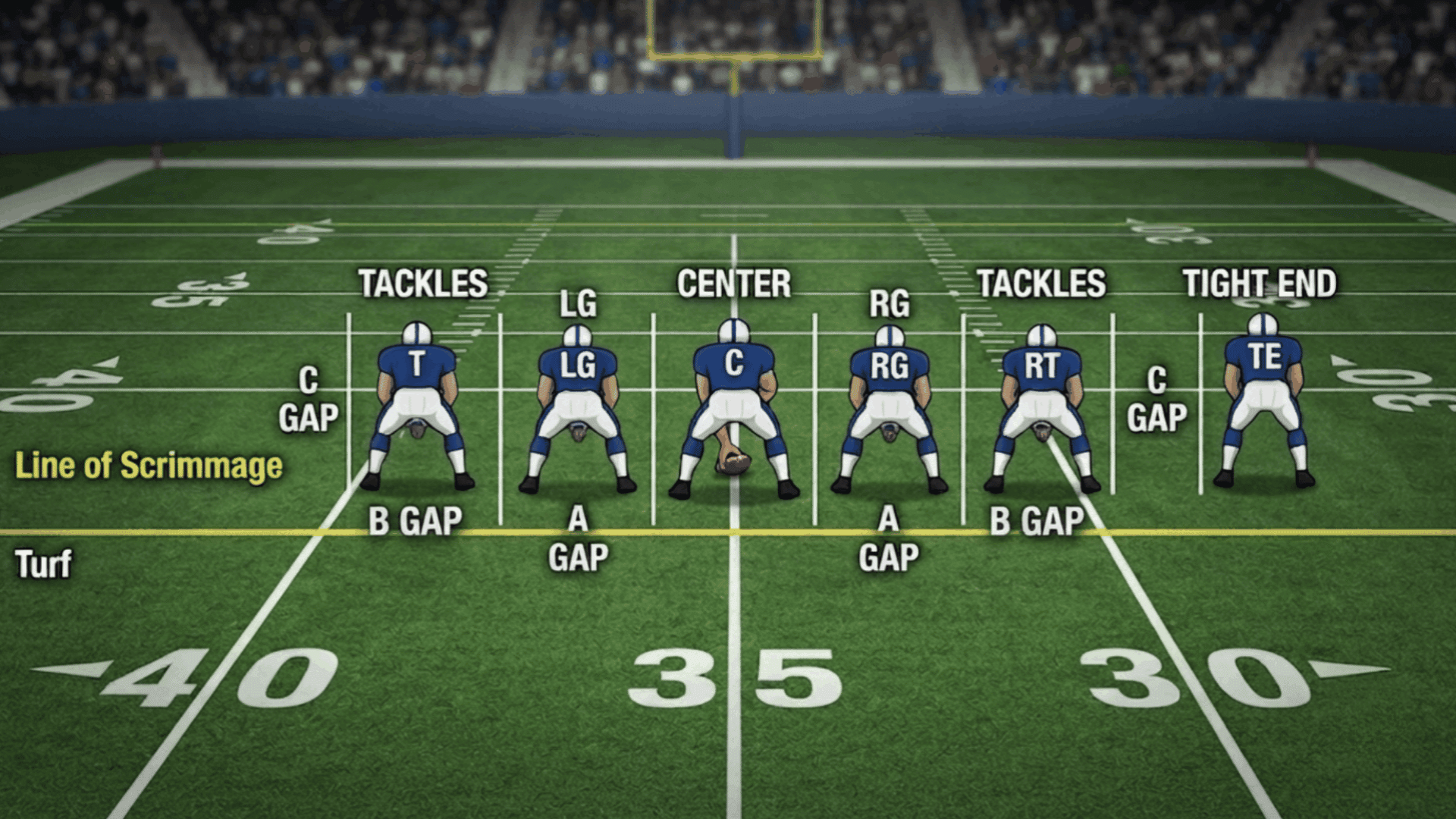
The A gap sits between the center and each guard, the B gap is between the guard and tackle, and the C gap is between the tackle and tight end, or outside the tackle if no tight end is on the field.
Coaches assign players to specific gaps to stop running plays, pressure the quarterback, or create running lanes.
Learning where each gap is and how players use it makes it much easier to follow defensive line play, recognize common run concepts, and understand why certain plays succeed or fail during a game.
Understanding Every Football Gap Position
Every gap has a specific location and purpose on the field. Knowing where each one is helps explain blocking decisions, defensive positioning, and how running plays develop after the snap.
1. A Gap
The A gap is the space between the center and the guard on either side of the offensive line.
It is the shortest path to the backfield, making it one of the busiest areas during a running play. Nose tackles, defensive tackles, and inside linebackers often defend this gap to stop runs up the middle.
Offenses frequently target the A gap with dive and quarterback sneak plays because it offers a direct route for gaining short yardage.
Strong play in this gap can quickly disrupt an offense’s game plan.
2. B Gap
The B gap is located between the guard and the offensive tackle. This gap gives running backs slightly more room than the A gap while still keeping the play inside the tackles.
Defensive tackles commonly line up to control the B gap, using strength and quick footwork to keep blockers from creating running lanes.
Many trap, inside zone, and power running plays are designed to attack this area.
Success in the B gap often depends on linemen maintaining position and linebackers reacting quickly after reading the play.
3. C Gap
The C gap is the space between the offensive tackle and the tight end. If no tight end is on the field, the area outside the tackle becomes the gap.
Defensive ends and outside linebackers usually protect this gap because it is a common point for off-tackle runs and edge plays.
Their job is to keep outside leverage, force runners back inside, and prevent big gains around the edge.
Many power, counter, and outside zone runs are aimed at the C gap, making disciplined positioning especially important.
How Offensive Players Create and Attack Football Gaps?
Every offensive player has a specific role in creating and protecting the intended running lane before the ball carrier reaches the gap.
- Offensive Linemen: Linemen block defenders away from the assigned gap so the runner has a clear lane to follow.
- Running Backs: The running back reads the blocking and attacks the planned gap, such as the A gap on dives or the C gap on power runs.
- Tight Ends: Tight ends help seal the C gap or edge, especially on off-tackle runs and outside zone plays.
- Pulling Guards: A pulling guard moves across the line to lead the runner into a chosen gap, often on power or counter plays.
- Quarterbacks: Quarterbacks read the defense before the snap and may change the play if a gap looks crowded.
Football Defensive Gap Roles
Each defender is assigned a gap before the snap to control running lanes and keep the offense from creating open space.
Defensive Position | Assigned Gap | Primary Responsibility |
|---|---|---|
Nose Tackle | A Gap | Stop inside runs and control the middle. |
Defensive Tackle | A or B Gap | Disrupt blocking and close interior running lanes. |
Defensive End | C Gap | Set the edge and contain off-tackle runs. |
Outside Linebacker | C or D Gap | Keep runners from reaching the outside. |
Inside Linebacker | Open A or B Gap | Fill the first available gap and make tackles. |
Defensive Line Techniques and Gap Alignment
Defensive line techniques describe where a defender lines up in relation to the offensive line before the snap. Each alignment affects gap responsibility, leverage, and the type of run or pass play a defender is expected to stop.
1. 0-Technique
The 0-technique places the defender directly over the center. This alignment is most common for a nose tackle in a 3-4 defense.
The defender’s main job is to control the middle of the line and prevent inside runs through the A gaps.
In some defensive schemes, the player reads the block and controls both A gaps before reacting. Strong hand placement, balance, and the ability to hold ground against double teams are especially important in this position.
2. 1-Technique
A 1-technique defender lines up on the outside shoulder of the center, shading toward one A gap. This alignment focuses on penetrating the backfield and disrupting inside running plays before they develop.
Defensive tackles playing the 1-technique rely on quickness and leverage to beat single blockers.
They often force running backs to change direction while also creating opportunities for linebackers to make tackles near the line of scrimmage.
3. 2-Technique
The 2-technique places the defender directly over the offensive guard. This alignment is common in defenses that ask linemen to read the play before attacking.
Rather than charging into one gap immediately, the defender controls the blocker and reacts to the ball carrier.
The position requires strength, patience, and good vision because the player may need to defend either the A gap or the B gap depending on how the play develops.
4. 2i-Technique
The 2i-technique lines the defender on the inside shoulder of the offensive guard, placing the focus on the A gap. This alignment gives the defender a better angle to stop inside runs and pressure the quarterback through the middle.
Defensive tackles in this position try to split blockers quickly while limiting running backs’ space. It is commonly used in defensive fronts that want strong control of the interior line.
5. 3-Technique
The 3-technique aligns on the outside shoulder of the offensive guard, giving direct access to the B gap. This is one of the most aggressive defensive tackle positions because it allows quick penetration into the backfield.
Players in this role are expected to pressure the quarterback, disrupt blocking schemes, and stop runs before they reach the second level.
Speed off the snap and strong hand usage are key traits for this alignment.
6. 4-Technique
A defender playing the 4-technique lines up directly over the offensive tackle. This position is often used in defenses that ask linemen to control blockers rather than immediately attack a single gap.
The player keeps the tackle occupied while reading the direction of the play.
Depending on the defensive call, the defender may react to either the B gap or C gap after the ball is snapped, helping keep the front balanced.
7. 4i-Technique
The 4i-technique places the defender on the inside shoulder of the offensive tackle. This alignment creates a strong angle toward the B gap and helps limit inside running lanes.
It is frequently used in modern 3-4 defenses because it combines run defense with opportunities to rush the interior. The defender must stay disciplined, avoid getting sealed by the tackle, and react quickly if the play moves toward the edge.
8. 5-Technique
The 5-technique lines the defender on the outside shoulder of the offensive tackle, placing primary responsibility on the C gap. Defensive ends commonly play this position, especially in 3-4 defensive fronts.
Their job is to keep outside runs from reaching the edge while also applying pressure on passing plays. Good leverage, strong edge setting, and the ability to shed blocks make this alignment effective against both the run and the pass.
9. 6-Technique
The 6-technique positions the defender directly over the tight end when the tight end is lined up beside the tackle. This alignment helps defend plays aimed at the outside edge of the formation.
The defender must handle blocks from the tight end while keeping outside leverage.
This position is useful against teams that rely on power running plays, multiple tight ends, or strong edge blocking to create running lanes.
10. 7-Technique
The 7-technique places the defender on the inside shoulder of the tight end. This alignment allows the player to attack the C gap while staying close to the edge of the formation.
Defensive ends and outside linebackers often use this position to pressure the quarterback or stop off-tackle runs. Quick reactions are important because the defender may need to fight through blocks from both the tackle and tight end.
11. 9-Technique
The 9-technique aligns the defender well outside the tight end, creating a wide position on the edge. This alignment is designed to contain outside runs and pressure the quarterback from a wider angle.
Edge rushers in the 9-technique use speed and flexibility to beat offensive tackles while preventing runners from reaching the sideline.
Teams often use this alignment in passing situations or against offenses that favor outside zone and sweep plays.
One-Gap vs Two-Gap Defense
A one-gap defense asks each defender to attack a single running lane, while a two-gap defense requires reading the blocker before controlling multiple lanes.
Feature | One-Gap Defense | Two-Gap Defense |
|---|---|---|
Gap Responsibility | One assigned gap | Two adjacent gaps |
Playing Style | Attack immediately | Read and react |
Best Fit | Fast, aggressive fronts | Strong, physical fronts |
Common Use | 4-3 defense | 3-4 defense |
How Do Gap Assignments Affect Running Plays?
Gap assignments shape where running plays succeed or break down, making every defender’s position important once the ball is snapped.
- A Gap Runs: Short-yardage plays like dives and quarterback sneaks often target the A gap to gain quick yards through the middle.
- B Gap Runs: Inside zone and trap plays commonly attack the B gap, where blockers create space between the guard and tackle.
- C Gap Runs: Power and off-tackle runs aim for the C gap, using tight ends and tackles to seal the edge.
- Defensive Gap Control: When defenders stay in their assigned gaps, running lanes close quickly, limiting the ball carrier’s options.
- Missed Assignments: A defender leaving the assigned gap can create an opening that allows the runner to reach the second level.
- Blocking Coordination: Offensive linemen work together to move defenders away from the intended gap and create a clear running lane.
- Pre-Snap Reads: Quarterbacks and running backs identify defensive alignments before the snap to decide which gap offers the best chance for a successful run.
How Do Defenses Use Gap Control During
Defenses use gap control by assigning each player a specific running lane to protect, reducing open space and forcing the offense into difficult situations.
Before every snap, defenders line up with clear gap responsibilities based on the play call and offensive formation.
Defensive linemen attack or control their assigned gaps while linebackers fill any lanes that open during the play.
When every defender stays disciplined, running backs have fewer options and are often forced to change direction before reaching the second level.
Gap control also helps defenders maintain proper leverage, making it easier to contain outside runs and limit cutback lanes.
If even one defender abandons an assignment, a running lane can open quickly and turn a routine play into a significant gain. Consistent gap discipline is one of the foundations of strong run defense in American football.
How Do Coaches Teach Gap Discipline?
Coaches build gap discipline through repeated practice so every defender knows where to line up, react, and finish each play.
- Assign Clear Responsibilities: Every defender learns which gap to protect before the snap based on the defensive call.
- Practice Recognition Drills: Players repeatedly read blocking schemes to react quickly without leaving their assigned gap.
- Emphasize Proper Leverage: Coaches teach defenders to keep the correct body position and prevent runners from reaching open space.
- Reinforce Team Communication: Defenders communicate adjustments before the snap so everyone understands their role.
- Review Game Film: Coaches use film sessions to highlight strong gap discipline and correct missed assignments from previous games.
- Build Consistent Habits: Repetition during practice helps players maintain gap control even in fast-paced game situations.
Summing it up
Understanding A Gap, B Gap, and C Gap gives a clearer picture of how every play develops before and after the snap.
Gap locations, defensive line techniques, and player responsibilities all work together to control running lanes and limit offensive opportunities.
Whether it’s a one-gap or two-gap defense, staying disciplined in assigned lanes is essential for consistent defensive play.
Knowing these concepts also makes it easier to recognize why coaches choose certain formations and how players react during different situations on the field.
The next time a game is on, watch how defenders line up and protect their assigned gaps. Paying attention to these details can make every snap easier to follow and much more enjoyable to watch.
Frequently Asked Questions
What is a C Gap Defender?
A C gap defender is usually a defensive end or outside linebacker responsible for covering the space outside the tackle and stopping off-tackle or edge-running plays.
What are One-Gap and Two-Gap Defenses?
One-gap defense assigns each defender a single gap to attack immediately. Two-gap defense requires defenders to control blockers first before reacting to either adjacent gap.
What is the D Gap in Football?
The D gap is the space outside the tight end, created only when a tight end lines up on the formation. It is usually the responsibility of an outside linebacker or edge defender defending sweeps and wide runs.
How do Defensive Line Techniques Relate to Gap Assignments?
Defensive line techniques determine where a defender lines up before the snap. That alignment helps define which gap the player attacks or controls during the play.