





Every football game has moments when one unexpected decision can shift momentum and change the final result.
Coaches spend hours preparing for familiar formations, yet one unusual alignment can force defenders to hesitate, communicate under pressure, and adjust within seconds.
That uncertainty is one reason certain plays remain relevant long after they first appeared on the field.
Some formations create an advantage not through speed or size, but through timing, spacing, and quick decision-making.
From high school programs to college football, these plays continue to attract attention because they challenge defensive discipline and create scoring opportunities in critical situations.
Their unusual structure also gives coaches another way to pressure opponents before the ball is even snapped.
What Is Swinging Gate Football?
Swinging gate football is an unconventional offensive formation commonly used during PAT attempts and two-point conversions.
Most of the offensive line shifts to one side, leaving only the center over the ball.
This unusual setup forces the defense to adjust quickly before the snap and may create a numerical advantage on one side of the field.
If the defense fails to match the alignment, the offense can attack the open space.
If defenders adjust correctly, the team can shift back into a traditional field goal formation.
The formation supports several options, including a direct run, a quick screen pass, an option play, or an extra-point kick, making it a flexible special-teams strategy.
How the Swinging Gate Formation Evolved?
The swinging gate formation has been part of American football for decades. Early coaches used unbalanced alignments to improve blocking angles and create a numbers advantage at the point of attack.
Over time, it developed into a specialized strategy, especially on special teams.
High school programs adopted it because strong preparation and clean execution could offset differences in size or athletic ability.
College teams later expanded its use for two-point conversions and surprise scoring chances. Although professional teams use the formation less often, it still appears in key moments.
Modern versions may include quick passes, option plays, jet motion, or shifts back into standard kicking formations.
Its long history shows that timing and disciplined execution remain important.
How to Implement the Swinging Gate Formation?

Setting up the swinging gate formation requires proper alignment, clear communication, and consistent practice.
Step 1: Set Up the Swinging Gate Formation
Start by placing the center, quarterback or holder, and kicker in their required positions while moving most offensive linemen to one side of the field.
This creates the unbalanced structure that defines the swinging gate. Make sure every player understands their exact alignment before the snap.
Repeated practice helps the team form quickly, avoid penalties, and maintain proper spacing during game situations.
Step 2: Assign Clear Player Responsibilities
Every player needs a specific role before the play begins. The center focuses on a clean snap, while the quarterback or holder reads the defense and chooses the best option.
Linemen create blocking lanes, receivers prepare for passing chances, and the kicker remains ready for a quick shift back.
Clear responsibilities reduce confusion and help players react faster when the defense changes its alignment.
Step 3: Install One Core Play First
Begin with a simple play that players can execute confidently before adding more variations. Many teams start with a side snap run because it teaches timing, blocking, and communication.
Once the basic movement becomes consistent, coaches can introduce options such as screen passes, pitches, or motion plays.
Building the play gradually allows players to understand their roles and reduces mistakes during important moments.
Step 4: Teach the Pre-Snap Defensive Read
The quarterback or holder should learn how to evaluate the defense before the snap.
Players should count defenders, identify uncovered receivers, and check for open running lanes created by the formation.
If the offense has an advantage, the team can attack quickly. If defenders adjust correctly, shifting back to a traditional kick may be the better choice. Practicing these reads improves decision-making under pressure.
Step 5: Practice the Shift Back to Kick
A strong swinging gate package requires a reliable backup option when the defense responds correctly.
Coaches should teach players a clear signal that moves the offense back into a standard extra-point formation.
Each player must understand the timing of the transition to avoid confusion or penalties. Regular practice of this movement helps the team stay organized and execute smoothly during high-pressure situations.
Step 6: Prepare for Defensive Adjustments
Defenses can react in different ways, so players should practice against multiple alignments. Coaches can create situations with overloaded fronts, balanced defensive setups, and late shifts before the snap.
This preparation helps players recognize when to run the play, attempt a pass, or return to a kick formation.
Practicing different reactions builds confidence and allows the offense to stay composed during game situations.
Step 7: Rehearse the Formation Every Week
The swinging gate should receive regular attention during practice, even if the team uses it only occasionally.
Short weekly repetitions help players remember their positions, assignments, and communication signals.
Waiting until game day increases the chance of mistakes and confusion. Consistent rehearsal keeps the formation organized, improves execution, and ensures players are prepared when the right opportunity appears during a critical scoring situation.
Why Is It Called the Swinging Gate?
The name “swinging gate” comes from the way the formation appears before the snap. Most of the offensive line shifts to one side, leaving a wide opening that resembles a gate swinging away from its normal position.
This unusual alignment forces the defense to react quickly and reorganize coverage. Instead of placing players evenly across the line of scrimmage, the offense creates a clear imbalance.
The grouped blockers provide extra numbers on one side, while the remaining players stay separated to support run, pass, or option plays.
Coaches also call the setup the “muddle huddle” because it can create confusion before the snap.
Both names reflect its purpose of forcing quick defensive decisions and creating favorable matchups.
Swinging Gate Player Alignment
The success of the swinging gate formation depends on how each player positions themselves before the snap.
| Offensive Player | Typical Position | Primary Responsibility |
|---|---|---|
| Center | Over the football | Delivers a clean snap and starts the play |
| Offensive Linemen | Grouped on one side of the center | Create an overload and block for the chosen play |
| Quarterback or Holder | Opposite the heavy side | Reads the defensive alignment and makes the final decision |
| Running Back | Near the quarterback or holder | Carries the ball or serves as an option receiver |
| Eligible Receiver | Wide near the overloaded side | Receives a quick pass if left uncovered |
| Kicker | Positioned for a possible kick | Prepares for an extra point if the offense shifts back |
How Does the Swinging Gate Formation Work?
Unlike a standard special teams formation, where players line up evenly across the line of scrimmage, the swinging gate moves most of the offense to one side of the field.
This creates an unbalanced setup that forces defenders to count players, communicate assignments, and decide whether to shift before the snap.
The offense studies the defensive response and selects the option that offers the best matchup.
Depending on the alignment, the team may run, pass, pitch the ball, or return to a traditional kicking formation for a field goal in football attempt.
Every player has a specific role, so timing, positioning, and communication must remain precise. Even a small mistake can lead to a penalty, a missed assignment, or a broken play.
What Do Coaches Look for Before the Snap?
Before the Ball is Snapped, Coaches and Quarterbacks Quickly Evaluate Several Defensive Indicators.
- Count Defenders on the Overloaded Side: Compare the number of defenders to the offensive blockers to determine whether a numbers advantage exists.
- Look for Uncovered Eligible Receivers: Check whether any eligible receiver is still open for a quick, easy completion.
- Identify Open Running Lanes: Find gaps created by the offensive alignment that can be attacked immediately after the snap.
- Watch for Late Defensive Movement: Pay attention to defenders shifting just before the snap, as late adjustments can create openings.
- Decide Whether to Attack Immediately: Run the designed play if the matchup is favorable, or shift back to a standard kicking formation if it is not.
Common Swinging Gate Variations
The swinging gate supports several play variations from the same basic alignment. Each option allows the offense to respond to defensive positioning without changing personnel.
| Variation | How It Works |
|---|---|
| Side Snap Run | The center snaps directly to a back running behind the overloaded blocking side. |
| Quick Screen Pass | The quarterback or holder throws quickly to an open receiver with blockers nearby. |
| Option Pitch | The runner keeps the ball or pitches it based on the edge defender’s reaction. |
| Jet Motion | A player crosses the formation to create handoff, fake, run, or pass options. |
| Shift Back to Field Goal | The offense returns to a standard kicking formation when no clear advantage appears. |
Strategic Purpose of the Swinging Gate
The swinging gate is designed to create pressure before the snap and give the offense several ways to respond.
- Forces Quick Defensive Adjustments: The formation makes defenders count, players communicate assignments, and reposition before the snap.
- Creates a Numbers Advantage: Shifting blockers to one side may give the offense more players at the point of attack.
- Opens Running and Passing Options: The alignment can create running lanes or leave an eligible receiver uncovered.
- Supports Pre-Snap Reads: The quarterback or holder can study the defense and select the best option.
- Allows a Quick Attack: If the defense is poorly aligned, the offense can snap the ball and use the open space.
- Provides a Safe Backup Plan: If defenders adjust correctly, the team can shift back into a standard kicking formation.
- Forces Extra Preparation: Opponents must spend practice time preparing for the formation even when it is rarely used.
Why Do Teams Use the Swinging Gate?
Teams use the swinging gate because it creates pressure on the defense before the snap and gives the offense several ways to respond.
By grouping blockers on one side, the offense may gain a numbers advantage at the point of attack, making it easier to create a running lane or complete a quick pass.
The unusual alignment forces quick defensive adjustments, which can lead to missed coverage or poor positioning.
Coaches can choose from several options, including a direct run, a screen pass, an option play, or a shift back into a standard kicking formation.
Even when the play is rarely used, opponents must spend practice time preparing for it.
With consistent practice and smart timing, the swinging gate can become a reliable scoring strategy rather than just a surprise play.
When Should Coaches Use the Swinging Gate?
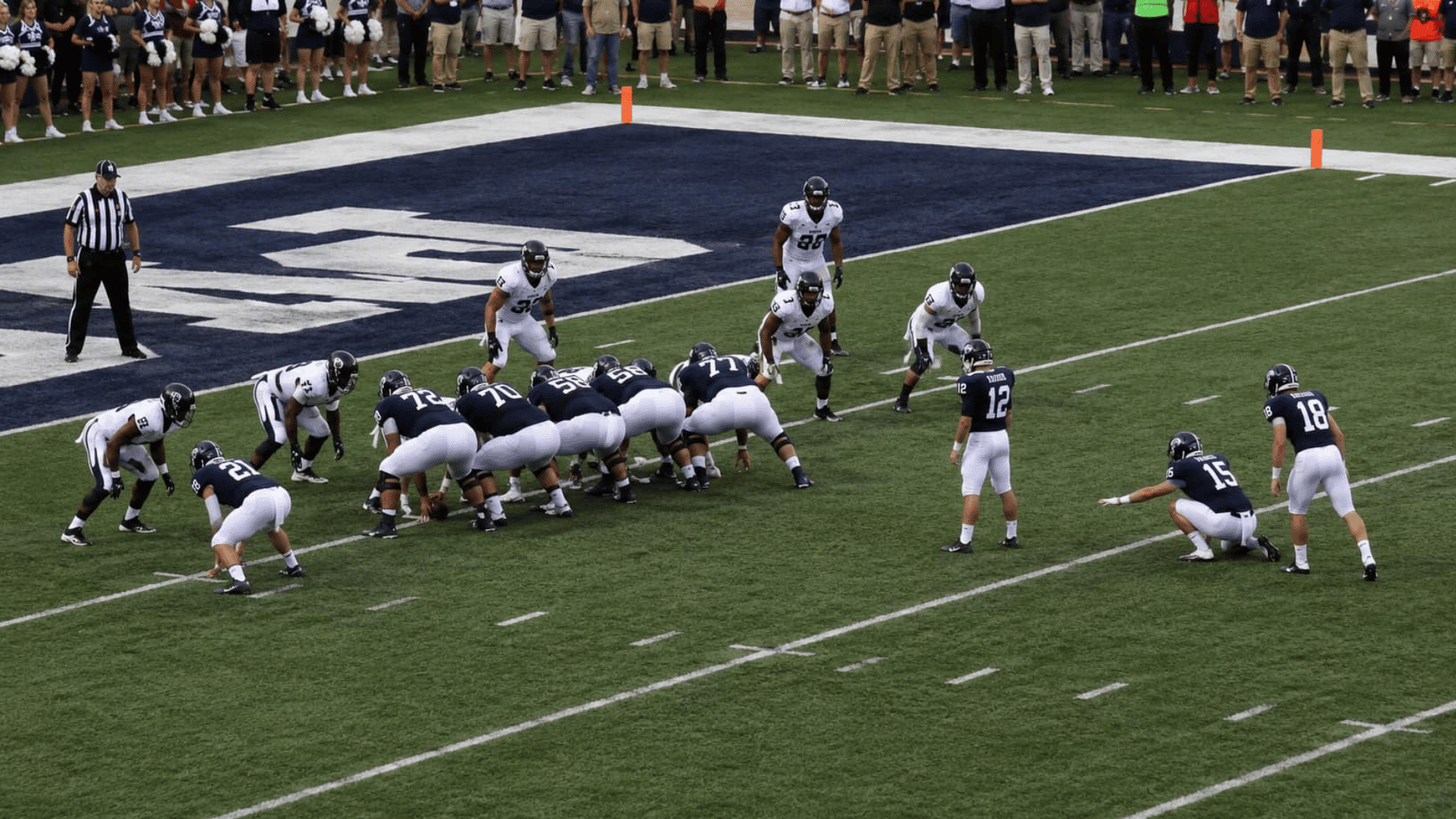

Coaches should use the swinging gate when the defense has little time to recognize the formation and adjust its assignments.
It is most common after a touchdown, when the offense can attempt a two-point conversion or shift back into a standard extra-point setup.
The formation also works on short-yardage plays, where the overloaded side provides a blocking advantage.
Some coaches call it after a turnover or major gain while the defense is still reorganizing. It may also work well against teams that rarely practice against unusual alignments.
The swinging gate works best when used selectively with proper timing and execution.
Coaching Tips for the Formation of Swinging Gate Football
According to USA Football Coaching Resources, coaches should build the formation step by step so players gain confidence before adding more advanced plays.
- Start With One Core Play: Teach one reliable play before adding more options from the formation. This helps players understand timing, positioning, and responsibilities.
- Practice Legal Alignment: Ensure every player knows the correct position before the snap to prevent unnecessary penalties and formation errors.
- Focus on Snap Consistency: Repeated snap practice improves timing, coordination, and ball security during game situations.
- Create Clear Check Calls: Give the quarterback or holder simple signals to decide whether to run the play or shift back to a kick.
- Rehearse Defensive Looks: Practice against different defensive alignments so players can recognize reactions and adjust quickly.
- Emphasize Communication: Make sure every player understands signals, cadence, and assignments before the ball is snapped.
- Review Game Film: Analyze successful and unsuccessful attempts to improve decisions, identify mistakes, and strengthen execution.
Common Swinging Gate Formation Mistakes
The swinging gate offers useful scoring options, but small mistakes can quickly disrupt the play.
- Illegal Formation: Incorrect alignment or failure to meet formation rules can lead to a penalty before the play begins.
- Poor Snap Execution: A rushed or inaccurate snap can disrupt the timing and prevent the play from developing properly.
- Missed Blocking Assignments: One missed block can allow defenders to reach the ball carrier before the play gains momentum.
- Slow Decision-Making: Delayed reads give defenders time to adjust and remove the offense’s advantage.
- Overusing the Formation: Calling the play too often makes it easier for opponents to prepare and respond.
- Insufficient Practice: Limited repetition increases the risk of penalties, confusion, and missed assignments.
Conclusion
Creative football strategy often begins by pressuring the defense before the snap, and swing-gate football does so through its unusual alignment and flexible playbooks.
The formation creates favorable matchups and gives the offense several scoring options.
However, its value depends on proper alignment, disciplined assignments, and regular practice rather than surprise alone.
Coaches must choose the right moment, while players need to execute each responsibility with confidence. When the formation is taught clearly and used selectively, it can become a dependable part of the special teams plan.
Swinging-gate football remains a practical tactical option for teams seeking greater flexibility near the goal line.
Frequently Asked Questions
Is the Swinging Gate Still Effective?
Yes, the swinging gate remains effective when teams practice it well and use it at the right moment. It can still create favorable matchups and improve two-point conversion chances.
How Much Practice Does the Swinging Gate Require?
Regular practice helps players master alignment, assignments, snap timing, and decision-making while reducing penalties during games.
Why Do Some Teams Shift Out of the Swinging Gate Before the Snap?
Teams often shift into a traditional kicking formation when the defense adjusts correctly. This allows the offense to take the safer extra-point attempt rather than force a risky play.