





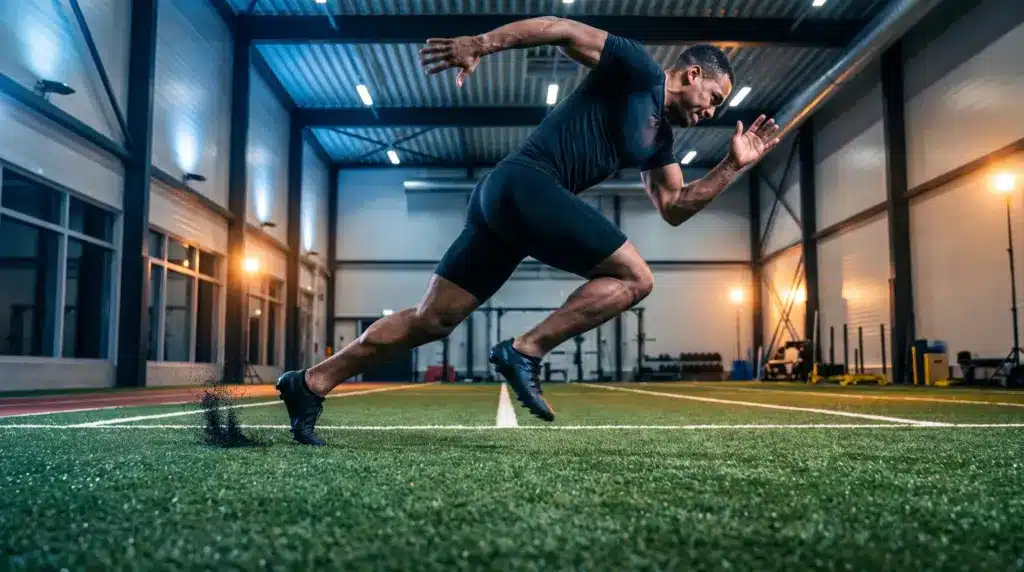
Many football fans hear the term wide receiver every game, but they may not know exactly what the position involves. A wide receiver’s main job is to catch passes from the quarterback, gain yards, and score touchdowns.
They also run precise routes, create separation from defenders, and block during certain running plays to help the offense succeed.
In today’s NFL and college football, wide receivers often make the biggest plays and can quickly change the outcome of a game with a single catch.
This guide explains what a wide receiver does, where they line up, their key responsibilities, the skills they need, and why they are one of the most valuable positions on a football team.
It also compares wide receivers with other offensive positions to help you better understand their role.
What Does a Wide Receiver Do in Football?
A wide receiver catches passes, gains yards, blocks when needed, and helps the offense score points.
As one of the primary receiving targets, a wide receiver works closely with the quarterback to move the ball down the field. Their role extends beyond catching the football.
They must run precise routes, create separation from defenders, and make plays after the catch. During running plays, they are also expected to block defensive backs to help teammates gain extra yards.
Modern football offenses depend heavily on wide receivers because they can stretch the defense and create scoring opportunities.
A reliable receiver can turn a short pass into a long gain or make a difficult catch in a crucial situation.
Whether lined up near the sideline or in the slot, wide receivers play a major role in keeping drives alive and putting points on the scoreboard.
What Are the Main Responsibilities of a Wide Receiver?

A wide receiver contributes in several ways throughout a football game. These responsibilities allow the offense to move the ball, gain first downs, and create more scoring opportunities.
1. Catch Passes from the Quarterback
The primary responsibility of a wide receiver is to catch passes thrown by the quarterback.
Receivers must secure the football in different situations, whether the throw is short, deep, high, or made while under pressure.
Good receivers keep their focus despite defenders trying to break up the pass. Strong hands, body control, and concentration help them complete difficult catches near the sideline or in traffic.
After making the catch, they immediately look for extra yards before being tackled, giving the offense a better chance to continue the drive or score.
2. Run Precise Passing Routes
Wide receivers must run the exact route called in the playbook. Every route has a specific depth, timing, and direction that matches the quarterback’s drop and throwing motion.
A receiver who runs sloppy routes can disrupt the timing of the play and increase the chance of an incomplete pass or turnover.
Sharp cuts, quick acceleration, and the ability to change direction without losing speed help receivers separate from defenders.
Accurate route running also builds trust with the quarterback, making the receiver a dependable target in serious situations.
3. Create Separation from Defenders
Getting open is one of the most valuable skills a wide receiver can have. Before the quarterback throws the football, the receiver must create enough space to make the catch safely.
This often requires quick footwork, sudden changes in direction, and good awareness of defensive coverage.
Receivers use different techniques to beat man-to-man coverage or find open areas against zone defenses.
Even creating a small amount of separation can give the quarterback a safe passing window and improve the success of the play.
4. Gain Yards After the Catch
A completed pass is often only the beginning of the play. After catching the football, wide receivers try to gain as many additional yards as possible before being tackled.
This is known as yards after the catch, or YAC. Speed, balance, vision, and agility allow receivers to avoid defenders and extend the play.
Some players can turn a short pass into a long gain by breaking tackles or making defenders miss in open space. Strong YAC ability gives offenses more explosive plays without requiring long throws.
6. Block During Running and Passing Plays
Wide receivers also play an important role when the football is not coming their way. On running plays, they block defensive backs to help create running lanes for the ball carrier.
During screen passes, receivers may block ahead of a teammate to allow extra yardage after the catch.
Although they usually block smaller defenders than offensive linemen, effort and proper technique are still essential.
Coaches value receivers who stay engaged throughout every play because their blocks often determine whether a play gains a few yards or becomes a big gain.
7. Score Touchdowns and Make Big Plays
Wide receivers are often the players fans remember because they score many of the offense’s touchdowns.
They can catch passes in the end zone, make contested catches in tight coverage, or outrun defenders on deep throws. Some touchdowns come from short passes that receivers turn into long runs after the catch.
Their ability to produce explosive plays forces defenses to stay alert throughout the game.
A receiver who consistently makes big plays can change momentum and give the offense confidence during critical moments.
8. Stretch the Defense and Create Opportunities
A talented wide receiver affects the game even when they do not receive the football. Fast receivers force defenders to cover more of the field, preventing safeties from staying close to the line of scrimmage.
This opens more space for running backs, tight ends, and other receivers to make plays underneath.
Defensive coordinators often adjust their coverage to stop dangerous receivers, creating favorable matchups elsewhere on the field.
By stretching the defense, wide receivers help the entire offense become more effective and unpredictable.
Where Does a Wide Receiver Line Up?
A wide receiver can line up in several positions depending on the offensive formation and play design. Each alignment gives the receiver a different role and affects how defenses respond.
| Alignment | Position on the Field | Primary Role | Typical Strengths |
|---|---|---|---|
| X Receiver (Split End) | On the line of scrimmage, usually opposite the tight end | Faces the defense’s top cornerback and runs outside routes | Size, strength, contested catches |
| Z Receiver (Flanker) | Off the line of scrimmage | Uses motion and runs deep or intermediate routes | Speed, versatility, route running |
| Slot Receiver | Between the outside receiver and offensive line | Attacks the middle of the field with short and quick routes | Agility, quickness, reliable hands |
| Wide Side Receiver | Aligns toward the wider side of the field | Creates space and stretches the defense | Speed and open-field ability |
| Motion Receiver | Moves before the snap | Confuses defenders and identifies coverage | Versatility and football IQ |
What Skills Does a Wide Receiver Need?
The best wide receivers combine athletic ability with sound technique. These six skills help them make consistent plays and become reliable offensive weapons.
- Reliable Hands: Catch the football consistently, even on difficult or contested throws, while maintaining possession through contact and staying focused under pressure.
- Speed and Acceleration: Reach top speed quickly to beat defenders, create separation on deep routes, and gain extra yards after making a catch.
- Route Running: Run precise routes with proper timing and sharp cuts, helping the quarterback deliver accurate passes to the expected location.
- Agility and Body Control: Change direction smoothly, adjust to off-target throws, and stay balanced while making catches near the sideline or in traffic.
- Football IQ: Read defensive coverages, recognize openings in the defense, and adjust routes when needed to remain available for the quarterback.
- Blocking Ability: Block defensive backs during running plays and screen passes, giving teammates more space to gain additional yards and extend drives.
Wide Receiver vs. Tight End vs. Running Back
Each offensive skill position has a different purpose, even though all three can catch passes. Understanding these differences makes it easier to see why offenses use each position in specific situations.
| Feature | Wide Receiver | Tight End | Running Back |
|---|---|---|---|
| Primary Job | Catch passes and gain yards | Block and catch passes | Run the football and catch passes |
| Starting Position | Outside or slot | Next to the offensive line | Behind or beside the quarterback |
| Route Running | Main responsibility | Frequent | Occasional |
| Blocking | Sometimes | Frequently | Frequently |
| Ball Carrying | Rare | Rare | Main responsibility |
| Typical Build | Lean and fast | Bigger and stronger | Compact and powerful |
| Deep Passing Threat | High | Moderate | Low |
| Common Offensive Role | Stretch the defense and create big plays | Balance blocking with receiving | Control the running game and short passes |
What Makes a Good Wide Receiver?
Not every wide receiver becomes a top playmaker. The most successful players combine consistency, smart decisions, and strong fundamentals in every game.
- Consistent Catching: Reduces dropped passes and helps the offense keep possession during important drives.
- Creates Separation: Gives the quarterback a clear passing window by getting open against defenders.
- Strong Route Discipline: Runs each route with the correct timing and depth to keep the passing game accurate.
- Yards After the Catch: Turns short completions into bigger gains by avoiding tackles and finding open space.
- Competitive Mindset: Battles for contested catches and keeps making plays against tight coverage.
- Dependable Under Pressure: Performs well on third downs, in the red zone, and during late-game situations.
What Routes Does a Wide Receiver Run?
Every route a wide receiver runs comes from a shared route tree that helps quarterbacks and receivers stay in sync. Each route has a specific depth and direction, making it easier to attack different defensive coverages.
| Route | Typical Depth | How It Breaks | Best Used Against |
|---|---|---|---|
| Slant | 3–5 yards | Sharp cut inside at about a 45-degree angle | Man coverage, quick timing throws |
| Flat | 2–3 yards | Breaks immediately toward the sideline | Screens, quick outlet passes |
| Hitch | 5–6 yards | Stops and turns back to the quarterback | Off or soft coverage |
| Curl | 8–12 yards | Runs vertically, then turns back toward the quarterback | Zone coverage |
| Out | 10–12 yards | Makes a sharp 90-degree cut toward the sideline | Man coverage |
| Dig | 10–15 yards | Cuts 90 degrees across the middle after a vertical release | Zone coverage |
| Corner | 12–15 yards | Angles about 45 degrees toward the back corner | Cover 2 defenses |
| Post | 12–15 yards | Breaks about 45 degrees toward the goalposts | Cover 3 defenses |
| Go (Streak) | 20+ yards | Runs straight downfield without breaking | Deep man coverage, one-on-one matchups |
Can Anyone Play Wide Receiver?
Many athletes can learn to play wide receiver, but succeeding at the position takes practice, discipline, and consistent skill development.
Size alone does not determine success. Some of the best receivers rely on quickness, precise route running, and dependable hands instead of exceptional height.
Young players can develop these abilities through regular drills, strength training, and game experience.
Learning how to read defenses, communicate with the quarterback, and make smart decisions during each play is equally important.
With dedication and proper coaching, players of different body types and athletic backgrounds can become effective wide receivers at youth, high school, college, or professional levels.
How Has the Wide Receiver Position Changed Over Time?

Today’s wide receivers are expected to do far more than catch passes. As football has become more pass-focused, the position has evolved into one of the most versatile and demanding roles on the field.
- More Diverse Route Running: Earlier receivers mainly ran deep routes. Modern wide receivers run short, intermediate, and deep routes to keep defenses guessing.
- Greater Positional Flexibility: Many receivers now line up outside, in the slot, or move across the formation before the snap to create favorable matchups.
- Increased Focus on Yards After the Catch: Coaches expect receivers to turn short completions into big gains by using speed, vision, and agility after securing the football.
- Expanded Offensive Role: Wide receivers are involved in screen passes, jet sweeps, trick plays, and blocking assignments, making them important on nearly every offensive series.
- Higher Athletic Standards: Modern receivers need a combination of speed, quickness, reliable hands, route-running ability, and football intelligence to succeed against faster, more athletic defenses.
- Stronger Impact on Offensive Strategy: Many teams now build their passing offense around elite wide receivers, using their skills to create scoring opportunities and open space for other teammates.
How Do Wide Receivers Help Their Team Win?
Wide receivers influence much more than the passing game. Their ability to catch passes, block, and attract defensive attention helps create opportunities for the entire offense.
| Contribution | How It Helps the Team |
|---|---|
| Converts First Downs | Keeps offensive drives alive and gives the team more scoring opportunities. |
| Scores Touchdowns | Adds points through receiving touchdowns or long runs after the catch. |
| Stretches the Defense | Forces defenders to cover more of the field, creating space for teammates. |
| Supports the Running Game | Blocks defensive backs to help running backs gain additional yards. |
| Creates Explosive Plays | Produces long gains that quickly change field position and game momentum. |
| Builds Quarterback Confidence | Gives the quarterback a reliable target in both routine and high-pressure situations. |
Conclusion
A wide receiver is much more than a player who catches passes. They run precise routes, create separation, block for teammates, gain extra yards after the catch, and score touchdowns that can change the outcome of a game.
Their combination of athletic ability, technique, and teamwork makes them one of the most important players in any modern football offense.
Whether you’re new to football or looking to understand the game better, knowing what a wide receiver does helps you appreciate how every offensive play comes together.
Keep exploring my football guides to learn more about player positions, game rules, and strategies that shape every NFL and college football matchup.
Frequently Asked Questions
Is Wide Receiver a Hard Position to Play?
Yes. Wide receiver is considered one of football’s most challenging positions because it requires speed, precise route running, reliable hands, quick decision-making, and strong coordination with the quarterback.
What Is the Easiest NFL Position?
No. NFL position is truly easy because every role requires specialized skills and extensive training. Some fans consider kicker one of the least physically demanding positions, but it still demands exceptional accuracy and consistency.
Do Wide Receivers Make Touchdowns?
Yes. Wide receivers regularly score touchdowns by catching passes in the end zone or turning receptions into long runs after the catch. Many of the NFL’s highest-scoring offensive players are wide receivers.
What NFL Position Gets Injured the Most?
Running backs experience some of the highest injury rates in the NFL because they frequently absorb direct contact while carrying the football. Wide receivers can also suffer injuries, especially from tackles and contested catches.