November 10, 2026
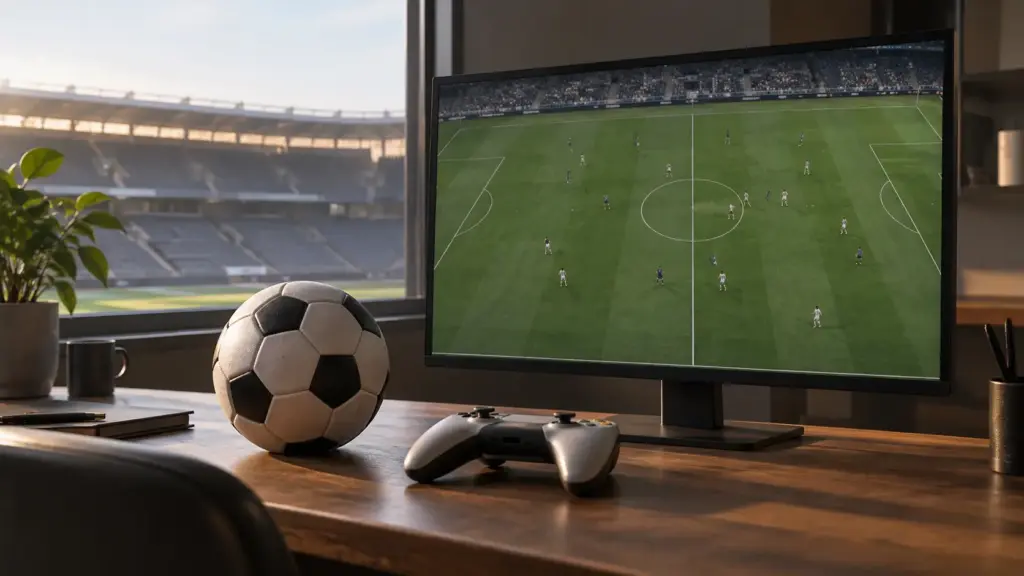
A football pitch on a screen does not tell you what kind of product you are looking at. It might be a match you control, an illustration beside a betting market or the background of a game with entirely different rules. The sporting imagery is familiar in each case. The source of the result is what separates them. Understanding that difference makes product descriptions much easier to read. Sports simulation recreates some part of playing or managing a sport. Sports betting attaches a wager to a specified event. Sports-themed design borrows the appearance of sport, while the underlying activity can take many forms. Sports simulation gives you decisions inside a model In a simulation, software represents the contest. It calculates movement, collisions, timing and other elements according to the game’s rules. Your inputs can change what happens within that model. Choosing a pass, moving a defender or adjusting a formation can alter the next passage of play. Control does not always mean operating an athlete directly. A management simulation can focus on recruitment, tactics and substitutions. EA’s Career Mode guide distinguishes managing a club from developing the career of an individual player. Both approaches involve decisions within a represented sporting world. The simulation is still an interpretation. Difficulty settings, assistance and the behavior of computer-controlled opponents affect how it plays. A match can look close to a television broadcast while using rules designed to make control responsive or to compress a full contest into a shorter session. Its score belongs to that simulated match. Even when real squads or league circumstances supply the starting information, the session produces its own sequence of events. A sports theme describes the presentation A game can feature a football, a racing helmet or a stadium without simulating the corresponding sport. Those images might decorate a […]