
May 21, 2026
The performance gap between athletes competing at the highest level has never been smaller. In almost every professional sport, the margins that separate podium finishes from near-misses are measured in fractions — of a second, of a percentage point, of a degree. When talent and training volume are roughly equivalent, which at the elite level they usually are, the advantages that compound over a career tend to come from somewhere less obvious: sleep quality, cognitive recovery, the environment in which an athlete spends the hours they are not competing or training. This is why the world’s best-performing athletes have become so deliberate about their living spaces. It is not aesthetic vanity. It is an extension of the same logic that governs every other performance variable in their lives. Every detail in that space is a variable, and lighting is one of the first athletes get right, replacing harsh fixed overhead bulbs with dimmable table lamp that let them dial down light intensity precisely as the body begins its wind-down in the hours before sleep. Recovery Is Where Adaptation Happens There is a persistent misconception in sports culture that the training session is where improvement occurs. It is not. Training is where the stimulus is applied. Improvement — the physiological adaptation that produces stronger muscles, faster reaction times, and greater endurance capacity — happens during recovery. Sleep, specifically deep sleep, is the most productive phase of that process. Which means that the bedroom of a serious athlete is not simply a place to sleep. It is a recovery tool. And like any tool, its effectiveness depends on how well it is designed for its purpose. The environmental factors most strongly associated with sleep quality are temperature, sound, and light. Of these, light is the most disruptive and the most commonly underestimated. The […]

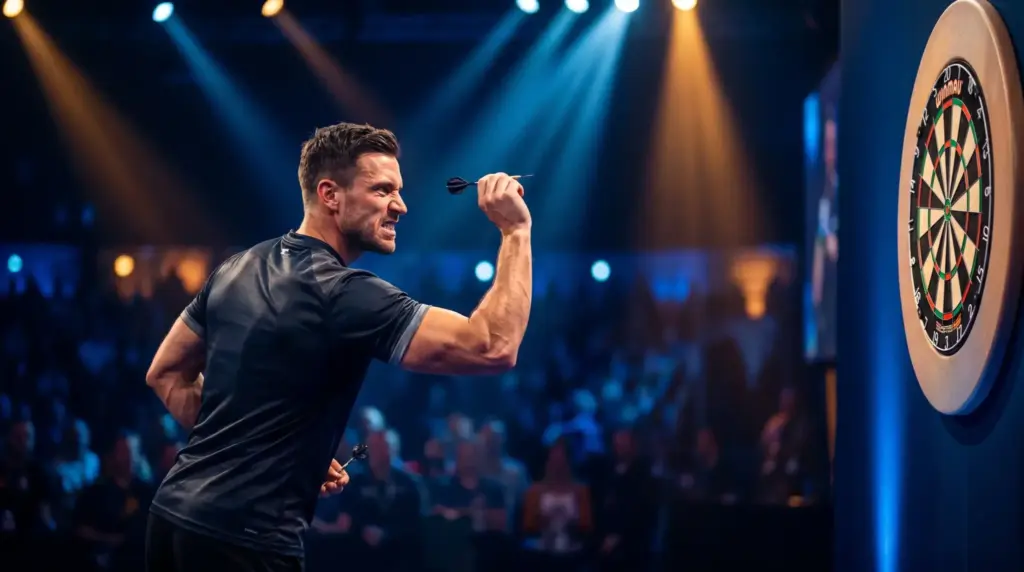
Darts has always had that pub-sport reputation, but the modern game looks very different. Walk into any major tournament now, and you’ll see players treating it less like a casual throwaround and more like a full professional discipline. Training, preparation, and even physical conditioning have become part of the standard routine for those chasing consistency on the big stage. As the sport evolves, the role of physical preparation is becoming harder to ignore, especially when looking at how players now approach long-format events and back-to-back matches. In fact, this is now being reflected in the latest darts scores and results, with fitter players often showing stronger finishes in deciding legs and maintaining accuracy deep into matches. It’s not just about throwing darts anymore; it’s about having the energy and focus to do it repeatedly under pressure without dropping off. One of the biggest shifts is how fitness supports overall performance. Stamina is a major factor in tournaments where matches can stretch for hours, and even small dips in energy can affect accuracy. Strength and flexibility also help reduce strain from the repeated throwing motion, which quietly builds up over time. On top of that, regular exercise has been linked to sharper concentration, something that matters massively when every visit to the board can swing a game. You can also see how different players have embraced this change in their own way. Gerwyn Price is one of the clearest examples, bringing his athletic background into the sport and showing how physical conditioning can translate into a competitive edge. Players like Michael van Gerwen have also spoken about maintaining sharp focus through structured routines, while professionals such as Rob Cross and Adrian Lewis have highlighted how improving fitness helped their consistency on stage. Even legends like Phil Taylor have reflected on how […]
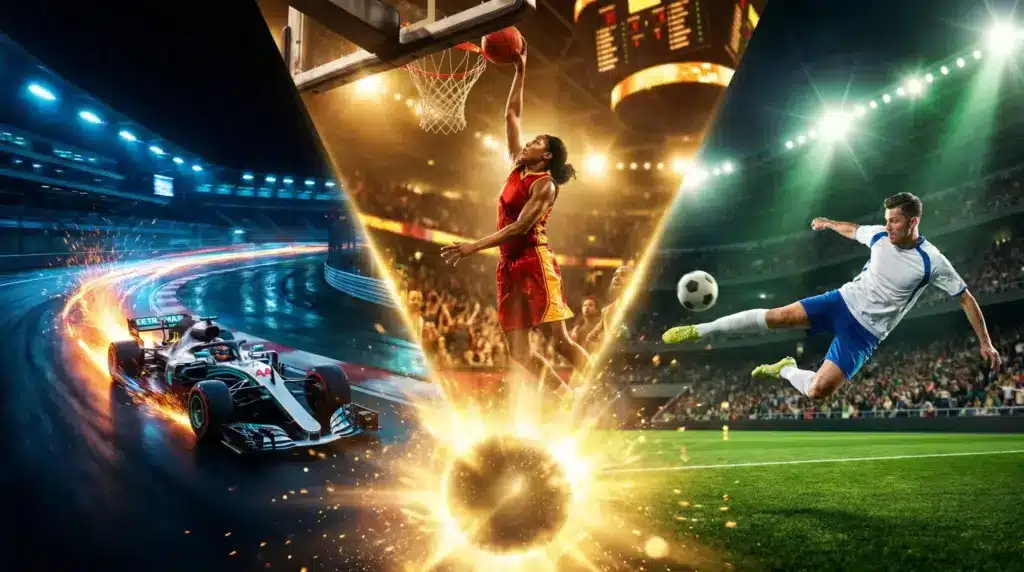
There used to be an off-season. That seems almost quaint now. Between the WNBA’s expanded calendar, F1’s record 24-race schedule, and European football’s unbroken procession of cup competitions, league fixtures, and international windows, the sports calendar has become structurally continuous. Fans who once endured months of withdrawal now move from one high-stakes narrative to the next with barely a pause. That shift has done something significant to digital entertainment. The modern fan isn’t searching for a distraction from sport during quiet periods. Those periods don’t really exist anymore. They’re looking for something that matches the pace and texture of what they’ve been watching: fast, consequential, loaded with tension and visual spectacle. The gaming industry noticed. The convergence of sports culture and interactive design is most visible in gaming products like online slot games, which have moved away from generic themes toward formats that replicate the visual intensity and psychological rhythm of a live broadcast. The “Triple Threat” of F1, WNBA, and football hasn’t just influenced digital gaming. It’s given developers a working blueprint for what sustained engagement actually looks like. The F1 Influence: Precision and High-Speed Mechanics F1’s global fanbase reached 826.5 million in 2024, up nearly 90 million in a single year, according to Nielsen Sports data. That kind of growth doesn’t happen through motorsport alone. It happens through Drive to Survive, through telemetry breakdowns on social media, through a generation of fans who came to the sport via storytelling and stayed for the data. F1’s own 2025 global fan survey, drawn from over 100,000 responses across 186 countries, found that 61% of engaged fans interact with F1 content daily. The F1 fan is unusual. They want spectacle – the roar of a pit exit, the wheel-to-wheel battles through chicanes – but they also want to understand what’s underneath […]
Every MLB season produces surprise contenders, disappointing starts, and franchises that evolve dramatically once they’ve navigated April and May. Early standings often create strong narratives, but experienced baseball fans know how quickly momentum can shift over a 162-game season. Several franchises entering the 2026 season have already shown signs of long-term potential that extend beyond current win-loss records. Whether fueled by elite pitching, emerging stars, or a deep and balanced roster, these teams remain fascinating to monitor throughout the summer. Some clubs appear positioned for stronger second halves, while others still have enough talent to become dangerous if they find momentum after slow starts. 1. Toronto Blue Jays Continue Building Dangerous Momentum The Toronto Blue Jays remain one of the American League’s most intriguing franchises despite facing intense competition within a difficult division. Their combination of experienced hitters and high-end pitching gives them substantial upside throughout the season. Vladimir Guerrero Jr. continues serving as the centerpiece of Toronto’s lineup, while the franchise’s rotation has shown encouraging signs of greater stability during the opening months. Strong starting pitching becomes increasingly important as playoff races tighten. Across baseball, fans monitoring postseason futures and tracking Blue Jays AL pennant odds will have noted that Toronto remains firmly in the broader American League conversation despite inconsistent stretches. Toronto’s bullpen depth also appears improved compared to recent seasons, giving the club an improved chance of late-game stability. That added reliability could prove critical during tightly contested divisional matchups and postseason races. The Blue Jays also benefit from roster flexibility and postseason experience. If their offense heats up consistently during summer months, Toronto could become one of the league’s most dangerous teams entering October. 2. Philadelphia Phillies Still Possess Championship-Level Talent The Philadelphia Phillies continue operating with one of baseball’s deepest and most battle-tested rosters. Even […]