






Dizziness During Training: It’s Common, But Not Always Benign
Athletes often experience dizziness during training at some point, but it’s not necessarily benign. Dizziness can feel like lightheadedness, wooziness, spinning, or unsteadiness, and it may be related to hydration, blood pressure, blood sugar, vestibular issues, vision, medication effects, or other causes. Dehydration, under-fueling, overheating, and overtraining are common examples, although some athletes are dizzy even after adjusting everything perfectly.
An underappreciated factor is your eyes — vision problems can affect balance, spatial awareness, coordination, and athletic performance. This perspective allows for comprehensive troubleshooting of continued symptoms, with safety in mind.
Why Dizziness Matters in Performance
Athletes often push through dizziness because they assume it is an inevitable part of hard training. While occasional lightheadedness can happen during intense exertion, repeated episodes should under no circumstances be ignored.
Regular dizziness directly compromises five key areas of athletic performance:
- Your safety during drills or competition
- Physical balance and coordination
- Mental focus and reaction time
- Confidence during execution
- Ongoing training recovery
When your spatial awareness is disrupted, your body cannot process timing efficiently, which severely limits ability and leads to significantly slower reaction times and higher injury risks. Dizziness deserves immediate attention if it happens frequently, appears during moderate efforts, or presents alongside headaches, neck pain, vision discomfort, nausea, or significant imbalance. Severe drops in coordination or sudden imbalance in older athletes act as medical red flags requiring emergency evaluation instead of continued physical training.
Common Training-Related Causes of Dizziness
Before assuming a more complex issue, review the foundational elements of your routine. These familiar variables are the most frequent culprits for mid-workout lightheadedness.
Dehydration and Electrolyte Loss
Heavy sweating can contribute to fluid and electrolyte loss, which may lower blood volume and blood pressure and contribute to lightheadedness. This pressure drop prevents adequate blood flow to the brain, manifesting as sudden lightheadedness, impaired concentration, and overall reduced physical performance.
Low Blood Sugar or Poor Pre-Workout Fueling
Athletes who skip meals or under-fuel often experience exercise-induced hypoglycemia. Physical activity increases the muscles’ demand for glucose while simultaneously making insulin work more effectively, which rapidly pulls sugar from your blood. In some athletes, certain pre-workout fueling patterns may contribute to blood sugar swings, including symptoms that feel like shakiness, weakness, or dizziness.
Overexertion, Heat, and Breathing Issues
Pushing too hard in hot conditions can cause heat exhaustion, creating a cardiovascular competition where your blood struggles to supply both your working muscles and your skin for cooling. Poor breathing rhythms—especially holding your breath during heavy lifts—may affect blood pressure and limit oxygen. Athletes should always correct hydration, nutrition, and breathing mechanics first.
When Dizziness May Be Linked to Vision Misalignment
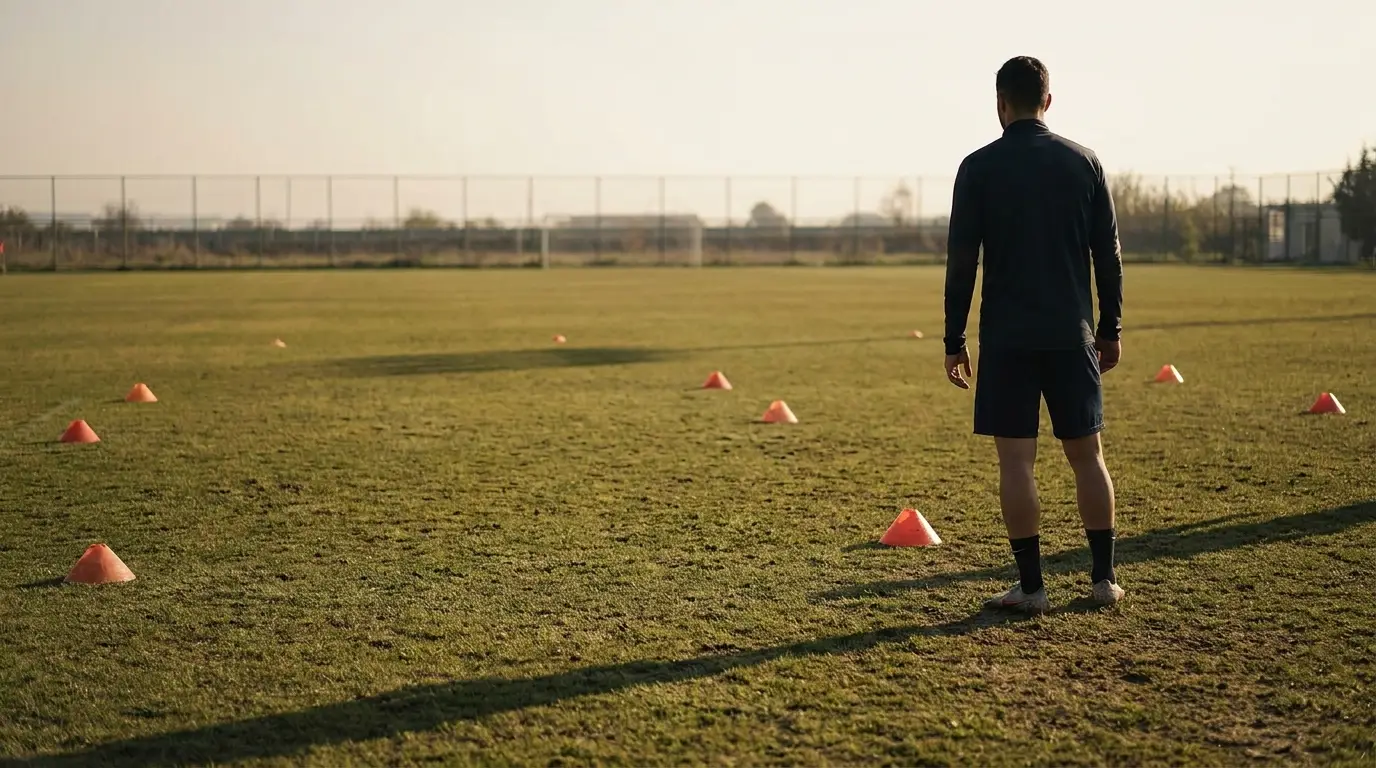
If an athlete continues experiencing dizziness even after addressing hydration, nutrition, rest, breathing, and training intensity, it may be worth considering whether the eyes are working together properly. The eyes do far more than just see clearly; they provide the primary guidance system for helping the brain judge space, motion, balance, and body position.
In sports, the visual system must process shifting environments against moving players, fast balls, field markings, and shifting lights. When the eyes struggle to process this environmental complexity efficiently, it can place extra stress on the balance system. Experiencing headaches after practice, struggling to track a moving ball, feeling unsteady in busy environments, or having vision that feels “off” after a standard eye exam can sometimes point to functional misalignment. In that situation, completing a binocular vision dysfunction questionnaire may be a useful starting point for organizing symptoms and deciding whether to ask about eye-teaming issues during a more detailed evaluation.
What Is Binocular Vision Dysfunction?
Binocular Vision Dysfunction (BVD) is a functional condition where both eyes simply do not work together as smoothly as they should. An individual might have perfect 20/20 eyesight for distance clarity but still struggle with the complex motor act of eye teaming, alignment, focus, or visual coordination.
Some people have subtle eye-teaming or alignment issues that may not be obvious during a basic vision screening. However, when the brain has to constantly work harder to combine distinct images from both eyes, it may contribute to several disruptive symptoms, including:
- Dizziness
- Headaches
- Eye strain
- Trouble focusing
- Light sensitivity
- Balance issues
- Visual fatigue
It is important not to jump to conclusions, but noting these symptoms is worth discussing with a qualified professional. These manifestations can be associated with visual processing, but only a targeted clinical assessment can evaluate true causation.
Signs Athletes Should Watch For
Vision-related symptoms rarely surface when sitting still. Instead, they typically show up during moments of high cognitive load—such as fast movement, navigating crowded environments, sustained ball tracking, dealing with bright arena lights, or enduring long, physically exhausting practices.
Athletes should watch for these specific signs:
- Feeling dizzy or unsteady during movement drills
- Experiencing headaches immediately after practice or games
- Noticing significant eye strain during regular training
- Difficulty tracking a fast-moving ball, puck, or moving opponent
- Displaying consistently poor depth perception
- Making mistimed catches or delayed physical reactions
- Feeling completely overwhelmed in visually busy environments
- Increased light sensitivity in arenas, gyms, or outdoor fields
- Symptoms noticeably worsening much later in the practice session
One symptom alone does not confirm a vision problem. However, if visual fatigue and balance issues form a recurring pattern, they are worth paying close attention to as part of recovery and injury-prevention planning.
Why Standard Eye Exams May Not Catch the Problem
Many athletes assume their eyes are fine if they pass a basic exam or are told they have perfect 20/20 vision. However, standard clinical eye exams primarily focus on physical “visual hardware”—checking for static clarity, structural eye health, and internal pressure. Seeing detail clearly across a quiet, stationary room is not the same thing as having both eyes work together efficiently under significant physical duress.
Athletes must differentiate between standard visual clarity and the active demands of:
- Eye alignment
- Eye teaming
- Smooth tracking
- Functional depth perception
- Rapid visual processing during motion
Most standard testing environments do not evaluate dynamic visual acuity, which measures how well a player resolves detail while the target or the player is in rapid motion. Because sports environments aggressively stress the visual system more than everyday daily activities, coordination symptoms often appear exclusively during demanding training but remain entirely hidden during routine tasks.
How Vision Problems Can Affect Sports Performance
Athletic performance requires a highly optimized neural loop allowing the brain and eyes to process movement quickly and accurately. When visual information lags, the physical response will inherently follow suit. Subtle visual misalignments drastically impact essential mechanics like your overall reaction time, physical balance, spatial awareness, hand-eye coordination, depth perception, maintaining confidence during fast plays, and remaining consistent under intense pressure.
Because athletic reactions depend on rapid visual processing and timing, even small disruptions in visual information can affect performance. A baseball player must accurately predict trajectory well before a pitch arrives. A soccer or basketball athlete heavily relies on peripheral awareness to judge distance and react to defenders instantly. A tennis player needs precise stereopsis to track a fast-approaching ball, while hockey players, runners, and those engaged in strength training require seamless binocular depth perception to feel physically steady during quick, sudden directional changes.
What Athletes Should Do If Dizziness Keeps Coming Back
If you continually experience mid-workout dizziness, step back and implement a structured troubleshooting process to ensure your physical safety.
Follow these immediate steps:
- Stop all training immediately if dizziness feels severe, sudden, or causes extreme unsteadiness.
- Hydrate effectively and fuel properly before attempting your next workout.
- Avoid pushing through repeated dizzy spells assuming they will magically fade.
- Track meticulously exactly when and where your specific symptoms happen.
- Note whether your symptoms appear alongside headaches, eye strain, light sensitivity, or problems tracking objects.
- Speak with a qualified healthcare professional if dizzy sensations continue.
- Seek urgent care for major red flags like unexpected chest pain, fainting, severe “thunderclap” headaches, confusion, physical weakness, or shortness of breath.
- Consider pursuing a specialized vision evaluation if the timeline seems connected to ongoing eye strain or balance issues.
Maintain perspective: visual misalignment may simply be one possible factor to explore, not the sole explanation.
Final Thoughts
Dizziness during training comes from many common causes, including sudden hydration loss, nutrition gaps, extreme heat, overexertion, improper breathing, and blood pressure changes. Once these initial triggers are addressed, if symptoms continue, hidden vision problems may be worth considering carefully. Athletes should listen closely to recurring patterns, track their symptoms, and get appropriate professional guidance instead of assuming chronic dizziness is just part of training.