
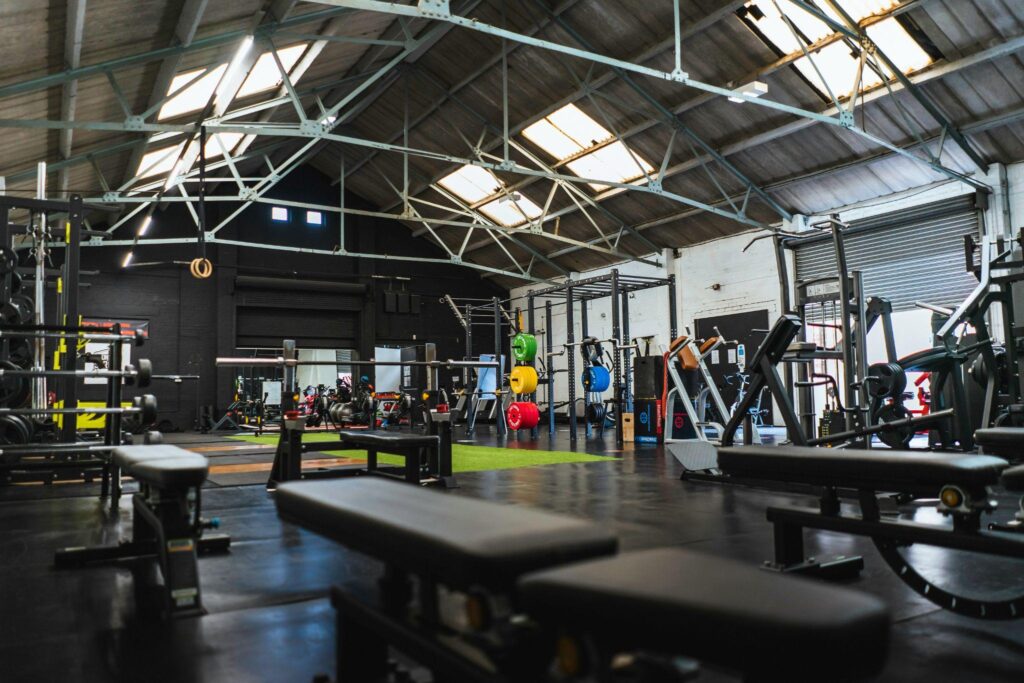





The traditional gym schedule is becoming less compatible with the way people actually live and work.
In 2025, a record 81 million Americans belonged to a gym, studio, or fitness facility, up 5.2% from 2024. Americans also made nearly 7 billion fitness-facility visits during the year. Across almost 11,000 U.S. facilities tracked separately, average annual visits reached more than 184,000 per location, a 4.2% increase from 2024.
At the same time, work schedules have become less predictable. Shift workers, healthcare professionals, parents, commuters, students, and remote workers may want to exercise at 5 a.m., during a late lunch break, or after 10 p.m. A gym that operates only during conventional staffed hours can struggle to serve all of them.
This helps explain the growing appeal of round-the-clock fitness. Major operators already demonstrate the scale of the model. Anytime Fitness, for example, advertises 24/7 access across more than 6,000 gyms globally.
But keeping a gym open all night requires more than leaving the lights on. Automated entry, access permissions, monitoring, and connected software are making the 24/7 model practical. Here is why that combination is changing what members expect from a modern gym.
1. Fitness Is Starting to Fit Around People’s Schedules
For years, gyms largely expected members to organize workouts around operating hours. The 24/7 model reverses that relationship. The facility becomes available around the member’s schedule.
That flexibility matters because the modern fitness audience is broad. Someone finishing a hospital shift at midnight has very different availability from an office employee who trains before work. Parents may find their only uninterrupted workout window early in the morning, while students and hospitality workers may prefer late evenings.
The sheer growth in gym participation makes flexibility more important. In 2024, 77 million Americans were fitness-facility members, representing roughly 25% of the U.S. population aged six and older. Membership then climbed to 81 million in 2025.
Round-the-clock access can help remove time as a barrier. Members can:
- Exercise before an early workday
- Train after late or overnight shifts
- Avoid peak evening crowds
- Fit workouts around childcare or family commitments
- Maintain routines when work schedules change
This does not mean every member wants to exercise at 2 a.m. The value is knowing that the option exists when life does not follow a predictable timetable.
2. Automated Entry Makes 24/7 Operation Practical
Twenty-four-hour access would be expensive if every gym needed a fully staffed reception desk throughout the night.
Automated access control changes the economics.
Instead of relying on an employee to recognize members and unlock a door, gyms can use credentials such as mobile access, key cards, key fobs, barcodes, PINs, or biometrics. The access system checks whether a person has permission to enter and unlocks the door when the credential is valid.
This is where 24 hour gym software becomes important. Coram provides one example of how access technology can support an unattended or lightly staffed fitness facility. According to Coram’s gym access-control guide, its system checks a member’s credentials against conditions such as membership status and time restrictions before allowing entry. The platform also supports remote monitoring, access records, and integration with technologies such as video surveillance and visitor management.
For gym operators, automation can therefore accomplish two things at once. It extends availability for members while reducing the need to keep reception staff at the entrance around the clock.
That allows employees to spend staffed hours on activities where people add more value, such as coaching, member support, cleaning, sales, and maintaining the facility.
3. 24/7 Access Is Becoming Part of the Member Experience
Convenience has become an important part of what people expect from fitness memberships.
Members increasingly interact with gyms through apps, digital memberships, online class booking, connected equipment, mobile payments, and automated check-ins. Twenty-four-hour entry fits naturally into that experience.
Consider a member who normally trains at 6 p.m. but has to work late. At a traditional facility that closes at 9 p.m., the workout may simply disappear from the day. At a round-the-clock gym, the member can arrive at 10 p.m., authenticate at the entrance, exercise, and leave without needing the front desk to remain open.
Large fitness chains have already built their value propositions around this type of flexibility. Anytime Fitness currently promotes 24/7 member access and smartphone-enabled entry across 6,000-plus locations worldwide.
The broader fitness market is growing at the same time. The Health & Fitness Association reported that global memberships increased 6% year over year in 2024, while industry revenue rose an average of 8% and the number of facilities expanded by nearly 4%.
As competition increases, convenient access can become part of the experience members use to compare facilities.
4. Technology Helps Protect the Gym During Unstaffed Hours

Flexibility introduces an obvious question: what happens when members are inside but employees are not?
A 24/7 gym needs to know who is entering, whether their membership permits access, and ideally when they entered. This makes access control particularly important during overnight and low-staff periods.
Individual credentials create a better audit trail than simply leaving an entrance accessible. Operators can use access records to understand facility usage and investigate potential misuse.
Several risks deserve attention:
- Members sharing credentials with non-members
- Tailgating through controlled entrances
- Unauthorized after-hours access
- Lost or stolen physical credentials
- Access to areas outside a member’s permission level
Technology cannot eliminate every risk, so 24/7 operators still need appropriate emergency procedures, lighting, surveillance, maintenance, and member policies.
The advantage of connected systems is visibility. Access logs can establish when credentials were used, while integration with surveillance can provide visual context when an incident needs investigation.
This makes round-the-clock fitness less dependent on someone physically sitting behind a reception desk.
5. Usage Data Can Help Gyms Operate More Efficiently
Automated entry generates something that a traditional unlocked door cannot: useful operational data.
Every authorized entry creates a record. Over time, those records can reveal when the gym is busiest, which periods have very little traffic, and how usage changes by day or season.
This information can influence practical decisions. For example, a gym might discover that a surprising number of members train between 4 a.m. and 6 a.m., while another location receives little overnight traffic but becomes crowded immediately after work.
Operators can use these patterns to make better decisions about:
- Staff scheduling
- Cleaning windows
- Equipment maintenance
- Peak-hour support
- Facility expansion
- Member access policies
The industry already has strong reasons to focus on operational efficiency. HFA’s 2025 benchmarking study, covering 175 companies and more than 17,000 fitness facilities, found median revenue growth of 9.9% in 2024 and average net membership growth of 5.5%. Member retention, however, averaged 66.4%.
For growing gyms, understanding when and how members actually use the facility can help turn extended hours into a managed service rather than simply a longer opening schedule.
6. Flexible Access Can Help Gyms Serve More Types of Members
The typical nine-to-five schedule no longer represents everyone a gym wants to attract.
Healthcare workers may rotate between day and night shifts. Restaurant employees can finish after conventional gyms close. Police officers, firefighters, warehouse workers, airline employees, freelancers, and small-business owners can all have irregular schedules.
A facility available around the clock can serve these groups without creating separate operating windows for each one.
The opportunity is not limited to the United States. India’s fitness market, for example, generated approximately INR 16,200 crore, or US$1.9 billion, in 2024 and is projected to reach INR 37,700 crore, or US$4.5 billion, by 2030. That represents a projected compound annual growth rate of roughly 15%.
Twenty-four-hour operators are already part of that market. Anytime Fitness promotes round-the-clock locations in India, including clubs across Delhi and other major cities.
As fitness participation expands, accommodating different schedules can help facilities appeal to a wider range of lifestyles rather than concentrating their entire service around morning and evening rush periods.
7. The Best 24/7 Gyms Combine Automation With Human Support
Round-the-clock access should not be confused with removing people from the gym experience.
Technology is best at repetitive operational tasks. Software can validate a credential, record an entry, enforce access permissions, and provide usage data without requiring an employee to perform each step manually.
People remain important for coaching, personal training, customer service, cleaning, maintenance, community building, and responding to complex situations.
That creates a hybrid operating model. Members get automated access when they need flexibility, while staff can concentrate their time where human interaction matters most.
This balance may become increasingly important as gyms compete not only on equipment but also on convenience and experience.
A member might never use the gym at 3 a.m. Yet knowing that an unexpected workday, delayed commute, or changing family schedule will not automatically cancel a workout can make a membership easier to maintain.
That is ultimately what 24/7 fitness offers: not just longer hours, but greater control over when exercise fits into everyday life.
Key Takeaways
- Fitness participation is at record levels. U.S. fitness facilities reached 81 million members and nearly 7 billion visits in 2025.
- 24/7 access removes scheduling barriers for shift workers, parents, students, commuters, and people with unpredictable routines.
- Automated access makes extended hours practical by verifying members without requiring a staffed reception desk around the clock.
- Connected security matters during unstaffed periods, particularly for managing unauthorized access and investigating incidents.
- Entry data can improve operations by showing when members actually use the facility and helping managers plan staffing, cleaning, and maintenance.
- Human staff still matter. The strongest 24/7 model uses technology for routine access while keeping people focused on coaching, support, safety, and the member experience.
FAQs
What is a 24/7 gym?
A 24/7 gym allows eligible members to access the facility at any time, although staffed service hours may be more limited. Entry is typically managed using an electronic credential such as a mobile app, card, fob, PIN, or biometric identifier.
How can a gym stay open when the front desk is closed?
Automated access control can verify members and unlock doors without a receptionist manually checking each person. Surveillance, remote monitoring, access logs, alarms, and established emergency procedures can provide additional layers of oversight.
Are 24/7 gyms completely unstaffed?
Not necessarily. Many operate with regular staffed hours while allowing authorized members to continue using the facility outside those periods.
What technology does a 24/7 gym need?
Requirements vary, but common components include electronic access control, member credentials, gym management software, surveillance cameras, reliable connectivity, alarms, and systems for recording access activity.
Why are 24/7 gyms becoming more popular?
The biggest advantage is flexibility. Members can exercise around work, family, travel, or changing daily schedules rather than restricting workouts to traditional business hours.
Conclusion
The rise of 24/7 fitness reflects a larger change in what people expect from gyms. Members increasingly want exercise to fit around their lives, not the other way around.
With 81 million Americans holding fitness-facility memberships in 2025 and gym traffic continuing to grow, operators are serving a larger and more diverse population with very different schedules.
Automated entry, connected security, remote management, and usage data are making it possible to offer that flexibility without keeping a traditional front desk fully staffed every hour of the day.
For gyms, the opportunity is not simply to stay open longer. It is to build a fitness experience that remains convenient, controlled, and accessible whenever members are ready to work out.
As fitness becomes more personalized and flexible, will choosing when to exercise eventually feel just as important as choosing where to exercise?