
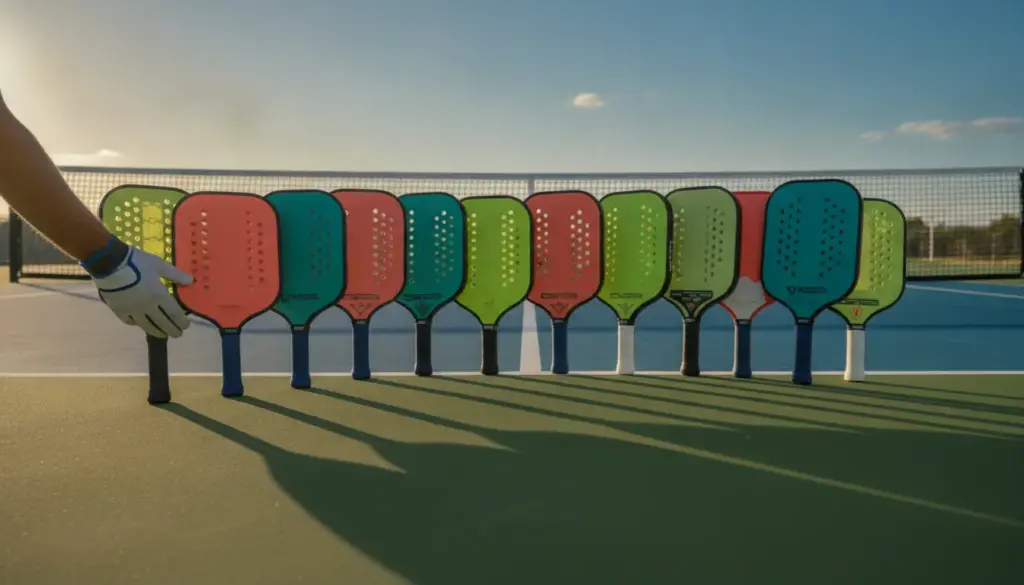



Pickleball is easy to start, but paddle choice can quickly affect comfort, accuracy, and confidence on the court. The right paddle helps with touch at the kitchen line, controlled drives from the baseline, quick reactions during volleys, and steady shot placement under pressure.
Many paddles look similar at first glance, yet small details make a major difference. Shape, weight, core thickness, face material, grip size, and balance all influence how the paddle feels in play. A paddle that suits one player may feel too heavy, stiff, or unpredictable for another.
Choosing well means understanding how you play, where you play, and what kind of response you need from the paddle. Control, power, and outdoor performance should all be considered before buying.
Why Paddle Choice Matters in Pickleball
A pickleball paddle is the main connection between the player and the ball. It affects dinks, drops, blocks, volleys, serves, returns, resets, and drives. When a paddle feels balanced, players can place the ball with more confidence. When it feels wrong, even simple shots can become inconsistent.
Control-focused players usually want a paddle that softens contact and helps them keep the ball low. Power-focused players may prefer extra pop for serves, drives, and put-away shots. Most recreational players need a balanced option that offers enough control for touch shots and enough power for deeper returns.
The right paddle should support your natural game. Beginners often benefit from forgiveness and comfort, while more experienced players may want added spin, reach, or pace. Paddle choice can also help reduce common problems such as mishits, weak returns, wrist discomfort, and poor control caused by unsuitable weight, grip size, or face response.
Start With Your Playing Style
Before comparing paddle materials or prices, think about how you usually win points and where you struggle.
Control players rely on placement, patience, dinks, drops, and resets. They need a stable paddle with predictable response. A softer feel can help absorb pace and keep the ball low during kitchen exchanges.
Power players prefer aggressive serves, hard drives, fast volleys, and overheads. They may want a firmer face, a longer shape, or a paddle with more pop. Too much power, however, can make touch shots harder for players still developing consistency.
All-court players need balance. They want a paddle that can manage soft shots and aggressive swings without feeling limited in either direction. This is often the best fit for intermediate players who are still building a complete game.
Outdoor players should also factor in court conditions. Wind, heat, sun, and outdoor balls can change timing and paddle response. A paddle that works well indoors may feel different outside, especially during fast rallies or off-center contact.
Balance Control and Power
Control and power are two of the most important parts of paddle selection. A control paddle helps players guide the ball, reset points, and manage pace. A power paddle helps generate speed with less effort, especially on serves, drives, and overheads.
The right balance depends on your current game. A beginner who struggles with accuracy may not benefit from a highly powerful paddle. A player with steady placement may want extra pace without losing touch near the kitchen.
Paddle thickness often affects this balance. Thicker paddles usually provide a softer, more controlled feel. Thinner paddles often feel quicker and more powerful, though they may be less forgiving on off-center hits. The paddle face also matters because some surfaces support spin and touch, while others create a livelier response.
Players comparing all-court options can look at collections such as Honolulu pickleball paddles to evaluate how paddle shape, surface material, and core design affect control, power, and consistency.
Avoid choosing a paddle based on one feature alone. Power is useful only if the ball stays in play. Control is helpful only if the paddle still gives enough depth on returns and drives. A good paddle should feel reliable in several situations, not just one type of shot.
Consider Outdoor Playing Conditions
Outdoor pickleball creates demands that indoor play may not. Wind can move the ball late, sunlight can affect tracking, and outdoor balls are often firmer and faster. Heat and sweat can also change how secure the paddle feels in the hand.
For outdoor play, stability is important. A dependable sweet spot helps reduce the impact of off-center hits when timing is disrupted by wind or fast exchanges. Enough pop is also useful for deep returns, passing shots, and defensive recovery.
Touch still matters outside. A paddle that feels too lively may send dinks, resets, and blocks long. Players who spend a lot of time at the kitchen line should look for a paddle that can slow the ball down when needed.
Grip comfort becomes more noticeable during long outdoor sessions. A grip that is too small may cause over-squeezing, while a grip that is too large can limit wrist movement. Either issue can affect control and create tension in the hand or forearm.
Durability should also be part of the decision. Outdoor play exposes paddles to heat, moisture, rough court surfaces, and repeated ball impact. Frequent players should consider construction quality, edge protection, and materials built for regular use.
Look at Paddle Materials and Core Design
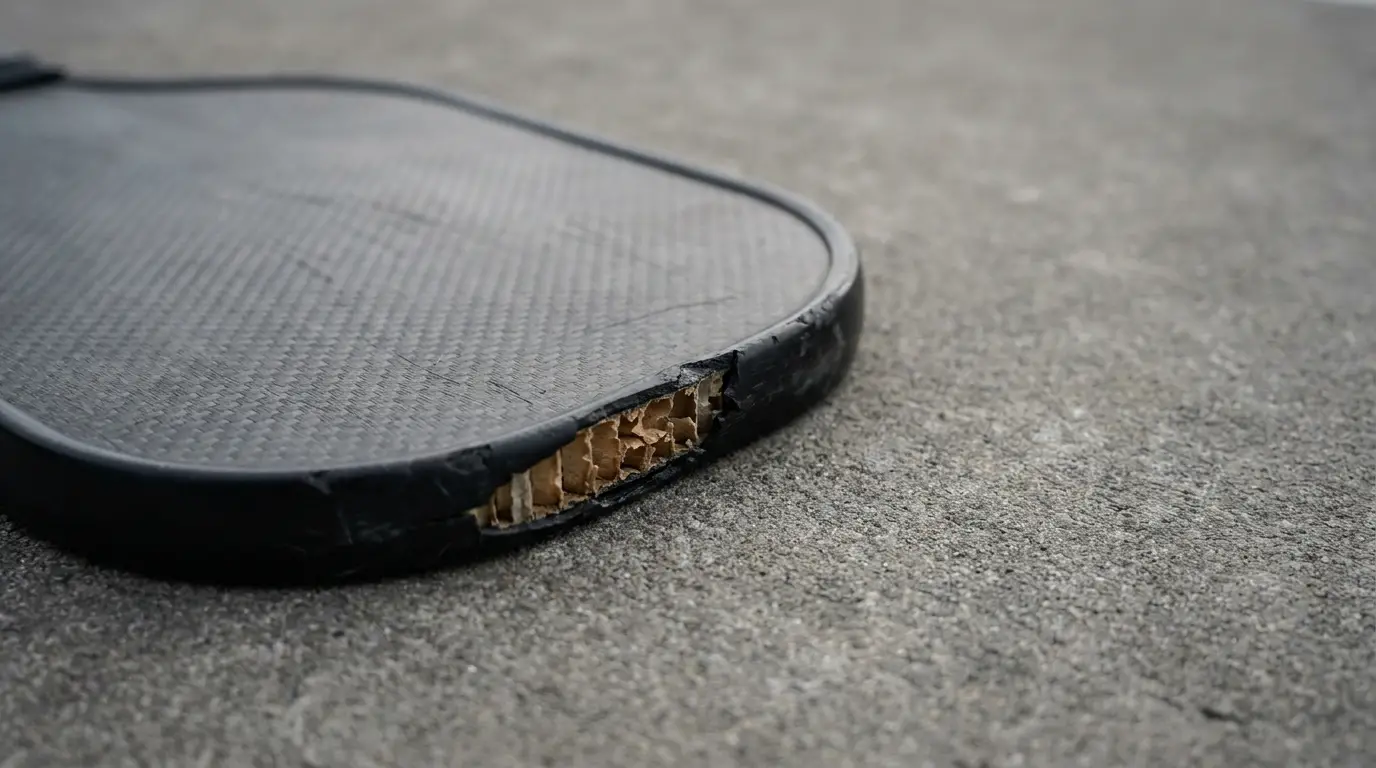
Paddle materials can sound technical, but the basics are straightforward. The face material influences ball response, while the core affects feel, sound, forgiveness, and stability.
Fiberglass faces often provide extra pop. They can help players generate power, although they may feel less controlled during soft placement shots.
Carbon fiber faces are commonly associated with control, spin, and consistent response. They can help players shape shots, manage pace, and feel more confident during dinks, drops, and resets.
Kevlar-style materials are often used in performance paddles for stability and durability. They may suit players who want a strong, controlled feel during both soft exchanges and faster rallies.
Many modern paddles use a polymer honeycomb core. Polymer cores are popular because they offer softness, durability, and forgiveness. A thicker core usually creates a more controlled feel, while a thinner core may provide more pop.
Players who plan to compete should check whether a paddle appears on an approved paddle list before using it in sanctioned events. Recreational players may not need to worry about this immediately, but tournament and league players should confirm approval before buying.
Check Weight, Grip, and Shape
Weight, grip size, and shape can affect comfort as much as paddle materials do.
Lightweight paddles are easier to move quickly. They help with fast volleys and hand battles, and they may reduce fatigue during longer sessions. The tradeoff is that some lightweight paddles provide less natural power.
Midweight paddles are popular because they offer a practical balance of control, power, and maneuverability. Many recreational and intermediate players do well in this range.
Heavier paddles can add stability and pace, but they may also increase fatigue. Players with wrist, elbow, or shoulder discomfort should be careful with extra weight, especially if they play several games in a row.
Grip size deserves close attention. A grip that is too large can restrict wrist movement. A grip that is too small can make players squeeze too tightly, reducing touch and comfort. The grip should feel secure without forcing tension in the hand.
Shape also changes performance. Standard-shaped paddles usually offer a wider sweet spot and balanced feel. Elongated paddles can add reach and power, which may help singles players or those who use two-handed backhands. However, elongated designs can be less forgiving if the sweet spot is narrower.
Know What to Avoid When Buying a Paddle
A common mistake is buying a paddle only because it is popular. A paddle used by an advanced player may not suit someone who needs more forgiveness, comfort, or control.
Price can also mislead buyers. A low-cost paddle may be fine for occasional casual games, while frequent players often need better grip comfort, consistency, and durability. At the same time, the most expensive paddle is not automatically the best choice.
Copying another player’s paddle can create problems too. Hand size, swing style, strength, skill level, and preferred shots all affect how a paddle performs.
Grip size is another detail many players overlook. Poor grip fit can affect touch, control, and comfort. Players who feel hand tension, wrist strain, or inconsistent contact should check whether the grip suits their hand.
Newer players should be cautious about buying too much power too soon. Power is useful, but pickleball rewards consistency, control, and smart shot selection. Players who are still learning the difference between related paddle sports can also review a basic guide to paddleball vs pickleball before choosing equipment, since each game has different court setups, rules, and gear expectations.
Outdoor players should avoid relying only on indoor recommendations. If most games happen outside, the paddle should feel steady in wind, comfortable in warm weather, and reliable during quick exchanges.
Match the Paddle to Your Long-Term Goals
A good paddle should fit your current game while leaving room for improvement. Beginners may prioritize forgiveness, comfort, and a wide sweet spot. Intermediate players may start looking for more spin, better control, and stronger performance during resets and drives. Advanced players may become more specific about shape, surface texture, swing weight, and handle length.
Think about the type of player you want to become. If you want better soft play, choose a paddle that supports touch and placement. If you want stronger baseline drives, look for enough pop and stability. If you mostly play doubles, quick hands and kitchen control may matter more than reach. If you play singles, power and court coverage may become more important.
Testing different paddle types can be helpful when possible. Even a short hitting session can reveal whether a paddle feels too stiff, heavy, weak, or unpredictable. Specifications help narrow the search, but feel should guide the final decision.
Playing frequency matters as well. Someone who plays once a month may not need the same paddle as someone who plays several times a week. The more often you play, the more important comfort, durability, and consistent response become.
Final Thoughts
Choosing the right pickleball paddle comes down to fit. The best option is the one that supports your playing style, feels comfortable in your hand, and performs well in the conditions where you play most often.
For control, look for a paddle that helps with placement, resets, and pace management. For power, choose one that adds speed without making shots unpredictable. For outdoor play, prioritize stability, grip comfort, durability, and a dependable sweet spot.
A well-chosen paddle can make pickleball more enjoyable and consistent. When the paddle matches the player, soft dinks, confident drives, quick volleys, and controlled resets all become easier to develop.