
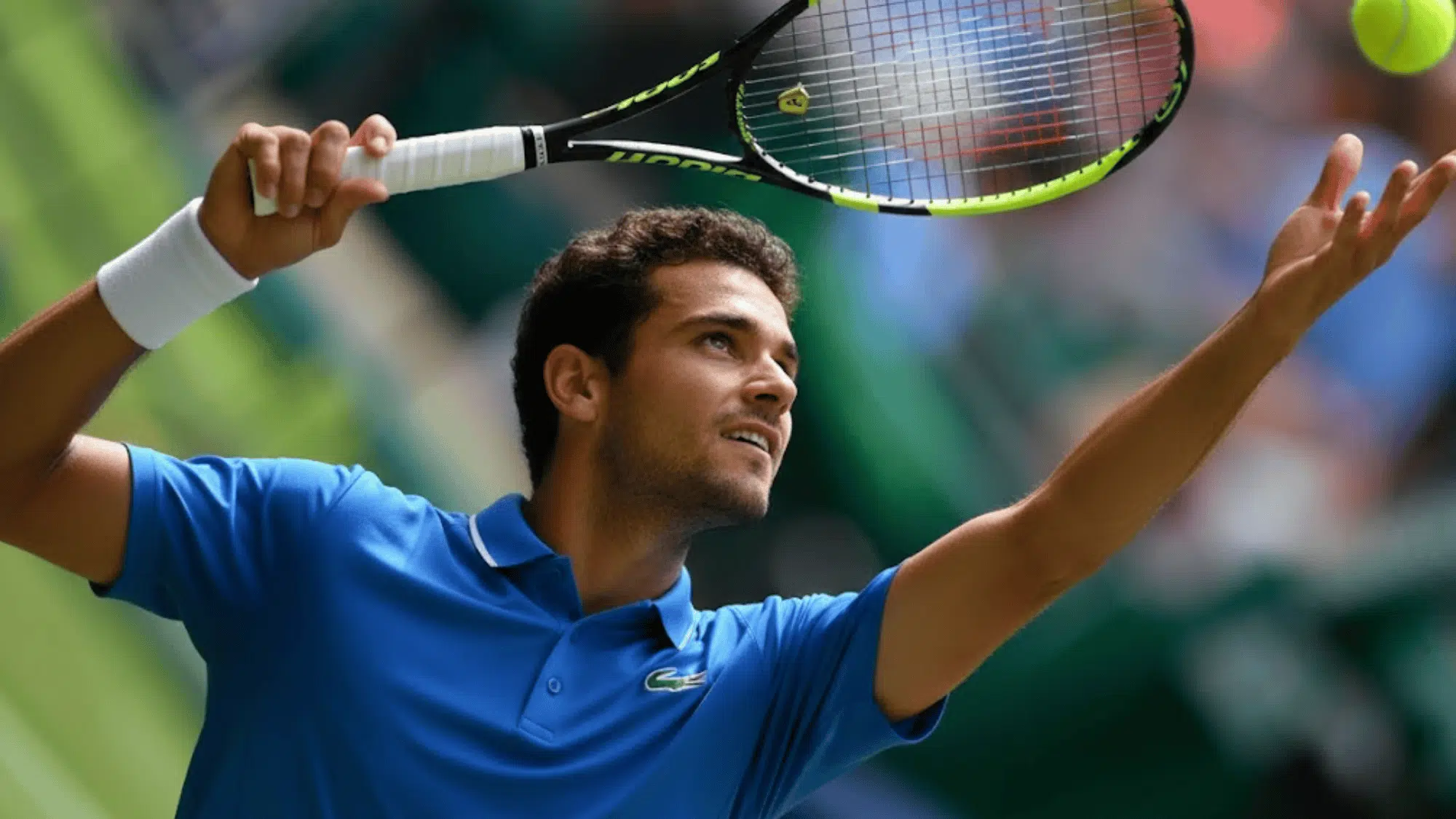





Ever wondered how tennis serves got so fast that players barely have time to react? Today’s game is full of incredible power, and the serve has become one of the most exciting parts to watch.
The story behind these lightning-quick shots is packed with progress, science, and jaw-dropping moments.
In this blog, we will share the fastest tennis serve ever, how serving speed has changed over the decades, and the players known for their huge serves
We will also look at the physics that make a powerful serve possible, and whether future players might break the current speed record.
Why Serve Speed Matters in Modern Tennis
Before we get into record-breaking serves, it’s important to know why speed matters so much. Modern tennis is incredibly fast, and the serve has become one of the biggest weapons in the sport.
A powerful serve can flip a point instantly, forcing opponents to react almost before the ball leaves the racket.
But serve speed isn’t just about hitting hard. It shapes strategy, confidence, and momentum. When a player can regularly hit above 220 km/h, they control the start of nearly every point.
The returner has only a split second to react, often leaving them on defense right away.
As equipment and training improve, players keep pushing serve speed higher, raising the sport’s level with each generation.
Sam Groth’s 263.4 km/h Serve: The Unbeatable Record

Sam Groth stunned the tennis world in 2012 when he fired a 263.4 km/h serve at the Busan Open Challenger.
Even though it happened outside the main ATP Tour, the record stands because the event used fully calibrated, professional-grade speed-tracking equipment.
Key Highlights:
- Hit during the 2012 Busan Open Challenger in South Korea
- Recognized as a world record by Guinness World Records and noted by Tennis Australia as the fastest serve on record.
- Surpassed the assumed 250 km/h ceiling for human serving speed
- Influenced new thinking in power-focused coaching and training
Groth’s record didn’t just break expectations; it reset them. His serve proved that players could push beyond previous limits, inspiring fresh approaches to power, technique, and athletic potential in modern tennis.
However, this serve is not officially recognized by the ATP as the fastest serve ever.
How the Fastest Tennis Serve Evolved Over Time
Tennis serves haven’t always been this fast. Back in the day, when players used wooden rackets, serves were much slower. The game was more about placement and spin than pure power.
Here’s how things changed over the decades:
| Era | Key Characteristics |
|---|---|
| The Wooden Racket Era (Before the 1980s) | Serves rarely exceeded 180 km/h Players focused on accuracy over speed Heavy rackets made it harder to generate speed |
| The Graphite Revolution (1980s–1990s) | Lighter rackets meant faster swings Players like Pete Sampras began hitting 200+ km/h serves Technology started changing the game |
| Modern Era (2000s–Present) | Advanced materials make rackets lighter and more powerful Better string technology increases ball speed Serves regularly exceed 220 km/h |
Players Known for Lightning-Fast Serves
While Sam Groth holds the overall record, several players have built their entire careers around having absolutely devastating serves. Let’s meet the big bombers:
1. Goran Ivanišević (Croatia)

The former world record holder at 251 km/h, Ivanišević won Wimbledon in 2001 largely because of his monster serve.
He played a classic serve-and-volley style, using his big serve to set up easy volleys at the net. His left-handed delivery made his serve even trickier for opponents to read.
2. John Isner (USA)

This 6’10” American tower regularly blasts serves over 240 km/h.
Isner’s serve is so effective that he once played the longest match in tennis history at Wimbledon in 2010, where his powerful serving kept him in the game for 11 hours and 5 minutes across three days!
His height gives him a better angle, making his serves even harder to return.
3. Andy Roddick (USA)

Before retiring, Roddick was famous for having the fastest serve on tour for years. He regularly clocked serves at 230+ km/h and won multiple ATP Serve of the Year awards.
What made his serve special wasn’t just speed; it was the combination of power and placement that made him so tough to face.
4. Ivo Karlović (Croatia)

Standing at 6’11”, Karlović is one of the tallest players ever to play professional tennis. He consistently hits serves at 230+ km/h and holds the record for most career aces (serves the opponent can’t even touch).
His height and long arms create incredible leverage, turning his body into a human catapult.
5. Roger Federer (Switzerland)

Here’s something interesting: Federer doesn’t have the absolute fastest serve, but many experts say he has one of the best serves in tennis history.
Why? Because he combines decent speed (around 220 km/h) with incredible precision, disguise, and variety. His serve proves that raw speed isn’t everything; smart serving beats pure power.
The Physics & Biomechanics of the Fastest Serves in Tennis
So how do players generate such incredible speed? It’s all about physics and using your body like a chain reaction.
Think of a tennis serve like cracking a whip. The power starts from the ground and moves up through your body in what coaches call the kinetic chain:
- Legs – Push off the ground to generate initial power
- Core – Rotates to build momentum
- Shoulder – Turns and lifts the arm
- Arm – Accelerates upward
- Wrist – Snaps at the last moment
- Racket – Hits the ball at maximum speed
The magic happens at the moment of contact. The racket head can be moving at over 200 km/h, and when it hits the ball at the perfect moment, all that energy transfers into the ball.
Factors That Affect Serve Speed
Several things can make servers faster or slower:
- Altitude: Higher elevations mean thinner air and less resistance (balls fly faster in places like Denver)
- String tension: Looser strings create more “trampoline effect” for extra speed
- Ball condition: New balls are lighter and faster than worn-out ones
- Court surface: Hard courts slightly favor faster serves than clay
How a Big Serve Changes the Entire Match
A powerful serve doesn’t just win free points, it reshapes the way a match is played. When a player can consistently fire high-speed serves, the entire rhythm of the game shifts in their favor.
Opponents are forced to play reactively, often starting rallies from a defensive position instead of taking control.
Here’s how a Big Serve Creates a Strategic Advantage:
- Dictates the Pace: The server decides how fast the point begins, putting pressure on the returner from the very start.
- Limits Opponent’s Options: Instead of attacking, the returner is often reduced to blocking the ball back, giving the server control of the next shot.
- Builds Scoreboard Pressure: Holding serve easily keeps the server ahead, forcing the opponent to feel like they Must “play catch-up.”
- Protects Energy over Long Matches: Quick points mean less running, fewer rallies, and more stamina left for crucial moments.
- Shapes Opponent Behavior: Returners start guessing or changing position, which can open up the court for easy aces or wide serves.
With extreme serve speeds, the returner’s challenge becomes mental as much as physical. They’re constantly trying to anticipate, adjust, and stay calm while knowing one small hesitation could cost the point.
It’s this psychological tug-of-war, not just raw power, that makes elite serving such a dangerous weapon.
Racquet Tech, Training Methods & Measurement Tools
Technology has completely transformed how fast players can serve and how accurately we can measure those speeds.
| Modern Racket Technology | Training Evolution | Measurement Systems |
|---|---|---|
| Carbon fiber & graphite composites | Biomechanics experts study movement | Radar guns track ball speed |
| Larger sweet spots | Strength training for explosive power | Electronic systems are accurate to 1 km/h |
| Advanced string patterns for extra power | High-speed cameras refine technique | Instant speed display for fans |
| Aerodynamic frames for faster swings | Sports science optimizes nutrition & recovery | Data recorded for official stats |
The combination of better equipment and smarter training means today’s players are serving faster than ever thought possible.
Will the Fastest Tennis Serve Ever Be Broken?
This is the million-dollar question: Can anyone hit a serve faster than 263.4 km/h? Many experts think yes, eventually.
Here’s why:
Reasons the Record Could Be Broken:
- Athletes keep getting stronger and taller
- Training methods continue improving
- Racket technology hasn’t reached its limit yet
- More players are focusing specifically on serve development
Reasons It Might Stand Forever:
- The human body has physical limits
- Tennis might change rules if serves get too fast (for player safety)
- Current equipment regulations might prevent further advances
- Achieving perfect technique, timing, and conditions is incredibly rare
Some sports scientists predict that the absolute maximum human serve speed is around 270 km/h. If someone reaches that, they’ll need perfect conditions, peak physical condition, and a little bit of luck.
The Future of Fast Serving
Looking ahead, fast serves will continue dominating tennis. We’re already seeing more young players who are tall, athletic, and serve-focused.
Coaching now emphasizes serve development from an early age, meaning tomorrow’s players will likely serve even better.
However, tennis might need to adapt. If serves become so fast that returning becomes nearly impossible, the game could become boring (just serve after serve with no rallies).
Some experts suggest that tennis organizations might need to consider rule changes, such as requiring slower balls or adjusted court dimensions.
For now, though, the quest for speed continues. Every tournament, players chase that perfect serve where everything comes together, the toss, the timing, the power, to create something truly spectacular.
Final Thoughts
The fastest serves in tennis show just how much the sport has grown, from old wooden rackets to today’s high-tech gear and powerful athletes.
Every generation pushes the limits a little more, and each new record proves that speed, skill, and smart training can create something truly special on the court.
Even if the current serve record is broken someday or stays untouched for years, fast serving will always be a thrilling part of the game. It shapes matches, challenges players, and keeps fans on the edge of their seats.
Want a deeper insight into more fun tennis topics or other sports breakdowns? Stick around, there’s plenty more coming.