




Picture a Saturday morning at the rink or the pitch. The whistle blows, the kids are flying, parents are cheering, and then a player goes down and doesn’t get back up. The coach jogs over. Everyone’s watching. In that moment, the most important person on the field isn’t the star athlete. It’s whoever knows what to do next. That’s why learning First Aid and CPR belongs on every coach’s off-season checklist, right next to drills and lineups.
Sport is movement, contact, speed, and heat. It’s also, now and then, injury. Most are minor. Some are not. And when the serious ones happen, there’s rarely a doctor on the bench. The difference between a scary moment and a tragedy often comes down to the trained adult standing closest.
Why Should Coaches Be the Ones Trained?
Coaches, team parents, and gym staff are the de facto medics of amateur sport. You’re there every practice and every game. You know the athletes. You’re already the one who notices when someone’s limping or looks off. Adding real first aid skills to that instinct is a natural fit.
And here’s the thing about sport specifically. The injuries tend to come in predictable categories. Once you know what to watch for and how to respond, you’re ready for the vast majority of what a season can throw at you. Let’s walk through the big ones.
What Happens When a Young Athlete’s Heart Stops?
It’s rare, but it’s real, and it’s the scenario that scares everyone most. Sudden cardiac arrest can strike a seemingly healthy athlete with no warning. A hard hit to the chest at the wrong instant, an undiagnosed heart condition, sheer exertion. The player simply collapses and stops breathing normally.
In Canada, around 60,000 out-of-hospital cardiac arrests happen every year, and only about 1 in 10 people survive. On a sideline, those odds hang on one thing: whether someone acts fast.
Here’s what every coach should burn into memory. If an athlete collapses and isn’t breathing normally, start chest compressions immediately. Push hard and fast in the centre of the chest, about 100 to 120 times a minute, at least 5 centimetres deep, and let the chest come all the way back up between pushes. Don’t stop until help arrives.
Then there’s the AED. An automated external defibrillator is the other half of the equation. CPR paired with an AED can double a person’s chance of survival. These machines are designed for non-medical people. They talk you through it and only shock when it’s needed. Every coach should know where the nearest AED is kept at every venue they use. Arena lobby? Community centre wall? Find out before the season, not during the emergency.
How Do You Spot a Concussion on the Field?
Head injuries are the quiet danger in contact sport. A player takes a knock, shakes it off, and wants right back in. But a concussion doesn’t always show up as a dramatic collapse. It shows up in subtle signs you have to know to catch.
Watch for these:
- Confusion or a blank, dazed look. Ask what the score is or what drill you just ran.
- Dizziness, balance problems, or clumsy movement.
- Headache, nausea, or sensitivity to light and noise.
- Slow responses, slurred speech, or acting “not themselves.”
- Memory gaps about the play or even the day.
The golden rule is simple: when in doubt, sit them out. A player who returns too soon risks a second, far more dangerous injury. No game is worth that. A trained coach knows how to assess, remove the athlete calmly, and keep them monitored until a medical professional can check them.
What About Sprains, Fractures, and the Everyday Stuff?
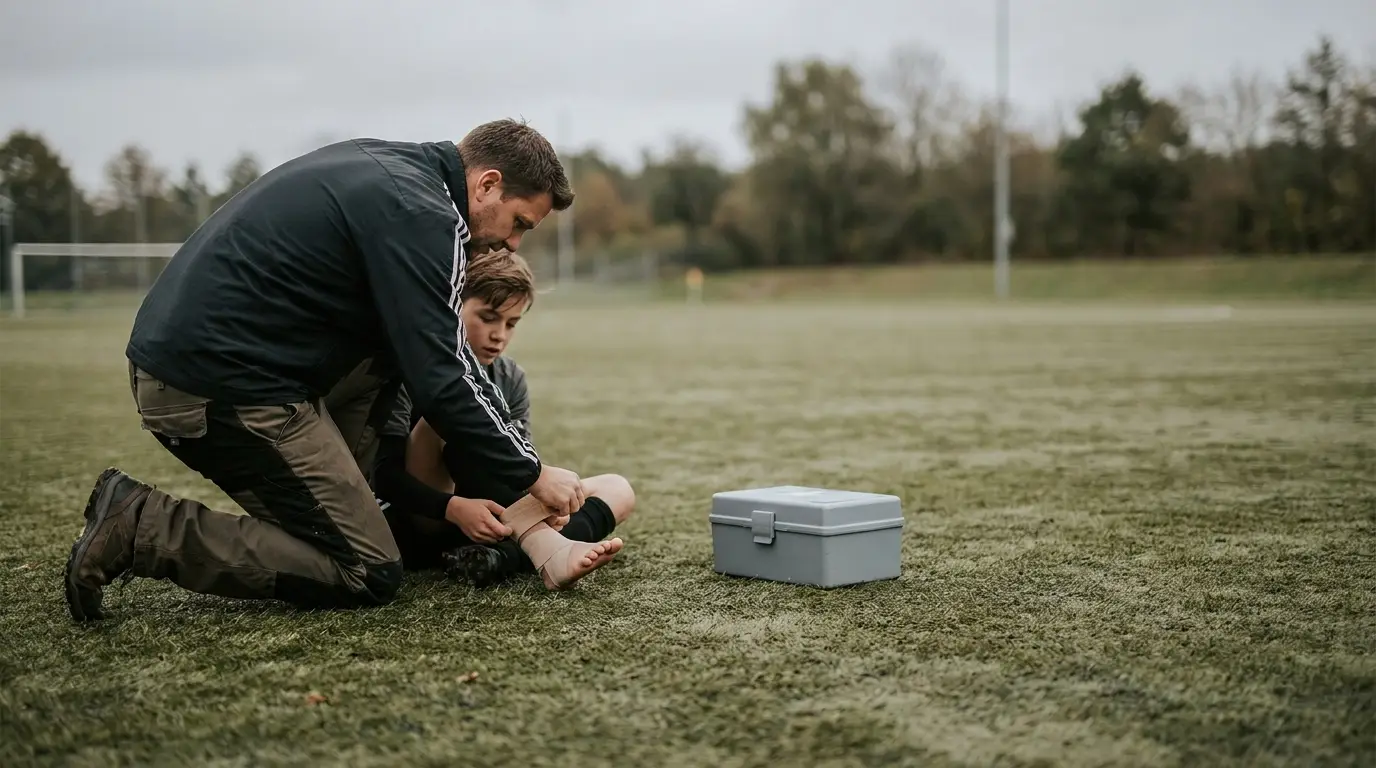
Most sideline injuries are the ordinary ones. Rolled ankles. Jammed fingers. A collision that leaves a player clutching a wrist. Knowing how to respond keeps a minor injury from getting worse and keeps a panicking kid calm.
For sprains and strains, the old standby still works well: rest the limb, apply ice, use gentle compression, and elevate it. For a suspected fracture, the priority is simple. Don’t move it, don’t try to straighten it, and keep the athlete still and supported until help arrives. Trying to “pop it back” or walk it off can turn a clean break into a complicated one.
The calm you bring matters as much as the technique. A frightened young athlete takes their cues from the adult kneeling beside them. When you’re steady, they settle. That steadiness is something training gives you.
Is Heat Really That Dangerous in Sport?
Absolutely, and it sneaks up on people. A hot summer tournament, a stuffy gym, heavy gear, and athletes pushing hard. Heat illness runs on a scale, and catching it early is everything.
It usually starts with heat cramps and heavy sweating. Then comes heat exhaustion: pale, clammy skin, dizziness, nausea, weakness, and a racing heart. If it’s ignored, it can tip into heat stroke, which is a true emergency. The warning signs there include hot skin, confusion, and collapse.
The response is practical. Get the athlete out of the heat and into shade or air conditioning. Loosen gear. Cool them with water and air. Give small sips of water if they’re alert. And know when the situation has crossed the line into needing emergency help. Hydration breaks, shade, and sensible scheduling prevent most of this, but every coach should recognize the signs the moment they appear.
Why Should Every Team Have Trained People and an AED?
Think of it as part of your equipment, the same way you’d never show up without a first aid kit or a water jug. A team with trained responders and access to an AED has a safety net. A team without one is gambling that nothing serious will ever happen. Over a long enough season, that’s a risky bet.
You don’t need the whole roster of parents certified. But having two or three trained adults on every team, plus a known AED location, changes everything. It means that when the worst happens, there’s no frozen scramble. There’s a plan, and there are hands that know what to do. If you want to get your coaching staff and team parents ready before the next season, Coast2Coast First Aid courses cover the exact skills a sideline demands.
The best part? These skills aren’t just for the field. The coach who learns to respond to a collapsed athlete is also ready at home, at the lake, or anywhere life happens. That’s a win that follows you long after the final whistle.
How Do You Build a Simple Emergency Plan for Your Team?
Training is step one. Having a plan for how to use it is step two, and it’s one a lot of teams skip. When an emergency hits, you don’t want people improvising. You want a clear, practised routine that everyone falls into automatically.
Start with roles. Before the season, decide who does what if an athlete goes down. One person takes charge and starts first aid. One person calls for emergency help. One person goes to fetch the AED and meets the responders to guide them in. Assigning these ahead of time removes the frozen “who’s doing what” scramble that wastes precious seconds.
Next, know your venues. Walk each rink, field, and gym your team uses and locate the nearest AED and the quickest way for an ambulance to reach the playing surface. Write it down. Share it with your assistant coaches and team parents.
Then keep a stocked first aid kit on the bench at every practice and game. Check it regularly so you’re not reaching for an empty box when you need gauze. Ice packs, bandages, gloves, and a way to call for help are the basics.
Finally, talk about it. A two-minute conversation at your first parent meeting can line up a few trained volunteers and make sure everyone knows the plan. It’s not alarmist. It’s the same ordinary preparation as lining up snack duty or carpools.
What Do Athletes Themselves Learn From a Prepared Coach?
Here’s a bonus worth mentioning. When a coach takes safety seriously, athletes notice. Older kids and teens pick up on it. They learn that looking after each other matters, that you don’t “tough out” a head injury, that calling for help is strength, not weakness.
Some of them will carry those lessons into their own lives, maybe even sign up for training themselves one day. A prepared coach doesn’t just protect a team for one season. They model a habit of care that can ripple outward for years. That’s the kind of coaching that sticks with players long after they’ve hung up their cleats.
If you’re looking for first aid and CPR training for your coaches, parents, and athletes in the Saskatoon area and surrounding communities, you may reach out to Coast2Coast First Aid & Aquatics in that area.
Frequently Asked Questions
Q: I coach kids’ sports part-time. Is a full first aid course really necessary?
A: It’s one of the best investments a coach can make. You’re the adult closest to the action, and injuries happen even in recreational leagues. A course gives you the confidence to respond to everything from a rolled ankle to a cardiac emergency.
Q: What’s the most important skill for a coach to have?
A: Knowing how to perform CPR and use an AED tops the list, because sudden cardiac arrest is the scenario where seconds matter most. Beyond that, recognizing concussions and managing sprains and heat illness cover the bulk of sideline situations.
Q: How do I know where the AED is at a venue?
A: Ask the facility staff before your season starts. Most arenas, gyms, and community centres have AEDs mounted in visible spots like lobbies or near entrances. Knowing the location in advance saves precious time in an emergency.
Q: Can team parents take the same training as coaches?
A: Yes, and it’s a great idea. The more trained adults around a team, the safer the athletes are. Parents, assistant coaches, and volunteers all benefit from the same core skills.
Q: How long does the training take?
A: Many courses use a blended format, where you complete the theory online at your own pace and then attend one short in-person session to practise the hands-on skills. It’s designed to fit around a busy schedule, which suits most coaches perfectly.


