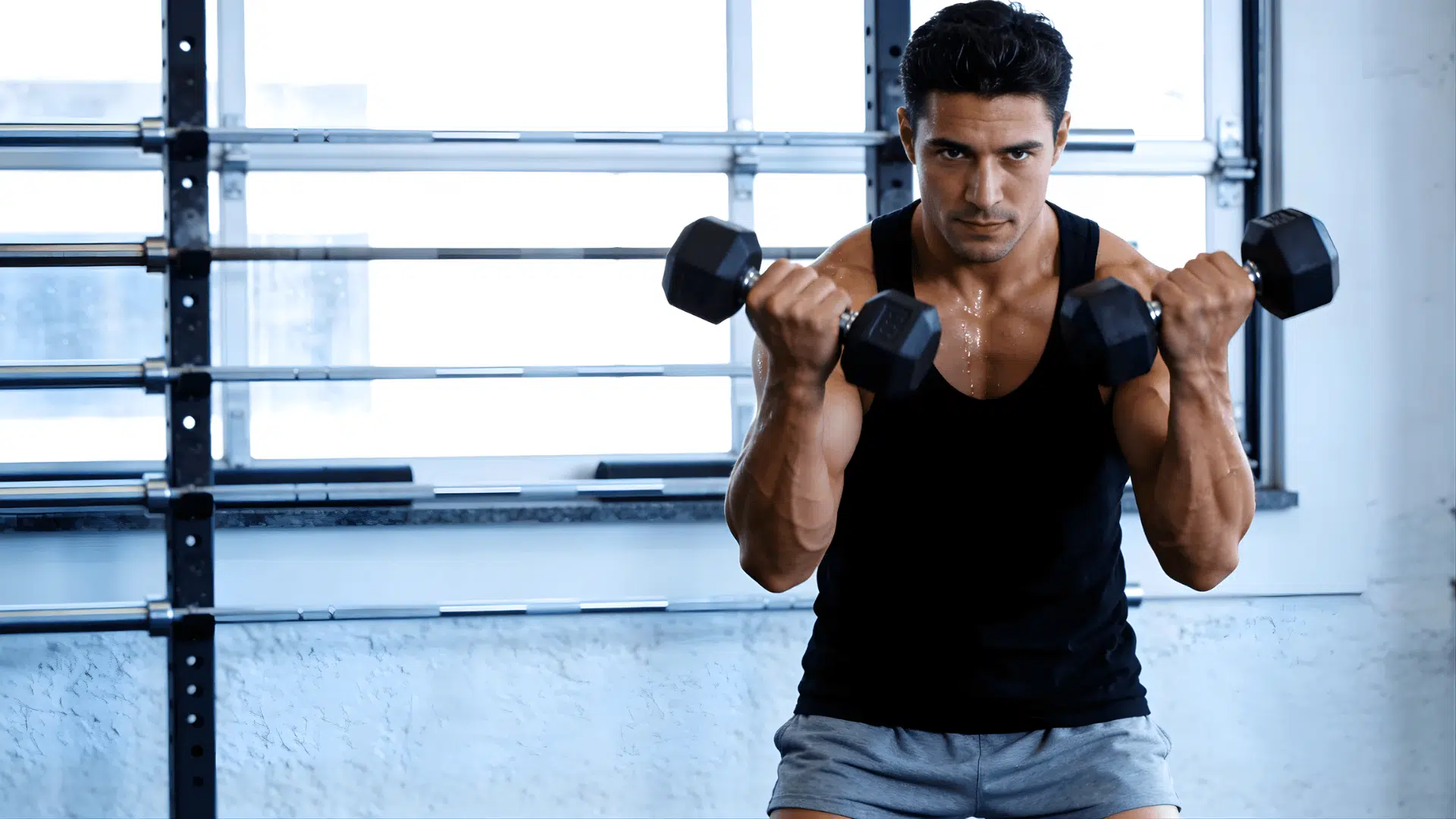
I’ve worked with many people who want stronger arms but feel unsure about where to begin. Most don’t need complex plans or long hours in the gym.
A simple upper-body dumbbell workout, done with good form, can build real strength over time. I’ve used these same exercises with clients, and I’ve seen how small, steady effort leads to clear results.
In this guide, I’ll walk you through arm exercises with weights that target your biceps, triceps, and forearms.
I’ll also share how to set up your workout, choose the right weights, and avoid common mistakes that slow progress.
You don’t need a big setup or special tools. A pair of dumbbells and a clear plan are enough. Stay consistent, focus on form, and you’ll notice better strength, control, and muscle tone over time.
Why Is an Upper Body Dumbbell Workout Needed?
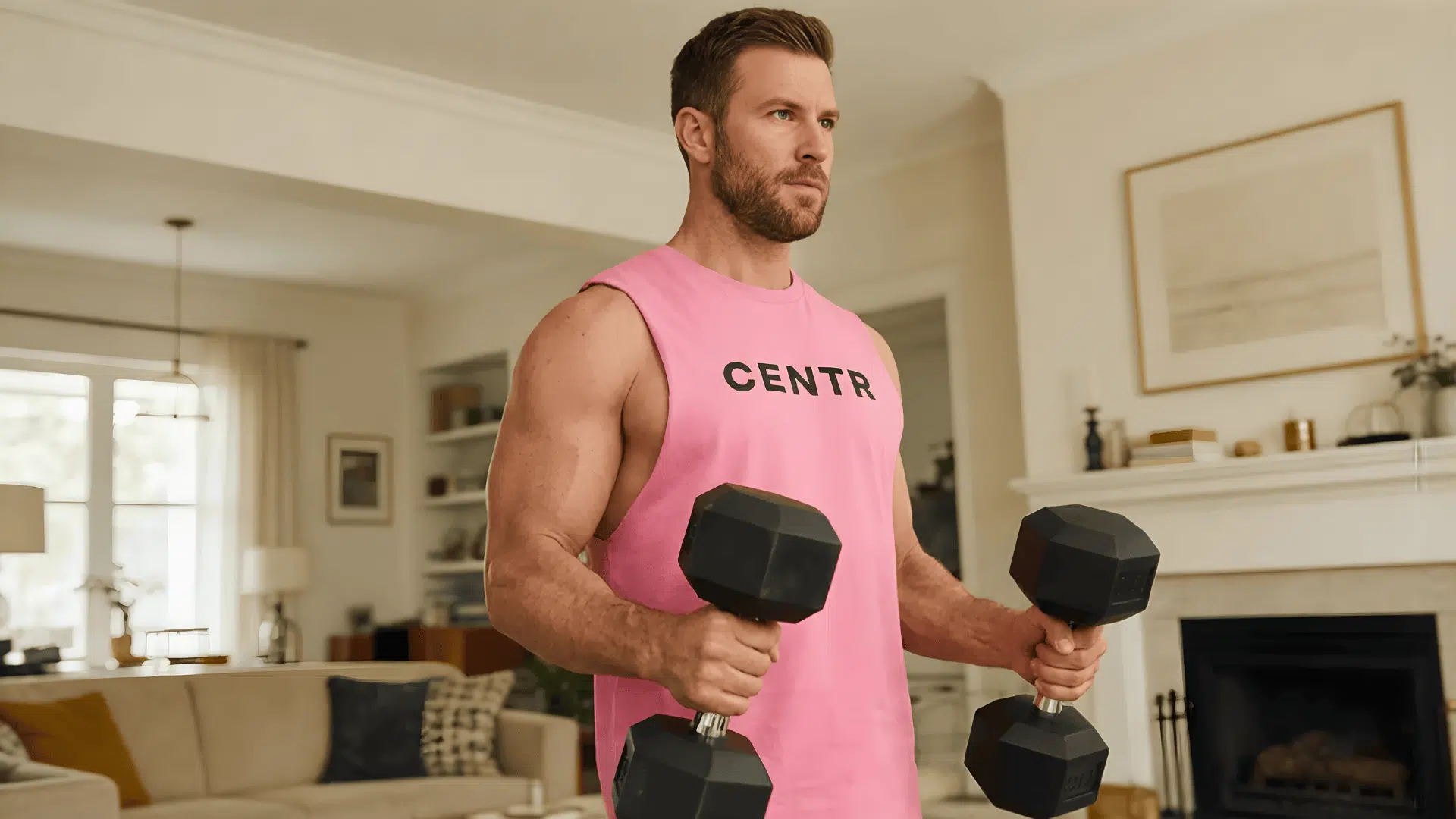
I’ve seen many people skip arm training, but that often leads to weak grip and poor strength over time.
A good upper-body dumbbell workout helps build strength in your arms and supports daily tasks like lifting, pushing, and carrying.
When you train your arms with weights, you also improve balance and control in your movements.
Arm exercises with weights target your biceps, triceps, and forearms together. This helps your muscles work more effectively as a group rather than in isolation.
It also supports better posture and reduces the chance of strain during workouts.
From my experience, even simple dumbbell moves can bring clear results when done with proper form. You don’t need heavy weights or long sessions to see progress.
How to Do an Upper Body Dumbbell Workout for Arms?
This routine uses simple arm exercises with weights and follows a timed format for better focus. It targets the biceps and forearms together to build strength and control in a single session.
- Step 1: Grab a pair of dumbbells (5-30 lbs) and get into a stable standing position
- Step 2: Perform each exercise for 30 seconds, followed by 30 seconds of rest
- Step 3: Start with double bicep curls, lifting fully and squeezing at the top
- Step 4: Do hammer curl with wrist curl to train both biceps and forearms
- Step 5: Perform bicep curl negatives, lifting fast and lowering slowly
- Step 6: Use reverse curls with an overhand grip for forearm focus
- Step 7: Perform wide bicep curls by keeping arms slightly out to the sides
- Step 8: Alternate between bicep curl and hammer curl on each arm
- Step 9: Perform inward curls by bringing the dumbbell toward the chest
- Step 10: Do half curls, stopping when elbows reach a right angle
- Step 11: Perform alternating hammer curls with steady control
- Step 12: Finish with wrist curl and bicep curl combo for full arm work
- Step 13: Complete one or two rounds and allow proper rest between sessions
This tutorial is based on a helpful video by Midas Movement. You can check out the original video on their YouTube channel here or watch it below.
Upper Body Dumbbell Workout: Bicep Exercises With Weights
Bicep exercises with dumbbells help build strength and shape in the front of the arms. Using steady movement and proper form improves results and reduces the risk of strain.
1. Dumbbell Bicep Curl
An arm exercise with weights where you lift dumbbells by bending your elbows. It mainly targets the front of your upper arm (the biceps).
How to do it:
- Hold a dumbbell in each hand with palms facing forward
- Keep your elbows close to your sides
- Curl the weights up, then slowly lower them back down
| Benefit | Details |
|---|---|
| Size | Builds fuller and more defined arms with weights |
| Strength | Improves arm strength with weights |
| Control | Helps you control arm movements better |
2. Hammer Curl
An arm exercise with weights done with palms facing each other. It works both your biceps and forearms at the same time.
How to do it:
- Hold dumbbells with palms facing each other
- Keep your elbows tight to your body
- Curl the weights up and lower slowly
| Benefit | Details |
|---|---|
| Size | Adds thickness to arms with weights |
| Strength | Builds both biceps and forearm strength |
| Grip | Improves grip during weight training |
3. Concentration Curl
An arm exercise with weights is done one arm at a time while sitting. It helps you focus fully on one bicep for better results.
How to do it:
- Sit and rest your elbow on your inner thigh
- Hold one dumbbell and curl it upward
- Lower slowly while keeping your arm steady
| Benefit | Details |
|---|---|
| Size | Helps build strong and shaped arms with weights |
| Isolation | Targets one arm at a time |
| Control | Improves focus during arm exercises with weights |
4. Incline Dumbbell Curl
An arm exercise with weights is performed on a slanted bench. It stretches your biceps more during each lift.
How to do it:
- Sit on an incline bench with arms hanging down
- Hold dumbbells with palms facing forward
- Curl up and lower slowly
| Benefit | Details |
|---|---|
| Stretch | Gives a deep stretch during arm exercises with weights |
| Size | Helps grow longer and fuller biceps |
| Range | Improves full motion while lifting weights |
5. Alternating Dumbbell Curl
An arm exercise with weights where you lift one dumbbell at a time. It helps you train each arm evenly and with better focus.
How to do it:
- Hold dumbbells at your sides
- Curl one arm at a time while the other rests
- Lower slowly and switch sides
| Benefit | Details |
|---|---|
| Balance | Improves arm balance with weights |
| Strength | Builds steady strength in each arm |
| Focus | Helps better control in arm exercises with weights |
6. Zottman Curl
An arm exercise with weights that combines a regular curl and a reverse curl. It trains both the biceps and forearms in one movement.
How to do it:
- Curl the dumbbells up with palms facing up
- Rotate your wrists at the top
- Lower the weights with palms facing down
| Benefit | Details |
|---|---|
| Strength | Builds both biceps and forearms with weights |
| Control | Improves wrist and arm control |
| Efficiency | Works multiple muscles at once |
7. Cross Body Hammer Curl
An arm exercise with weights where you curl across your body. It targets the outer biceps and forearms.
How to do it:
- Hold dumbbells at your sides
- Curl one weight across your chest
- Lower slowly and switch sides
| Benefit | Details |
|---|---|
| Size | Adds width to arms with weights |
| Strength | Builds outer bicep strength |
| Focus | Improves control in each rep |
8. Spider Curl
An arm exercise with weights is done while leaning forward on a bench. It keeps your arms fixed to focus fully on the biceps.
How to do it:
- Lie chest-down on an incline bench
- Let your arms hang straight down
- Curl the weights up and lower slowly
| Benefit | Details |
|---|---|
| Isolation | Fully targets the biceps |
| Shape | Helps improve arm definition with weights |
| Control | Reduces cheating during reps |
9. Seated Dumbbell Curl
An arm exercise with weights done while sitting for better control. It helps reduce body movement and keeps the focus on your arms.
This one feels more controlled since there is less chance of swinging. It also makes it easier to focus on each rep properly.
How to do it:
- Sit on a bench with dumbbells at your sides
- Curl the weights up while keeping your elbows still
- Lower slowly back to the start
| Benefit | Details |
|---|---|
| Stability | Keeps your body steady during arm exercises with weights |
| Strength | Builds controlled arm strength |
| Focus | Improves form and reduces momentum |
10. Reverse Curl
An arm exercise with weights done with palms facing down. It works the forearms as well as the biceps. It also helps build better grip control and supports overall arm strength during lifting.
I notice better grip strength when I add this into my routine. It also brings a different feel compared to regular curls.
It also helps improve wrist stability during different arm exercises with weights.
How to do it:
- Hold dumbbells with palms facing down
- Keep your elbows close to your body
- Curl up and lower slowly
| Benefit | Details |
|---|---|
| Grip | Strengthens grip during weight training |
| Forearms | Builds stronger forearms with weights |
| Balance | Supports overall arm strength |
Upper Body Dumbbell Workout: Tricep Exercises With Weights
Tricep exercises with dumbbells help build strength in the back of the arms and support pushing movements. Using the right form and controlled reps can improve muscle growth and overall upper body performance.
11. Overhead Dumbbell Tricep Extension
An arm exercise with weights where you lift a dumbbell overhead and extend your arms. It mainly targets the back part of your upper arm, helping build stronger triceps.
How to do it:
- Hold one dumbbell with both hands and raise it fully overhead in a stable position
- Keep your elbows close to your head and avoid letting them flare outward
- Slowly lower the weight behind your head, then extend your arms back up
| Benefit | Details |
|---|---|
| Size | Helps build bigger and more defined triceps with consistent weight training |
| Stretch | Gives a deep stretch to the triceps, which improves muscle growth over time |
| Strength | Improves overall arm strength, especially for overhead movements |
12. Dumbbell Skull Crushers
An arm exercise with weights done while lying down and lowering dumbbells toward your head.
It focuses on building strong, well-shaped triceps through controlled movement.
How to do it:
- Lie flat on a bench while holding dumbbells straight above your chest
- Bend your elbows slowly to lower the weights toward the sides of your head
- Extend your arms back up while keeping your upper arms steady
| Benefit | Details |
|---|---|
| Strength | Builds strong triceps with weights by focusing on controlled extension |
| Control | Improves elbow stability and reduces the risk of poor form |
| Shape | Helps improve the look and definition of the back of your arms |
13. Tricep Kickbacks
An arm exercise with weights where you extend your arm backward while keeping it steady. It isolates the triceps so you can focus fully on that muscle.
How to do it:
- Bend slightly forward at your hips while holding dumbbells in both hands
- Keep your elbows fixed close to your body without moving them forward
- Extend your arms straight back fully, then return slowly to the start position
| Benefit | Details |
|---|---|
| Isolation | Targets the triceps directly without involving other muscles too much |
| Tone | Helps improve arm shape and tone with regular weight training |
| Control | Improves your ability to control each movement and avoid swinging |
14. Close-Grip Dumbbell Press
An arm exercise with weights, pressing dumbbells while keeping them close together. It works both your chest and triceps, but keeps more focus on the triceps.
How to do it:
- Lie on a bench and hold the dumbbells close together above your chest
- Press the weights upward while keeping your elbows tucked near your body
- Lower the dumbbells slowly while maintaining control and alignment
| Benefit | Details |
|---|---|
| Strength | Builds both triceps and chest strength with a strong focus on arms |
| Focus | Keeps more tension on the triceps compared to a wider press |
| Stability | Improves control and balance during pressing movements |
15. Dumbbell Floor Press
An arm exercise with weights is performed while lying on the floor to limit the range of motion. It focuses more on the triceps by reducing shoulder involvement.
How to do it:
- Lie on the floor with dumbbells held above your chest in a stable position
- Press the weights upward until your arms are fully extended
- Lower them until your elbows lightly touch the floor before pressing again
| Benefit | Details |
|---|---|
| Safety | Reduces shoulder strain since the floor limits how far you lower the weights |
| Strength | Builds triceps strength effectively with controlled movement |
| Control | Helps improve pressing form by slowing down each repetition |
16. Single Arm Tricep Extension
An arm exercise with weights is performed one arm at a time for better focus. It helps correct the strength imbalance between both arms.
How to do it:
- Hold a dumbbell overhead with one hand while keeping your arm straight
- Lower the weight behind your head while keeping your elbow steady
- Extend your arm back up fully before switching sides
| Benefit | Details |
|---|---|
| Balance | Helps improve the strength balance between your left and right arms |
| Strength | Builds focused strength in each arm separately |
| Focus | Allows better control and attention to form during each rep |
17. Tate Press
An arm exercise with weights where dumbbells move inward during the press. It targets the triceps differently from standard pressing exercises.
How to do it:
- Lie on a bench holding dumbbells above your chest with palms facing forward
- Bend your elbows outward and lower the weights toward your chest slowly
- Press the weights back up while keeping the motion controlled
| Benefit | Details |
|---|---|
| Variation | Adds a new movement pattern to your arm exercises with weights |
| Strength | Builds triceps strength by focusing on a different angle |
| Control | Improves coordination and control during pressing movements |
18. Dumbbell Bench Dips
An arm exercise with weights, using a bench and a dumbbell to add resistance. It works the triceps using your body weight along with added load.
How to do it:
- Place your hands on a bench behind you and extend your legs forward
- Keep a dumbbell on your lap to increase resistance during the movement
- Lower your body slowly and push yourself back up using your arms
| Benefit | Details |
|---|---|
| Strength | Builds strong triceps by combining body weight and added resistance |
| Endurance | Improves muscle endurance with repeated controlled reps |
| Stability | Strengthens supporting muscles that help stabilize your arms |
19. Incline Tricep Extension
An arm exercise with weights performed on an incline bench for a deeper stretch. It increases the range of motion and improves muscle activation.
How to do it:
- Lie on an incline bench while holding dumbbells above your head
- Lower the weights behind your head slowly while keeping your elbows steady
- Extend your arms back up fully while maintaining control
| Benefit | Details |
|---|---|
| Stretch | Provides a deeper stretch, which helps improve tricep development |
| Size | Supports muscle growth when performed with proper form |
| Range | Improves the overall range of motion in your arm exercises |
20. Neutral Grip Dumbbell Press
An arm exercise with weights where your palms face each other during the press. It targets both the triceps and chest with a more natural hand position.
This one feels smoother on my wrists compared to a regular press. It also helps me keep better control throughout the movement.
How to do it:
- Hold dumbbells with palms facing each other above your chest
- Press the weights upward until your arms are fully extended
- Lower the weights slowly while keeping your elbows controlled
| Benefit | Details |
|---|---|
| Comfort | Reduces wrist strain due to a more natural hand position |
| Strength | Builds both triceps and chest strength effectively |
| Control | Improves stability and control during pressing exercises |
Upper Body Dumbbell Workout: Forearm Exercises With Weights
Forearm exercises with dumbbells help improve grip strength and support better control during lifts. Regular forearm training also helps with daily tasks that require hand and wrist strength.
21. Wrist Curls
An arm exercise with weights where you curl your wrists upward while holding dumbbells. It mainly targets the forearm muscles and helps improve grip strength over time.
I like adding this because I can really feel my forearms working with controlled reps. It also helps me build better grip strength for other arm exercises with weights.
How to do it:
- Sit on a bench and rest your forearms on your thighs while holding dumbbells
- Let your wrists hang slightly off your knees for a full range of motion
- Curl your wrists upward slowly, then lower them back down with control
| Benefit | Details |
|---|---|
| Strength | Builds stronger forearms with weights through controlled wrist movement |
| Grip | Improves grip strength, which helps in many lifting exercises |
| Control | Enhances wrist stability and movement precision |
22. Reverse Wrist Curls
An arm exercise with weights where you lift the dumbbells using the back of your wrists. It targets the outer part of your forearms and improves balance.
How to do it:
- Sit with your forearms resting on your thighs and palms facing down
- Hold dumbbells and lift your wrists upward as far as possible
- Lower slowly to maintain full control throughout the movement
| Benefit | Details |
|---|---|
| Balance | Strengthens the opposite side of the forearms for better muscle balance |
| Strength | Improves overall forearm strength with weights |
| Stability | Helps support wrist stability during workouts |
23. Farmer’s Carry
An arm exercise with weights: walk while holding heavy dumbbells. It works your forearms, grip, and overall upper body strength.
How to do it:
- Hold heavy dumbbells in both hands at your sides
- Keep your posture upright and shoulders back while walking
- Walk steadily for a set distance or time without dropping the weights
| Benefit | Details |
|---|---|
| Grip | Builds strong grip strength with sustained holding |
| Endurance | Improves muscle endurance in the forearms and upper body |
| Stability | Strengthens posture and core during movement |
24. Dumbbell Hold
An arm exercise with weights where you simply hold dumbbells for time. It helps build grip strength and muscle endurance.
How to do it:
- Hold heavy dumbbells at your sides with a firm grip
- Keep your arms straight and shoulders stable
- Hold for as long as possible without dropping the weights
| Benefit | Details |
|---|---|
| Grip | Strengthens grip with sustained tension |
| Endurance | Improves how long your muscles can hold weight |
| Simplicity | Easy to perform without complex movement |
25. Wrist Rotations
An arm exercise with weights where you rotate your wrists while holding dumbbells.
It improves wrist mobility and forearm strength.
How to do it:
- Hold light dumbbells in both hands with arms extended
- Rotate your wrists in a circular motion slowly
- Reverse direction after a few repetitions for balance
| Benefit | Details |
|---|---|
| Mobility | Improves wrist flexibility and movement range |
| Strength | Builds forearm strength with controlled motion |
| Control | Enhances coordination in wrist movements |
26. Hammer Curl Hold
An arm exercise with weights where you hold the dumbbell in a curled position. It builds static strength in your forearms and biceps.
I prefer this because holding the weight really tests my grip and endurance. It also makes my forearms feel more engaged than regular curls do.
How to do it:
- Hold dumbbells in a hammer grip position with palms facing each other
- Curl the weights up and pause halfway or at the top
- Hold the position for a few seconds before lowering slowly
| Benefit | Details |
|---|---|
| Strength | Builds static strength in arms with weights |
| Grip | Improves grip by holding tension longer |
| Endurance | Increases muscle endurance over time |
27. Wrist Roller
An arm exercise with weights where you roll the dumbbell using your wrists. It mainly targets the forearms and improves grip control. It also helps build steady strength through repeated wrist movement.
How to do it:
- Hold a dumbbell in both hands in front of your body
- Roll the weight up and down using only your wrists
- Keep your arms steady and control the movement throughout
| Benefit | Details |
|---|---|
| Grip Strength | Improves grip by working fingers and wrists together |
| Forearm Activation | Keeps forearm muscles active through full movement |
| Control | Builds better wrist coordination and stability |
28. Plate Pinch (Dumbbell Grip Hold)
An arm exercise with weights where you hold dumbbells using your fingers. It focuses on grip strength and finger control.
How to do it:
- Hold the head of a dumbbell using only your fingers
- Keep your arms straight and maintain a strong grip
- Hold for as long as possible without dropping
| Benefit | Details |
|---|---|
| Grip | Strengthens finger and hand grip |
| Control | Improves hand coordination and control |
| Strength | Builds forearm strength with weights |
29. Seated Wrist Curl
An arm exercise with weights done while sitting to improve control. It targets the forearms and helps build steady wrist strength.
I like doing this seated because it keeps my arms stable and controlled. It also helps me focus more on proper wrist movement without distraction.
How to do it:
- Sit on a bench and rest your forearms on your thighs
- Hold dumbbells with palms facing up and wrists hanging off
- Curl your wrists upward slowly, then lower back down
| Benefit | Details |
|---|---|
| Control | Improves wrist control with a stable position |
| Strength | Builds forearm strength with weights effectively |
| Focus | Helps maintain proper form during each rep |
30. Behind-the-Back Wrist Curl
An arm exercise with weights where you curl dumbbells behind your back. It targets forearms from a different angle.
How to do it:
- Stand holding dumbbells behind your back with palms facing backward
- Curl your wrists upward while keeping your arms straight
- Lower slowly to complete each repetition
| Benefit | Details |
|---|---|
| Angle | Targets the forearms from a different position |
| Strength | Builds wrist and forearm strength |
| Variety | Adds variation to arm exercises with weights |
31. Dumbbell Finger Curl
An arm exercise with weights where you roll the dumbbell through your fingers. It focuses on finger strength and grip control.
How to do it:
- Hold dumbbells with your fingers instead of a full grip
- Let the weights roll down toward your fingertips
- Curl your fingers to bring the weights back into your palm
| Benefit | Details |
|---|---|
| Grip | Improves finger grip strength |
| Control | Enhances hand coordination |
| Strength | Builds forearm muscles through finger movement |
Common Mistakes in Arm Workouts With Weights
Many people focus on lifting weights but miss small details that affect results. Fixing these common mistakes can improve form, strength, and overall progress.
- Using weights that are too heavy: This often leads to poor form and reduces the effectiveness of the exercise
- Swinging the arms during reps: Using momentum instead of controlled movement takes pressure off the target muscles
- Not keeping elbows stable: Moving elbows too much shifts focus away from the intended muscle group
- Skipping warm-up before workouts: Cold muscles are more likely to get strained or injured during lifting
- Rushing through repetitions: Fast reps reduce muscle tension and limit proper strength development
- Ignoring the full range of motion: Not completing full movement reduces muscle activation and growth
- Not allowing enough rest between sessions: Overtraining arms can slow recovery and lead to fatigue
How Often to Train Arms With Dumbbells?
Training arms with dumbbells 2 to 3 times per week works well for most people. This gives enough time for muscle recovery while still allowing steady strength and size improvement.
If you are a beginner, starting with 2 sessions per week is a good way to build form and avoid overtraining. For intermediate levels, 3 sessions can help increase strength, provided rest days are included.
It is also important to balance biceps, triceps, and forearm exercises instead of focusing on just one area. Rest days matter because muscles grow and repair during recovery, not during the workout itself.
I usually prefer training arms twice a week with proper rest in between. This helps maintain good energy levels, better form, and consistent progress without feeling overworked.
Best Weights for Arm Exercises at Home
Choosing the right weights for arm exercises at home depends on your strength, comfort, and control during each movement. Using the correct weight helps improve results, maintain proper form, and reduce the risk of strain
By Age
| Age Group | Weight Range | Notes |
|---|---|---|
| Teens (13–18 years) | 2–6 kg | At this stage, the body is still developing, so using lighter weights helps build proper technique and prevents unnecessary stress on joints and muscles. |
| Adults (18–40 years) | 5–15 kg | This group can handle a wider range of weights depending on fitness level, and gradual increases help build strength without affecting form. |
| Above 40 years | 3–10 kg | It is important to focus on controlled movements and avoid heavy strain, as joints and recovery may require more care. |
By Gender
| Category | Weight Range | Notes |
|---|---|---|
| Men (Beginner) | 5–8 kg | Starting with moderate weights allows better control and helps build a strong base before moving to heavier loads. |
| Men (Intermediate–Advanced) | 8–20 kg | Heavier weights can be used once proper form is maintained, allowing for better muscle growth and strength development. |
| Women (Beginner) | 2–5 kg | Lighter weights help in learning correct form and building confidence before increasing resistance. |
| Women (Intermediate–Advanced) | 5–12 kg | Gradual weight progression supports strength gains while maintaining control during exercises. |
By Body Type
Body Type | Weight Range | Notes |
|---|---|---|
| Slim / Lean | 2–6 kg | Starting with lighter weights helps the muscles adapt slowly and reduces the risk of fatigue or improper form. |
| Average | 5–10 kg | A balanced weight range works well for improving both strength and endurance during regular workouts. |
| Heavy / Strong | 8–15+ kg | Heavier weights can be used effectively, but maintaining control is still important to avoid unnecessary strain. |
When Will You Start Seeing Results?
Most people begin to notice changes from weight training within about 3 to 6 weeks if they train regularly. How fast results appear depends on workout frequency, weight selection, and overall consistency.
During the first couple of weeks, strength and control usually improve, even if visible changes are not obvious yet.
Around weeks three to four, arms may start to feel tighter and look slightly more toned.
Clear changes in muscle size and shape often show after about four to six weeks with proper form and steady effort.
Good rest, balanced meals, and slowly increasing weights can help speed up progress. Keeping a regular routine and avoiding common errors helps maintain steady improvement over time.
At the End
As I’ve seen over time, building stronger arms is really about staying regular and keeping your movements clean and controlled.
You don’t have to rush or lift very heavy weights to make progress. What matters most is showing up, doing each rep with care, and giving your body time to recover.
I always remind myself that small steps add up. Some days feel easier, some feel harder, but sticking with the routine is what makes the difference. When you stay patient, your strength, grip, and control slowly improve.
If you’re just starting, keep it simple and focus on learning proper form first. If you’re already training, keep pushing yourself a little more each week.
Give this routine a try and see how it works for you. If it helped, share your experience or tips below, I’d love to hear what worked best for you!