
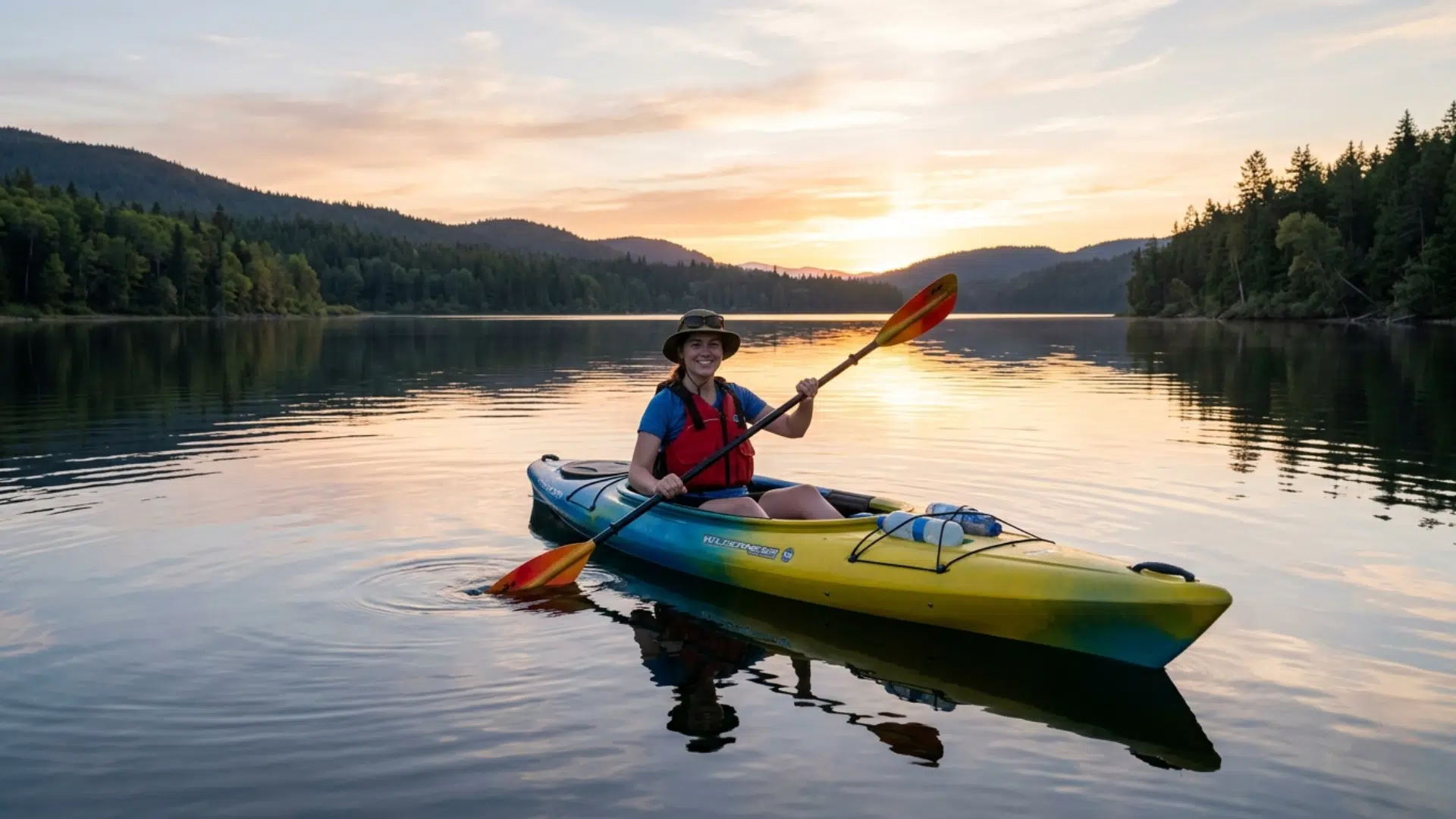
I still remember the first time I tried kayaking; it looked easy until I got on the water. The moment I started paddling, I realized there was more to it than I expected.
Feeling excited but a bit confused at the same time is very common for beginners.
In this guide, I will walk you through how to kayak in a simple and clear way. I will share basic tips, common mistakes to avoid, and what you need to get started without feeling lost.
You will also learn about the gear you need and simple safety steps to follow on the water.
These small things can make a big difference in your first experience.
By the end, you will have a clear idea of what to do and how to enjoy your first kayaking trip with more confidence and control.
What Is Kayaking?
Kayaking is a paddling sport where you sit in a small, narrow boat called a kayak and move through water using a double-bladed paddle.
It works on calm lakes, slow rivers, and even coastal ocean water. The sport is popular because the entry barrier is low; you do not need special fitness levels or prior water sport experience to try it.
Most people can get moving confidently in a single session. Kayaking splits into three broad types based on water conditions and goals.
Recreational kayaking covers lakes and gentle rivers; this is where most beginners start.
Touring kayaking suits longer open-water trips. Whitewater kayaking involves fast, technical river water and is a different discipline altogether.
What Type of Kayak Should a Beginner Use?
Kayak choice matters more than most guides admit. The wrong boat makes learning harder than it needs to be. There are two main styles worth knowing when you are just starting out: sit-in kayaks and sit-on-top kayaks.
Sit-on-top kayaks are generally better for first-timers. They are wider, more stable, and far easier to get in and out of.
If you capsize, you can just flip the kayak and climb back on. Sit-in kayaks give more control in rough water but are harder to learn. Sit-on-top kayaks are easier for calm water.
Within these styles, recreational kayaks are the standard pick for new paddlers.
They have flat, wide hulls that prioritize stability over speed, large cockpits for comfort, and enough storage for a day’s gear.
Avoid touring or whitewater kayaks until you have a solid base of skills.
When renting, always ask the outfitter for a wide, stable recreational model; most will suggest one by default, but it helps to ask.
How to Kayak the Proper Way for Beginners?
Kayaking the proper way starts with sitting balanced, holding the paddle correctly, and keeping steady movements on the water. Smooth and even strokes help control direction, while staying relaxed improves balance and safety.
Step 1: Get Into the Kayak Safely
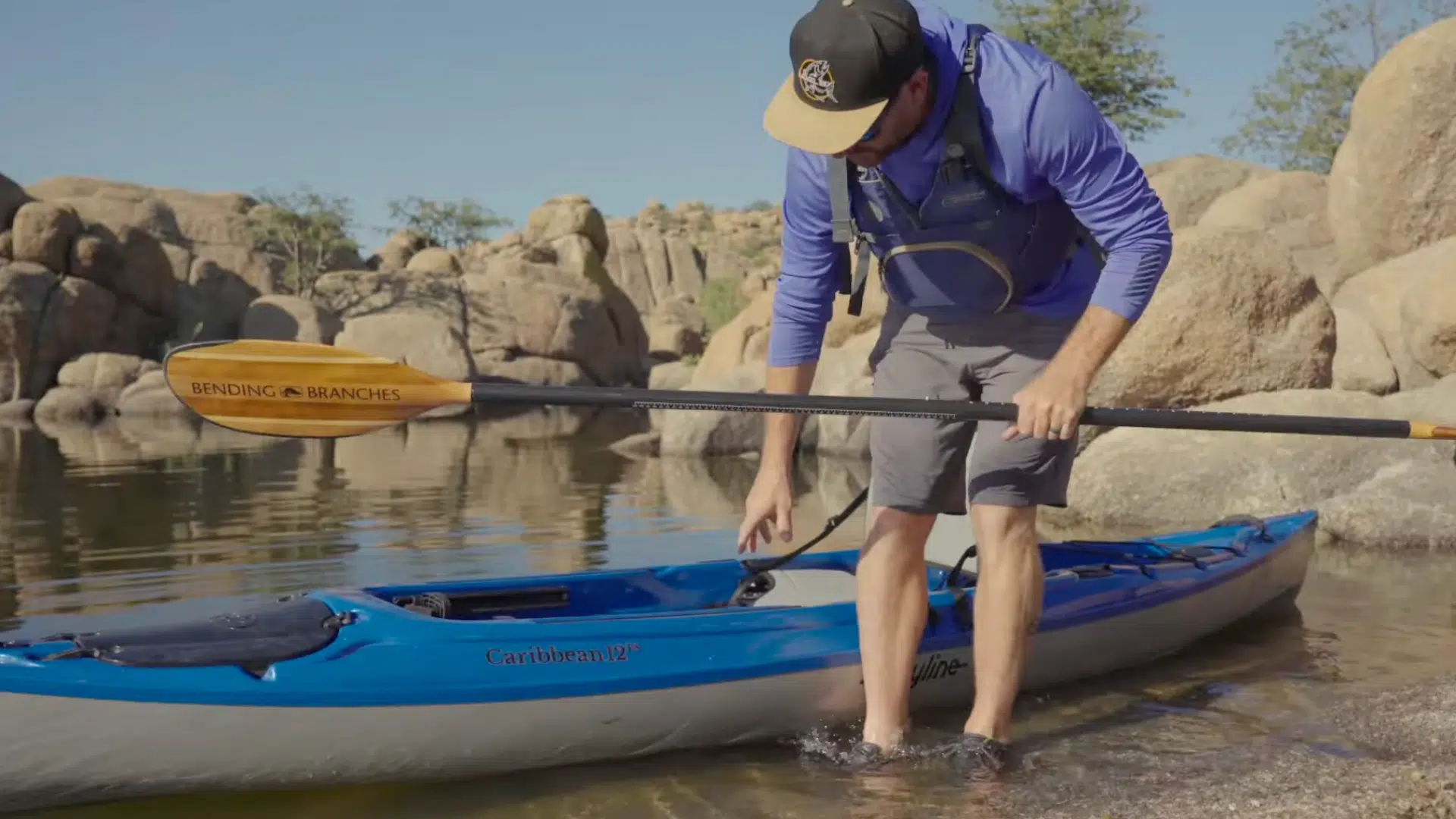
Getting into the kayak the right way helps prevent tipping and builds confidence. Place the kayak in a steady position near the shore or dock.
Sit down in the seat first instead of stepping onto the kayak. Keep your weight centered as you lower yourself.
Once seated, bring your legs inside one at a time. Move slowly and avoid sudden shifts in weight.
For a shore launch, position the kayak perpendicular to the waterline with the bow pointing out. This makes entry and exit much cleaner, especially when paddling solo.
Step 2: Adjust Your Position and Foot Support
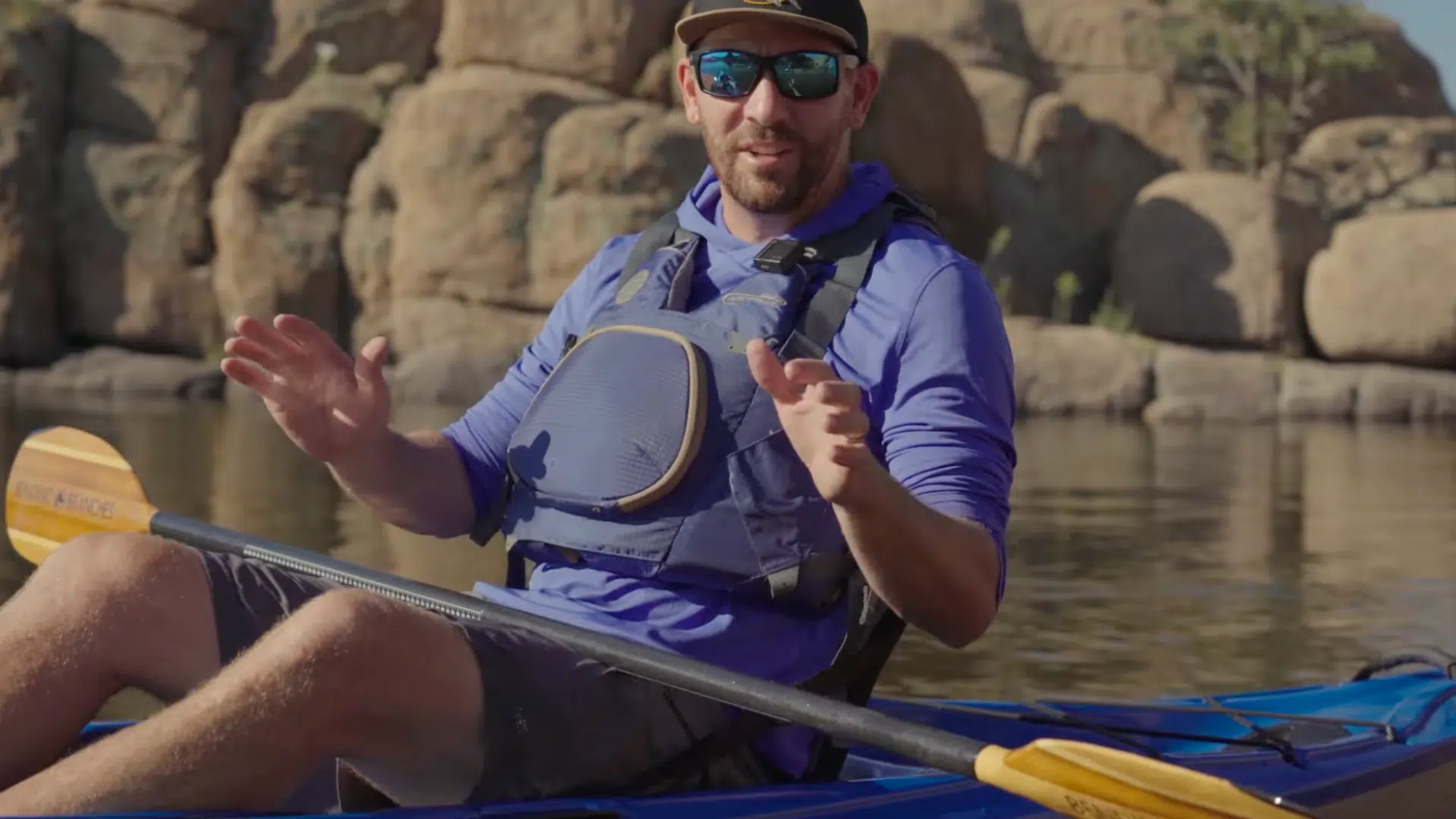
Proper positioning inside the kayak improves control and comfort. Adjust the foot pedals so your knees stay slightly bent, not fully straight.
This allows you to push gently with your legs while paddling. Sit upright with your back supported, avoiding a slouched position.
Your thighs should press lightly against the sides of the cockpit; this contact point is what lets you steer with your lower body, not just your arms.
A good setup means three firm points of contact: seat, footpegs, and thigh braces.
Step 3: Hold the Paddle the Right Way
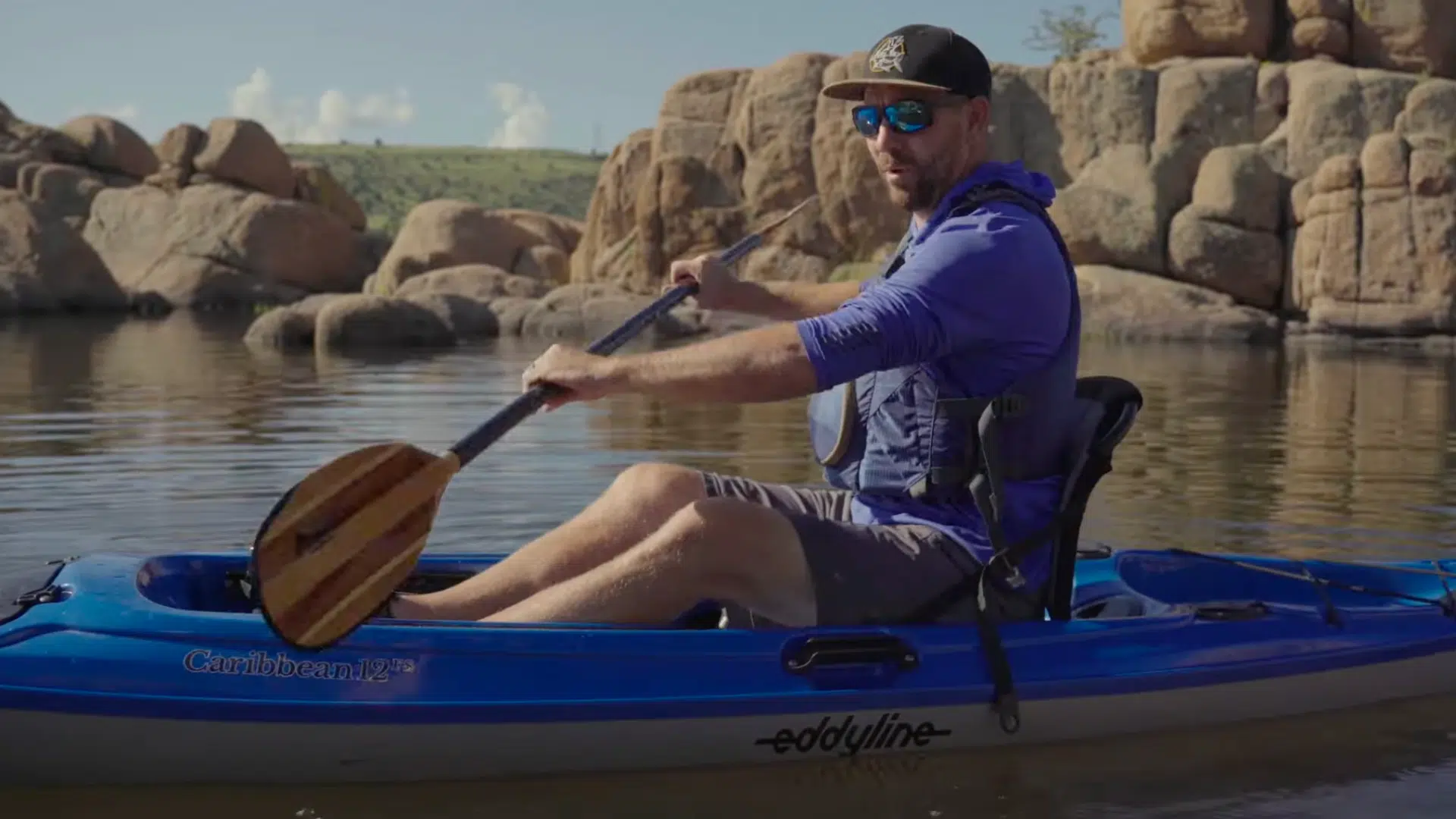
Holding the paddle correctly makes a big difference in how easily you can move through the water. Keep your hands slightly wider than shoulder width apart.
Your elbows should have a slight bend to form a comfortable paddling position.
Maintain a relaxed grip instead of holding the paddle too tightly.
This helps reduce fatigue and allows smoother strokes. Keeping the paddle aligned properly also improves control and helps you guide the kayak in the right direction.
Step 4: Start Paddling Forward
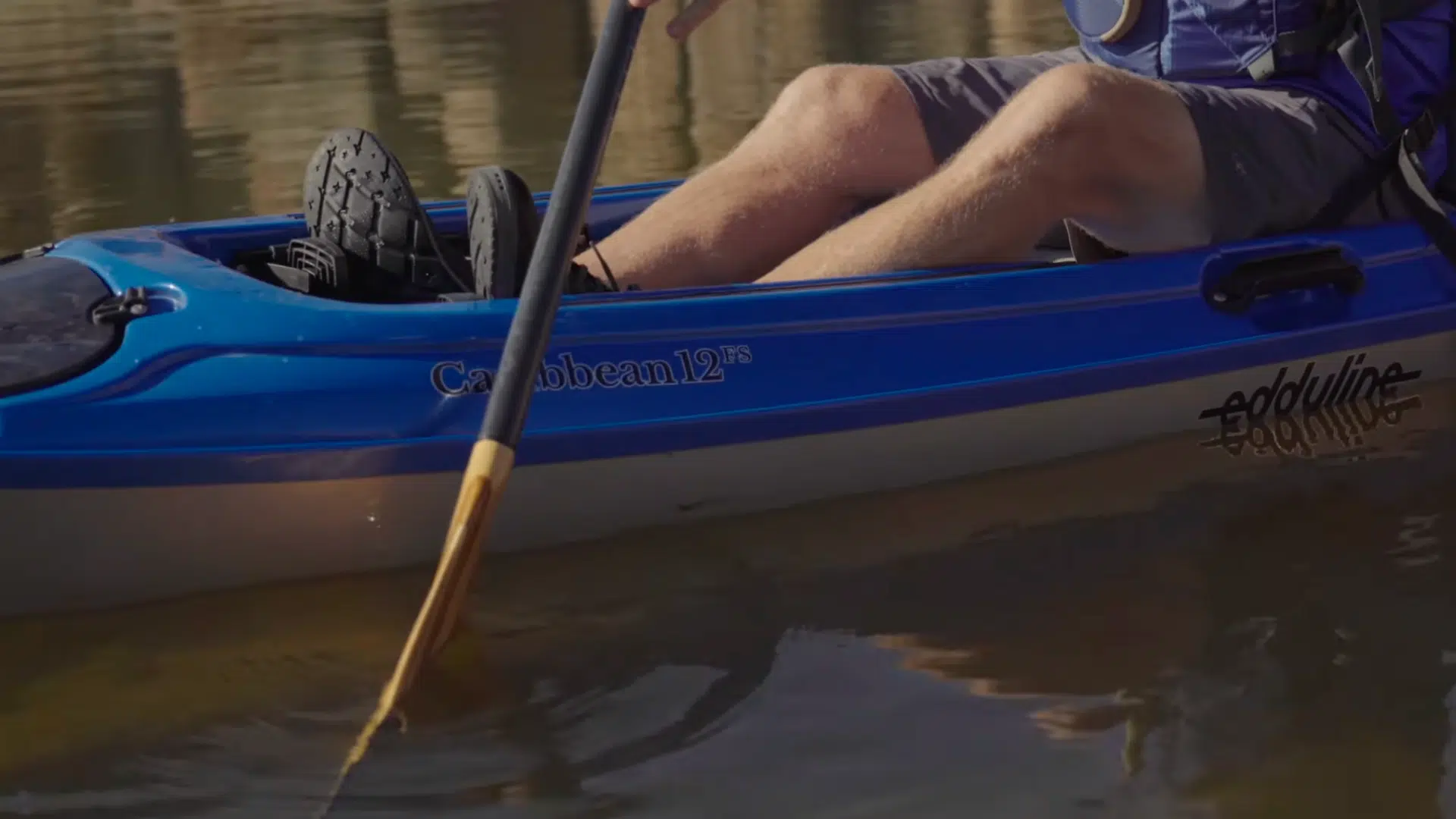
To move forward, place the paddle blade near your feet and pull it back through the water. Focus on using your core and body rotation instead of just your arms.
Keep your strokes even on both sides to stay on track.
A smooth and steady motion works better than fast, uneven paddling. Pushing slightly with your legs can also help add power.
This technique helps you move efficiently while staying balanced and in control of the kayak.
Step 5: Use Reverse Stroke to Stop
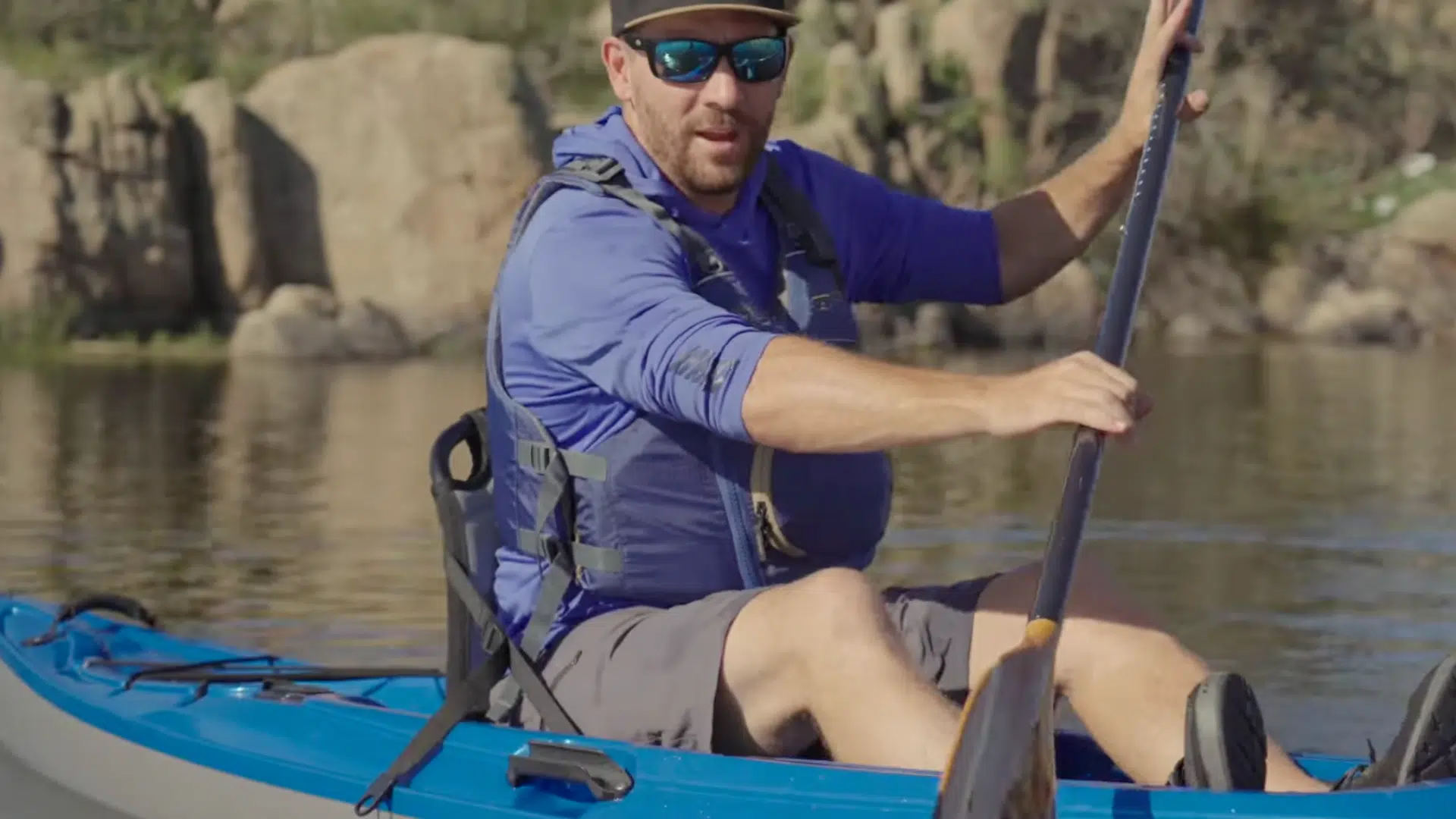
Stopping the kayak is just as important as moving forward. To slow down, place the paddle behind you and sweep it forward through the water.
Alternate sides to reduce speed evenly and maintain control.
Keep your movements smooth rather than sudden to avoid losing balance.
On your first few sessions, practice stopping well before you need to, reactionary braking in a kayak is less reliable than proactive speed management.
Step 6: Turn and Control Direction
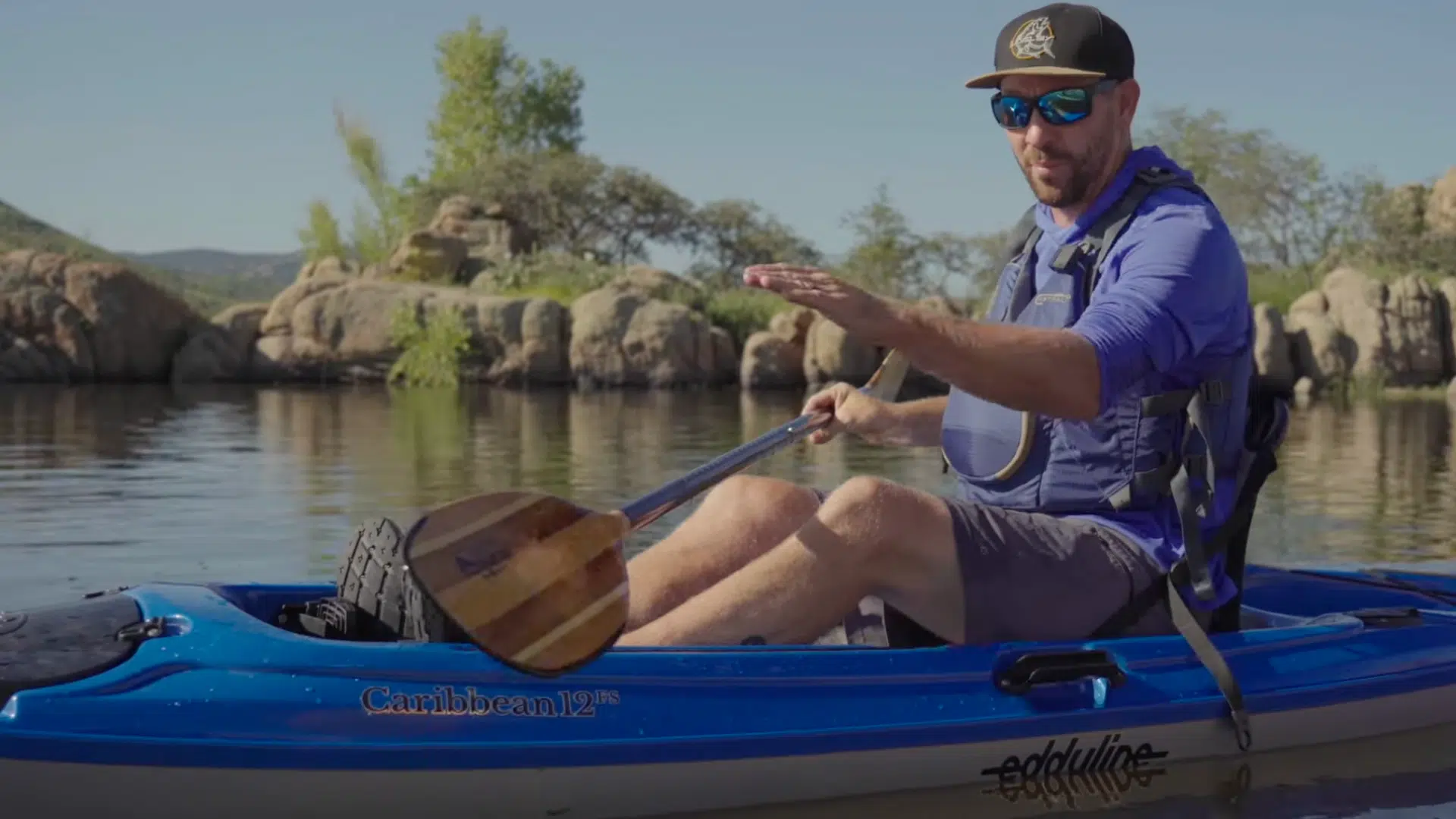
Turning the kayak helps you move around obstacles and change direction smoothly. Use wide sweep strokes by moving the paddle away from the kayak in a curved motion.
The farther your paddle moves from the kayak, the sharper the turn will be. Keep your movements steady and controlled.
Using your body rotation also improves turning efficiency.
With practice, turning becomes easier and helps you stay in control while moving through different water conditions.
Step 7: Get Out of the Kayak Safely
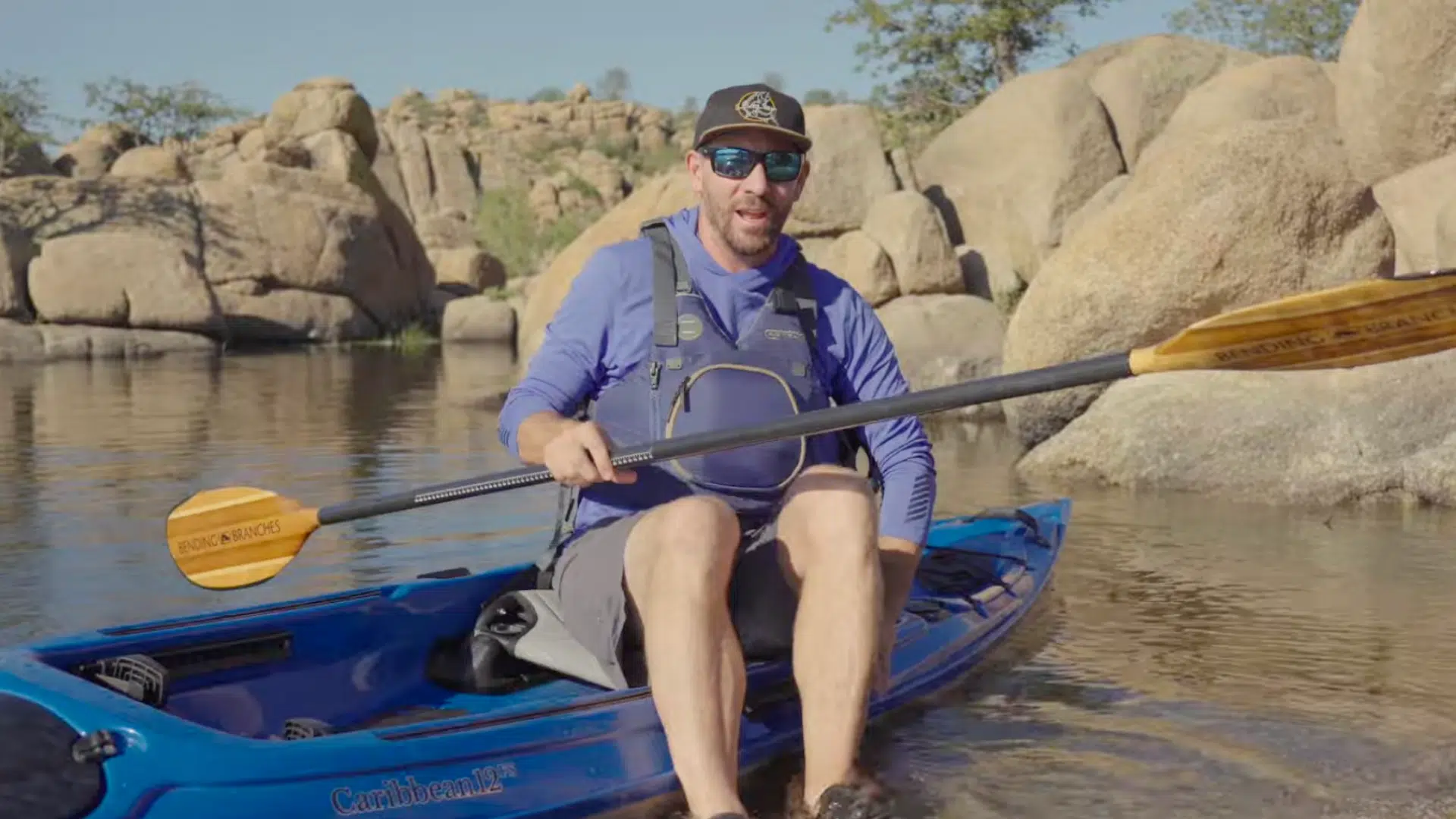
Getting out of the kayak should be done carefully to avoid tipping. Bring your kayak close to a stable surface like a dock or shore.
Swing your legs out first while keeping your weight forward. Use your paddle or nearby support to steady yourself. Stand up slowly and avoid sudden movements.
If you are at a dock, lay your paddle shaft across the dock edge and use it as a brace, it adds surprising stability during exit.
This tutorial is based on a helpful video by HeadwatersKayak. You can check out the original video on their YouTube channel here or watch it below.
What to Wear when Kayaking?
Most new paddlers focus entirely on the boat and forget that clothing matters just as much. The main rule is dress for the water temperature, not the air temperature.
Water can be cold even on warm days, and hypothermia is a real risk if you capsize without the right layers.
Avoid cotton at all costs, it absorbs water and stays cold against your skin.
Synthetic fabrics like polyester and polypropylene are the right base layer because they retain some warmth even when wet.
For most recreational summer sessions, a moisture-wicking base layer, waterproof or quick-dry shorts, and a light waterproof jacket on top is a practical setup.
Add neoprene water shoes or sandals with straps for foot protection. In colder months or colder water, a wetsuit or dry suit becomes necessary.
Always pack a dry set of clothes in your dry bag, regardless of the forecast. Weather on open water changes fast.
Basic Kayaking Strokes Every Beginner Should Know
These five strokes cover most situations you will encounter on calm water. You do not need to master them all before getting started, but understanding what each one does helps you respond to situations.
| Stroke Name | What It Does | How It Helps |
|---|---|---|
| Forward Stroke | Moves the kayak straight ahead | Helps you paddle smoothly |
| Reverse Stroke | Moves the kayak backward | Useful for stopping or slowing |
| Sweep Stroke | Turns the kayak left or right | Helps change direction easily |
| Draw Stroke | Moves the kayak sideways | Useful near docks or tight spots |
| Rudder Stroke | Keeps the kayak moving straight | Helps with better control |
Common Kayaking Mistakes Beginners Should Avoid
Most early mistakes come down to a few recurring patterns. Knowing them ahead of time means you can correct them before they become habits.
- Using only arms while paddling: Relying solely on arms leads to quick fatigue. Use your core and body rotation to generate more power.
- Holding the paddle too tightly: Keep your hands relaxed for smoother strokes. It also gives you better control over each movement.
- Poor sitting posture: Leaning back too much affects balance. Good posture also makes paddling feel more natural.
- Choosing rough water conditions: Starting in waves or wind makes learning difficult. It helps you focus on technique without extra stress.
- Skipping safety gear: Not wearing a life jacket can be risky. Safety gear protects you in unexpected situations.
- Making sudden movements: Quick shifts in weight can tip the kayak. Controlled movements help you stay balanced at all times.
- Ignoring the weather forecast: Conditions change fast on open water. High winds and fog are serious hazards, even for experienced paddlers.
- Skipping the float plan: Not telling anyone where you are going is an unnecessary risk. A quick text to a friend with your location and return time takes 30 seconds.
- Paddling alone without self-rescue skills: Going out solo before you know the basics is avoidable risk. A buddy or a guided session makes your first sessions far safer and faster to learn from.
Kayaking Rescue Basics and Safety Actions
Understanding basic rescue terms and emergency responses is important for staying safe while kayaking. These terms help you react quickly and handle unexpected situations on the water.
| Term | Meaning | Why It Matters |
|---|---|---|
| Wet Exit | Safely getting out after capsizing | Helps you stay calm in emergencies |
| Self Rescue | Getting back into your kayak alone | Useful when no help is nearby |
| Assisted Rescue | Getting help from another paddler | Makes recovery easier and safer |
| T Rescue | A method using another kayak for support | Common and effective rescue technique |
| Paddle Float Rescue | Using a float to re-enter the kayak | Adds stability during self-rescue |
| Capsize | When the kayak flips over | Knowing this helps you react properly |
| Bracing | Using a paddle to prevent tipping | Helps maintain balance in rough water |
Quick Safety Tips for Kayaking Emergencies
A capsize on calm water is rarely dangerous if you are wearing a PFD and know what to do next. Run through this checklist mentally before each session so it becomes instinct.
- Stay calm and avoid panic: Keeping calm helps you think clearly and act safely in any situation. Panic can lead to poor decisions and loss of balance.
- Always wear a life jacket: It keeps you afloat if you fall into the water. It gives you time to recover and get back safely.
- Practice basic self-rescue: Knowing how to get back into your kayak is very useful. It helps you stay independent when help is not nearby.
- Keep your paddle with you: It’s important for control and support. Losing it can make it harder to return safely.
- Stay close to your kayak: The kayak floats and is easier to spot than a person. Holding onto it improves your chances of staying safe.
Should You Take a Kayaking Course?
A structured course accelerates the learning curve significantly. The American Canoe Association (ACA) runs paddlesports instruction programs that cover core skills, safety, and rescue in a single session.
Local outfitters, park departments, and lake marinas often offer introductory classes that include the kayak, paddle, and PFD in the cost.
If you are serious about kayaking beyond a single afternoon, one session with a qualified instructor is worth far more than several sessions of trial and error alone.
I noticed a real shift in my own technique after a guided two-day flatwater trip, the structured feedback on paddle angle alone cut my fatigue in half.
Conclusion
Getting started with kayaking may feel a bit uncertain, but it becomes easier with the right approach and practice.
The biggest difference between someone who struggles and someone who clicks with it quickly comes down to one thing that is relaxation.
The more tense you are, the more the kayak fights you.
Once you stop bracing against the water and let the boat do its job, everything starts to feel easy and natural.
The gear and technique matter, but the mindset matters more in those first few sessions. By now, the basics, tips, and techniques should feel clearer and easier to follow.
With the right gear and simple habits, kayaking can become a fun activity anyone can enjoy.
What was your first kayaking experience like? Share your thoughts, tips, or even mistakes in the comments below!
Frequently Asked Questions
Is Kayaking Hard for Beginners?
Kayaking is easy to learn, and most beginners feel comfortable after a short practice session in calm water.
Do You Need to Know How to Swim for Kayaking?
Swimming helps, but wearing a life jacket makes kayaking safe even for non-swimmers.
How Long Does It Take to Learn Kayaking?
Basic kayaking skills can be learned within a few hours with simple practice.
What Is the Best Kayak for Beginners?
A wide, stable kayak is best for beginners, as it offers better balance and control.
Can Kayaking Help with Fitness?
Kayaking improves strength, especially in the arms and core, while also boosting endurance