
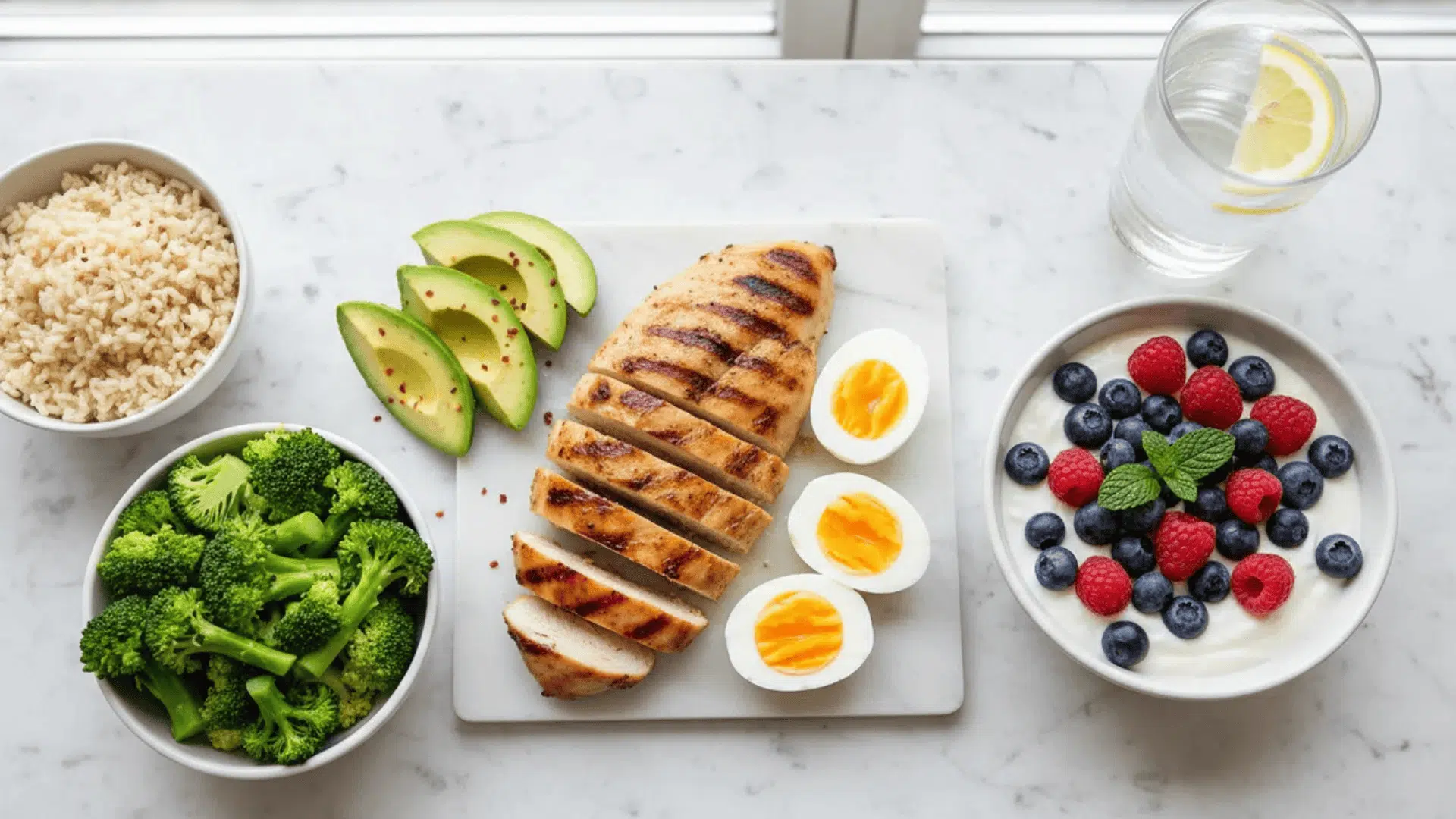
A 1000-calorie diet is considered a very low-calorie diet (VLCD) and is not appropriate for everyone. Consult a registered dietitian or your physician before starting.
This plan is intended for short-term use only, generally no longer than 1 to 4 weeks, and is not suitable for pregnant or breastfeeding individuals, people with a history of disordered eating, or those with certain medical conditions.
Eating 1000 calories a day is not easy, but having the right plan makes it a lot more manageable. Without one, it is too easy to eat the wrong foods, feel hungry all day, and give up by day three.
I have been there, and I know how frustrating that cycle can be. If you are trying to lose weight and feel like nothing is working, this guide is for you.
I put together a complete 1000-calorie meal plan for weight loss that takes the confusion out of the process.
You will find a full 7-day meal plan with calorie counts, the best foods to eat, what to avoid, and simple tips to manage hunger.
I also included honest safety advice so you know when this plan works for you and when it does not. Let’s get into it.
Is a 1000-Calorie Diet Right for You?
Before getting into meal ideas, it is worth being honest about who this plan is designed for and who it is not.
Most adult women need at least 1,600 to 2,000 calories per day, and most men need closer to 2,200 to 3,000, depending on age and activity level.
Dropping to 1,000 calories creates a significant daily deficit that can accelerate weight loss in the short term, but it is not a neutral intervention.
This plan may be appropriate if you:
- Are working with a doctor or dietitian who has recommended a low-calorie reset
- Have a higher starting body weight, where a larger initial deficit is more medically appropriate
- Need a short-term, structured tool to break a plateau (no longer than 4 weeks)
This plan is not appropriate if you:
- Are pregnant or breastfeeding
- Have a history of disordered eating
- Are currently very active or an endurance athlete (your energy demands are too high)
- Are under 18
- Have diabetes, kidney disease, or other metabolic conditions without medical clearance
I flag this not to be discouraging, but because in my experience coaching clients through calorie-restricted phases, the people who struggle most are the ones who were not the right candidate in the first place.
Getting that clarity upfront saves a lot of frustration
How to Hit Your Macros on 1000 Calories a Day
Hitting the right macro balance matters just as much as hitting the calorie target. With only 1000 calories to work with, every meal needs to count.
A good starting point is aiming for roughly 40% protein, 35% carbohydrates, and 25% fat. In real numbers, that works out to about 100g of protein, 88g of carbs, and 28g of fat per day.
A research on National Libary of Medicine on low-calorie diets consistently shows that higher protein intake during a calorie deficit helps preserve lean muscle mass, which is the reason protein should anchor every meal on this plan.
Protein helps maintain muscle mass during a calorie deficit. Good sources include chicken breast, eggs, Greek yogurt, cottage cheese, and lentils.
Carbs should come from whole grains, fruits, and vegetables, not processed snacks. For fat, small amounts of olive oil, avocado, or nuts go a long way.
Spreading meals across the day helps the body use those macros more effectively. Eating protein at every meal is one of the simplest ways to stay on track.
Tracking macros with a free app like MyFitnessPal makes this much easier to manage. A registered dietitian can also fine-tune these numbers based on individual health needs.
What to Eat on a 1000-Calorie Plan
With limited calories, food quality does more heavy lifting than volume. These food groups consistently perform well at low calorie counts:
| Category | Best Options | Why It Helps |
|---|---|---|
| Lean Protein | Chicken breast, eggs, Greek yogurt, cottage cheese, tofu, lentils | Preserves muscle, suppresses hunger hormones |
| Non-Starchy Vegetables | Spinach, broccoli, zucchini, bell peppers, cucumber | High volume, very low calories, rich in fiber and micronutrients |
| Complex Carbohydrates | Brown rice, oats, quinoa, whole wheat bread | Steady energy, slower digestion |
| Low-Sugar Fruit | Berries, apples, oranges | Natural sweetness without spiking blood sugar |
| Healthy Fats | Olive oil, avocado (small portions), almonds | Satiety and fat-soluble nutrient absorption |
What to Avoid
On 1000 calories, there is almost no room for calorie-dense, low-nutrient foods. These consistently cause people to blow their limit without feeling satisfied:
- Processed Snacks and Chips: High in sodium and refined fats, they add calories fast without providing satiety
- Sugary Beverages: Sodas, juices, and flavored coffees can account for 200 to 400 calories without any nutritional payoff
- Fried Foods: Calorie density is far too high for this plan
- White Bread and Refined Grains: Digest quickly, leaving you hungry again within an hour
- Alcohol: Supplies 7 calories per gram with no nutritional benefit, and it lowers inhibition around food choices
Full Day 1000 Calorie Meal Plan
Here is a simple example of how 1000 calories can be spread across one full day. Meals are timed to keep energy steady and hunger manageable throughout the day.
| Time | Meal | Foods | Calories |
|---|---|---|---|
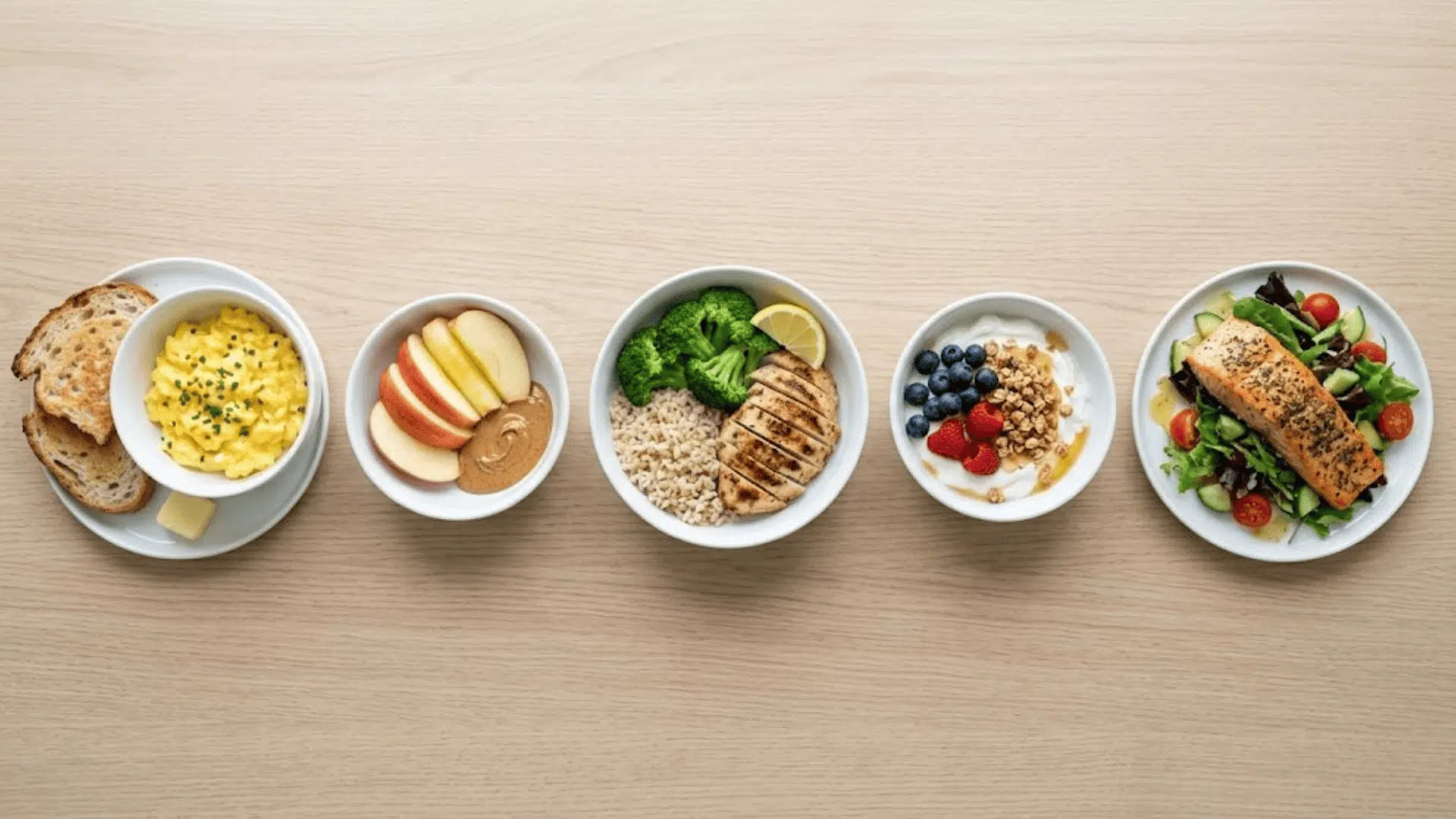
| 7:00 AM | Breakfast | 2 scrambled eggs, 1 slice whole wheat toast, black coffee | 250 cal |
| 10:00 AM | Morning Snack | 1 small apple, 1 tbsp almond butter | 120 cal |
| 2:30 PM | Lunch | Grilled chicken breast, 1 cup steamed broccoli, ½ cup brown rice | 320 cal |
| 3:30 PM | Afternoon Snack | ½ cup low-fat Greek yogurt, a handful of berries | 110 cal |
| 7:00 PM | Dinner | Baked salmon, 1 cup mixed greens, lemon dressing | 200 cal |
| Daily Total | ~1000 cal |
This is just one example. Meals can be swapped out as long as the daily calorie total stays at or near 1000. Keeping a source of protein at each meal helps manage hunger throughout the day.
Simple Tips to Stick to Your 1000 Calorie Meal Plan
Sticking to a low-calorie plan takes preparation and consistency. These practical habits make the day-to-day process easier to manage without feeling overwhelmed.
- Track every meal: Logging food in an app like MyFitnessPal keeps calorie counts accurate. Small portions add up quickly, and tracking removes the guesswork.
- Prep meals ahead of time: Spending a couple of hours on Sunday to prep proteins, portion snacks, and wash vegetables saves time and prevents poor choices during the week.
- Eat at regular times: Spacing meals every three to four hours keeps blood sugar stable and reduces the urge to overeat. Skipping meals often leads to stronger cravings later in the day.
- Drink water before meals: Drinking a full glass of water before sitting down to eat helps reduce the amount of food needed to feel satisfied.
- Keep low-calorie snacks within reach: Having options like cucumber slices, boiled eggs, or plain Greek yogurt readily available makes it easier to avoid reaching for high-calorie snacks.
- Avoid eating late at night: Late-night eating often leads to going over the daily calorie limit. Setting a kitchen cutoff time, such as 8 p.m., is a simple boundary that helps.
- Focus on progress, not perfection: One off day does not erase the work already done. Getting back on track the next morning is what matters most.
How Much Weight Can You Lose on 1000 Calories Meal Plan?
Most people can expect to lose between 1 and 2 pounds per week on a 1000-calorie meal plan. The first week often shows a bigger drop, but that is mostly water weight, not fat.
Results vary depending on starting weight, age, activity level, and metabolism.
Someone with more weight to lose may drop pounds faster early on. Someone closer to their goal weight will likely see slower progress.
A 1000-calorie diet creates a significant daily deficit for most adults. That deficit is what drives weight loss. However, cutting too many calories for too long can slow metabolism and lead to muscle loss.
This is why the plan works best as a short-term reset rather than a permanent approach.
Staying consistent, getting enough sleep, and drinking plenty of water all support steady results. Losing 1 to 2 pounds per week is healthy, sustainable progress worth sticking with.
Short-Term vs. Long-Term Use of This Diet
A 1000-calorie meal plan is designed for short-term use. Understanding the difference between short and long-term use helps set realistic expectations and keeps the approach safe.
| Short-Term Use (1–4 Weeks) | Long-Term Use (Beyond 4 Weeks) | |
|---|---|---|
| Goal | Quick weight loss reset | Not recommended without supervision |
| Energy Levels | May dip initially, then stabilize | Likely to drop significantly over time |
| Muscle Mass | Mostly preserved with adequate protein | At risk of gradual muscle loss |
| Metabolism | Minimal impact short-term | Can slow down noticeably |
| Nutrient Intake | Manageable with smart food choices | Hard to meet daily requirements |
| Weight Loss | 1–2 lbs per week on average | Results typically plateau |
| Doctor Guidance | Recommended before starting | Required for safe continuation |
| Best For | Jumpstarting a weight loss plan | Not advised without medical oversight |
Following a 1000-calorie plan for more than 4 weeks without medical guidance increases the risk of nutrient deficiencies and energy depletion. It works best as a structured short-term tool, not a lifestyle.
Bottom Line
I want to be honest with you, this kind of plan is not always easy, but it can work when you follow it the right way. I have seen that staying prepared and choosing the right foods makes a big difference.
You do not need to be perfect every single day. What matters more is showing up, sticking to your meals, and learning what works best for your body.
Pay attention to how you feel during this plan. If your energy drops too much or something feels off, it is okay to pause and adjust. Your health always comes first.
Think of this as a short step to help you build better habits, not a long-term rule to follow forever.
If you found this helpful, save this plan and share it with someone who might need it. And if you try it, I would love to hear how it goes for you!