
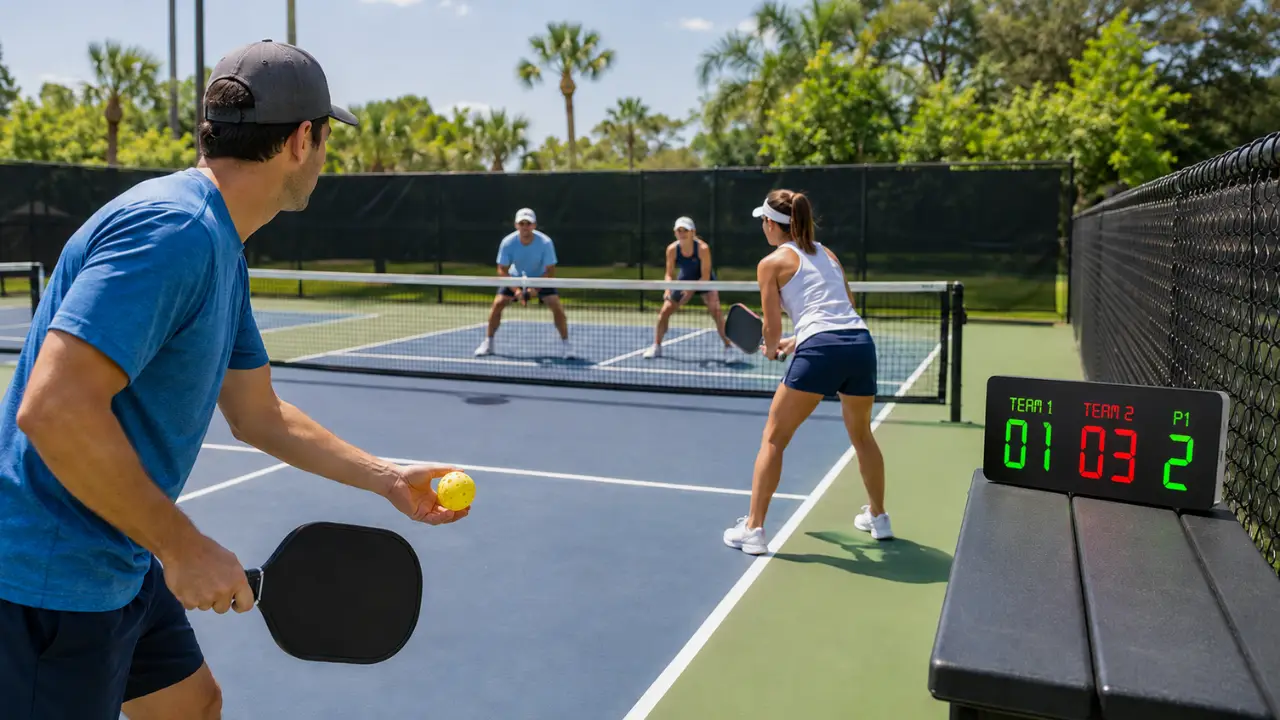
Pickleball has become one of the easiest paddle sports for new players to enjoy. It is quick to learn, social, active, and friendly for different age groups. You do not need years of training or expensive gear to get started, but understanding the basics before your first game makes a big difference.
This guide explains the essential gear, court layout, basic rules, scoring system, and common beginner mistakes so you can step onto the court with confidence.
What Is Pickleball?
Pickleball is a paddle sport that combines elements of tennis, badminton, and table tennis. It is played on a smaller court with a low net, solid paddles, and a perforated plastic ball.
The game can be played in singles or doubles, but doubles is more common in recreational play. Pickleball is easy to start because the court is compact, the ball moves more slowly than a tennis ball, and rallies often last longer than beginners expect.
That simple setup is also what makes the sport surprisingly strategic. Placement, patience, footwork, and control often matter more than power.
The Gear You Need to Get Started
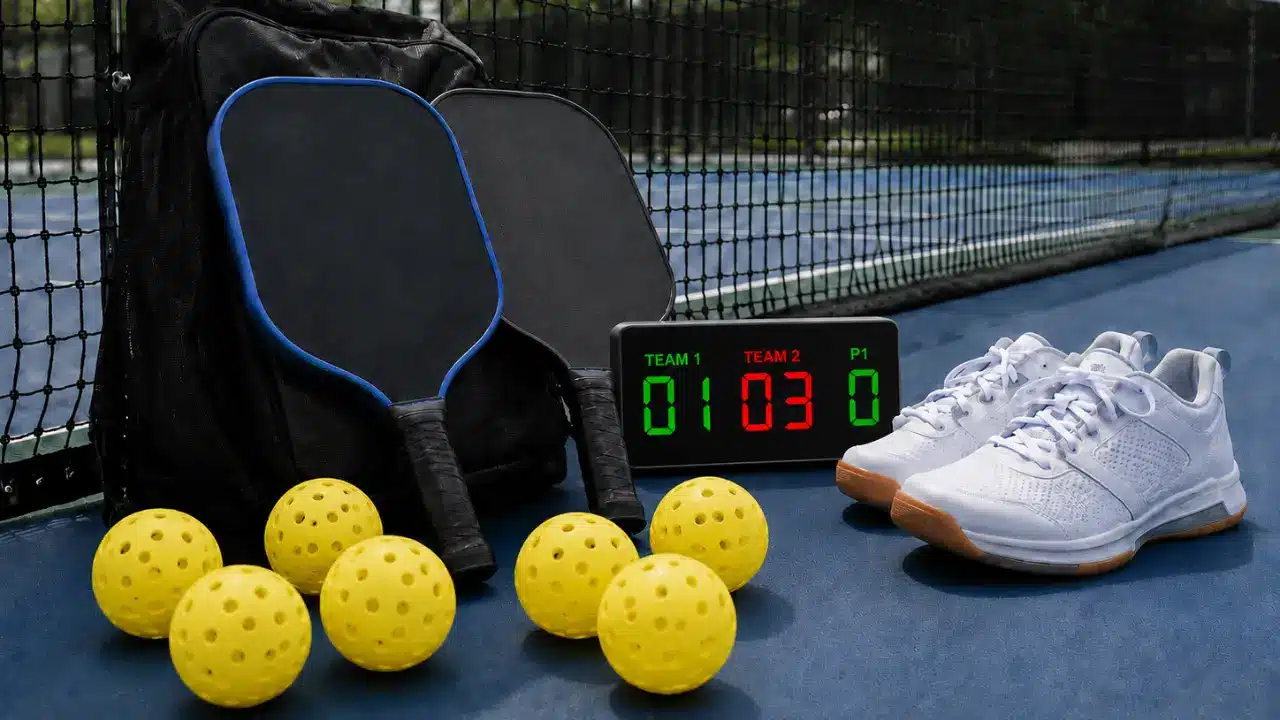
You do not need a long shopping list to begin playing pickleball. A paddle, the right ball, proper shoes, and a basic way to manage the score are enough for your first few games.
1. Pickleball Paddle
Pickleball paddles come in wood, composite, graphite, and carbon fiber options. Beginners usually do well with a midweight composite paddle because it offers a good balance of control, comfort, and power.
Wood paddles are cheaper, but they are usually heavier and less forgiving. High end paddles can improve spin, touch, and power, but new players do not need to start there.
A good beginner paddle should feel comfortable in your hand, not too heavy, and easy to control during short rallies.
2. Pickleballs
Pickleballs are not all the same. Indoor and outdoor balls are built differently.
Indoor balls are usually softer and have larger holes. They are easier to control and work well on smoother indoor surfaces.
Outdoor balls are harder, slightly heavier, and have smaller holes. They are designed to handle wind, rougher surfaces, and faster outdoor play.
Using the wrong ball affects bounce, control, and durability. Outdoor balls also crack faster than many beginners expect, especially on rough courts or in colder weather.
Players who want a better balance of performance and sustainability can also choose USA-approved pickleballs. These balls are built for consistent play while using recycled ocean bound plastic, making them a smarter option for players who care about reducing plastic waste without sacrificing quality.
3. Court Shoes
One of the biggest beginner mistakes is wearing running shoes on the pickleball court.
Running shoes are designed for forward movement. Pickleball requires quick stops, pivots, lunges, and side to side movement. That means you need shoes with lateral support.
Court shoes, tennis shoes, or quality cross trainers are better choices. They help reduce slipping, ankle rolls, and knee strain. If you plan to play regularly, proper shoes are not optional. They are one of the most important pieces of equipment you can buy.
4. A Way to Track the Score
Pickleball scoring can feel confusing at first, especially in doubles. Players must call the score before every serve, and the three number format can be easy to forget during casual games.
At the beginner level, you can start by calling the score out loud. But once you begin playing regularly, a portable digital scoreboard can make the game easier for everyone. It keeps the score visible, reduces arguments, and helps players stay focused on the rally instead of trying to remember the last point.
This is especially useful for club play, beginner round robins, family games, and recreational tournaments.
Understanding the Pickleball Court
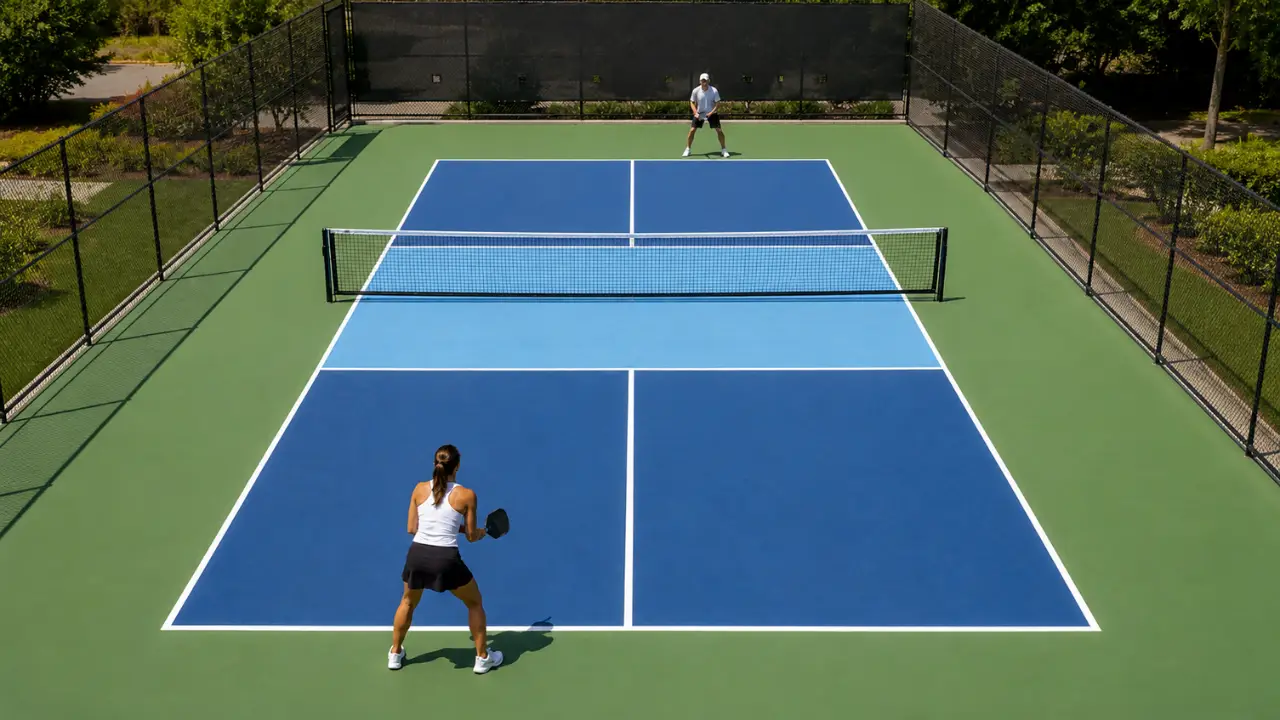
A standard pickleball court is 20 feet wide and 44 feet long. The size is the same for singles and doubles.
Here are the key areas every beginner should know.
Baseline
The baseline is the back boundary line. You must stand behind it when serving.
Kitchen
The kitchen, officially called the non volley zone, is the 7 foot area on both sides of the net. You cannot volley the ball while standing inside this zone.
A volley means hitting the ball out of the air before it bounces. If you step into the kitchen and volley, it is a fault.
The kitchen is one of the most important parts of pickleball strategy. It prevents players from standing right at the net and smashing every ball.
Service Boxes
The service boxes are the areas where the serve must land. Serves are hit diagonally across the court into the opposite service box.
Basic Pickleball Rules for Beginners
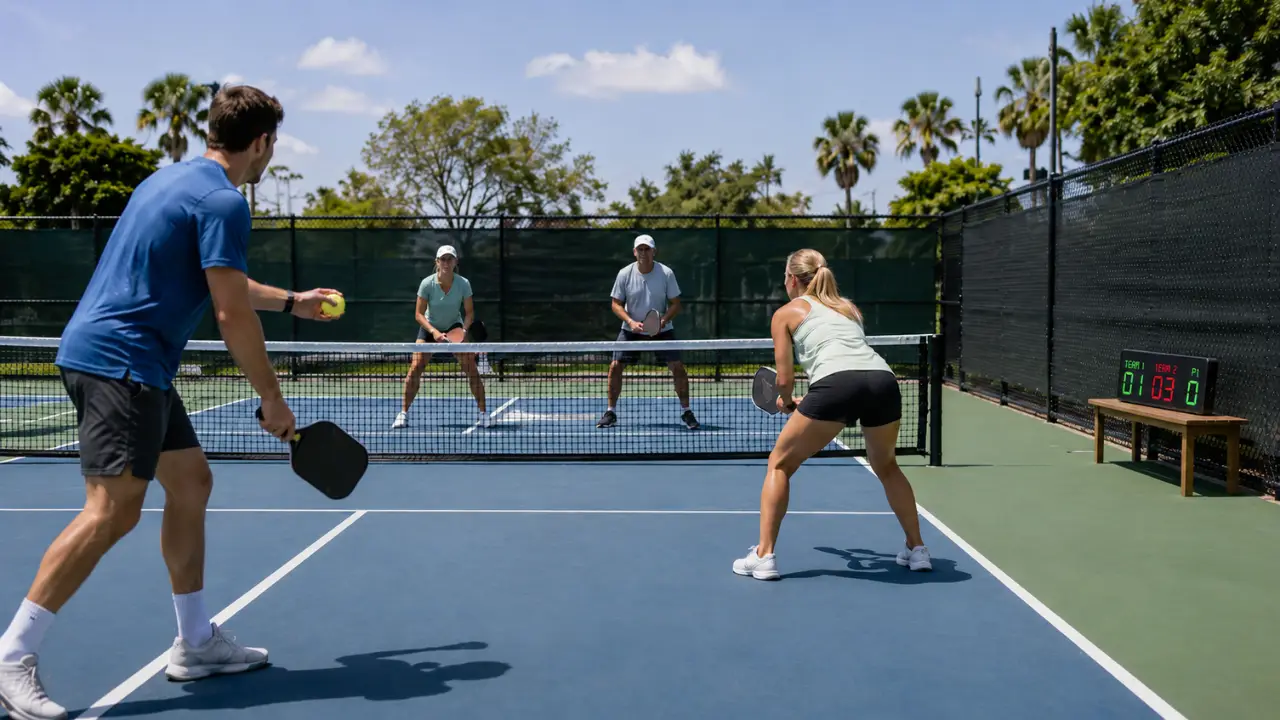
Pickleball rules are simple once you understand the rhythm of the game.
Serving Rules
The serve starts every rally. Here are the basic serving rules:
- The serve must be hit underhand
- Contact must happen below the waist
- The paddle must move in an upward motion
- The serve must travel diagonally into the opposite service box
- Both feet must stay behind the baseline at contact
- Only one serve attempt is allowed
Unlike tennis, there is no second serve in standard pickleball. If your serve lands out, hits the net, and does not land in the correct service box, or breaks a serving rule, it is a fault.
The Double Bounce Rule
The double bounce rule is one of the first rules every beginner must learn.
After the serve, the receiving team must let the ball bounce once before returning it. Then the serving team must also let that return bounce once. After those two bounces, players can either volley the ball or let it bounce.
This rule keeps the serving team from rushing the net immediately. It creates longer rallies and gives both sides a fair chance to set up the point.
Common Faults
A fault ends the rally. Common beginner faults include:
- Hitting the ball out of bounds
- Failing to clear the net
- Letting the ball bounce twice on your side
- Volleying from inside the kitchen
- Stepping on the kitchen line while volleying
- Serving into the wrong service box
- Breaking the double bounce rule
Most beginner mistakes come from footwork and positioning, not just paddle technique.
How Pickleball Scoring Works
Pickleball scoring can seem strange at first, but it becomes simple with practice.
Most recreational games are played to 11 points, and you must win by 2. Tournament games may be played to 15 or 21.
The most important scoring rule is this:
Only the serving team can score points.
If the receiving team wins a rally, they do not score. They simply gain the serve.
Doubles Scoring Explained
Doubles scoring uses three numbers.
The score call follows this order:
- Serving team score
- Receiving team score
- Server number
A score call of 4 2 1 means the serving team has 4 points, the receiving team has 2 points, and the first server is serving.
Each team usually gets two serves before the serve passes to the other team. One player serves first. If that player faults, the second player serves. If the second player faults, it is called a side out, and the other team gets the serve.
There is one exception. At the start of the game, the first serving team only gets one serve. That is why the first score is called 0 0 2.
This rule helps balance the advantage of serving first.
Singles Scoring Explained
Singles scoring is simpler because there is only one player on each side.
In singles, players usually call two numbers:
- Server score
- Receiver score
For example, 5 3 means the server has 5 points, and the opponent has 3.
The server’s position depends on the score. When the server’s score is even, they serve from the right side. When the server’s score is odd, they serve from the left side.
Beginner Mistakes to Avoid
Most new players improve quickly once they stop making a few common mistakes.
1. Staying Too Far Back
After the double bounce rule is satisfied, move toward the kitchen line. Beginners often stay near the baseline, which gives opponents more space and more attacking angles.
The kitchen line is where most points are controlled.
2. Hitting Every Shot Hard
Power feels exciting, but pickleball rewards control. New players often try to smash every ball and end up hitting out.
Soft shots, resets, and dinks are often more effective than hard drives.
3. Forgetting the Score
Scoring confusion is normal in doubles. Always call the score before serving. It keeps both teams aligned and prevents arguments.
If your group plays often, a visible scoreboard can make casual games much smoother.
4. Ignoring the Kitchen Line
The kitchen line causes many beginner faults. If you volley while touching the line or standing inside the kitchen, you lose the rally.
Train yourself to stop before the line and stay balanced.
5. Using the Wrong Ball
Indoor balls and outdoor balls play differently. If you use an indoor ball outside, wind can affect it badly. If you use an outdoor ball indoors, it may feel too hard or too fast.
Match the ball to your court environment.
6. Wearing the Wrong Shoes
Running shoes may feel comfortable, but they do not provide the lateral support needed for pickleball. Proper court shoes protect your feet, ankles, and knees.
Simple Tips for Your First Game
Start with control instead of power. Your goal is not to hit winners on every shot. Your goal is to keep the ball in play.
Focus on these basics:
- Serve deep
- Return deep
- Move toward the kitchen line
- Keep your paddle up
- Watch your foot position
- Call the score clearly
- Aim for consistency before speed
Once you become comfortable, you can start learning dinks, drops, resets, drives, lobs, and advanced positioning.
Ready for Your First Pickleball Game?
Pickleball is one of the easiest paddle sports to start, but it becomes more rewarding the more you understand the basics. With the right paddle, the correct ball, proper court shoes, and a clear understanding of scoring, your first game will feel much less confusing.
You do not need perfect technique on day one. You just need to know where to stand, how to serve, how the kitchen works, and how to keep the score.
Grab a paddle, find a court, and start playing. The best way to learn pickleball is to get on the court and enjoy the game.
Enjoying pickleball but dealing with sore feet after games? Read our guide on Why Your Feet Hurt After Pickleball to avoid the most common shoe mistakes. If you want to understand broader injury risks in sports, our guide to common sports injuries is also a helpful next read.