





For years, soccer in the US meant sharing space with football stadiums with awkward sightlines, baseball parks with odd angles, and tracks that pushed fans too far from the pitch. That has changed fast.
MLS expansion brought a wave of purpose-built venues designed around one sport and one sport only.
Unlike football, where every field is identical, how soccer fields are designed and measured varies enough that two stadiums in the same city can have noticeably different playing surfaces.
This blog will walk you through the largest soccer-only stadiums in the US, what makes them unique, and how they compare to global venues.
Why Soccer-Only Stadiums Matter
A stadium built purely for soccer looks and feels completely different from a shared venue.
The stands wrap tighter around the pitch, sightlines are built for a horizontal game rather than a vertical one, and the atmosphere hits differently when there is no running track or football end zone pushing fans back.
For players, the field dimensions can also vary from venue to venue, which affects how home teams set up tactically. Purpose-built stadiums have become a sign of how seriously a city takes its soccer club.
The Largest Soccer-Only Stadiums in the US Ranked
Here’s a closer look at the biggest soccer-only stadiums in the US, ranked by capacity, along with what makes each venue unique for fans and players alike.
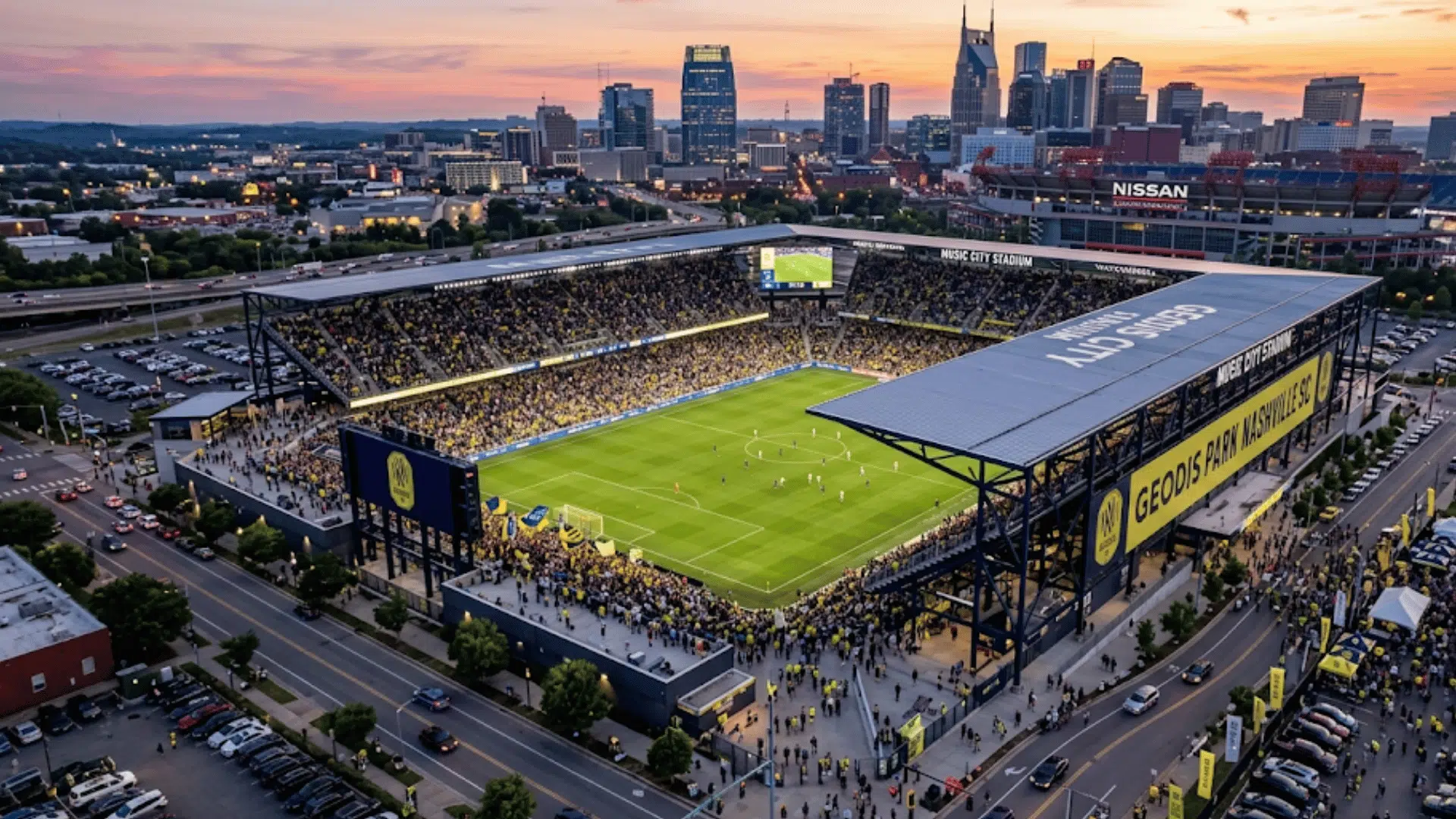
1. Geodis Park: Nashville SC
Geodis Park opened in 2022 with a capacity of 30,000, making it the largest soccer-specific stadium in the US and Canada.
The venue sits in Nashville’s Wedgewood-Houston neighborhood and was built entirely with soccer in mind, from the steep lower bowl to the field dimensions that run at 115 x 75 yards on a natural grass surface.
2. Q2 Stadium: Austin FC
Q2 Stadium, which opened in 2021, holds 20,738 fans and is Austin FC’s home ground. The open-air design keeps the noise inside the bowl, and the natural grass pitch runs at a standard professional size.
It became one of the fastest MLS expansions to sell out season tickets in league history.
3. Audi Field: DC United
Audi Field opened in 2018 with a capacity of 20,000 and sits close to the National Mall in Washington DC. The compact design keeps fans close to the action, and the natural grass field measures 115 x 75 yards.
It replaced RFK Stadium, which DC United had shared with the NFL’s Washington Commanders.
4. BMO Stadium: LA FC
BMO Stadium holds around 22,000 fans in the heart of Los Angeles. The steep stands and natural grass surface make it one of the loudest venues in MLS despite its size.
LAFC has used the intimate atmosphere as a genuine home advantage since the stadium opened in 2018.
5. Allianz Field: Minnesota United
Allianz Field opened in 2019 with a capacity of 19,400. Its translucent PTFE exterior glows at night and has become one of the most visually distinct soccer stadiums in the country.
The pitch is heated, which matters in Minnesota winters, and runs on a natural grass surface.
| Stadium | Team | Capacity | Opened | Surface |
|---|---|---|---|---|
| Geodis Park | Nashville SC | 30,000 | 2022 | Natural Grass |
| BMO Stadium | LAFC | 22,000 | 2018 | Natural Grass |
| Q2 Stadium | Austin FC | 20,738 | 2021 | Natural Grass |
| Audi Field | DC United | 20,000 | 2018 | Natural Grass |
| Allianz Field | Minnesota United | 19,400 | 2019 | Natural Grass |
What Makes Geodis Park Stand Out?
Geodis Park is not just the largest soccer-specific stadium in the US by capacity; it was designed from the ground up to feel like a proper soccer venue.
The lower bowl is steep enough that even the back rows sit close to the action. The field dimensions meet FIFA Pro standards at 115 x 75 yards, and the natural grass surface is maintained accordingly.
Nashville SC also built a safe-standing section, which is still rare in American soccer but common in European leagues. The result is a venue that feels closer to a Premier League ground than a typical MLS stadium.
How US Soccer Stadiums Compare to Europe
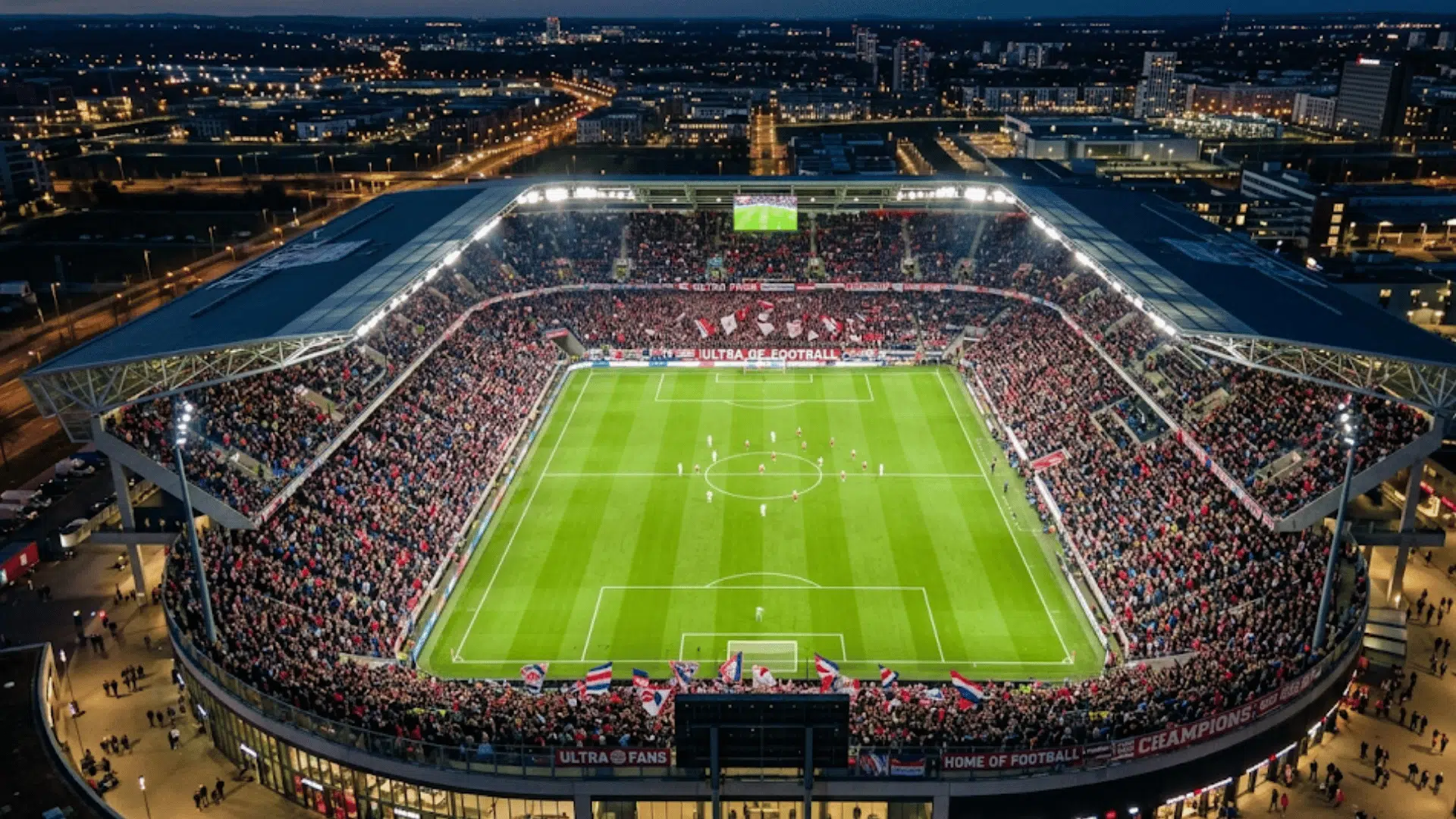
Even Geodis Park’s 30,000 capacity feels small next to the stadiums European clubs call home. Camp Nou in Barcelona holds over 99,000.
Signal Iduna Park in Dortmund packs in 81,000 with a standing section that creates some of the loudest atmospheres in world football. Old Trafford seats 74,000.
The gap is significant, but it reflects where US soccer is in its development rather than a lack of ambition. MLS venues are growing with every expansion cycle, and the 2026 World Cup is already pushing investment into larger, more modern facilities.
Even the biggest MLS venues feel modest when stacked against the stadiums that broke the 200,000-seat record, most of which were built decades ago for entirely different reasons.
What’s Next for Soccer Stadium Growth in the US?
Several new MLS clubs are already planning or building purpose-built venues with capacities pushing past 25,000.
The 2026 FIFA World Cup, co-hosted by the US, Canada, and Mexico, has accelerated infrastructure investment across the country.
Cities that land World Cup matches are upgrading existing stadiums and building new ones with long-term soccer use in mind.
The trend is clear: soccer-only venues in the US are getting bigger, louder, and more ambitious with every new build.
Wrapping Up
Geodis Park currently holds the record as the largest soccer-only stadium in the US, but that title may not last long.
MLS is expanding fast, new venues are being planned across the country, and the sport’s growing fanbase is pushing clubs to think bigger.
The era of sharing space with football and baseball is fading, and purpose-built soccer stadiums are becoming the new standard.
Have you been to any of these stadiums? Let us know your experience in the comments and share this with a soccer fan who thinks the US does not take the sport seriously.