
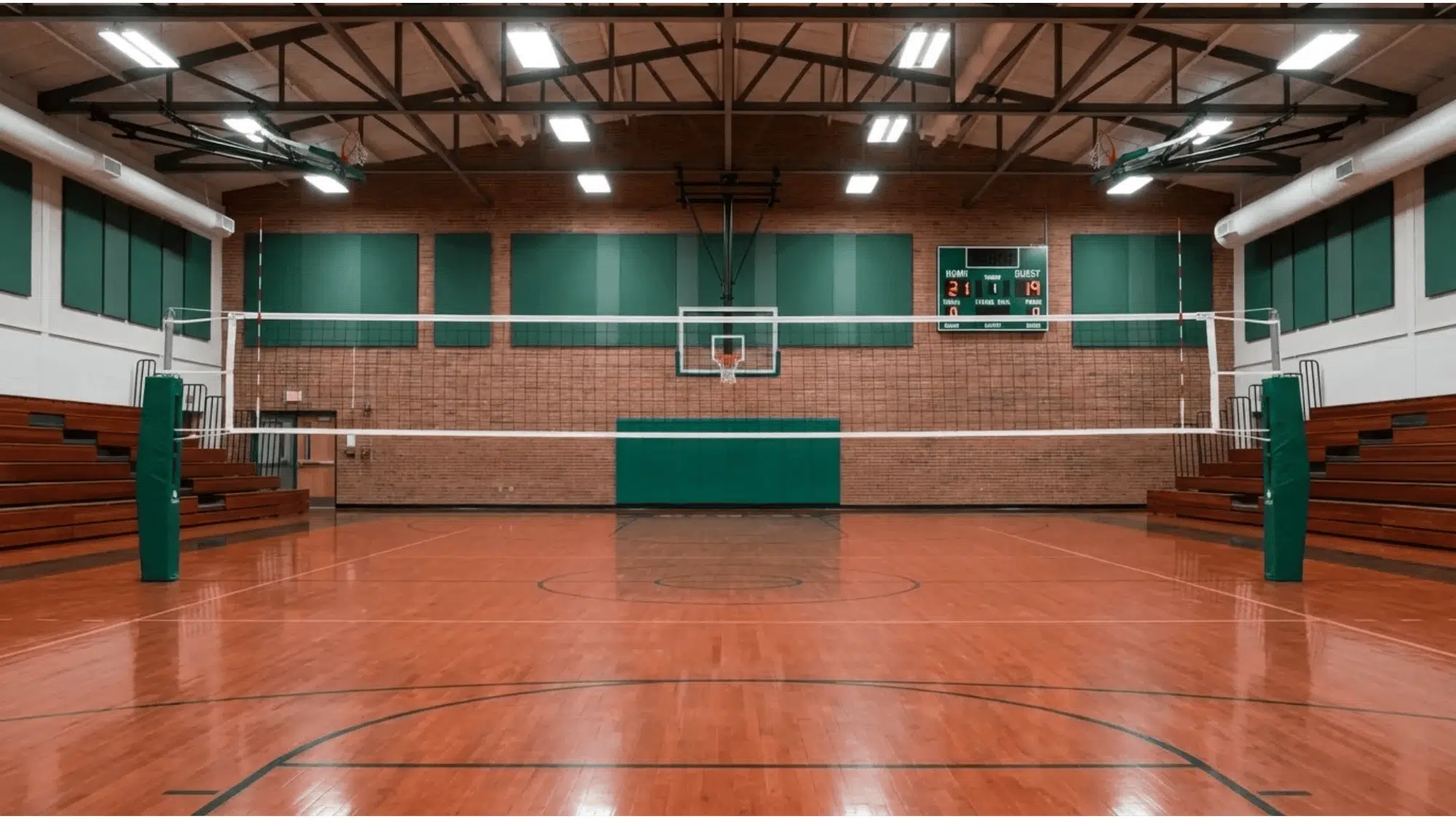




If you are setting up a court or understanding the lines during a match, clear measurements matter. Accurate lines ensure fair play and consistency.
You likely want fast, accurate numbers without having to read long rulebooks. In this guide to volleyball court dimensions with simple diagrams.
You’ll find the official court dimensions, net height, attack lines, service zones, boundary rules, and layout details.
You will also learn how indoor and beach courts differ, and why extra space around the court matters for safety, player movement, and overall comfort.
By the end, you will have the exact measurements you need for school, coaching, or personal reference, ensuring accurate setup and proper gameplay.
Understanding Volleyball Court Dimensions
Before you play or set up a volleyball court, it’s important to know its size and layout.
Court dimensions show the length, width, line placement, and section divisions.
These details matter because official games, school matches, and practice courts all follow the same measurements, ensuring consistency and fairness.
When the court is marked the right way, players know where to stand, serve, and score. Many people find court layouts confusing when they only read numbers.
That is why visual help is important.
In this guide, I focus on volleyball court dimensions using clear measurements and simple diagrams.
This makes it easier to picture the court, understand the layout, and learn what an official play space should look like, ensuring proper setup and gameplay.
Standard Volleyball Court Dimensions
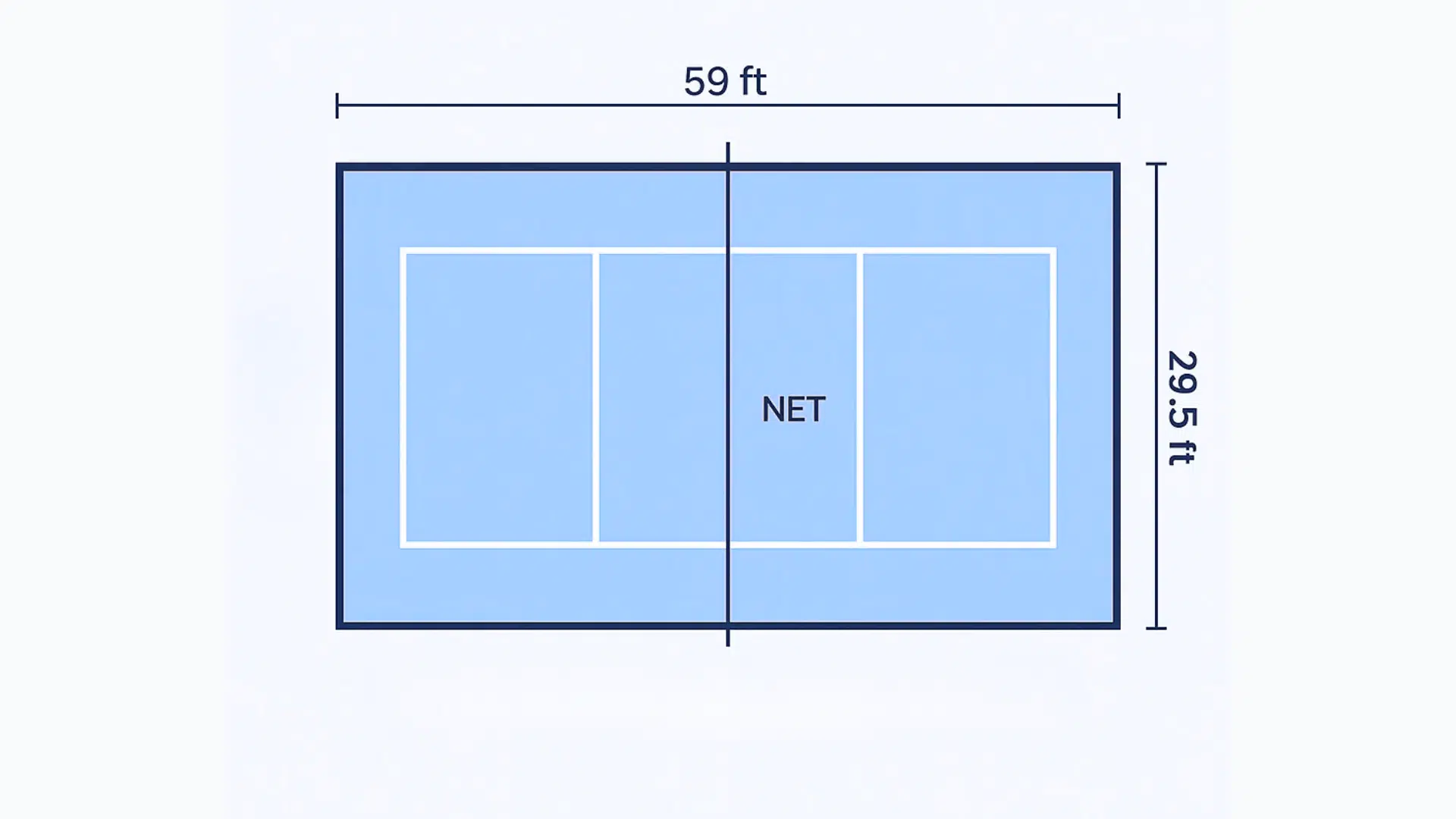
Understanding the dimensions of a volleyball court helps players and students learn the game faster. It also helps builders and schools set up a court the right way.
A standard volleyball court has a fixed size used in schools and official matches.
The court is 18 meters long and 9 meters wide, providing equal space for both teams.
This size stays the same for indoor volleyball at most levels. The rectangular shape gives both teams equal space, making the game fair and competitive.
Knowing the court’s length and width helps players understand where to move and helps builders set up a proper court for practice or games.
The volleyball court is split into two equal halves by a center line under the net. Each side is 9 meters long. This division ensures fair play and equal space for both sides.
On both sides, an attack line sits 3 meters away from the net. This line separates the front from the back. These sections help players know where they can jump, hit, or serve.
Here is a quick reference table:
| What to Measure | Size in Meters | Size in Feet |
|---|---|---|
| Full Court Length | 18 meters | 59 feet |
| Full Court Width | 9 meters | 29.5 feet |
| One Team Side | 9 meters | 29.5 feet |
| Attack Line Distance | 3 meters | 9 feet 10 in |
| Net Height (Boys/Men) | 2.43 meters | 7 feet 11 in |
| Net Height (Girls/Women) | 2.24 meters | 7 feet 4 in |
| Space Around Court | 3 meters | 9 feet 10 in |
Volleyball Court Layout
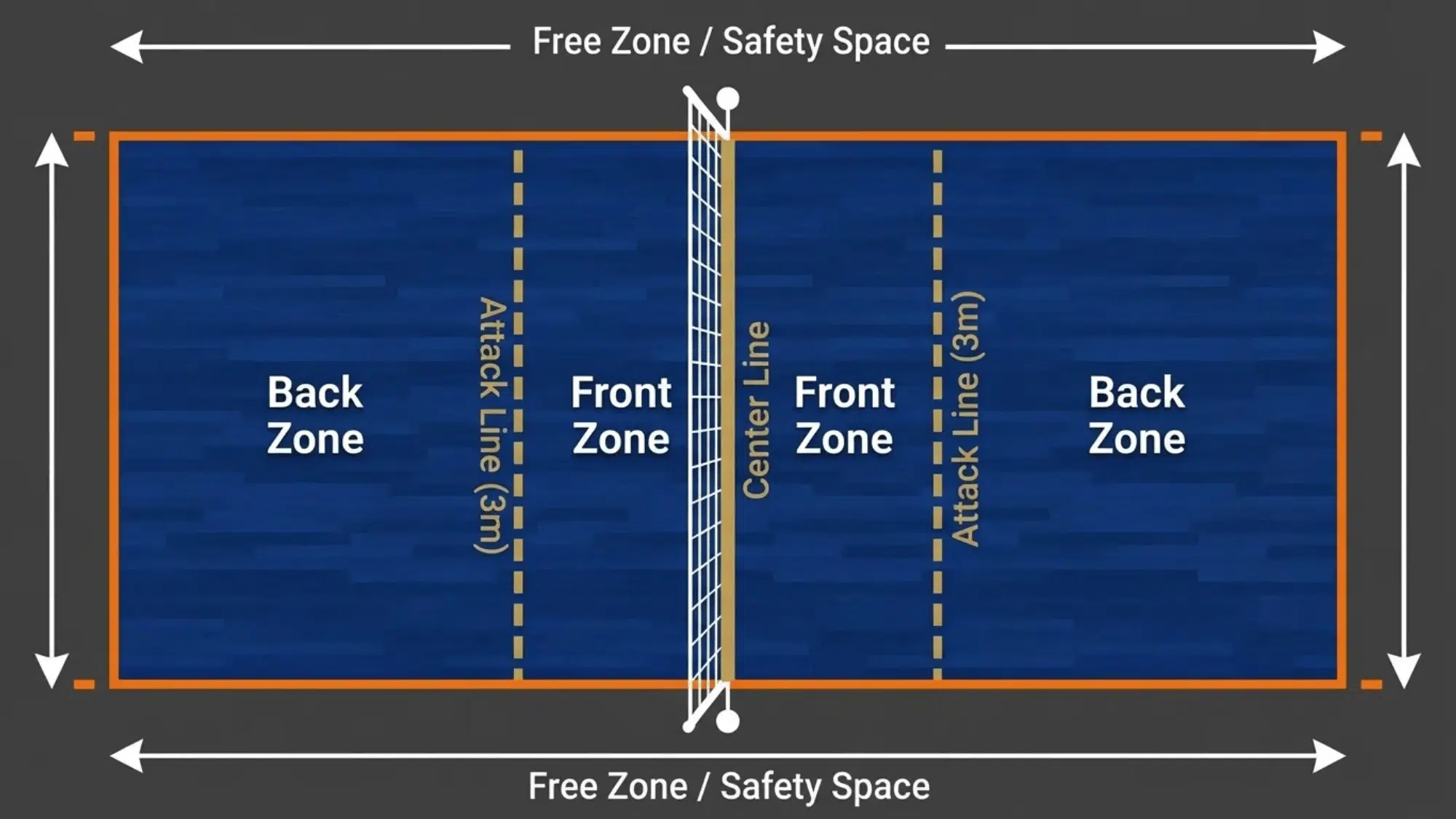
A volleyball court diagram makes the layout easy to understand at a glance. It clearly shows how lines, zones, and spaces are placed for fair and safe play.
1. Center Line and Net Position
The center line runs straight across the middle of the volleyball court. It sits just below the net and divides the court into two equal halves.
The net is placed exactly on this line, so both teams get the same space to play.
This setup keeps the game fair and balanced.
When you look at a diagram, the center line and net help you quickly see how the court is divided between the two teams.
2. Attack Lines and Their Distance
Attack lines are important markings on the volleyball court. Each attack line is placed 3 meters away from the net on both sides.
These lines help players know where they can jump and hit the ball.
Front-row players can attack near the net, while back-row players must stay behind the attack line.
Diagrams make it easier to see how far these lines are from the net and why they matter during play. They also help players understand positioning and strategy on the court.
3. Front Zone vs Back Zone
The court is split into a front zone and a back zone on each side.
The front zone is the area between the net and the attack line, where most offensive plays happen. Players here often jump and block the ball.
The back zone is the space behind the attack line, where players focus on defense and serving.
A clear diagram of these zones helps players understand where to stand and move during the game, improving their positioning and overall performance.
4. Free Zone and Safety Space Around the Court
The free zone is the open space around the volleyball court.
It gives players room to move, dive, and safely chase the ball, preventing injuries during intense plays.
This space is usually at least 3 meters wide on all sides. The free zone helps prevent injuries and keeps the game flowing without interruptions.
When shown in a diagram, this safety space helps players and builders understand how much extra room is needed beyond the court lines.
Net Height and Net Placement
The net plays a big role in how volleyball is played and judged. Its height, position, and markings help keep the game fair and easy to understand.
Net Height for Men, Women, and Kids
| Player Group | Net Height (Meters) | Net Height (Feet) |
|---|---|---|
| Men | 2.43 m | 7 ft 11 in |
| Women | 2.24 m | 7 ft 4 in |
| Kids | 2.00–2.15 m | 6 ft 6 in–7 ft |
Where the Net Sits on The Court
The volleyball net sits at the center of the court, dividing it into two equal halves, giving both teams the same playing space for fair competition.
Placing the net in the middle makes it easier for players to judge serves, passes, and hits.
From my experience, correct net placement is crucial for fair play.
When the net is set at the right height and centered, the game feels balanced and easier to follow in both practice and official matches.
Antennas and Sideline Alignment
Antennas are thin rods attached to each side of the net. They line up with the sidelines of the court and extend upward above the net.
These antennas show where the ball must cross to stay in play.
If the ball goes outside the antennas, it is called out, resulting in a point loss.
Clear antenna placement helps referees make quick calls and helps players aim their shots correctly during the game, improving overall gameplay.
Indoor vs Outdoor Volleyball Court
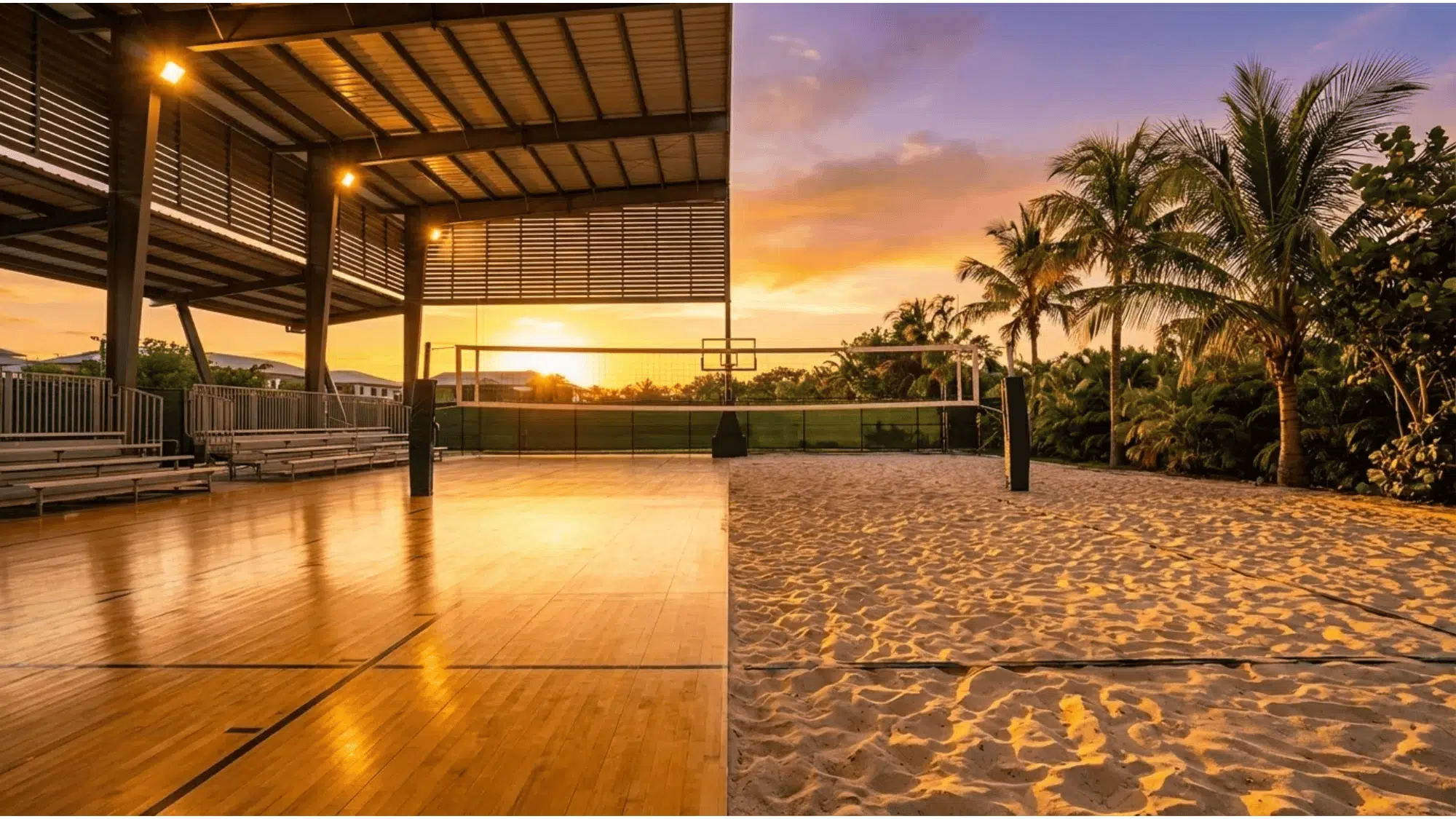
Indoor and outdoor volleyball courts look similar but follow different size rules. Knowing the difference helps set up the right court for each game.
| Aspect | Indoor Volleyball Court | Outdoor / Beach Volleyball Court |
|---|---|---|
| Size | 18 m long × 9 m wide | 16 m long × 8 m wide |
| Surface | Hard, flat flooring | Sand or soft ground |
| Space Around Court | Includes safety zone | Often more open space |
| Movement Style | Faster, stable footing | Slower, requires balance |
Markings and Lines on a Volleyball Court
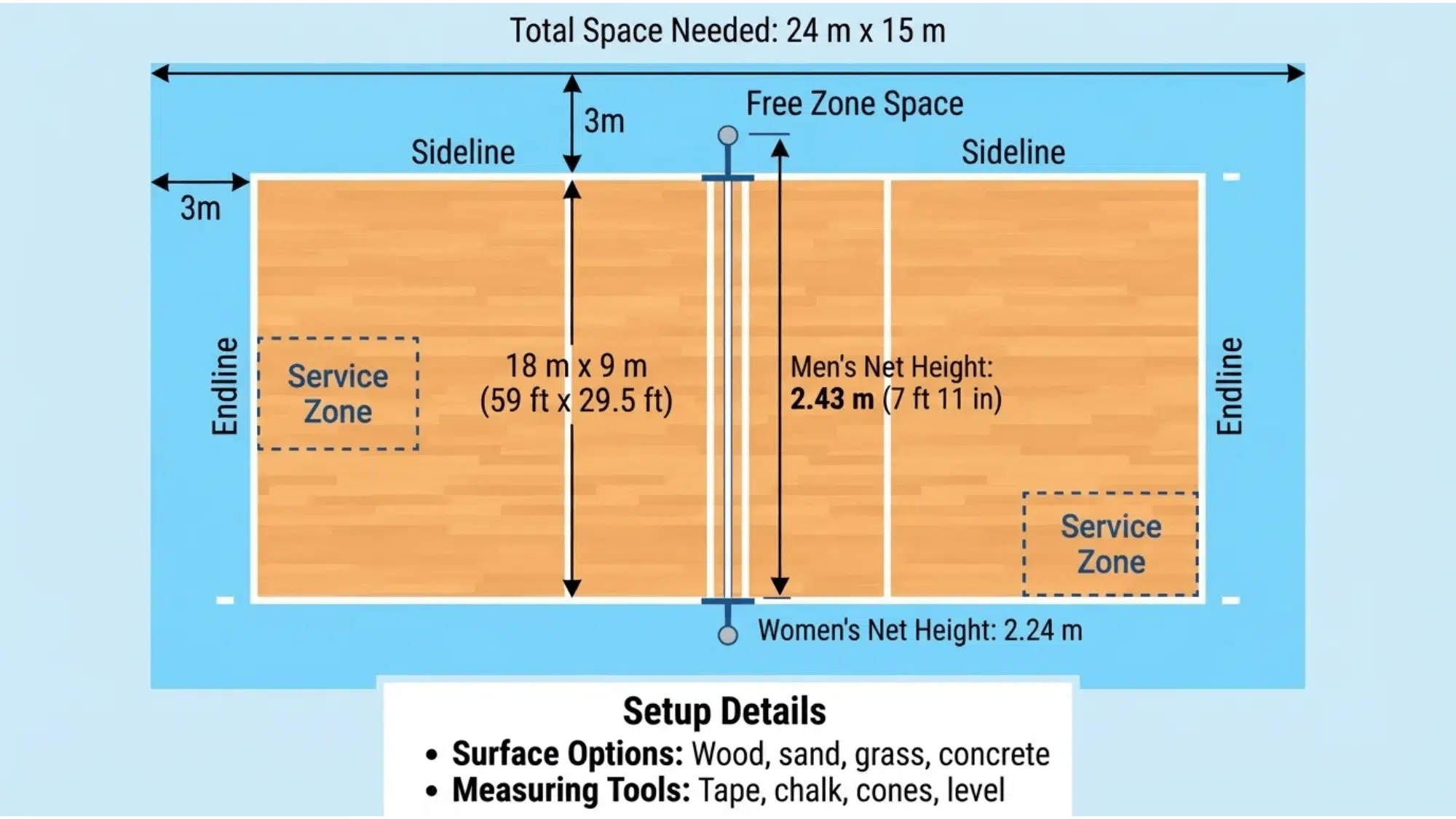
Court lines and markings help players understand where the game is played. They make it easier to follow rules, judge shots, and play with confidence.
- Boundary Lines: Boundary lines mark the exact playing area of a volleyball court. If the ball lands inside these lines, it’s in play; if outside, it’s out.
- Service Area: The service area is behind the end line where players serve. Players must stay behind the end line but can move side to side freely while serving.
- End Lines and Sidelines: End lines run along the short sides, while sidelines run along the long sides of the court. They define the court limits during rallies and serves.
- Line Width Standards: Volleyball court lines are typically 5 centimeters wide. The ball touching any part of the line is counted as in, ensuring consistency and clear calls.
Volleyball Court Dimensions for Construction or Setup
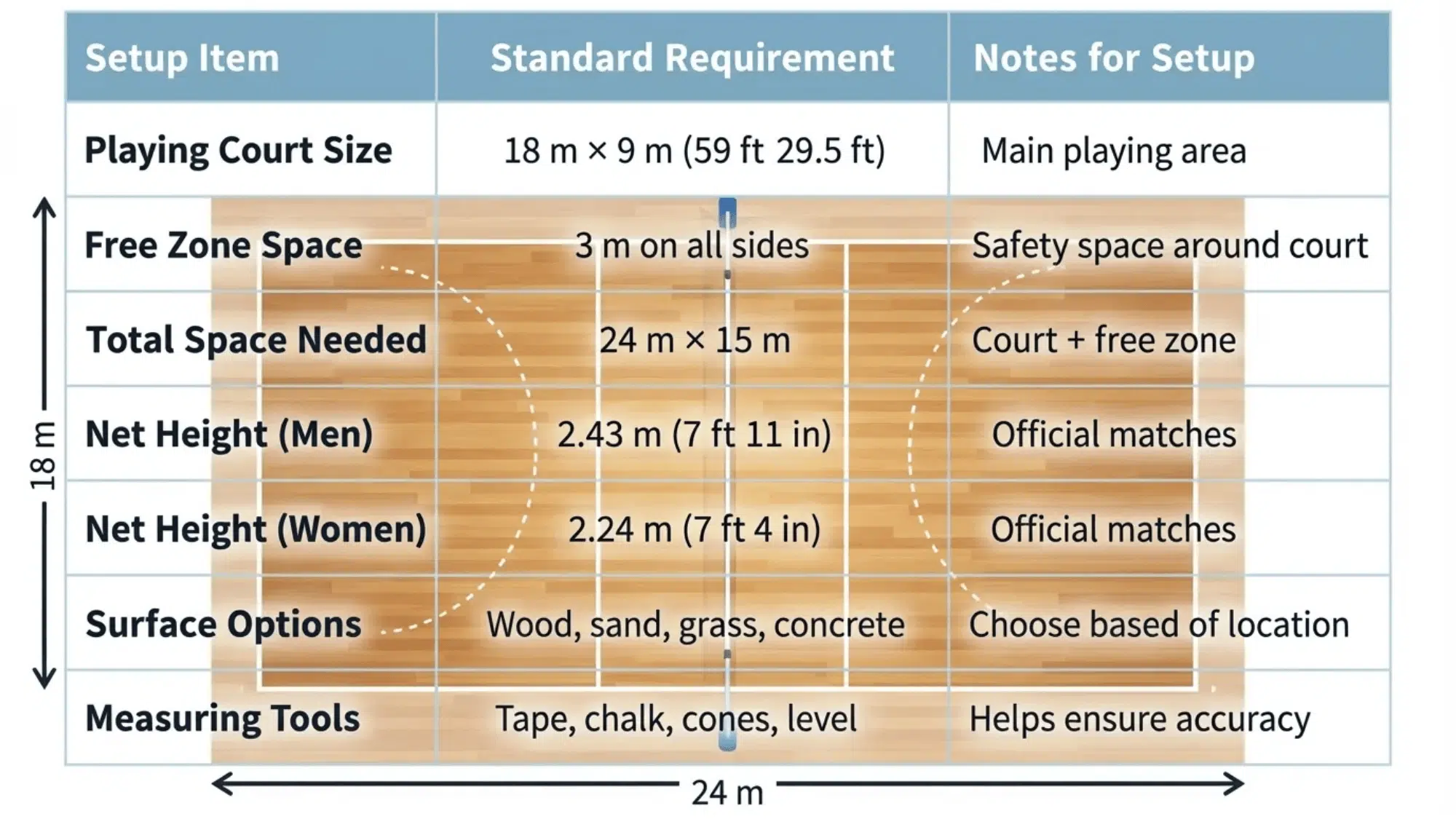
Setting up a volleyball court takes planning, space, and the right tools. Good measurements and surface choices help create a safe and playable court.
1. Minimum space needed
When building or marking a volleyball court, you need more space than just the playing area. The court itself is 18 meters long and 9 meters wide, but you also need a free zone around it.
This safety space is usually at least 3 meters on all sides.
Extra space helps players move safely, improves comfort, and reduces the risk of injury.
Planning enough room from the start makes setup easier and keeps the court usable. It allows for safe movement and ensures the game runs smoothly.
2. Surface types
Volleyball courts can be built on different surfaces based on where they are used. Indoor courts often use wood or smooth flooring to improve grip and ensure safe movement.
Outdoor courts may be made of sand, grass, concrete, or asphalt. Each surface affects how players move, bounce the ball, and how the court is marked.
Choosing the right surface helps the court last longer and makes the game more comfortable to play.
It also reduces the risk of injury and enhances player performance.
3. Tips for accurate measurement
Accurate measuring is important when setting up a volleyball court. Always measure from the inside edge of each line to ensure precise placement and consistency.
Double-check all measurements before drawing lines or placing the net. Use meters first, then convert to feet if needed.
This ensures accuracy and prevents costly mistakes.
Mark points with chalk or tape before final marking. Taking time to measure carefully helps avoid mistakes and keeps the court within official rules.
4. Tools commonly used
Simple tools make court setup easier and more accurate. A long measuring tape is the most important tool.
It helps ensure precise distances and proper alignment.
Chalk or marking paint helps draw clear lines. Stakes or cones can mark corners before final setup. This ensures accurate measurements and a professional finish.
A level helps set the net height correctly.
Using the right tools saves time and helps you create a clean, correct volleyball court, ensuring an enjoyable experience.
At the End
After going through all these details, I can say that knowing volleyball court dimensions really makes a difference.
When I understand the lines, zones, and net setup, the game feels much clearer and easier to follow. It also helps me set up a court the right way without confusion.
Whether I’m playing, coaching, or just practicing, these measurements give me confidence that everything is correct and fair. Even small details, like line placement or extra space, matter more than we think.
If you’re planning to mark a court or improve your game, use this guide as your quick reference. Save it, share it, and try setting up your own court today!