
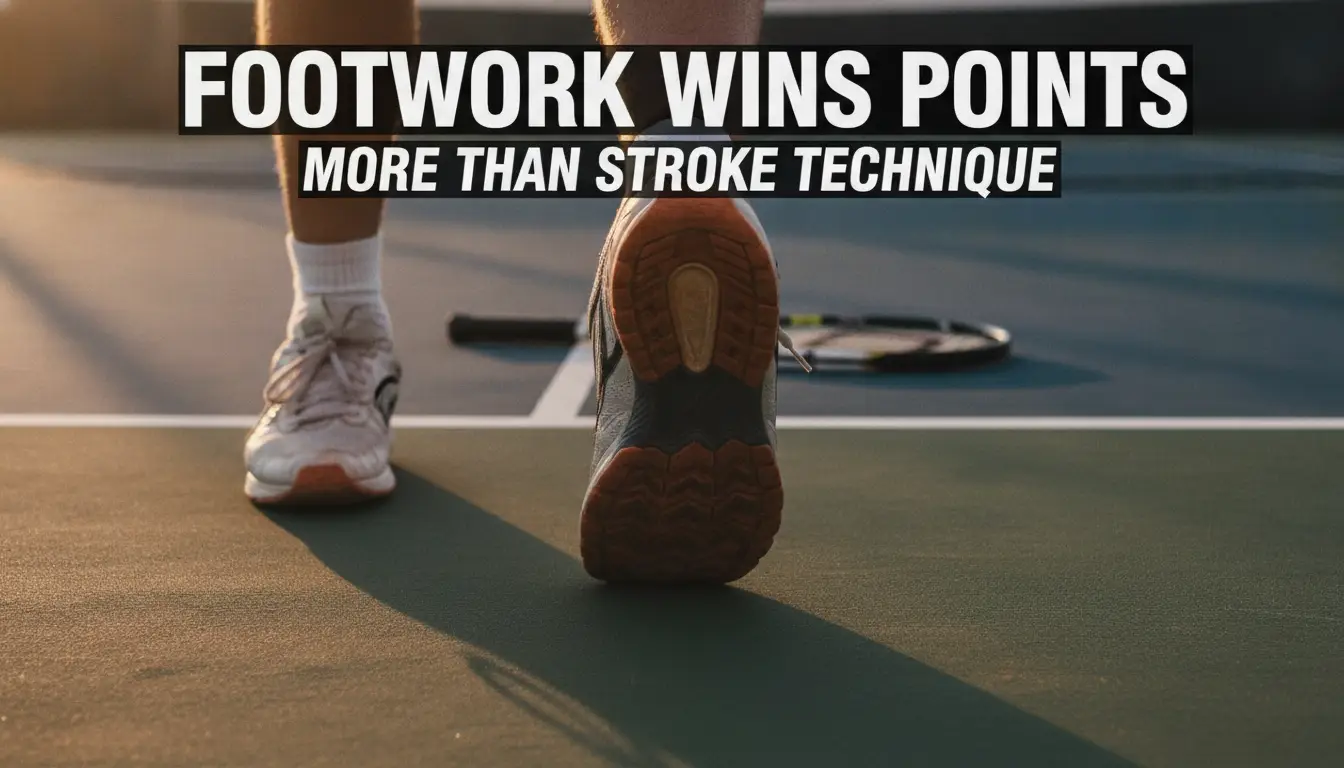
If you ask recreational tennis players what they need to improve, most will mention their serve, forehand, or backhand.
Yet coaches often notice a different problem.
Players are late to the ball.
The issue isn’t technique. It’s movement.
The truth is that tennis is won and lost with footwork long before the racquet makes contact. Even the cleanest stroke mechanics become ineffective when players arrive late, off balance, or out of position.
Watch any professional match and you’ll notice something interesting. The best players seem to have more time than everyone else. They aren’t necessarily faster runners. They’re simply moving earlier, recovering more efficiently, and positioning themselves better before each shot.
That’s why footwork remains one of the most important—and often overlooked—skills in tennis.
Why Footwork Matters So Much
Every shot in tennis begins with positioning.
Good footwork allows players to:
- Reach balls earlier
- Maintain balance through contact
- Recover quickly after each shot
- Reduce physical fatigue during long rallies
- Improve consistency under pressure
Research and coaching programs consistently emphasize movement quality as a foundation for performance because efficient movement helps players stay balanced and prepared for the next shot.
When players struggle with footwork, the symptoms show up everywhere. Groundstrokes become rushed. Volleys feel uncomfortable. Timing disappears.
The solution isn’t always hitting more balls. Often, it’s improving the way the body moves around the court.
The Foundation: The Split Step
One of the simplest yet most effective footwork habits is the split step.
The split step is a small hop performed just before an opponent strikes the ball. It prepares the body to react in any direction.
Without it, players are often flat-footed and slow to respond.
With proper timing, the body is already loaded and ready to explode toward the next shot.
Many amateur players know what a split step is, but few practice it consistently enough for it to become automatic.
Training for Movement, Not Just Strokes
A common mistake among tennis players is spending every practice session focused solely on stroke production.
While technical work is important, movement training develops skills that transfer to every aspect of the game.
Footwork-specific sessions can improve:
- Lateral speed
- Acceleration
- Deceleration
- Change of direction
- Court coverage
- Recovery positioning
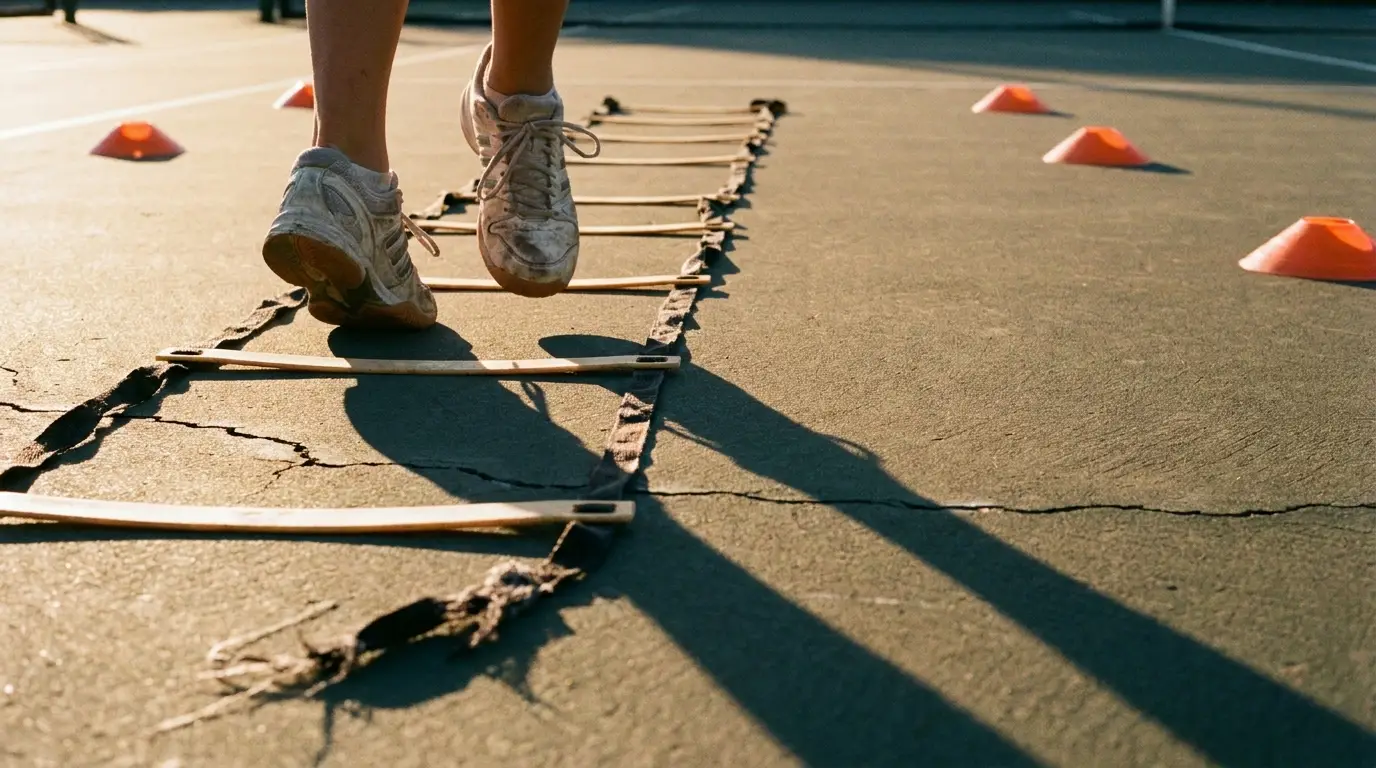
Simple cone drills, ladder exercises, and shadow movement patterns can all make a noticeable difference over time.
The key is consistency.
Ten minutes of focused movement work performed regularly often delivers better results than occasional high-intensity workouts.
Building Better Reactions
Modern tennis is increasingly fast.
Players must process information, recognize patterns, and react within fractions of a second.
That’s why reaction-based training has become a growing part of player development.
Instead of rehearsing predictable movement patterns, athletes are challenged to react to visual or auditory cues while maintaining proper footwork mechanics.
This type of training mimics real match situations where players never know exactly where the next ball is going.
Many coaches now incorporate reactive training tools into their sessions. Companies such as BlazePod, widely regarded as one of the market leaders in reaction-light training for agility and reflex development, have helped popularize drills that combine movement, decision-making, and coordination into a single exercise. Their systems are used across multiple sports, including tennis, basketball, soccer, and fitness training.
Common Footwork Mistakes
Even experienced players fall into bad movement habits.
Some of the most common include:
Standing too upright
A high posture limits explosiveness and slows directional changes.
Crossing feet unnecessarily
While crossover steps have their place, excessive crossing often reduces balance.
Failing to recover
Many players focus entirely on reaching the ball but forget to reposition afterward.
Watching the ball instead of moving
Footwork should begin before the ball arrives, not after.
Recognizing these habits is the first step toward correcting them.
Drills That Deliver Results
There are countless movement exercises available, but the best drills share a few characteristics:
- They mimic real tennis situations
- They require quick decision-making
- They encourage efficient recovery
- They challenge balance and coordination
For players looking to improve court coverage, these Tennis agility drills provide practical examples that focus on reaction speed, movement efficiency, and on-court positioning.
The most effective programs gradually increase complexity rather than simply adding speed.
Players who learn to move efficiently first usually develop speed naturally over time.
The Competitive Advantage Most Players Ignore
Tennis players often chase bigger serves and harder groundstrokes.
Those skills matter.
But movement is what creates the opportunity to use them effectively.
A player with average strokes and excellent footwork will often outperform someone with superior technique but poor movement habits.
The difference becomes even more noticeable during long matches, where fatigue exposes inefficient movement patterns.
Great footwork isn’t flashy. It rarely appears on highlight reels.
But it’s often the hidden factor separating players who struggle to stay competitive from those who consistently win points.
The next time you step onto the court, pay attention to your feet before your forehand.
You may discover that’s where the real improvement begins.