
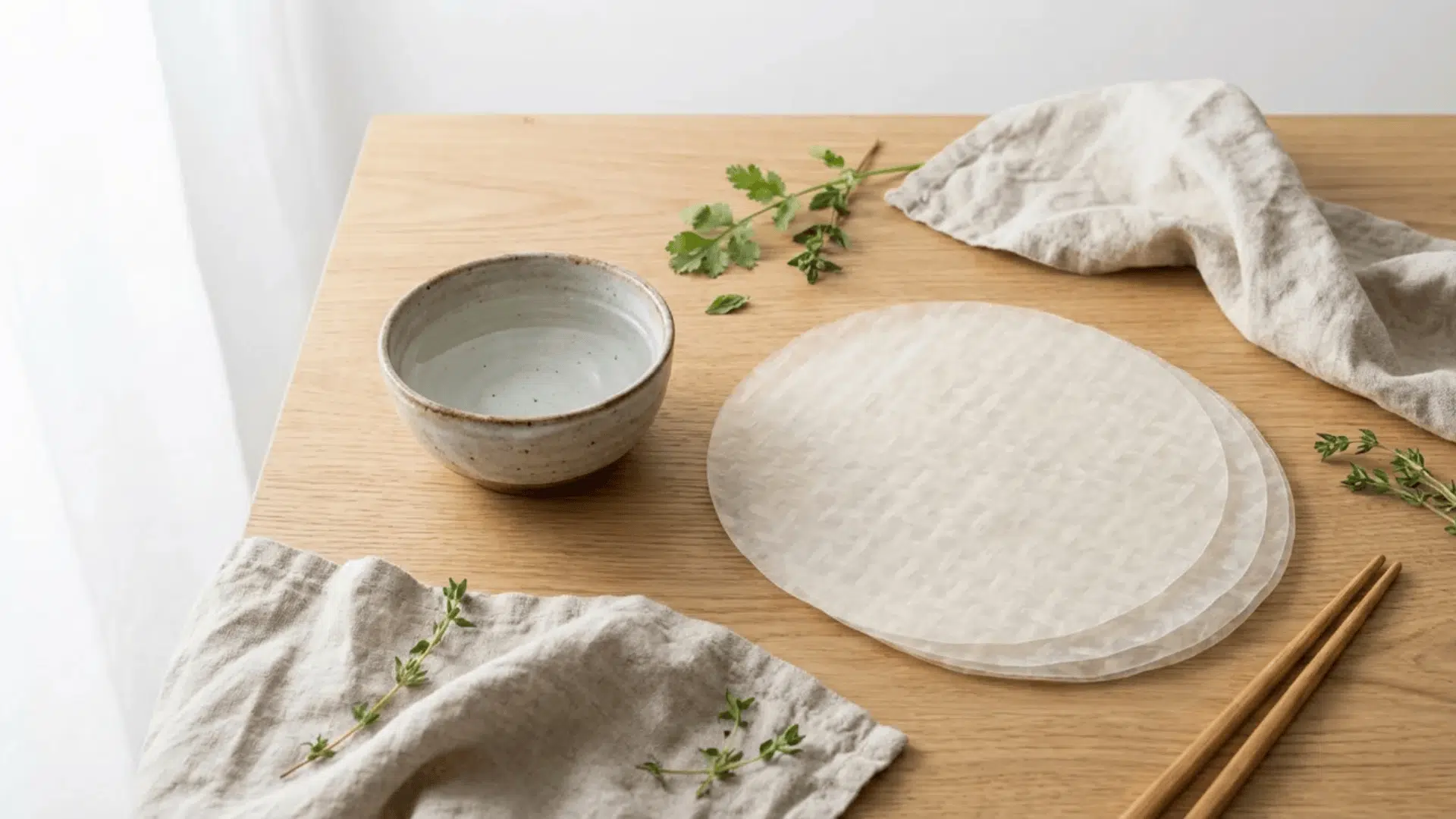



Rice paper nutrition is simpler than you might think. Each sheet runs between 30 and 50 calories, contains almost no fat, and is naturally gluten-free, making it one of the lightest wrapper options you can find.
But if you are trying to figure out how many carbs are in rice paper, if it fits your diet, or how it stacks up against flour tortillas and spring roll wrappers, you need more than just a calorie count.
This blog breaks down the full rice paper nutrition facts, including calories, carbs, protein, fat, and sodium, across different serving sizes.
You will also find out how rice paper fits into weight loss, gluten-free, and other common diets.
By the end, you will know exactly what you are eating and how to make rice paper work for your health goals.
What is Rice Paper and What is it Made Up Of

Rice paper is a thin, edible sheet commonly used to wrap spring rolls and light dishes in many Asian cuisines, especially Vietnamese food.
It is known for its dry, firm texture when packaged, and becomes soft and flexible after being dipped in water. This makes it easy to wrap around vegetables, meats, or noodles.
Rice paper is mainly made from white rice flour, water, and a small amount of salt.
Some varieties also include tapioca starch, which helps improve texture and gives the sheet a slightly chewy feel once softened.
The mixture is spread into thin layers, steamed, and then dried into round sheets. Because it uses simple ingredients, rice paper is naturally gluten-free and low in fat.
Its mild taste pairs well with a wide range of fillings, making it a popular choice for light meals.
Rice Paper Nutrition at a Glance
Before going into each nutrient, here is a quick reference for a single standard rice paper sheet (approximately 22 cm / 8–9 inches in diameter, ~10 g dry weight):
| Nutrient | Per Sheet (~10 g) | Per 2-Sheet Serving (~20 g) |
|---|---|---|
| Calories | 30–40 kcal | 60–80 kcal |
| Total Carbohydrates | 7–9 g | 14–18 g |
| Dietary Fiber | 0–0.5 g | 0–1 g |
| Net Carbs | 7–8.5 g | 14–17 g |
| Protein | 0.1–0.5 g | 0.2–1 g |
| Total Fat | 0 g | 0 g |
| Sodium | ~85–95 mg | ~170–190 mg |
| Glycemic Index (GI) | ~86 (high) |
Values are averages across common brands. Always check your specific product label for exact figures.
Is Rice Paper Healthy?
Yes, Rice paper can fit into many eating plans because it is low in fat and fairly low in calories.
A study in the Asian Journal of Food and Agro-Industry (2013) examined rice flour and tapioca sheets and found that these wrappers contain very little fat or protein.
This makes them a light option for meals, since most of the energy comes from carbs rather than added oils.
Another paper in Food Chemistry, 2016, examined rice starch films and reported that the sheets carry a steady carb load but very small amounts of micronutrients.
This means the sheet works best when you pair it with foods that supply fiber, protein, and vitamins. People with gluten concerns can use rice paper safely, as most brands use rice and tapioca rather than wheat.
Calories in Rice Paper
Rice paper is known for being a low-calorie wrap option compared to many others. It works well for light meals because it adds very few calories on its own.
1. Calories Per Sheet
A single rice paper sheet usually contains about 30 to 50 calories, depending on its size and thickness. Smaller sheets stay on the lower end, while larger ones add a few more calories.
Since it is very thin and made mostly from rice flour, it does not carry extra fat or heavy ingredients. This makes it a simple choice for keeping meals light without adding too many calories from the wrap itself.
2. Calories in Rice Paper Rolls
Rice paper rolls usually contain around 100 to 200 calories per roll, but this depends mostly on what goes inside. Fillings like vegetables keep calories low, while meats, noodles, and sauces can raise the total quickly.
The wrapper itself adds very little, so the main calorie count comes from the ingredients used. Choosing fresh, simple fillings helps keep the overall meal lighter and more balanced.
3. Rice Paper vs Other Wrappers
Rice paper is much lower in calories compared to common wraps like tortillas or flatbreads. A standard tortilla can have 150 calories or more, while a rice paper sheet has around 30 calories.
This makes rice paper a better option for those looking to reduce calorie intake.
It allows more room for healthy fillings without making the meal too heavy, especially when compared to thicker, flour-based wraps.
Carbs in Rice Paper
Carbs are the main nutrient found in rice paper, as it is made from rice flour. It provides quick energy but offers little fiber or protein.
1. Total Carbs Per Sheet
A single rice paper sheet contains about 7 to 8 grams of carbohydrates, depending on its size and thickness. Since it is made mainly from refined rice flour, most of these carbs come in a simple form.
This allows the body to digest it quickly and use it as a fast source of energy.
However, it is not very filling on its own. Pairing it with protein or vegetables can help create a more balanced and satisfying meal.
2. Are Rice Paper Carbs Healthy?
Rice paper carbs are mostly simple carbohydrates, which means they break down quickly in the body and provide fast energy.
However, it has very little fiber, so it may not keep hunger away for long when eaten alone. This can lead to feeling hungry again soon after eating.
It works best when combined with high-fiber foods like vegetables or protein-rich fillings to create a more balanced and satisfying meal that helps support steady energy levels.
3. Net Carbs and Diet Impact
Rice paper has almost no fiber, so its net carbs are nearly equal the its total carbs. This means most of the carbohydrates are absorbed quickly by the body, which can raise blood sugar levels more quickly.
For anyone on a strict ketogenic diet, a single rice paper sheet already delivers around 7–8 g of net carbs, which can represent a significant portion of a daily 20–50 g keto carb limit. Rice paper is generally not compatible with strict keto.
While it can still fit into a balanced diet, it may not be the best option for strict low-carb or keto plans.
Adding low-carb fillings like vegetables or lean protein can help control overall carb intake and make the meal more balanced.
Glycemic Index of Rice Paper
The GI measures how quickly a food raises blood glucose compared to pure glucose (scored at 100). Because rice paper is made from finely milled, pre-gelatinized rice flour, its starch is almost entirely in a rapidly digestible form.
Research published in Food Chemistry and ScienceDirect shows that many processed rice products carry a high GI, with rice paper estimated at approximately 86, higher than a bowl of cooked white rice (GI ~73) and much higher than brown rice (GI ~50).
What This Means Practically:
- For people with diabetes or insulin resistance, rice paper can trigger a relatively rapid blood glucose spike. Pairing it with protein, fat, and fiber-rich vegetables slows glucose absorption and reduces this effect.
- For athletes and active individuals, this fast-digesting quality can be useful. I recommend rice paper rolls with banana or light protein as a pre-workout snack 30–45 minutes before training, since the quick carbs support performance without feeling heavy.
- For general weight management, the high GI means rice paper on its own does not keep you full for long, which is why filling choices matter so much.
Rice Paper vs. Other Wrappers Nutrition Comparison
Different wrappers vary a lot in calories, carbs, and ingredients. Rice paper stands out as a lighter option compared to many common wraps.
| Comparison | Rice Paper | Other Wrapper | Key Difference |
|---|---|---|---|
| Rice Paper vs Flour Tortilla | ~35 calories ~8–9 g carbs per sheet | ~150–200 calories ~25–35 g carbs per tortilla | Rice paper is much lower in calories and carbs, making it better for light meals |
| Rice Paper vs Spring Roll Wrappers | Thin, gluten-free, used fresh or softened | Thicker, wheat-based, usually fried or baked | Rice paper is lighter and lower in calories; spring roll wrappers are heavier and cooked |
| Rice Paper vs Lettuce Wrap | ~35 calories ~8 g carbs | ~5 calories 0 g carbs | Lettuce is carb-free, low in calories but less durable; rice paper better for heavier fillings. |
| Rice Paper vs Egg Roll Wrapper | ~35 calories ~8 g carbs, gluten-free | ~70 calories ~15 g carbs, wheat-based | Rice paper is lighter and gluten-free; egg roll wrappers are usually fried, increasing calories. |
Tips to Use Rice Paper in a Healthy Way
Rice paper works best when paired with fresh and balanced ingredients. Smart filling choices can help keep the meal light and more satisfying.
- Fresh vegetables with shrimp: A light option that adds protein without too many calories
- Grilled chicken with herbs: Keeps the roll filling and adds clean flavor
- Tofu with salad: A good plant-based choice that feels balanced and light
- Lettuce, cucumber, and carrots: Add crunch, fiber, and freshness
- Light dipping sauces: Helps control extra sugar and calories
- Avocado slices: Add healthy fats and improve taste
- Boiled eggs: Boosts protein and keeps you full longer
- Fresh herbs like mint or cilantro: Enhance flavor without extra calories
- Lean meats like turkey: Keep fat low while adding protein
- Sprouts: Adds nutrients and texture to each bite
Common Mistakes to Avoid
Avoiding small mistakes can help keep rice paper meals light and balanced. Simple changes can improve both nutrition and overall meal quality.
- Too many noodles: Adds extra carbs and makes the meal heavier
- Sugary or heavy sauces: Increase calories and reduce the health value
- Overfilling rolls: Makes them harder to eat and adds more calories
- Skipping protein: Leads to less filling meals and quicker hunger
- No vegetables: Reduces fiber and overall nutrition balance
- Deep-frying rolls: Adds unnecessary fat and calories
- Using processed fillings: Lowers the overall health quality
- Adding too much salt: Can increase sodium intake quickly
- Poor portion control: Can lead to overeating without noticing
- Not balancing ingredients: Creates meals that are high in carbs but low in nutrients
Wrapping Up
Rice paper is a simple food that fits well in many light meals. It stays low in calories and fat, but most of its nutrition comes from carbs.
That means it gives quick energy, but it may not keep you full for long on its own.
The real value comes from how it is used. When paired with fresh vegetables, lean protein, and light sauces, it can turn into a balanced and satisfying meal.
I find rice paper to be a smart choice for anyone trying to eat lighter without giving up flavor. It gives flexibility to create healthy wraps in many ways. The key is to focus on what goes inside, not just the wrapper.
If you want more simple nutrition guides and healthy meal ideas, keep reading and check out other helpful posts.