



I know how frustrating it can feel when your legs look strong, but your calves don’t match the rest.
I’ve been there too, trying different moves and not seeing much change. The good news is you don’t need a gym to fix that.
With the right calf workouts at home, you can build strength and get more toned legs over time. In this guide, I’ll share some simple exercises you can do right where you are.
Some use just your body weight, while others can include dumbbells if you have them.
I’ll also share clear guidance that can help you train more effectively, improve your form, and avoid mistakes that often slow down progress.
If you stay consistent, you can start to notice real progress. Let’s get into the best ways to train your calves at home.
Understanding Your Calf Muscles
Before picking your exercises, it helps to know what you’re actually training. Your calf is made up of three muscles that work together:
- Gastrocnemius: The large muscle at the back of your lower leg that works most when your leg is straight and gives calves their defined shape.
- Soleus: A flat muscle under the main calf muscle that works more when your knees are bent and helps make your calves look wider and thicker.
- Plantaris: A small accessory muscle that supports the other two. Worth knowing, but it doesn’t need to be trained directly.
This is why a good home calf workout includes both straight-leg and bent-knee movements. One targets the gastrocnemius, the other targets the soleus, and together they produce balanced development.
Do You Need Weights for Calf Workouts at Home?
You don’t need weights for calf workouts at home. Your body weight is enough to build strength if you stay consistent and use good form.
Simple moves like calf raises, single-leg raises, and stair raises can work your muscles well. The key is control and repetition. Move slowly, pause at the top, and feel the stretch at the bottom.
If it starts to feel easy, you can make it harder by using one leg or adding more reps.
Progress matters more than equipment. Weights can help later, but they are not required to get results.
Many people build strong calves using just body weight. Focus on steady practice, proper form, and small increases over time.
That is what really helps your calves grow and get stronger at home without needing gym equipment.
A note on progressive overload: Calves are endurance muscles. They carry your bodyweight for thousands of steps every day, which means doing 20 quick bouncy reps is not enough of a challenge to force them to grow.
You need to keep making the workout harder over time, or your progress will stop.
Dumbbell Calf Workouts at Home
Dumbbell calf exercises at home help increase strength by adding extra resistance to your workouts. This added load challenges the muscles more, leading to better muscle growth and improved calf definition over time.
1. Standing Calf Raise
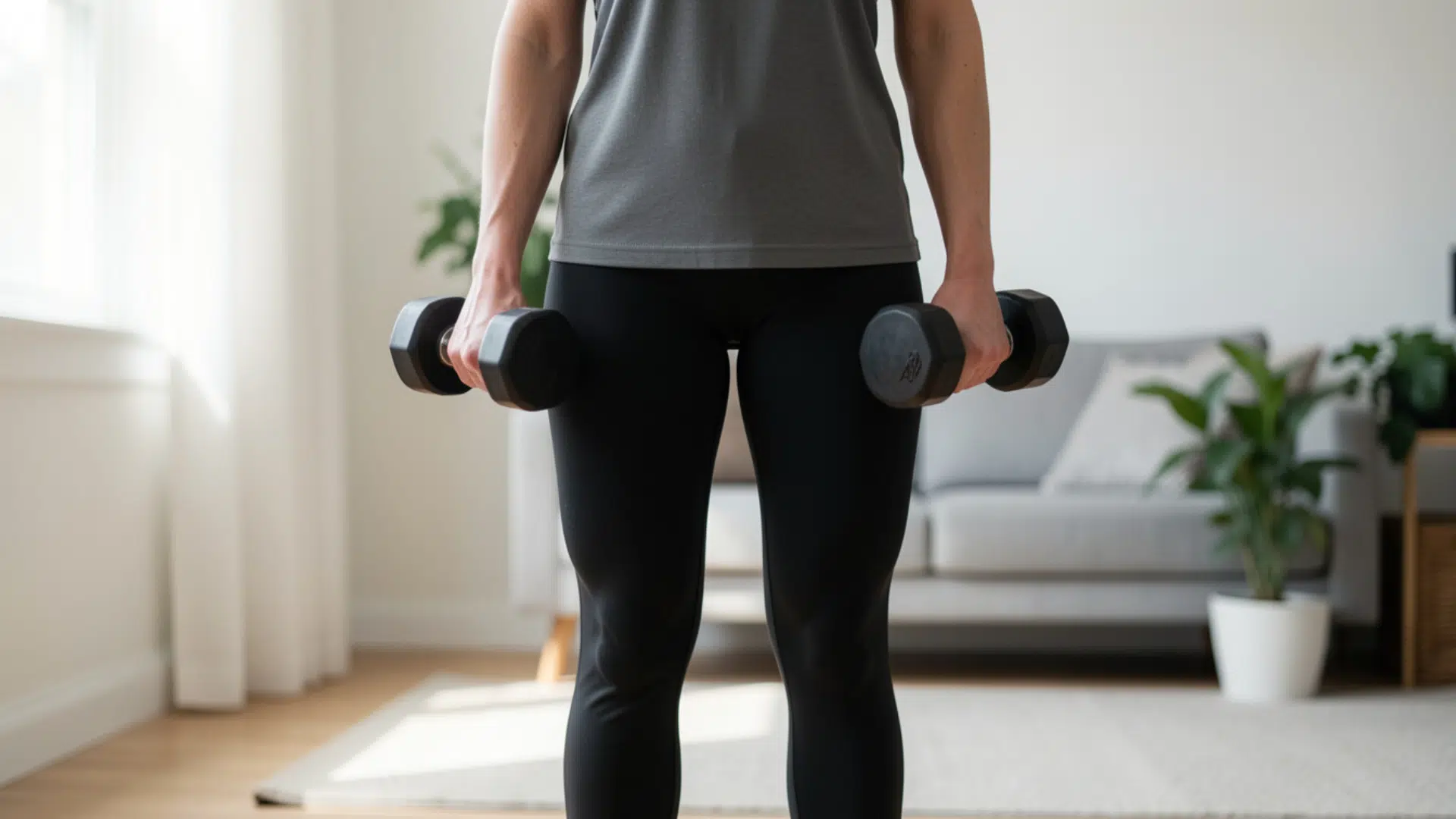
Stand upright while holding weights at your sides. Slowly lift your heels off the ground as high as possible, then lower them back down with control.
Use full movement and don’t bounce; this helps build strength and shape and is great for beginners.
Practicing this regularly can help develop stronger calves while also improving balance and stability during everyday movements.
Form tip: Pause for one to two seconds at the top of each rep and squeeze the calf before lowering. That brief hold increases time under tension and makes a noticeable difference over time.
I started doing this after noticing I was rushing through reps without feeling much of a burn, and it changed the exercise completely.
2. Single-Leg Calf Raise
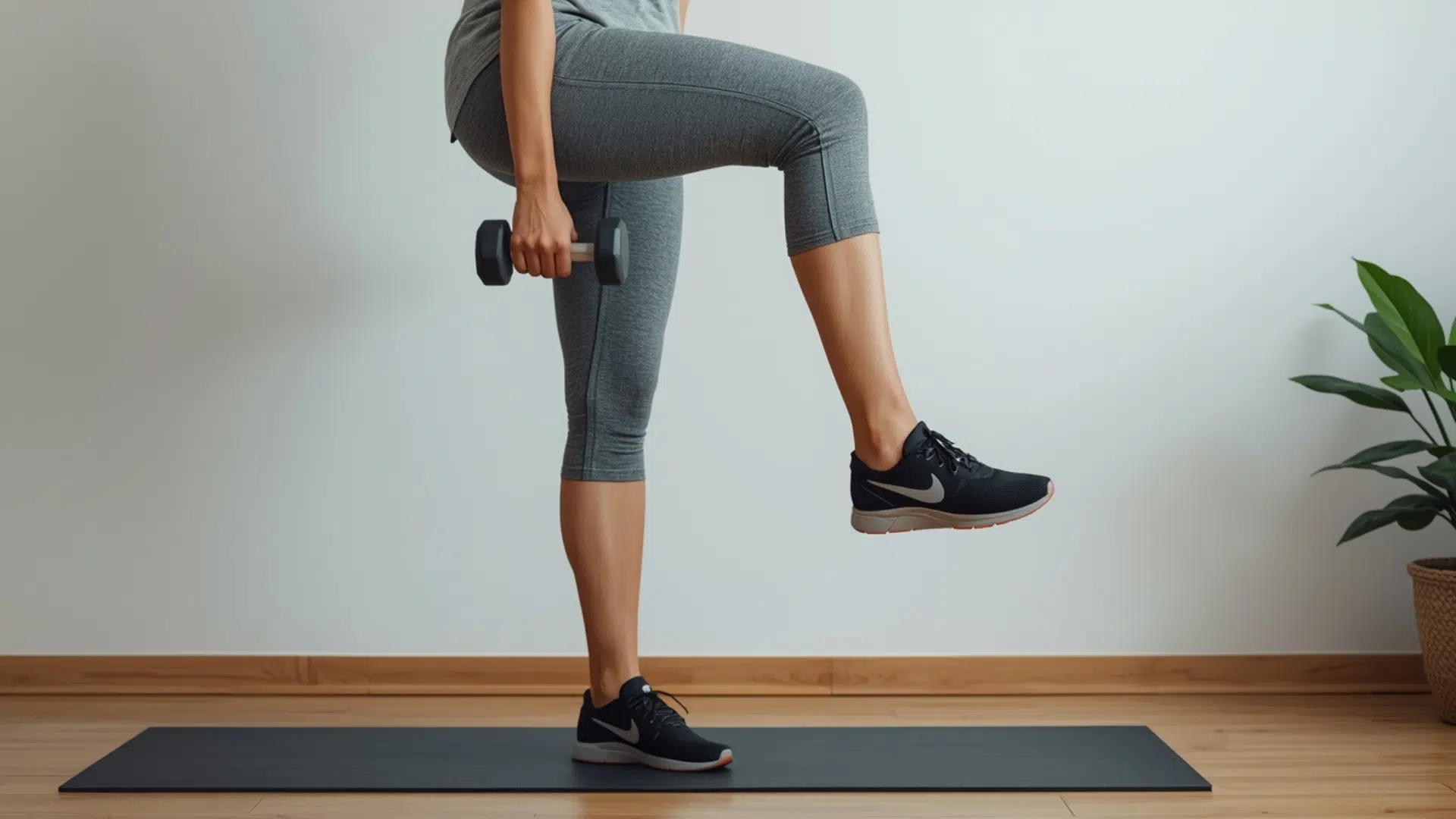
Stand on one leg while holding a weight in one hand. Lift your heel, then lower it back down slowly with control. Keep your body steady and use support if needed.
This movement targets each calf individually, helping improve balance and muscle control.
It also helps correct strength differences between the two legs.
Performing this exercise regularly can support better coordination and more even muscle development, making it a useful addition to any home workout routine.
Form tip: Most people have one calf that’s noticeably stronger than the other. Single-leg work helps identify and correct that imbalance before it compounds over time.
3. Seated Calf Raise
Sit on a chair with your feet flat on the floor and place weights on your knees. Lift your heels upward while keeping your toes planted, then lower them slowly.
Because your knees are bent in this position, the gastrocnemius goes slack, and the soleus takes on most of the work.
This is actually one of the most important calf exercises you can do at home, because the soleus is often undertrained and is responsible for a significant portion of calf thickness and width.
This move targets the deeper calf muscle and helps build endurance with better control.
It is a great option for improving muscle strength and can be easily added to a routine for balanced calf development.
Watch the video above by Clench Fitness to understand how to perform this exercise correctly. You can also check out the original video on their YouTube channel here.
4. Calf Raises on Step
Stand on the edge of a step while holding weights, allowing your heels to drop slightly below the surface.
Lift your heels upward as high as possible, then lower them slowly to feel a deep stretch.
This increased range of motion helps activate the calf muscles more effectively. It builds strength, improves flexibility, and helps your calves get stronger and more defined.
Why range of motion matters: Stopping at the floor level cuts the stretch phase short.
Dropping your heels below the step adds a deeper stretch at the bottom, which creates more muscle stimulus per rep without changing the weight at all.
This is the most effective free upgrade to any calf raise variation.
Watch the video above by Balance In Motion to understand how to perform this exercise correctly. You can also check out the original video on their YouTube channel here.
5. Farmer’s Walk on Toes
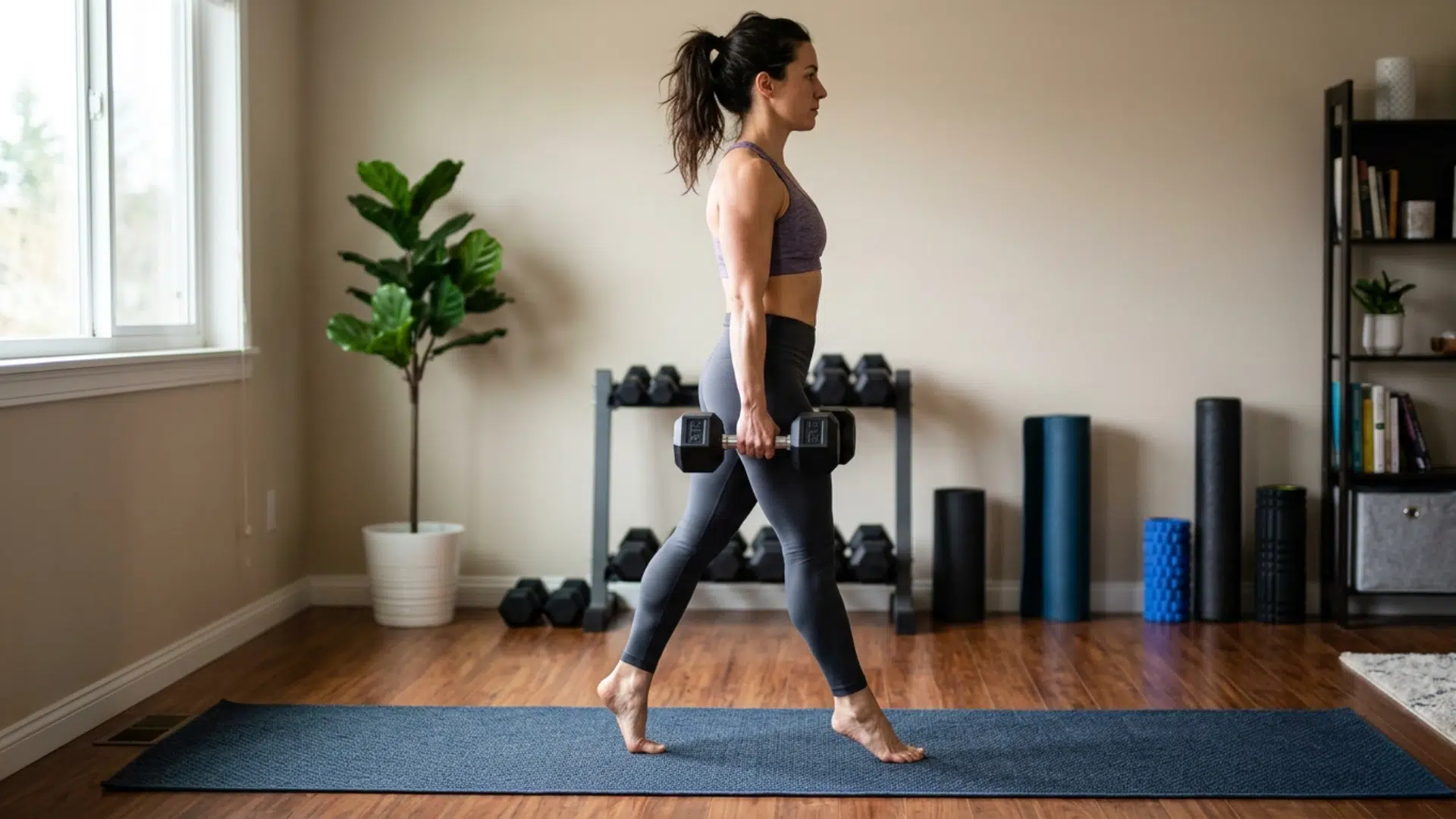
Hold the weights at your sides and walk slowly, keeping your toes on the ground. Keep your posture upright and your steps controlled throughout the movement.
This exercise keeps the calf muscles under constant tension while also engaging other lower-body muscles.
It helps improve strength, endurance, and balance at the same time.
Adding this movement to a routine can support better muscle control and stability, making it a strong finishing exercise for calf-focused workouts
Calf Workouts at Home without Equipment
Calf workouts at home without equipment focus on simple bodyweight movements that build strength and improve muscle tone. These exercises are easy to follow and can be done, making them perfect for consistent daily.
6. Jumping Calf Raises
Watch the video above by Matt Fisher to understand how to perform this exercise correctly. You can also check out the original video on their YouTube channel here.
Stand upright and perform small, controlled jumps by pushing off the ground using your toes. Land softly and repeat the movement with a steady rhythm.
This exercise adds a dynamic element to calf training, helping build power and improve muscle response.
The repeated motion keeps the calves active and engaged throughout.
It also improves coordination and endurance. Including this exercise in a routine can help develop stronger calves while making workouts more energetic and effective.
Form tip: Focus on landing softly by absorbing the impact through your toes and ankles, not your heels.
Landing heavily puts unnecessary stress on your joints and reduces the calf engagement you’re after.
7. Bent-Knee Calf Raises
Watch the video above by sportsinjuryclinic to understand how to perform this exercise correctly.
Stand with your knees slightly bent and slowly lift your heels off the ground. Lower them back down with control while keeping your knees in the same position.
This variation targets deeper calf muscles that are often missed in straight-leg movements.
It helps improve endurance and adds balance to your training routine.
The controlled motion ensures better muscle activation. Practicing this regularly can support stronger calves and improve overall lower leg stability over time.
8. Tiptoe Balance Hold
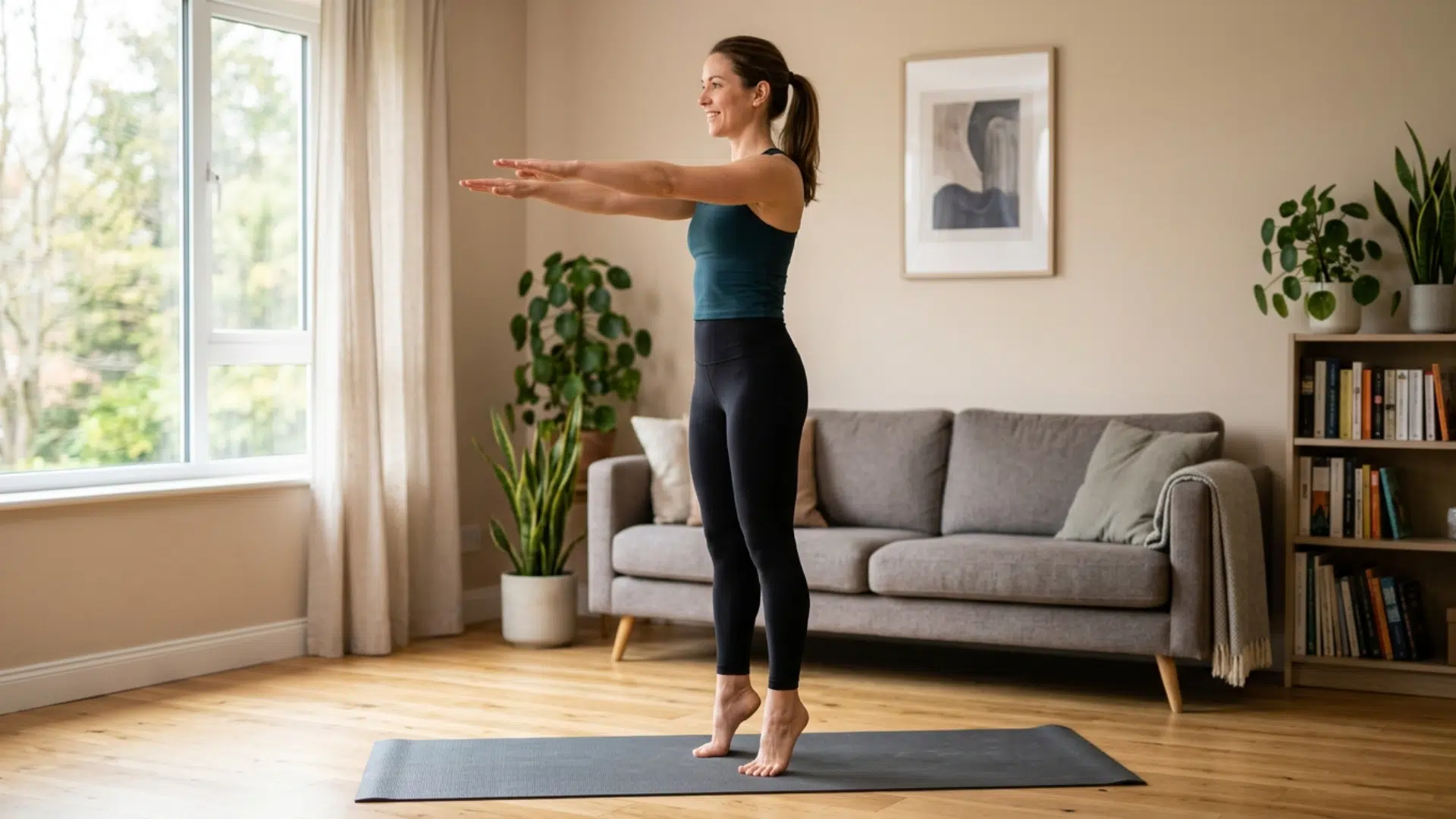
Watch the video above by Sportsinjuryclinic to understand how to perform this exercise correctly. You can also check out the original video on their YouTube channel here.
Rise onto your toes and hold the position for as long as possible while keeping your body steady. Use your arms slightly for balance if needed.
This exercise creates constant tension in the calf muscles, helping build strength and control. It also improves balance and coordination during movement.
Holding the position challenges stability, making the muscles work harder.
Regular practice can help strengthen calves and improve posture and control during everyday activities.
9. Lateral Calf Raises
Watch the video above by Physio Room Co to understand how to perform this exercise correctly.
Stand with your feet hip-width apart and shift your weight slightly to one side as you lift your heels. Lower back down slowly and repeat with control.
This side-focused movement targets the calf muscles from a different angle.
It helps improve muscle balance and adds variety to regular training. The controlled movement also supports better coordination.
Including this exercise in your routine can help build more evenly developed calves and improve overall lower leg strength.
10. Forward Lean Calf Raise

Stand upright and lean slightly forward as you lift your heels off the ground. Lower them back down slowly with control.
This forward position alters how the calf muscles are engaged, placing greater emphasis on specific muscle fibers.
It improves muscle activation and adds variation without needing equipment.
The movement also supports better balance and coordination. Practicing this regularly can help build stronger calves and improve overall lower leg control.
11. Quick Toe Taps

Stand in place and rapidly lift your heels up and down using small, quick movements. Keep the motion controlled and steady throughout.
This exercise keeps the calf muscles under constant tension while improving endurance.
The fast-paced movement also enhances coordination and muscle response. It is simple to perform and works well as a finishing exercise.
Adding this to your routine can help build stamina and keep your calves active without putting too much strain on the body.
Single-Leg Calf Exercises for Better Balance and Tone
Single-leg calf exercises help improve balance while strengthening each calf on its own. These movements also build better control and create more even muscle tone in the lower legs.
12. Single-Leg Donkey Calf Raise
Watch the video above by Three Point Performance to understand how to perform this exercise correctly. You can also check out the original video on their YouTube channel here.
Take a bent-over position with your hands placed on a surface for support. Lift one foot off the ground and raise the heel of the standing foot upward, then lower it slowly with control.
This position shifts body weight forward, increasing calf muscle activation.
It allows a deeper stretch and a stronger contraction than upright movements.
This exercise helps improve strength, balance, and control by keeping the focus on one side, making it effective for developing stable, well-developed calves.
13. Cross-Behind Lunge Raises
Watch the video above by Functional Effect Fitness & Rehabilitation to understand how to perform this exercise correctly. You can also check out the original video on their YouTube channel here.
Stand upright and step one leg diagonally behind the other into a cross-behind lunge. Lower your body slightly while keeping your balance, then push through the front foot to rise up.
At the top, lift your heel to come onto your toes, then return to the starting position.
This movement combines a lunge with a calf raise, increasing muscle activation and control. It helps improve balance, coordination, and lower leg strength.
Adding this variation can support more stable and evenly developed calves while also engaging surrounding muscles
14. Forward Anterior Reach Raises
Stand on one leg and lower your body slightly into a squat while extending your arms forward for balance. As you rise up, lift your heel to come onto your toes, then lower back down with control.
Keep your movements steady and controlled throughout.
The forward reach shifts your body weight, making the calf muscles work harder to maintain stability. It also improves balance and coordination.
This variation builds strength while training control, helping develop more stable and evenly balanced calves over time.
Watch the video above by Strength Ratio to understand how to perform this exercise correctly.
15. Supported Single-Leg Raises
Watch the video above by MANA Performance Therapy to understand how to perform this exercise correctly. You can also check out the original video on their YouTube channel here.
Stand facing a wall and lightly place your hands on it for support.
Lift one foot off the ground and raise the heel of the standing foot upward. Lower it slowly while maintaining control.
The wall support allows better focus on proper form and stability. This exercise helps improve strength and balance, especially for those building control.
It also supports even muscle development by ensuring both legs are trained effectively over time.
16. Angled Single-Leg Raises

Lie on a mat with one leg raised and the other on the floor then turn the foot slightly and flex and point your toes slowly
Lower the leg slightly if needed, then return to the starting position.
This small-angle adjustment alters how the calf muscles are activated, helping target different areas for more balanced development.
It also improves control and muscle awareness. Adding this variation can help strengthen the calves evenly while keeping the movement simple and effective without equipment.
A word of caution: Exaggerating the toe angle too much can put stress on the ankle joint.
A subtle shift of about 15 to 20 degrees in either direction is enough to change the activation without risking discomfort.
17. Single-Leg Squat Calf Press
Lower into a slight squat on one leg, then press through the ball of your foot to lift your heel upward. Return to the starting position with control.
This exercise combines strength, balance, and calf activation in one movement. It also engages surrounding muscles, making it more challenging.
Regular practice can help improve lower-body control, build stronger calves, and enhance overall coordination and stability.
Watch the video above by Fusionetics to understand how to perform this exercise correctly. You can also check out the original video on their YouTube channel here.
Advanced Calf Exercises with Added Resistance
Advanced calf exercises with added resistance help push muscles beyond basic training levels. These movements use load, position, and intensity changes to improve strength, control, and muscle development.
18. Seated Weighted Tibialis Raise
Sit on a bench with your feet resting on a raised surface, such as a step. Place a dumbbell across the top of your feet, keeping your heels supported.
Lift your toes toward your shins, then lower them slowly and with control.
This setup increases resistance and targets the front lower leg muscles more effectively. It helps improve ankle strength and supports better calf performance.
Regular practice can improve stability, control, and overall lower leg balance, making your calf workouts more effective.
Watch the video above by Midlife Mavericks to understand how to perform this exercise correctly.
19. Step-Up Calf Press
Stand with one foot on a raised platform, such as a box, while the other foot remains on the ground. Step up onto the platform and, at the top, lift your heel to rise onto your toes.
Lower your heel first, then step back down with control.
This movement combines a step-up with a calf raise, increasing intensity and muscle activation. It improves balance, coordination, and lower leg strength.
The elevated position also increases the range of motion, helping build stronger and more stable calves over time.
Watch the video above by Champion Physical Therapy and Performance to understand how to perform this exercise correctly. You can also check out the original video on their YouTube channel here.
20. Weighted Seated Pulse Raises
Sit on a chair and place weights on your knees. Lift your heels slightly and perform small pulsing movements without fully lowering them.
This keeps constant tension on the calf muscles, especially targeting deeper muscle fibers. The added resistance increases difficulty, helping improve endurance and control.
It also supports better muscle engagement throughout the movement.
Adding this exercise to your routine can help build stronger calves while maintaining steady muscle activation.
Watch the video above by 6percentfitness968 to understand how to perform this exercise correctly. You can also check out the original video on their YouTube channel here.
21. Offset Stance Calf Raise
Stand with one foot slightly forward and the other slightly back, holding the weights at your sides. Lift your heels, then lower them slowly with control.
This staggered stance shifts the load unevenly, forcing the calf muscles to stabilize and work harder.
It improves coordination, balance, and muscle control.
This variation adds a unique challenge compared to standard movements and helps build a more evenly developed, stable calf strength.
Watch the video above by The BFR. Co to understand how to perform this exercise correctly.
22. Isometric Calf Hold Raise
Hold the weights at your sides and rise onto your toes, then hold the top position for as long as possible.
This creates constant tension in the calf muscles, helping improve strength and endurance.
The static hold challenges stability and forces the muscles to remain engaged. It is a simple but effective way to increase intensity without adding movement.
Regular practice can help improve muscle control and build stronger calves over time.
Watch the video above by Elite Performance Institute to understand how to perform this exercise correctly. You can also check out the original video on their YouTube channel here.
23. Weighted Calf Raise with Forward Lean
Watch the video above by Gareth Sapstead to understand how to perform this exercise correctly. You can also check out the original video on their YouTube channel here.
Hold the weights and lean slightly forward as you lift your heels. Lower them back down slowly with control.
This forward position changes how the calf muscles are activated, placing more tension on specific muscle fibers. It also improves balance and coordination.
This variation adds variety to your routine and helps strengthen the calves in a slightly different way, making it useful for more advanced home training.
24. Split Stance Calf Press
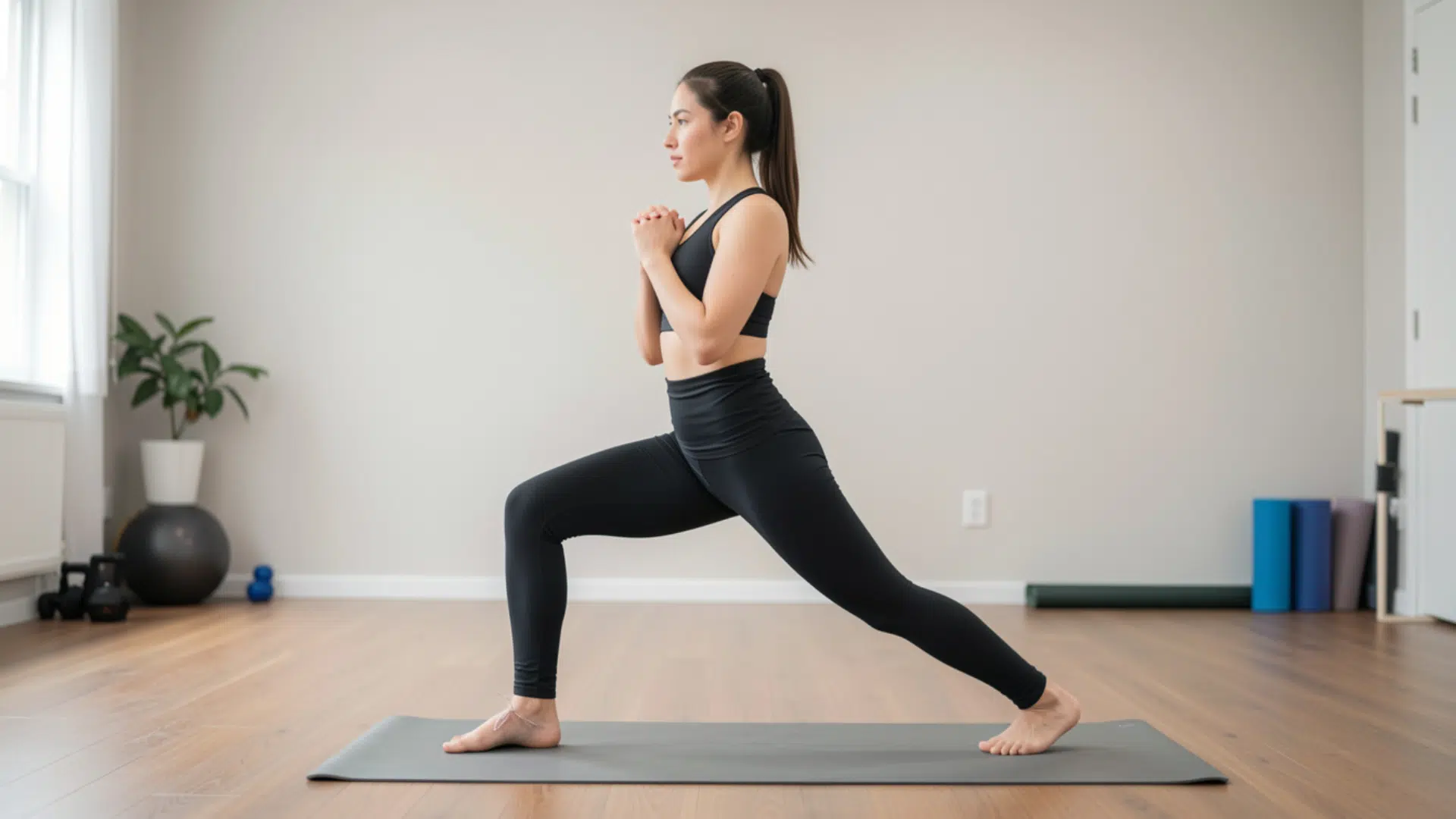
Take a split stance position and hold weights at your sides. Press through the front foot to lift your heel upward while keeping the back foot stable. Lower slowly and repeat.
This movement combines strength, balance, and coordination.
The uneven stance challenges stability and forces the calf muscles to work harder.
It is an effective variation for building strength while also improving lower-body control and overall movement stability.
25. Loaded Toe Walk with Direction Change
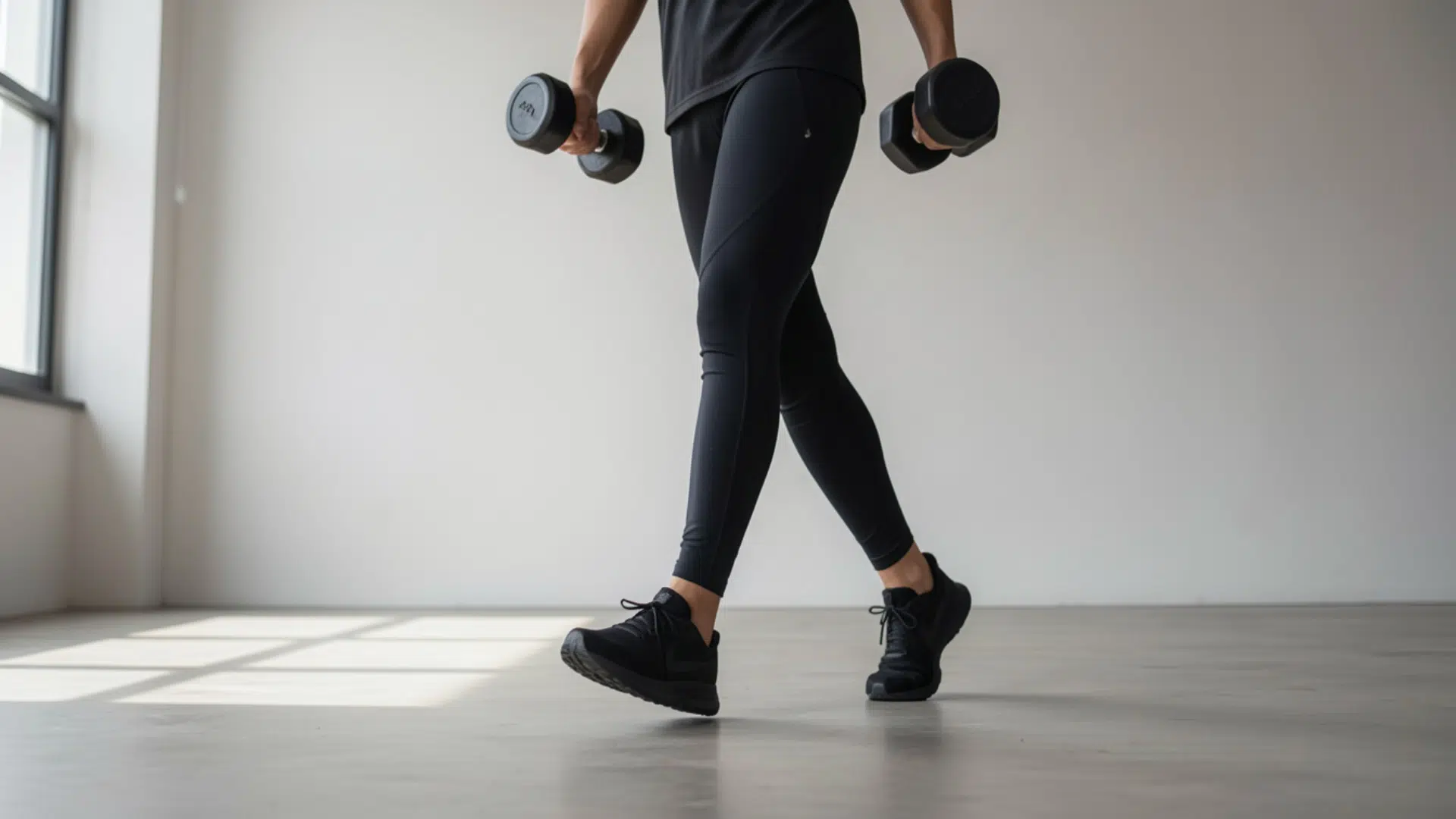
Hold the weights and walk on your toes, changing direction every few steps. Move forward, sideways, or slightly backward to keep the movement dynamic.
This keeps the calf muscles under constant tension, improving endurance.
The added resistance increases difficulty, while changes in direction challenge coordination and balance.
This exercise works well as a finishing movement, helping build strength and control in the calves without repeating basic movement patterns.
How Long Before You See Results?
This is one of the most common questions, and the honest answer is: it takes longer than most people expect.
Calves are used constantly throughout the day, which makes them highly resistant to fatigue. Because of that endurance quality, they need targeted, intense training to grow.
With consistent effort, you may start noticing subtle changes in 4 to 6 weeks.
More visible toning and definition typically takes a few months of regular training.
From my experience, the change doesn’t come from doing more exercises; it comes from doing the right exercises with better control and then staying consistent week after week.
How Do Calf Workouts Help Tone Your Legs?
Calf workouts help tone your legs by strengthening and shaping the lower leg muscles. These exercises mainly target two key muscles: the gastrocnemius and the soleus.
When these muscles are trained regularly, they become stronger and more defined, giving the legs a firmer, more toned look.
Calf workouts also improve muscle endurance. This helps support daily activities such as walking, climbing stairs, and standing for long periods. Better endurance can make the legs feel more stable and balanced.
In addition, these exercises support blood flow and muscle activation in the lower body.
This can reduce stiffness and improve overall leg function. For the best results, consistency matters most.
Combining different calf exercises and maintaining proper form can gradually lead to stronger, more toned legs over time
Bodyweight vs Dumbbell Calf Exercises
Both bodyweight and dumbbell calf exercises help build strength and improve muscle tone. The main difference lies in the level of resistance and the degree of challenge each method provides.
| Feature | Bodyweight Calf Exercises | Dumbbell Calf Exercises |
|---|---|---|
| Resistance Level | Uses body weight only | Adds extra load for more challenge |
| Best For | Beginners and daily training | Intermediate to advanced training |
| Muscle Growth | Slower, steady progress | Faster strength and muscle gain |
| Equipment Needed | None | Requires dumbbells or weights |
| Flexibility | Easy to do anywhere | Needs some setup and space |
| Progression | Limited without variations | Easy to increase weight over time |
| Balance Training | Strong focus on control | Adds strength with a stability challenge |
How Often Should You Train Your Calves at Home?
Calf muscles can handle frequent training, but they still need time to recover and grow stronger. Training calves 2 to 4 times per week works well for most people.
This allows enough time for recovery while still keeping the muscles active and improving over time.
Beginners can start with 2 sessions per week, while more experienced routines can include 3 or 4 sessions at varying intensities.
It is important to mix different types of exercises, such as slow controlled raises, holds, and more dynamic movements. This helps target the muscles in different ways and prevents plateaus.
Rest days are just as important, as they allow the muscles to repair and grow.
Staying consistent with a balanced routine will lead to better strength, endurance, and more toned calves over time.
Common Mistakes to Avoid in Calf Workouts at Home
Common mistakes in calf workouts at home can slow down progress and reduce results. Paying attention to form and consistency helps improve strength and muscle tone more effectively.
- Rushing Through Reps: Fast movements reduce muscle tension and limit results. Slow, controlled reps work better.
- Not Using Full Range of Motion: Lifting halfway up or not lowering fully reduces effectiveness. Always go through the full movement.
- Skipping Warm-Up: Cold muscles are more prone to strain. A quick warm-up helps improve performance and safety.
- Ignoring Balance and Form: Poor posture can shift focus away from the calves. Keep movements steady and controlled.
- Doing the Same Exercises Only: Repeating one move limits progress. Adding variety helps target muscles better.
- Not Training Consistently: Irregular workouts slow results. Regular practice is key to stronger and toned calves.
- Skipping the Soleus: Many home workouts skip bent-knee moves, so the deeper calf muscle stays weak and calves lack full size.
- Not Progressing Over Time: Calves adapt fast, so if nothing changes, you won’t grow; track reps and increase the challenge every 1–2 weeks.
Sample Beginner Calf Workout Routine (No Equipment)
If you’re not sure where to start, here is a simple routine I’d recommend for anyone new to calf training at home. Complete this 2 to 3 times per week with at least one rest day between sessions.
| Exercise | Sets | Reps / Duration |
|---|---|---|
| Standing Calf Raise | 3 | 15–20 reps (slow and controlled) |
| Bent-Knee Calf Raise | 3 | 15–20 reps |
| Tiptoe Balance Hold | 3 | 20–30 seconds |
| Supported Single-Leg Raises | 2 per leg | 10–12 reps |
| Quick Toe Taps (finisher) | 2 | 30 seconds |
Rest 60 to 90 seconds between sets. As this becomes easier over 2 to 3 weeks, progress by adding a step for a greater range of motion, moving to single-leg variations, or adding a light dumbbell or weighted backpack.
Conclusion
Building stronger and more toned calves at home is completely possible with the right approach and consistency.
The biggest change came not from doing harder exercises, but from doing simple ones with better control and sticking to a routine.
Once it clicks, progress becomes clear; mixing different exercises keeps workouts effective, and small gains add up.
The two things that made the biggest difference for me were slowing down the lowering phase of every rep and adding seated raises to target the soleus.
Both of those changes cost nothing and require no extra equipment, and they made my results feel different within weeks.
If this guide helped or you’ve tried some of these exercises, share your experience in the comments below.
What worked best for you? Your input might help someone else stay motivated and see better results, too!